3个理由Pi币可能在本周飙升!Pi Network已从看跌水平反弹!看涨目标价为0.80美元

cryptonewsPubblicato 2025-06-26Pubblicato ultima volta 2025-06-26

Introduzione

Pi Network 在周三早上报导时回升4.5%,随着攻击后的回升,Pi币已稳住在由5月17日、5月31日和6月18日的波动低点形成的关键短期支撑趋势线之上。

Pi Network 在5月份的价格继续令人失望,其跌势延续了高峰1.67美元后的下行趋势。它已经暴跌了70%,5月23日更一度跌破心理关口0.50美元,截至撰寫本文时回升至0.54美元左右。尽管情绪依然悲观,下降的楔形模式、下降的波动性以及即将到来的Pi2day日,可能会触发强劲的反弹。

Pi显示出下跌楔形信号反弹

从其8小时图显示,Pi Network 价格形成了下跌楔形图案,这通常会导致看涨突破。这个楔形由两条下降且会聚的趋势线组成。在这种情况下,楔形的上侧连接自3月16日以来的高点,而下趋势线连接自5月17日以来的低点。这两条线接近汇聚,这是看涨突破往往发生的时候。下跌楔形图案的价格目标是通过从突破价格中减去楔形高度来估算的。
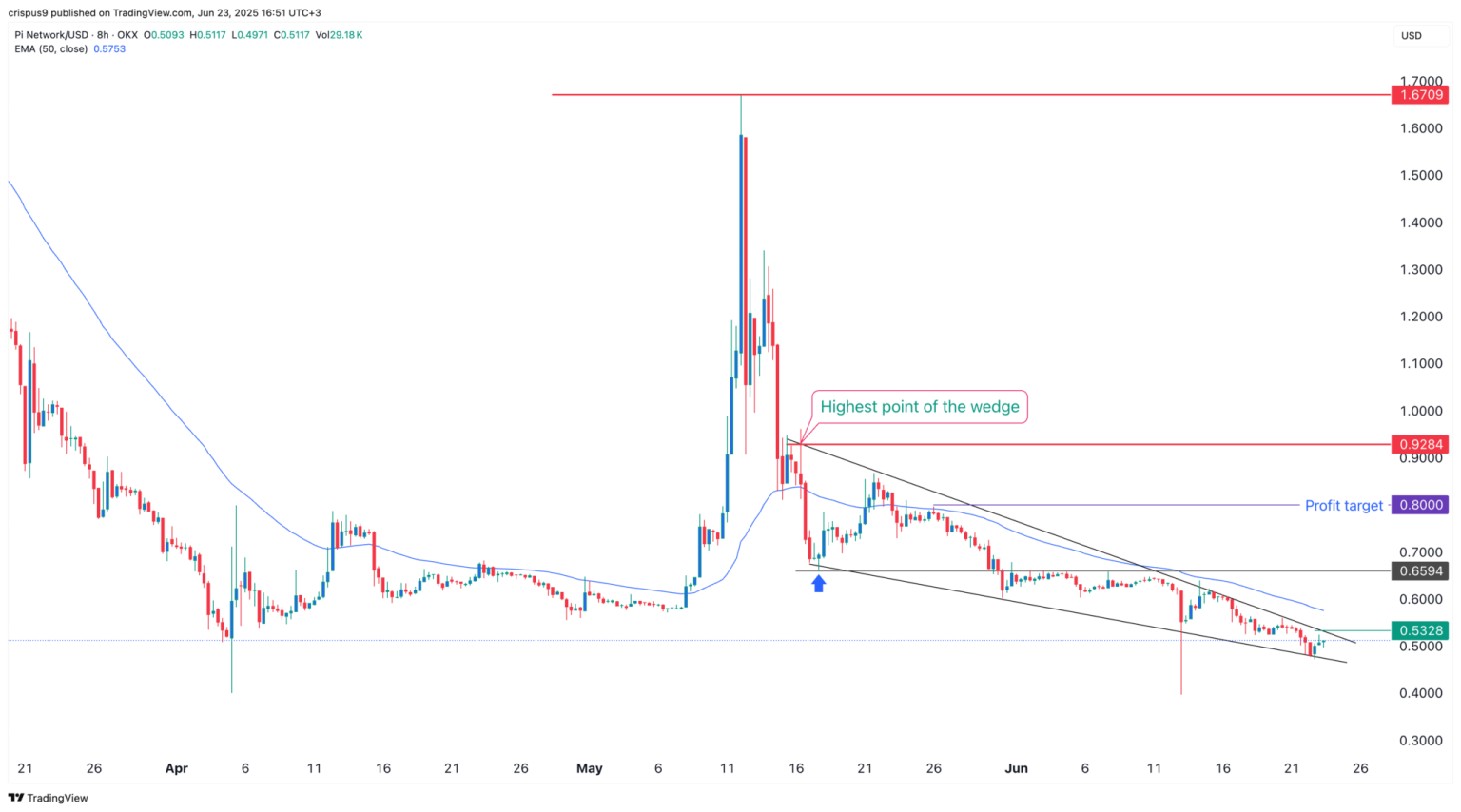
在这种情况下,高度是0.9285减去0.6594,即0.269美元。在此之后,将该数字添加到潜在的突破点,即0.5328美元。将两者相加得到的目标为0.80美元,这比当前水平高出接近一半。低于楔形图案下侧的跌落将使看涨的Pi 币价格预测失效。

下降的波动性可能会触发短挤压

另外一个对 Pi Network 价格看涨的催化剂是下降的波动性。在12小时的时间范围内,布林带三条线之间的差距变窄,这是它不再波动的迹象。布林带是由移动平均线和两个正负标准差组成的指标。这些线的收窄通常会导致向任一方向的大幅突破。
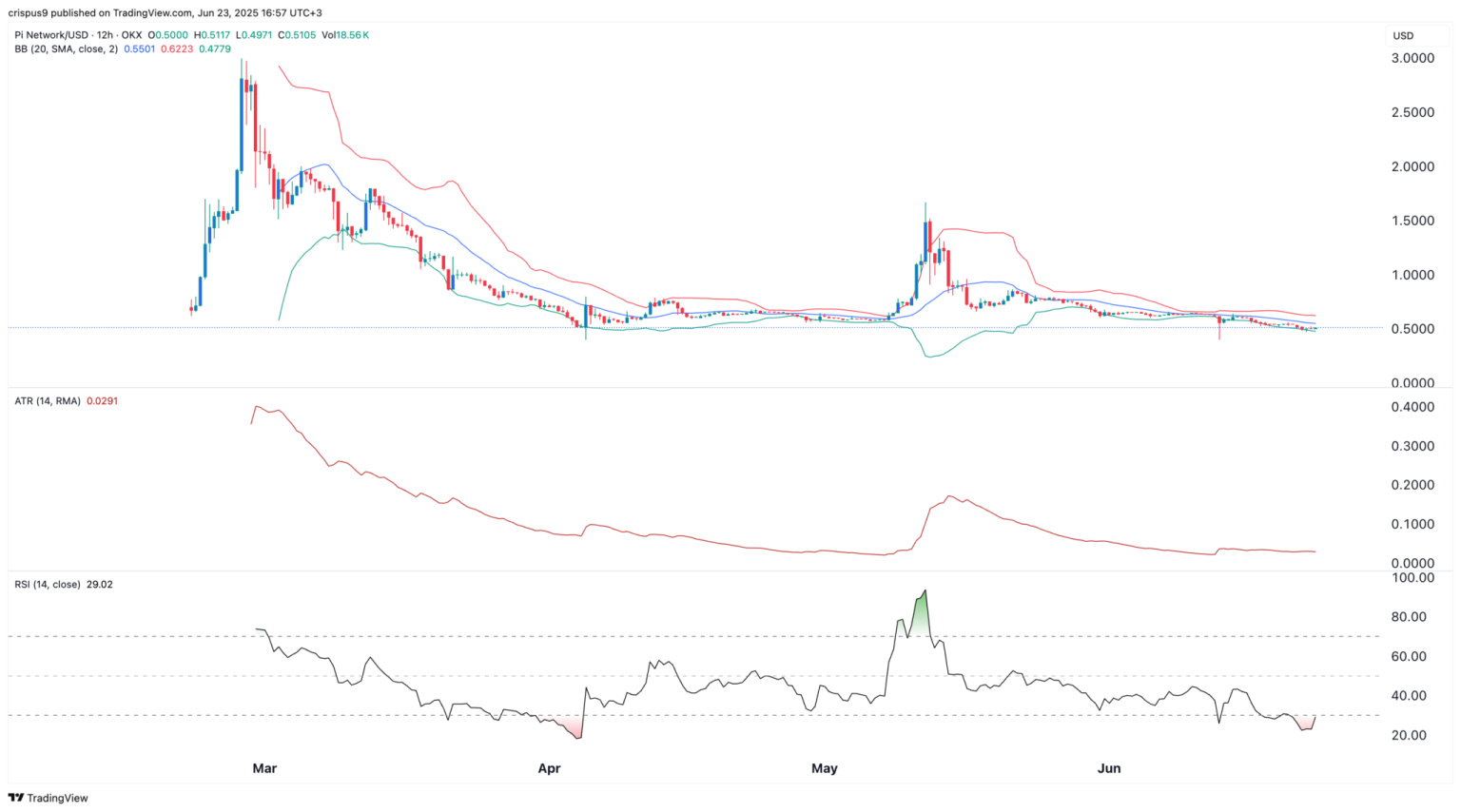
平均真实范围ATR指标持续下降,同样显示出波动性已经降低。伴随相对强弱指数RSI处于超卖水平,Pi币价格很可能会出现看涨突破。

Pi币可能会在Pi2day日之前上涨

Pi Network价格最可能的催化剂是即将于6月28日举行的Pi2day纪念活动。这是一个年度活动,也被称为Tau Day.。Tau Day庆祝常数,其等于2π。虽然不像3月14日的Pi日那样受到广泛庆祝,但这个活动可能会导致波动。历史上,Pi核心团队曾利用这些纪念日做出重大公告。在这次活动中,它正好与Pi域名拍卖的结束时间重合。Pi核心团队可能会在活动之前或之后做出重大公告,这可能会提高代币价格。

Pi Network近48小时回升7%

Pi Network 的价格在过去几周随着整体加密市场的前景崩溃。比特币 在美国攻击伊朗核设施后,曾一度跌破100,000美元,但自那时起已恢复。尽管Pi币的下降趋势可能会继续,但是形成的下跌楔形模式、低波动性以及即将到来的Pi2Day活动可能会导致看涨的突破。
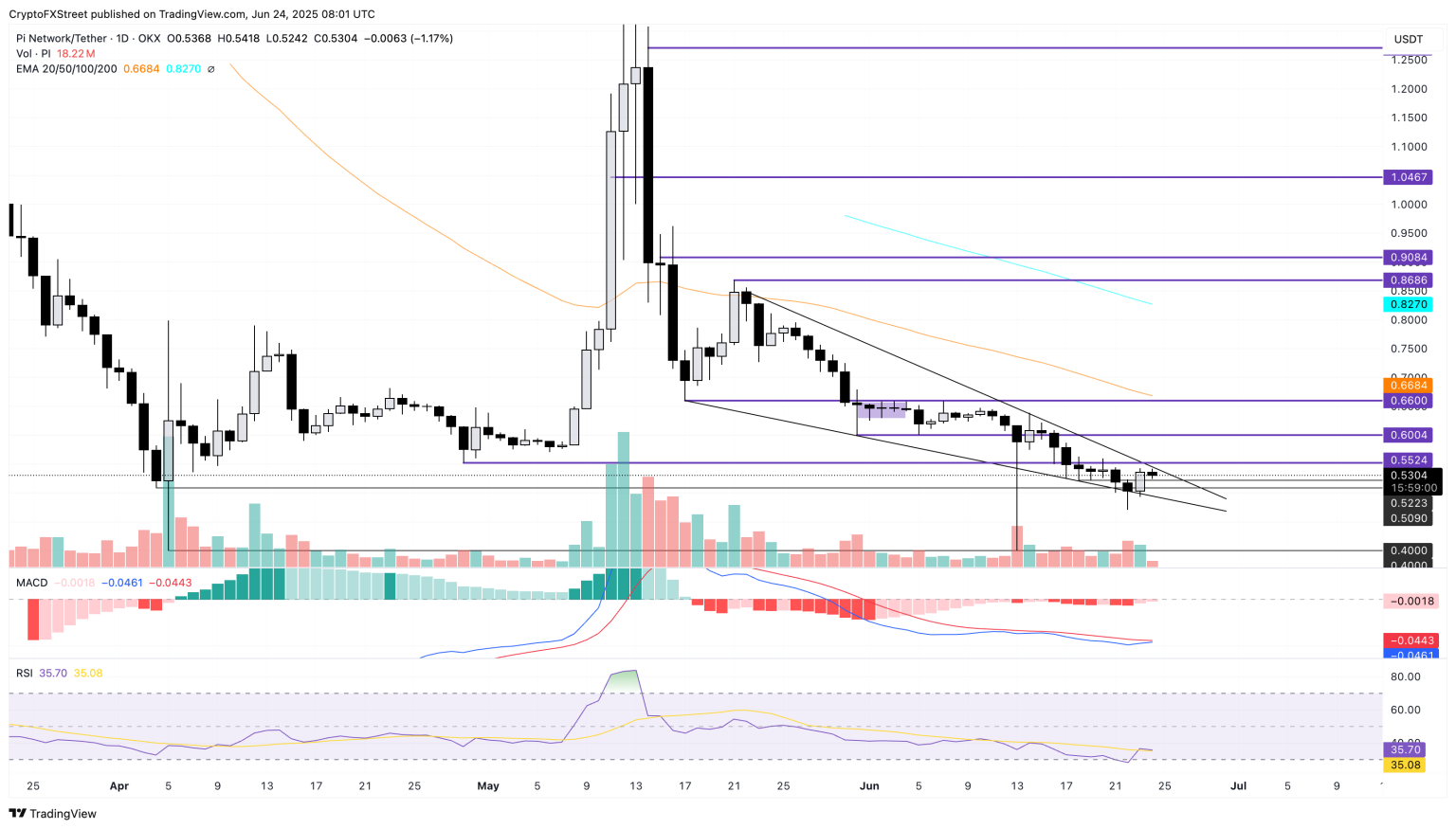
Pi Network 在周三早上报导时回升4.5%,随着攻击后的回升,Pi币已稳住在由5月17日、5月31日和6月18日的波动低点形成的关键短期支撑趋势线之上。为了重新建立看涨的回升趋势,Pi必须突破上方趋势线,收盘价高于0.55美元,这与4月29日的低点一致。在这种情况下,Pi Network 的反转反弹可能会在本周,上升至上周的高位0.60美元。现时图表指标显示MACD和信号线接近交叉,暗示潜在的趋势反转。投资者可以将交叉点上从零线上升的新一波绿色直方图视为可能的买入信号,加上相对强弱指数RSI显示,Pi币已经从看跌水平反弹,表明卖压减少。

Letture associate

MiCA is coming for DeFi vaults, but regulation will be difficult

The European Commission is exploring whether to extend the Markets in Crypto-Assets (MiCA) regulation to cover decentralized finance (DeFi) lending and borrowing, including lending vaults. These vaults, which channel billions into on-chain credit markets, present significant regulatory challenges because their decentralized structure doesn't map neatly onto existing financial frameworks. Their legal status is currently based on non-binding interpretations that they fall outside MiCA and EU fund rules. The article uses Morpho's decentralized lending protocol as an example, illustrating how responsibilities are divided among various participants (owner, curator, allocator, sentinel), making it difficult to identify a single "provider" to regulate. Experts warn that broadly categorizing "DeFi lending" could inadvertently capture vastly different structures. They argue that any regulatory approach should focus on the specific structure and control mechanisms of a vault, rather than using decentralization as a simple dividing line, and that DeFi lending may require a dedicated, carefully crafted framework distinct from traditional finance. The Commission's consultation closes on September 30, 2026. The core challenge for regulators is not just whether to regulate DeFi lending, but how to design rules that distinguish between different forms of on-chain lending and the entities that control them.

cointelegraph1 h fa

MiCA is coming for DeFi vaults, but regulation will be difficult

cointelegraph1 h fa

Grayscale Report: Financial Privacy in the AI Era, Why Zcash Should Not Be Overlooked?

Title: Grayscale Report: Financial Privacy in the AI Era – Why Zcash Should Not Be Overlooked The article argues that privacy is a fundamental, not niche, attribute of functional money. It highlights that technological shifts, like the rise of AI and stablecoins, are driving a new wave of public focus on financial privacy. Zcash, a decentralized digital currency similar to Bitcoin but with built-in privacy via zero-knowledge proofs, is positioned to address this need. Unlike transparent blockchains, Zcash offers users the option to conduct "shielded" transactions that hide sender, receiver, and amount while remaining verifiable. The report details Zcash's evolution, noting key upgrades that improved usability and security. It points to rising on-chain usage of privacy features as evidence of real demand. Currently, ZEC holds a minimal share (~0.4%) of the total crypto market cap. Grayscale suggests this reflects a market assumption that privacy is a marginal concern. The investment thesis hinges on a potential market re-evaluation: if privacy is recognized as a core monetary feature in an era of enhanced surveillance, Zcash's current valuation represents significant upside potential. Key risks discussed include regulatory challenges, historical trusted setup concerns for older pools (mitigated by newer protocols), quantum computing threats, and execution risks associated with future technical upgrades. The conclusion is that while the future scale of private digital currency is uncertain, the market currently prices in little chance of its value increasing substantially, presenting a potential opportunity for investors.

marsbit3 h fa

Grayscale Report: Financial Privacy in the AI Era, Why Zcash Should Not Be Overlooked?

marsbit3 h fa

Trading

Spot
活动图片