“白银”失色:莱特币在加密市场的沉默与挣扎

投研日志2025-05-27 tarihinde yayınlandı2025-05-27 tarihinde güncellendi

Özet

当叙事成为行业的核心驱动力,“稳健”不再是莱特币的护身符,而更像是一副枷锁。莱特币需要大胆抛弃过时的包袱,重新思考自己的核心定位。只有真正打破陈规,用技术和叙事为支撑,莱特币才有可能重获市场与社区的信任,焕发新生。

最近的行情都是meme给的,每天在链上pvp,在x上找热点,多睡1m就少赚1M,x上也开始出现A8、A9退圈宣言。但凡和meme沾上边的,不管新项目还是老项目都能让链上捕手多看一眼。曾经被认为是诈骗、无用例、纯投机的meme成为这轮周期里最瞩目的焦点,于是,很多项目方早已坐不住,纷纷开始寻求接入点,推出自己的meme项目、发行趣味代币或者干脆直接和现有的meme合作。就连一贯严肃的老牌团队也开始“放下身段”,努力蹭上meme热潮。

曾经一向低调严肃的莱特币也加入了这场狂欢,在其官方推特表示:“根据目前的市场状况,我现将自身定义为 Memecoin。”该推文一出,LTC 短时突破 83 USDT。同时,Solana链上推出的Memecoin——$LESTER,被认为是莱特币进军meme领域的首个尝试。莱特币官方推特的互动更是引爆了社区热情:不仅转发了$LESTER的合约信息,还在几天内多次展示$LESTER的logo。得益于这些动作,$LESTER的市值一度攀升至1亿美元。

然而剧情急转直下,莱特币随后声明: $LESTER 与他们无关,他们没有刻意宣传,只是有人利用这个logo 在 Solana 上创建了$LESTER。
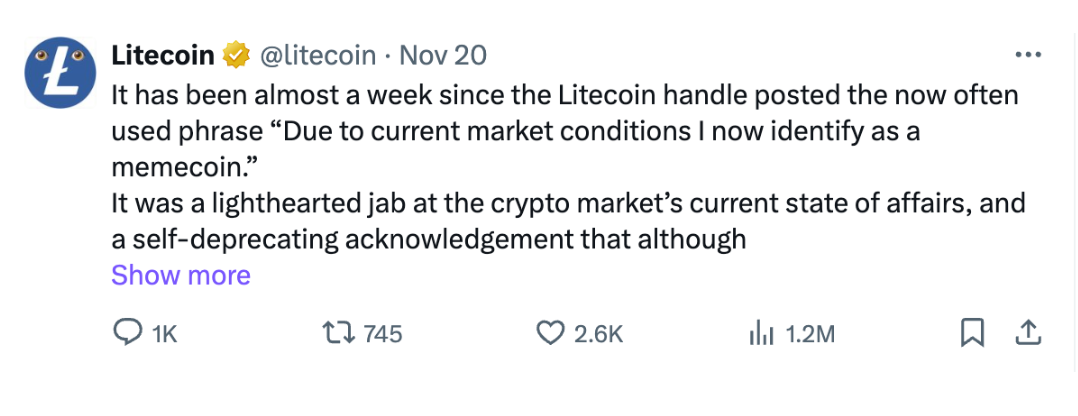
这一声明瞬间引发了社区的强烈反应。一些观点认为,莱特币在圈内的热度早已式微,正是因为蹭上meme的热度,靠$LESTER这个梗短暂地重回大众视野。而莱特币官方的态度则被批评为“既享受了meme带来的流量,又急于撇清关系、保留所谓的技术优越感”。这种“既要蹭热度,又不肯放下身段”的做法,引发了许多争议。

莱特币的困境:叙事匮乏与社区脱节

莱特币的问题并非始于$LESTER事件,而是长期积累的结果。

作为“比特币的白银”,莱特币从未摆脱这一标签的束缚,而这样的定位正变得越来越无力:

1.叙事的单薄与僵化

加密市场已经从单纯的“支付工具”叙事,转向生态建设、创新玩法的竞争。而莱特币依然停留在“快速且便宜”的框架内,缺乏吸引市场和社区的叙事张力。

2.创新能力的缺失

莱特币鲜有能与时俱进的技术突破或场景应用,难以吸引新一代用户。与之对比,许多新兴项目凭借独特的叙事、玩法或技术,迅速赢得市场目光。

3.社区的渐行渐远

社区是项目的灵魂,但莱特币多年来的表现缺乏对社区需求的深度共鸣。随着更活跃、更具吸引力的项目涌现,莱特币原有的用户基础正逐渐流失。

模因之外:莱特币的其他尝试

事实上,莱特币并非完全没有行动。去年5月,莱特币社区推出了LTC-20标准,用于支持在其链上铭刻NFT等内容。借助比特币BRC-20标准的热度,LTC-20短暂地吸引了市场注意。

这一热潮让莱特币链上交易笔数一度创下历史新高,达到576708笔,该记录是2018年1月牛市峰值附近的历史最高纪录的两倍多。也是莱特币区块链平均交易数量的五倍,此外,莱特币活跃钱包地址数也高达81.3万个,续创历史新高。

然而,这种“跟随式创新”并未真正持久,LTC-20很快消失在人们的视线中。

莱特币的这些努力虽有亮点,但始终缺乏一个长远的叙事逻辑和社区运营策略,难以持续为项目注入活力。

“白银”的时代为何褪色?

莱特币的挣扎不仅是技术问题,更在于它无法适应行业环境的变化:

1.行业需求的改变

过去的叙事强调简单的支付功能,但如今的用户更关注生态建设、创新功能以及项目的叙事张力。在这样的环境中,莱特币的定位显得单薄而无力。

2.缺乏吸引新用户的亮点

相比于那些能够持续输出热点或独特价值的项目,莱特币在创新和场景应用上显得乏善可陈。这使得它很难吸引新一代加密用户的关注。

3.过于守旧的品牌形象

作为老牌加密项目,莱特币一直强调其“稳健”和“经典”,但这种策略在如今的市场中容易被解读为保守和落后。当行业的叙事越来越灵活和多元化时,莱特币却停留在过去的辉煌中,显得与时代脱节。

老牌项目的自我救赎之路

在叙事驱动的市场中,莱特币若想重新崛起,需要从根本上改变策略:

1.重新定义叙事

“比特币白银”的定位已经过时,莱特币需要挖掘更贴合市场需求的叙事线索,将技术与情感诉求相结合。

2.激活社区力量

项目的活力来源于社区,莱特币需要通过定期活动、清晰沟通和更大胆的尝试,重新凝聚用户。

3.拥抱变化与创新

meme文化、创新玩法并非低级趣味,而是市场需求的体现。莱特币需要以开放的心态尝试新事物,学会用更生动的方式讲述自己的故事。

当叙事成为行业的核心驱动力,“稳健”不再是莱特币的护身符,而更像是一副枷锁。莱特币需要大胆抛弃过时的包袱,重新思考自己的核心定位。只有真正打破陈规,用技术和叙事为支撑,莱特币才有可能重获市场与社区的信任,焕发新生。

İlgili Okumalar

Pharos Introduces On-Chain Institutional-Grade U.S. Corporate Bond Credit, Expanding Its RealFi Asset Portfolio

Pharos Network has launched the pRNH Vault, introducing institutional-grade US corporate high-yield bond exposure to its on-chain RealFi (Real World Finance) ecosystem. Developed by the R25 protocol, the vault provides qualified users access to a tokenized portfolio of high-yield corporate debt, broadening Pharos's asset offerings beyond stablecoins and cash-equivalents. The vault's underlying asset is the NYLIM Anemoy US High Yield Corporate Bond separate account (HYB), managed by New York Life Investment Management (NYLIM) and tokenized in collaboration with Anemoy and Centrifuge. Users can deposit USDC into the vault to receive pRNH tokens, representing indirect ownership of the HYB portfolio, which targets an annualized yield of approximately 7%. The structure offers programmability and composability for on-chain financial applications. Pharos views this move as a key evolution from basic asset tokenization towards building a dynamic marketplace where institutional assets can be actively discovered, evaluated, and utilized programmatically. The pRNH Vault architecture incorporates agent-assisted functionalities for credit screening, liquidity monitoring, and on-chain operations, signaling tighter integration between real-world finance and intelligent on-chain systems. To support this vision, Pharos employs a technical stack including the SALI engine for parallel execution, modular SPNs, protocol-level compliance, ZK-KYC/AML, and native AI agent support. The network positions itself as the "value discovery layer" for the agent economy, aiming to make real-world value, smart agents, and institutional assets widely accessible. The pRNH launch adds a core credit asset to this ecosystem and serves as a practical test case for its infrastructure.

marsbit5 dk önce

Pharos Introduces On-Chain Institutional-Grade U.S. Corporate Bond Credit, Expanding Its RealFi Asset Portfolio

marsbit5 dk önce

Deposits in RWA Tripled — Traditional Finance Chooses Blockchain

The decentralized finance (DeFi) sector is undergoing a structural shift, with tokenized real-world assets (RWA) taking center stage. According to a joint report by CoinShares and Token Terminal, deposits in RWA lending and trading platforms tripled year-over-year, reaching $7.4 billion in Q2 2026. This explosive growth starkly contrasts with a 15% decline in overall DeFi deposits and a nearly 70% drop in DEX trading volumes over the same period. Analysts highlight this divergence as evidence of a fundamental shift: demand is driven not by speculation but by the genuine utility of blockchain for traditional finance. The primary drivers are tokenized U.S. Treasury bonds and multi-strategy funds, like BlackRock's BUIDL, which investors use as reliable collateral to secure stablecoin loans while earning yield. The Ethereum network hosts about 70% of all RWA collateral. Beyond government bonds, the tokenization of equities and commodity derivatives is advancing. The tokenized equity market is estimated at $2.2 billion, while perpetual futures on assets like oil and the S&P 500 have seen explosive growth on platforms like TradeXYZ. Standard Chartered projects the total tokenized asset market could reach $4 trillion by 2028. This growth signals that RWA has moved beyond crypto market cycles, offering tangible value, deep liquidity, and 24/7 global access, marking a new phase of institutional scaling for blockchain-based finance.

cryptonews.ru40 dk önce

Deposits in RWA Tripled — Traditional Finance Chooses Blockchain

cryptonews.ru40 dk önce

İşlemler

Spot
活动图片