US Senator Says He's Bullish on Bitcoin Because It's Decentralized, Uncontrollable
newsbtcPublished on 2022-02-27Last updated on 2022-02-27

Abstract

We cannot ‘freeze’ our users’ assets. We cannot prevent them from being moved. We do not have knowledge of ‘the existence, nature, value and location’ of our users’ assets.

US Senator Says He's Bullish on Bitcoin Because It's Decentralized, Uncontrollable

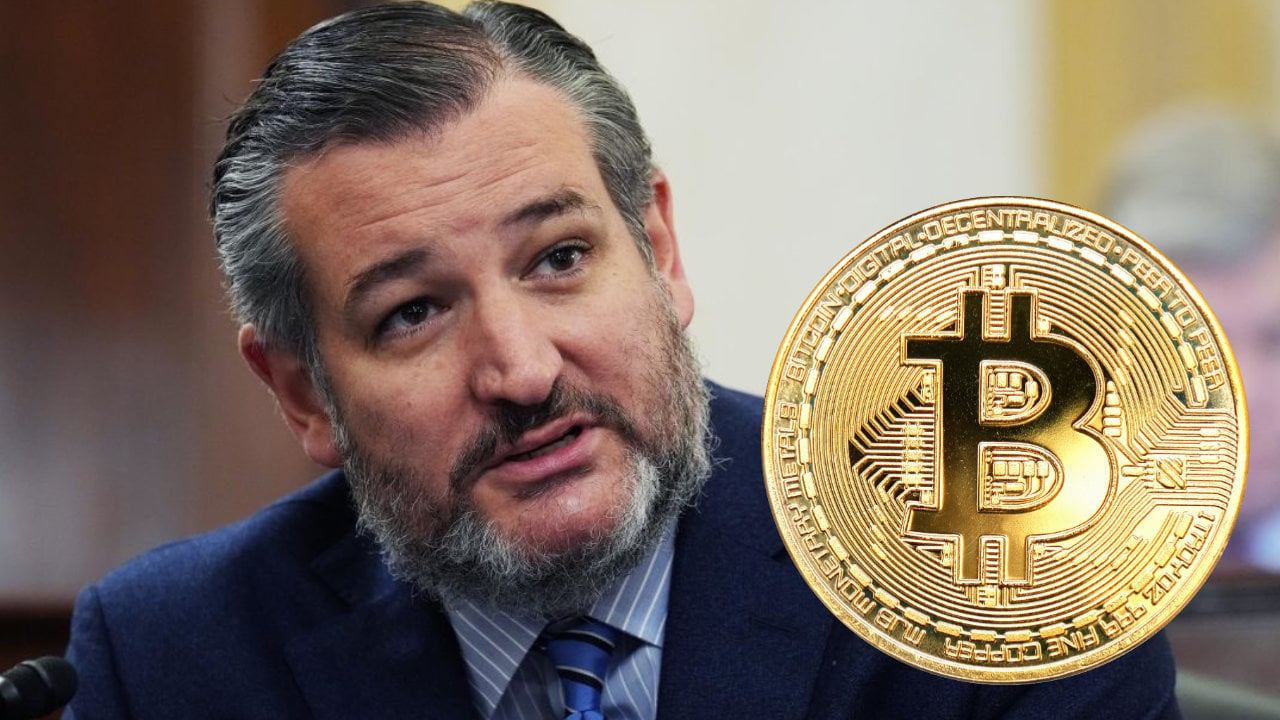
US Senator Ted Cruz Says He's Bullish on Bitcoin Because It's Decentralized and Uncontrollable

U.S. Senator Ted Cruz says one of the reasons he is so bullish on bitcoin is because it is decentralized and not controllable. He added that “China recently banned bitcoin because they can’t control it, which is the exact same reason Elizabeth Warren hates bitcoin.”

US Senator Bullish on Bitcoin

U.S. Senator Ted Cruz from Texas spoke favorably about bitcoin at the Conservative Political Action Conference (CPAC) Thursday. Launched in 1974, CPAC “is the largest and most influential gathering of conservatives in the world,” its website describes.

During his speech at the event, the senator said:

One of the reasons why I’m so bullish on crypto, on bitcoin, is because it is decentralized and not controllable.

“Let me give a fantastic example,” he continued. “So Justin Trudeau said I don’t like me some truckers, so we are going to freeze your assets. So the court went to try to freeze the crypto that was being given to the truckers.”

Senator Cruz proceeded to read aloud a letter from a bitcoin wallet company called Nunchuck to the Ontario Superior Court Justice. The company received an order from the court on Feb. 18 to freeze and disclose information about the assets involved in the Freedom Convoy movement.

In the letter to the court, the Nunchuck team explained that it is a “self custodial, collaborative-multisig Bitcoin wallet.” Citing that it is “a software provider, not a custodial financial intermediary,” the company told the court:

We cannot ‘freeze’ our users’ assets. We cannot prevent them from being moved. We do not have knowledge of ‘the existence, nature, value and location’ of our users’ assets. This is by design.

The letter ends with the company urging the court, “Please look up how self custody and private keys work.”

As he put the letter back in his jacket pocket, Senator Cruz exclaimed, “That is spectacular.”

Senator Cruz then talked about control, stating:

China recently banned bitcoin because they can’t control it, which is the exact same reason Elizabeth Warren hates bitcoin.

“The Chinese Communists and Elizabeth Warren, they both want to control you, your assets, your savings, your speech, your life, your children — every decision — they want to control, and so we need to break up the means of controlling the citizenry,” he emphasized.

The senator from Texas is a bitcoin holder. In February, he declared that he bought BTC worth between $15,001 and $50,000.

Senator Warren has repeatedly bashed bitcoin, citing environmental issues and investor protection. She has urged the U.S. Securities and Exchange Commission (SEC) to use “full authority” to regulate crypto trading.


Related Reads

Tom Lee充值信仰:加密春天已至,ETH会涨到25万美元

Tom Lee, Chairman of BitMine (NYSE: BMNR), asserts that "Crypto Spring" has arrived and predicts ETH could reach $250,000. In his speech at "Proof of Talk 2026," he outlines five macro catalysts: the end of the Iran war reducing oil-price inflation, the likely passing of pro-crypto US legislation (the Clarity Act), a supportive White House, a crypto-friendly new Fed Chair (Kevin Warsh), and strong demographic-driven equity market growth. Lee argues that two key trends will drive ETH's value: Agentic AI/robotics, which will require blockchain for control and payments, and the massive tokenization of real-world assets (potentially a $300 trillion market). He believes Ethereum is poised to become a future monetary unit, with its price closely linked to software stocks that are already benefiting from AI. He notes the evolving role of the Ethereum Foundation, whose ETH holdings have shrunk to 0.1% of supply. He positions public treasury companies like BitMine—which holds 4.47% of ETH's circulating supply—as the new key ecosystem funders and validators. Finally, Lee promotes BitMine as a leveraged play on ETH's rise. He highlights BitMine's investments in AI/identity (via Eightco/ORBS), its massive ETH staking operation generating ~$1M daily, its stake in content creator MrBeast, and its upcoming inclusion in the Russell 1000 index, which could drive significant institutional buying. He concludes that if ETH reaches $25,000, BitMine's stock could rise dramatically from its current ~$18 price.

Odaily星球日报10m ago

Tom Lee充值信仰:加密春天已至,ETH会涨到25万美元

Odaily星球日报10m ago

为什么我依然看好 ETH ?

Despite widespread pessimism in crypto circles and ETH's disappointing price performance over the past five years—lagging behind Bitcoin and traditional markets—the author remains highly bullish on Ethereum's future. The article argues that extended consolidation periods, like the one ETH is experiencing, are common precursors to major growth for transformative assets, citing historical examples like Amazon, NVIDIA, Apple, and Microsoft. Crucially, Ethereum's fundamentals are stronger than ever: network activity is at all-time highs with record transaction volume and significantly lower fees, address growth is steady, and over 32% of ETH supply is now staked, securing the network. The core bullish thesis is that Ethereum is poised to become the foundational settlement layer for the global tokenization of real-world assets (RWA), a market worth hundreds of trillions of dollars. Early data supports this: Ethereum already dominates the stablecoin market (~54% share) and over 53% of existing non-stablecoin RWA value resides on its network. This current RWA growth phase is compared to the early days of DeFi, which eventually catalyzed a massive ETH price surge. The potential passage of pro-crypto legislation like "The Clarity Act" could further accelerate this trend. In conclusion, while sentiment is negative, Ethereum's proven security, reliability, and burgeoning role in asset tokenization position it to capture immense value as the world's financial infrastructure migrates on-chain.

链捕手26m ago

为什么我依然看好 ETH ?

链捕手26m ago

Trading

Spot
Futures

Hot Articles

What is $BITCOIN

DIGITAL GOLD ($BITCOIN): A Comprehensive Analysis Introduction to DIGITAL GOLD ($BITCOIN) DIGITAL GOLD ($BITCOIN) is a blockchain-based project operating on the Solana network, which aims to combine the characteristics of traditional precious metals with the innovation of decentralized technologies. While it shares a name with Bitcoin, often referred to as “digital gold” due to its perception as a store of value, DIGITAL GOLD is a separate token designed to create a unique ecosystem within the Web3 landscape. Its goal is to position itself as a viable alternative digital asset, although specifics regarding its applications and functionalities are still developing. What is DIGITAL GOLD ($BITCOIN)? DIGITAL GOLD ($BITCOIN) is a cryptocurrency token explicitly designed for use on the Solana blockchain. In contrast to Bitcoin, which provides a widely recognized value storage role, this token appears to focus on broader applications and characteristics. Notable aspects include: Blockchain Infrastructure: The token is built on the Solana blockchain, known for its capacity to handle high-speed and low-cost transactions. Supply Dynamics: DIGITAL GOLD has a maximum supply capped at 100 quadrillion tokens (100P $BITCOIN), although details regarding its circulating supply are currently undisclosed. Utility: While precise functionalities are not explicitly outlined, there are indications that the token could be utilized for various applications, potentially involving decentralized applications (dApps) or asset tokenization strategies. Who is the Creator of DIGITAL GOLD ($BITCOIN)? At present, the identity of the creators and development team behind DIGITAL GOLD ($BITCOIN) remains unknown. This situation is typical among many innovative projects within the blockchain space, particularly those aligning with decentralized finance and meme coin phenomena. While such anonymity may foster a community-driven culture, it intensifies concerns about governance and accountability. Who are the Investors of DIGITAL GOLD ($BITCOIN)? The available information indicates that DIGITAL GOLD ($BITCOIN) does not have any known institutional backers or prominent venture capital investments. The project seems to operate on a peer-to-peer model focused on community support and adoption rather than traditional funding routes. Its activity and liquidity are primarily situated on decentralized exchanges (DEXs), such as PumpSwap, rather than established centralized trading platforms, further highlighting its grassroots approach. How DIGITAL GOLD ($BITCOIN) Works The operational mechanics of DIGITAL GOLD ($BITCOIN) can be elaborated on based on its blockchain design and network attributes: Consensus Mechanism: By leveraging Solana’s unique proof-of-history (PoH) combined with a proof-of-stake (PoS) model, the project ensures efficient transaction validation contributing to the network's high performance. Tokenomics: While specific deflationary mechanisms have not been extensively detailed, the vast maximum token supply implies that it may cater to microtransactions or niche use cases that are still to be defined. Interoperability: There exists the potential for integration with Solana’s broader ecosystem, including various decentralized finance (DeFi) platforms. However, the details regarding specific integrations remain unspecified. Timeline of Key Events Here is a timeline that highlights significant milestones concerning DIGITAL GOLD ($BITCOIN): 2023: The initial deployment of the token occurs on the Solana blockchain, marked by its contract address. 2024: DIGITAL GOLD gains visibility as it becomes available for trading on decentralized exchanges like PumpSwap, allowing users to trade it against SOL. 2025: The project witnesses sporadic trading activity and potential interest in community-led engagements, although no noteworthy partnerships or technical advancements have been documented as of yet. Critical Analysis Strengths Scalability: The underlying Solana infrastructure supports high transaction volumes, which could enhance the utility of $BITCOIN in various transaction scenarios. Accessibility: The potential low trading price per token could attract retail investors, facilitating wider participation due to fractional ownership opportunities. Risks Lack of Transparency: The absence of publicly known backers, developers, or an audit process may yield skepticism regarding the project's sustainability and trustworthiness. Market Volatility: The trading activity is heavily reliant on speculative behavior, which can result in significant price volatility and uncertainty for investors. Conclusion DIGITAL GOLD ($BITCOIN) emerges as an intriguing yet ambiguous project within the rapidly evolving Solana ecosystem. While it attempts to leverage the “digital gold” narrative, its departure from Bitcoin's established role as a store of value underscores the need for a clearer differentiation of its intended utility and governance structure. Future acceptance and adoption will likely depend on addressing the current opacity and defining its operational and economic strategies more explicitly. Note: This report encompasses synthesised information available as of October 2023, and developments may have transpired beyond the research period.

363 Total ViewsPublished 2025.05.13Updated 2025.05.13

What is $BITCOIN

Discussions

Welcome to the HTX Community. Here, you can stay informed about the latest platform developments and gain access to professional market insights. Users' opinions on the price of BTC (BTC) are presented below.

活动图片