Is the Metaverse Dead? On-Chain Data Tells a Different Story

insights.glassnode2025-03-09 tarihinde yayınlandı2025-04-07 tarihinde güncellendi

This is the third article in our series exploring Glassnode’s Cost Basis Distribution (CBD) metric and its practical applications. Previously, we demonstrated how to apply CBD insights across assets and how to identify capitulation events on a CBD heatmap.

For a deeper dive into the methodology and calculations behind this metric, refer to our detailed research piece here.

This week, we introduce another use-case-specific exploration of CBD - analyzing Metaverse tokens. Despite declining prices and fading hype, on-chain data suggests that major investors remain active, steadily accumulating and lowering their cost basis.

Does this signal a long-term bet on a Metaverse resurgence? Let’s first recap how to analyze and interpret CBD data and then apply that knowledge to the latest trends in Metaverse.

Understanding Cost Basis Distribution

Cost Basis Distribution (CBD) tracks where token supply is concentrated based on the average cost basis of holders. By analyzing shifts in supply distribution, we can identify investor behavior - whether they are accumulating, capitulating, or redistributing their holdings.

How to Read CBD Heatmaps:

  • Color Intensity (Supply Distribution)
    A warmer color (red/yellow) indicates a high concentration of supply at a given price range, while cooler colors (blue/green) signal lower supply.
  • Vertical Axis (Cost Basis)
    Each horizontal slice represents a price range where a portion of supply last moved, showing how holders adjust their cost basis over time.

Tracking these changes helps us pinpoint potential market turning points, where accumulation or distribution trends may signal future price movements.

Metaverse Tokens: What Cost Basis Distribution Data Reveals

In this analysis, we focus on Metaverse tokens - The Sandbox (SAND), Decentraland (MANA), and Axie Infinity (AXS) - which were among the most prominent assets during the Metaverse boom of 2021. While the hype surrounding virtual worlds has faded, we shift our focus away from user activity and instead examine investor behavior using Cost Basis Distribution (CBD) data.

Rather than evaluating adoption metrics or in-game activity, we analyze how token holders have adjusted their positions over time. Are they capitulating, holding steady, or accumulating at lower prices? By tracking supply shifts at different price levels, we gain insights into how investor conviction has evolved in this post-hype phase and whether accumulation trends hint at long-term confidence in these projects.

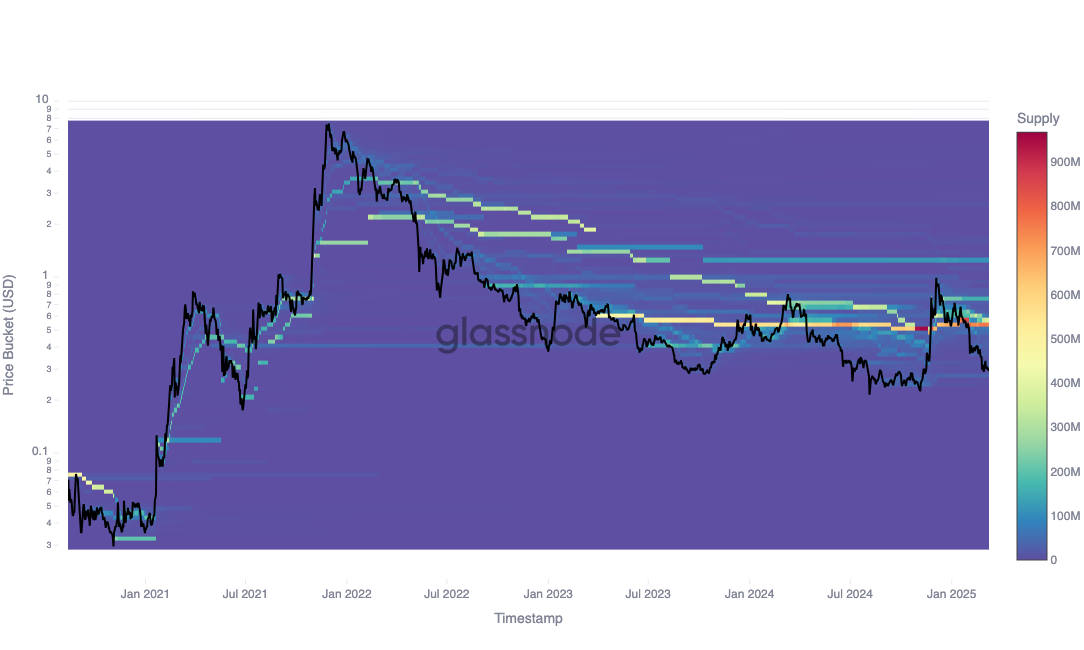
The Sandbox (SAND): Steady Accumulation in a Bear Market

Despite price volatility, on-chain data shows continued accumulation. Holders with strong conviction are steadily increasing their positions, reinforcing their belief in the project's long-term potential.
💡
Key Insight: Accumulation persists across key price levels, suggesting confidence despite bearish conditions.
image.png
CBD shows SAND investors remained engaged throughout long-term investment horizons
🔗
View Cost Basis Distribution Data for SAND across multiple timeframes in Glassnode Studio.

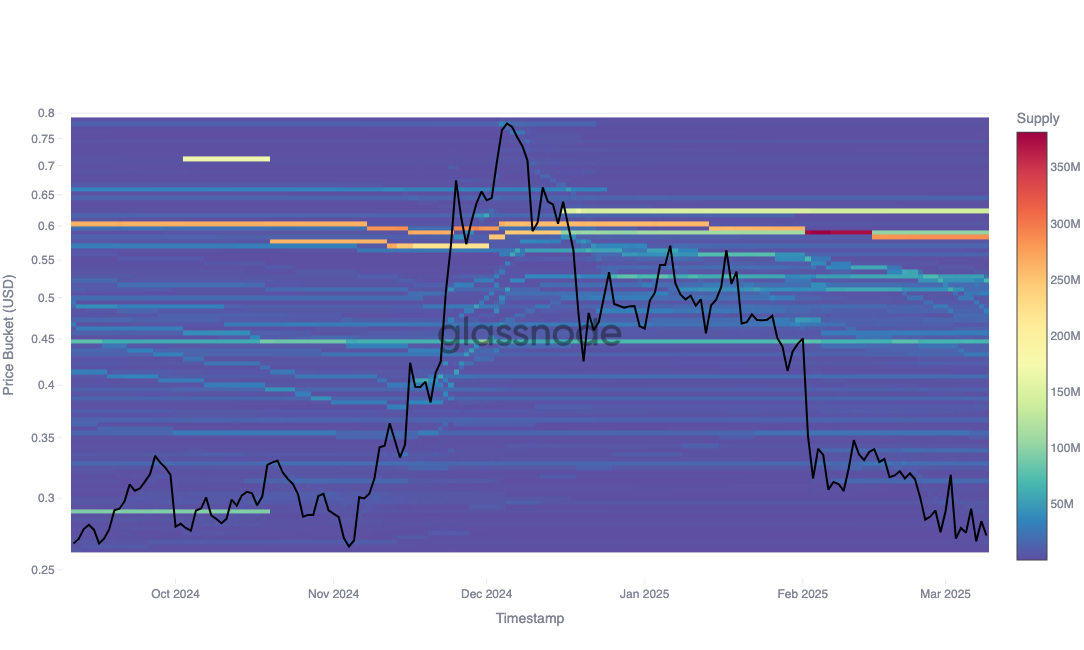
Decentraland (MANA): Buying the Dip

A significant supply concentration has formed around $0.60, reflecting increased buying activity following a price drop. This suggests that investors are viewing lower prices as buying opportunities, rather than signs of further decline.
💡
Key Insight: Market participants are actively accumulating at perceived value zones.
image.png
Notice supply concentration at around $0.6 increasing in Feb 2025 despite the price drop
🔗
View Cost Basis Distribution Data for MANA across multiple timeframes in Glassnode Studio.

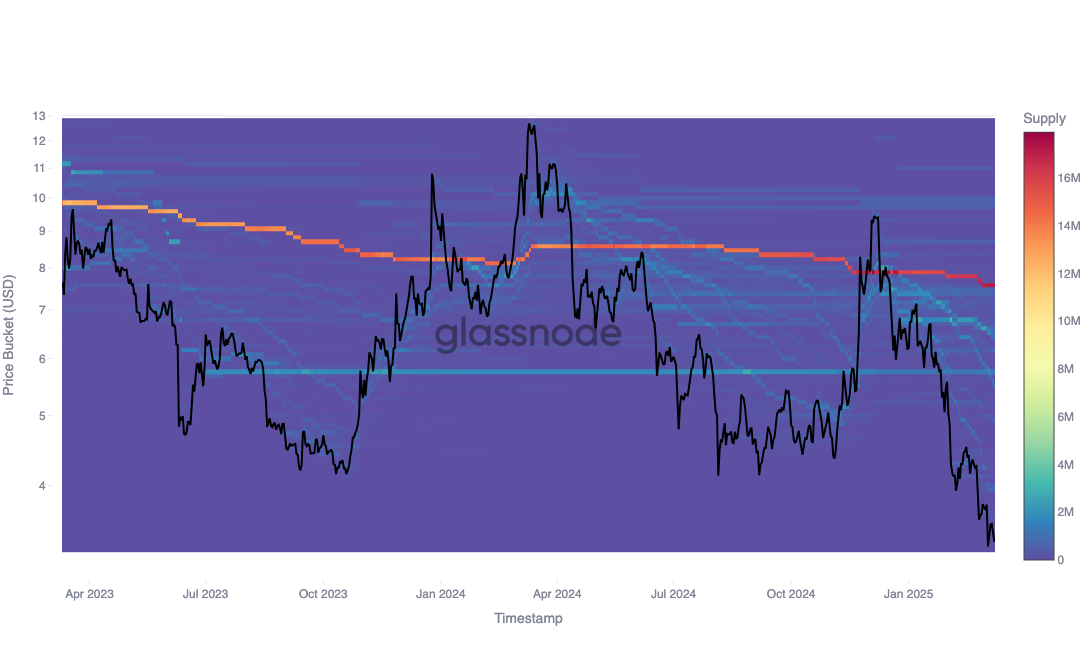
Axie Infinity (AXS): Long-Term Conviction Remains

Despite a sustained downtrend, on-chain data shows a progressive build-up of large positions. This pattern suggests that certain investors remain highly confident in the future of Axie Infinity.
💡
Key Insight: Persistent accumulation hints at long-term belief in the project’s fundamentals.
image.png
Notice consistent accumulation over the past two years showing low sensitivity to price action
🔗
View Cost Basis Distribution Data for AXS across multiple timeframes in Glassnode Studio.

Is Metaverse Resurgence Ahead?

The speculative hype around the Metaverse may have faded, but on-chain activity suggests otherwise. The continued accumulation across major Metaverse tokens indicates that many investors see these projects as undervalued opportunities rather than failures.

Is this setting the stage for a future recovery? While price action remains uncertain, the data suggests that conviction remains strong among key market participants - and they are positioning accordingly.


İlgili Okumalar

Conquering is easy, governing is hard: Polymarket must bow to regulations to plant its flag globally

Polymarket, a decentralized prediction market platform, faces significant regulatory hurdles in its global expansion. Its "permissionless" model, which bypasses traditional identity and financial controls, has led to widespread crackdowns. India recently blocked the site, categorizing it as illegal online gambling under new 2025 laws. Brazil also banned it and similar platforms, though it simultaneously authorized a regulated, investor-only version on its national exchange. Across Europe, countries like France, Portugal, and the Netherlands are enforcing bans based on existing gambling and financial regulations. To enter key markets, Polymarket is adopting a pragmatic, compliant approach. In the U.S., it paid a $1.12 million fine, acquired a CFTC-licensed exchange, and now operates a regulated, KYC-mandatory platform for American users. It also secured a major investment from Intercontinental Exchange (ICE), which will distribute its prediction data to institutional investors. In Japan, where gambling laws are strict, Polymarket has begun a long-term lobbying effort, aiming for legalization by 2030 through building institutional partnerships and community presence. Despite these challenges, the prediction market industry is booming, with global volume projected to surge from $51 billion to potentially $1 trillion by 2030. Polymarket's core dilemma remains: adapting its decentralized, anonymous model to fit within sovereign regulatory frameworks focused on licensing, consumer protection, and anti-money laundering rules. Its survival in each market depends on navigating this complex political and legal landscape.

marsbit3 dk önce

Conquering is easy, governing is hard: Polymarket must bow to regulations to plant its flag globally

marsbit3 dk önce

It's Easier to Conquer than to Govern: Polymarket Must Bend to Every Rule to Plant Its Flag Globally

Polymarket, a decentralized prediction market platform, is facing significant regulatory hurdles as it expands globally, illustrating the tension between permissionless, crypto-native platforms and national legal frameworks. The platform, which allows users to bet on event outcomes, was recently blocked in India under new online gambling laws and faces similar outright bans in Brazil and Ukraine, the latter citing moral objections to wagering on active war events. In Europe, countries like France, the Netherlands, and the UK are restricting access by enforcing existing gambling and financial derivatives regulations, forcing Polymarket to geo-block users or operate in view-only modes. To navigate this complex landscape, Polymarket is adopting a market-by-market, compliant strategy. In the U.S., it paid a $1.4 million CFTC fine, acquired a licensed exchange (QCEX) for $112 million, and now operates a regulated U.S. entity with strict KYC, abandoning anonymity. It also secured a major investment from Intercontinental Exchange (ICE), which will distribute its prediction data to institutional investors. In Japan, a high-potential market, it has begun a long-term lobbying effort aiming for legalization by 2030, acknowledging the country's strict anti-gambling laws and slow regulatory processes. The article concludes that while the global prediction market is growing rapidly—projected to reach $2.4 trillion by 2030—Polymarket's core challenge is transforming its decentralized model to fit sovereign regulatory systems built on licensing, consumer protection, and anti-money laundering rules. Its survival depends on proving its legitimacy in each jurisdiction.

链捕手8 dk önce

It's Easier to Conquer than to Govern: Polymarket Must Bend to Every Rule to Plant Its Flag Globally

链捕手8 dk önce

İşlemler

Spot
Futures
活动图片