Майнинговая компания Bitfarms получила кредит на сумму до $300 млн от Macquarie

cryptonews.ruPubblicato 2024-06-03Pubblicato ultima volta 2025-04-03

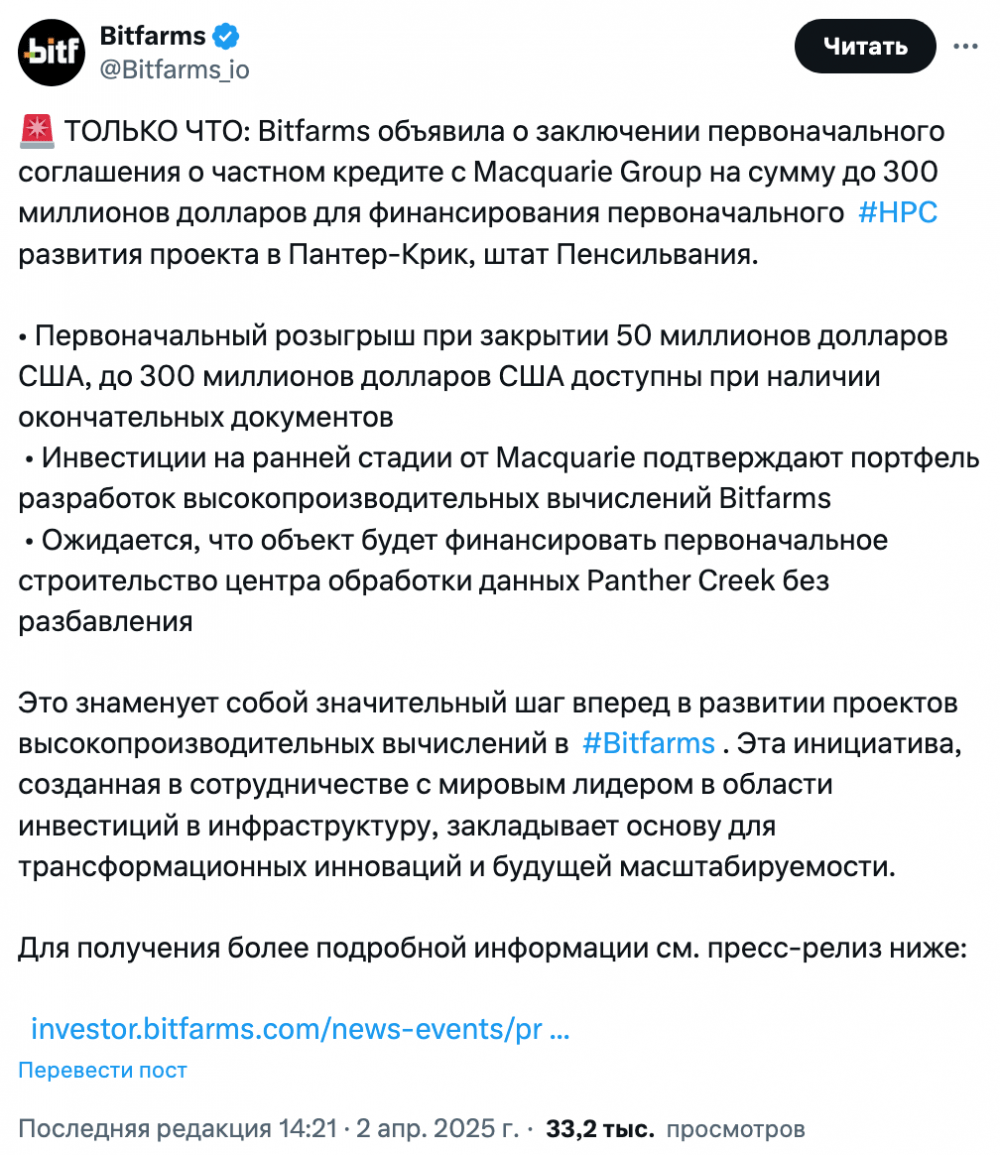
Bitfarms, международная компания компьютерной инфраструктуры, известная своими предприятиями по майнингу биткоинов, заключила кредитное соглашение на сумму 300 млн долларов с Macquarie Group для финансирования разработки своих центров обработки данных высокопроизводительных вычислений (HPC).

Согласно объявлению от 2 апреля, частная кредитная линия Macquarie предоставит 50 млн долларов в качестве первоначального финансирования проекта центра обработки данных Panther Creek компании Bitfarms в Пенсильвании.

Оставшиеся 250 млн долларов будут выданы после того, как Bitfarms достигнет «определенных этапов развития на своем объекте Panther Creek», говорится в объявлении.

После разработки Panther Creek будет иметь мощность почти 500 мегаватт, работающую от нескольких источников энергии.

«Panther Creek будет востребован арендаторами HPC после начала строительства проекта», — сказал Джошуа Стивенс, заместитель директора Macquarie Group.

Источник: Bitfarms

Проект реализуется в то время, когда приложения ИИ подпитывают растущий спрос на новые источники вычислительной мощности и емкости для хранения данных. Майнеры биткойнов спешат заполнить пустоту — и обеспечить себе надежные источники дохода в условиях после халвинга.

Однако в своем недавнем квартальном отчете Bitfarms раскрыла, что она продолжает сталкиваться с «нормативными проблемами при расширении своих энергетических мощностей», а сроки одобрения варьируются от 12 до 36 месяцев.

В то же время Bitfarms ожидает, что ее приобретение Stronghold Digital Mining за 125 миллионов долларов выполнит большую часть тяжелой работы по предоставлению дополнительных мощностей, сообщил инвесторам генеральный директор Бен Ганьон.

Майнеры ходлят на фоне давления на отрасль

Bitfarms добыла 654 биткоина в последнем квартале 2024 года при средней полной стоимости $60,800.

Как и другие майнеры, Bitfarms решила сохранить значительную часть добытых биткоинов. Данные отрасли показывают, что в настоящее время на балансе компании находится 1,152 BTC, что ставит ее в один ряд с 25 крупнейшими инвесторами в публично торгуемые биткоины.

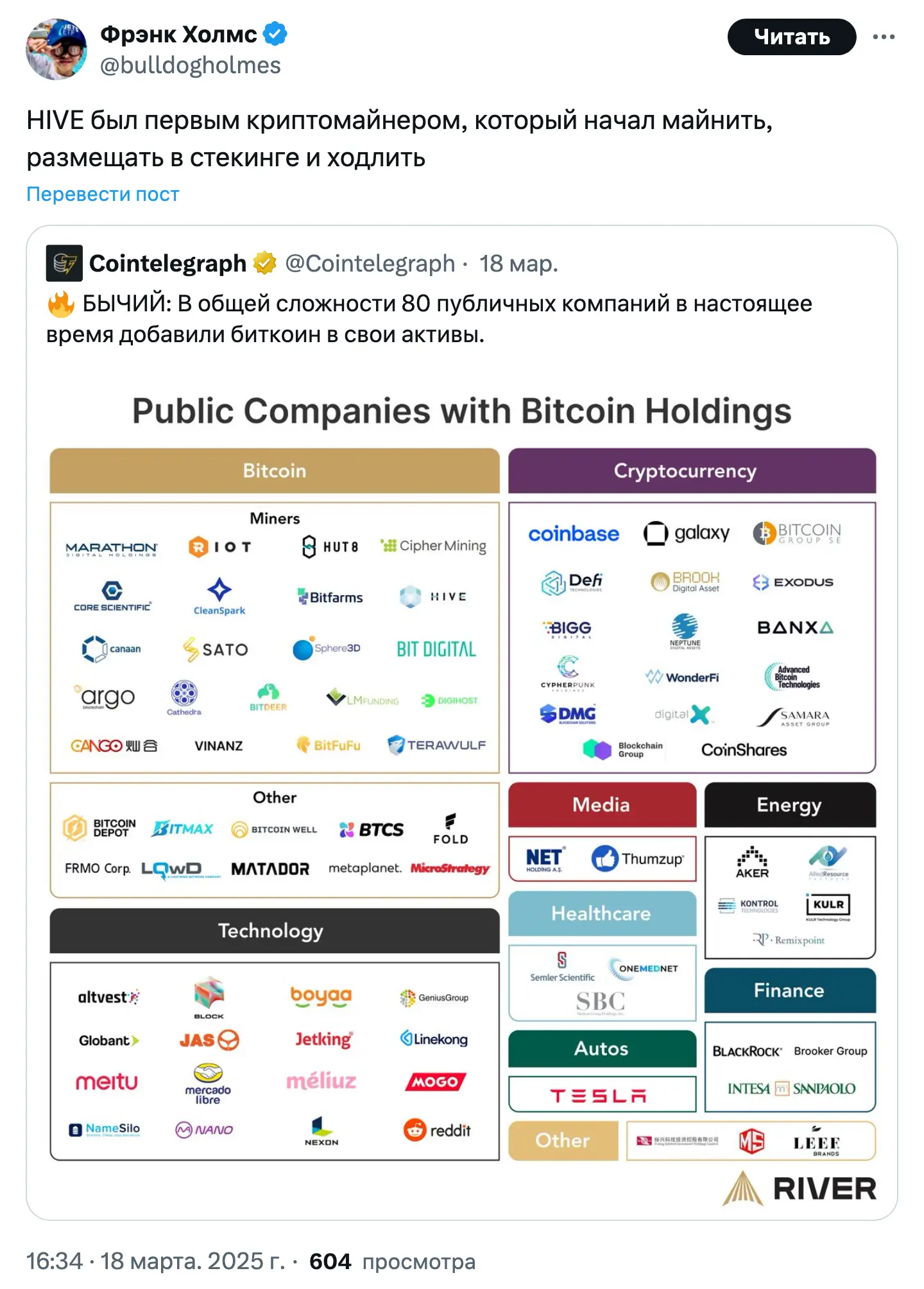
Такие майнеры, как Hive Digital, выбрали долгосрочную стратегию хранения или «hodl» биткоинов, чтобы укрепить свой баланс. Биткоин-активы компании выросли до 2,620 BTC.

Тем временем MARA Holdings накопила 46,374 BTC и объявила о планах размещения акций на $2 млрд для приобретения большего количества биткоинов.

Источник: Фрэнк Холмс.

Как и Bitfarms, Hive Digital, Core Scientific, Hut8 и Bit Digital также сделали стратегический поворот в сторону ИИ и HPC.

Руководители Hive ранее сообщили, что компания перепрофилировала часть своих графических процессоров Nvidia для таких задач. Они заявили, что приложения ИИ могут приносить более 2 долларов в час дохода по сравнению с всего лишь 0,12 доллара в час для майнинга криптовалют.


Letture associate

A Decade of Change: The Demise of Crypto Startups

"The Decade-Long Transformation: The Demise of Crypto Startups" The article traces the dramatic evolution of the cryptocurrency industry from its anarchic beginnings to its current highly regulated and institutionalized state. In the early days (circa 2017), launching a crypto startup was remarkably simple: a whitepaper, a GitHub repository, and a Telegram group could attract thousands of retail investors via an Initial Coin Offering (ICO). Founders operated anonymously with near-zero regulatory and financial barriers, enabling rapid, global innovation but also widespread fraud. By 2026, the landscape is fundamentally different. To operate in major markets like the US, EU, and Asia, crypto businesses must now navigate a complex web of regulations akin to traditional finance. Compliance costs are prohibitive: estimates for a US multi-state operation range from $750,000 to $1.2 million in the first three years, with annual costs exceeding $2 million thereafter. Regulations like MiCA in the EU and New York's BitLicense have created high capital and operational hurdles that act as barriers to entry. Simultaneously, venture capital investment has shifted dramatically. Following the collapses of Terra and FTX, funding has concentrated in later-stage, established companies, creating a "barbell market." Early-stage and seed funding has shrunk significantly, while mega-funds like Andreessen Horowitz's $15 billion pool dominate. Most capital now flows to trading platforms, lending infrastructure, and B2B services. This environment favors mergers and acquisitions as the primary path for growth. Companies like Coinbase and Ripple are acquiring firms like Deribit and Hidden Road not for their technology, but for their licenses, banking relationships, and institutional trust—assets far more valuable than code. Distribution channels, compliance, and brand reputation have become the new moats, overshadowing pure technical innovation. The industry's maturation brings benefits: reduced scams, increased institutional participation, and clearer regulatory frameworks. However, it comes at a cost. The low-barrier, experimental ethos that defined crypto's first decade is fading. Entrepreneurs without substantial capital, pre-existing licenses, or institutional connections face immense challenges. Funding for exploratory fields like decentralized social media or novel governance models is drying up. Ultimately, the crypto industry is replicating the consolidation pattern seen in banking and tech after the 2008 financial crisis. While this brings stability and legitimacy, it raises a critical question: in this new, resource-intensive reality, is there still room for the disruptive, from-scratch innovation that gave birth to the sector?

Foresight News33 min fa

A Decade of Change: The Demise of Crypto Startups

Foresight News33 min fa

Trading

Spot
活动图片