SEC Rules Bitcoin Mining Activities Are Not Securities Under US Law

bitcoinist2025-03-21 tarihinde yayınlandı2025-03-21 tarihinde güncellendi

Özet

The US Securities and Exchange Commission (SEC) has clarified its stance on proof-of-work (PoW) mining, ruling that Bitcoin (BTC) mining...

Trusted Editorial content, reviewed by leading industry experts and seasoned editors. Ad Disclosure

The US Securities and Exchange Commission (SEC) has clarified its stance on proof-of-work (PoW) mining, ruling that Bitcoin (BTC) mining activities do not fall under the definition of securities trading as per US law. 

This long-awaited statement provides essential clarity for crypto miners and the broader blockchain community, confirming that mining operations on public, permissionless networks are not subject to securities regulations.

A New Era For Bitcoin And Dogecoin Miners

The SEC’s decision is expected to have substantial implications for leading cryptocurrencies like Bitcoin and Dogecoin (DOGE), both of which rely on the PoW consensus mechanism to validate transactions and add new blocks to their respective blockchains.

In a statement issued on Thursday, the SEC’s Division of Corporation Finance addressed concerns regarding “Protocol Mining,” concluding that these activities do not involve the “offer and sale of securities” as defined under the Securities Act of 1933.

“It is the Division’s view that ‘Mining Activities’ do not involve the offer and sale of securities within the meaning of Section 2(a)(1) of the Securities Act and Section 3(a)(10) of the Securities Exchange Act of 1934,” the SEC noted. 

This determination means that individual miners and mining pools engaged in these activities are not required to register transactions with the Commission under the Securities Act, nor do they need to fall within any exemptions from registration.

Trump Era Regulations

The SEC’s ruling is particularly important for miners who invest significant resources into computational power and energy costs to secure blockchain networks. 

The decision allows both solo miners and mining pools—where several miners combine their resources to increase their chances of earning rewards—to continue their operations without the burden of regulatory uncertainty.

While the SEC did not specify particular blockchains in its statement, the ruling effectively applies to major PoW networks like Bitcoin and Dogecoin. 

The Commodity Futures Trading Commission (CFTC) has previously classified these assets as commodities rather than securities, further solidifying the regulatory landscape for these cryptocurrencies.

This clarification comes amidst a shift in the regulatory environment under US President Donald Trump, who has positioned himself as a pro-crypto leader. 

Trump’s administration has aimed to make the US a global hub for blockchain and digital assets, establishing the Council of Advisers on Digital Assets to develop industry-friendly regulations. 

The SEC’s confirmation that PoW mining does not constitute securities dealing may bolster confidence among investors and miners alike, signaling a move towards clearer and more favorable regulations in the cryptocurrency space.

Bitcoin
The daily chart shows Bitcoin’s price trending downwards. Source: BTCUSDT on TradingView.com

At the time of writing, Bitcoin trades at $83,875, recording losses of up to 13% in the monthly time frame. 

Featured image from Shutterstock chart from TradingView.com 

Editorial Process for bitcoinist is centered on delivering thoroughly researched, accurate, and unbiased content. We uphold strict sourcing standards, and each page undergoes diligent review by our team of top technology experts and seasoned editors. This process ensures the integrity, relevance, and value of our content for our readers.

Ronaldo is a seasoned crypto enthusiast with over four years of experience in the field. He is passionate about exploring the vast and dynamic world of decentralized finance (DeFi) and its practical applications for achieving economic sovereignty. Ronaldo is constantly seeking to expand his knowledge and expertise in the DeFi space, as he believes it holds tremendous potential for transforming the traditional financial landscape.

İlgili Okumalar

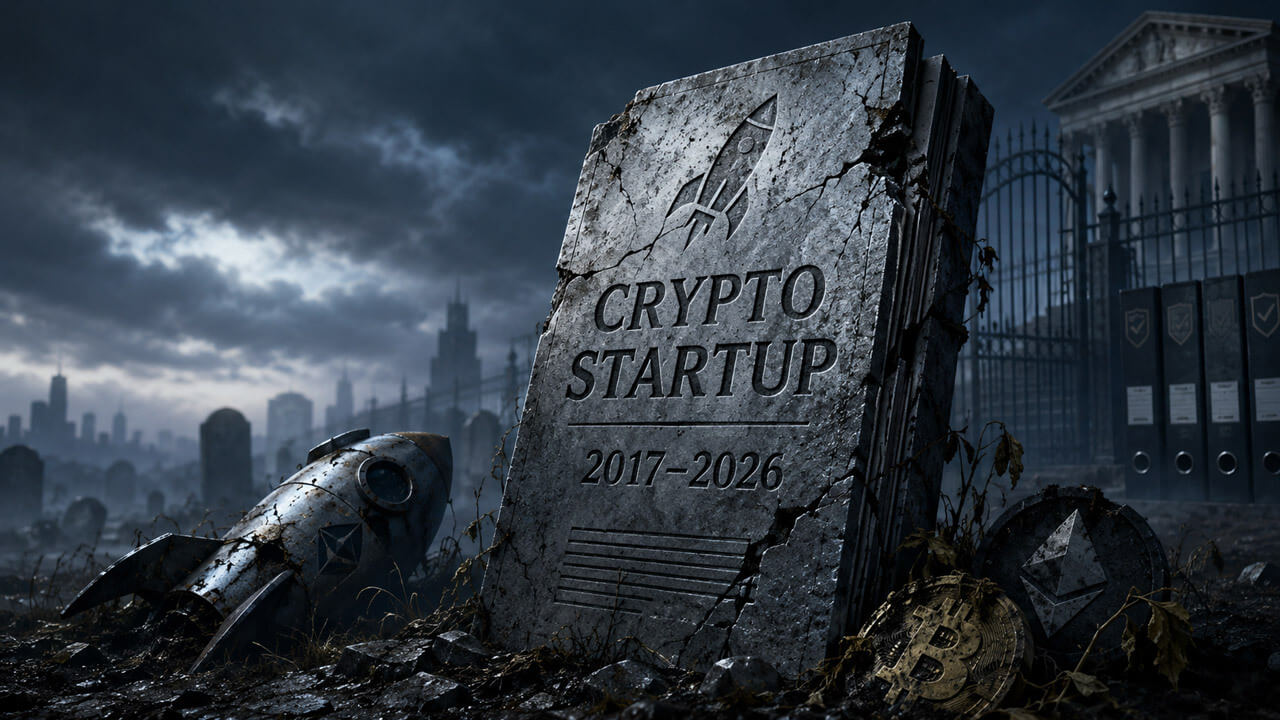
A Decade of Change: The Demise of Crypto Startups

"The Decade-Long Transformation: The Demise of Crypto Startups" The article traces the dramatic evolution of the cryptocurrency industry from its anarchic beginnings to its current highly regulated and institutionalized state. In the early days (circa 2017), launching a crypto startup was remarkably simple: a whitepaper, a GitHub repository, and a Telegram group could attract thousands of retail investors via an Initial Coin Offering (ICO). Founders operated anonymously with near-zero regulatory and financial barriers, enabling rapid, global innovation but also widespread fraud. By 2026, the landscape is fundamentally different. To operate in major markets like the US, EU, and Asia, crypto businesses must now navigate a complex web of regulations akin to traditional finance. Compliance costs are prohibitive: estimates for a US multi-state operation range from $750,000 to $1.2 million in the first three years, with annual costs exceeding $2 million thereafter. Regulations like MiCA in the EU and New York's BitLicense have created high capital and operational hurdles that act as barriers to entry. Simultaneously, venture capital investment has shifted dramatically. Following the collapses of Terra and FTX, funding has concentrated in later-stage, established companies, creating a "barbell market." Early-stage and seed funding has shrunk significantly, while mega-funds like Andreessen Horowitz's $15 billion pool dominate. Most capital now flows to trading platforms, lending infrastructure, and B2B services. This environment favors mergers and acquisitions as the primary path for growth. Companies like Coinbase and Ripple are acquiring firms like Deribit and Hidden Road not for their technology, but for their licenses, banking relationships, and institutional trust—assets far more valuable than code. Distribution channels, compliance, and brand reputation have become the new moats, overshadowing pure technical innovation. The industry's maturation brings benefits: reduced scams, increased institutional participation, and clearer regulatory frameworks. However, it comes at a cost. The low-barrier, experimental ethos that defined crypto's first decade is fading. Entrepreneurs without substantial capital, pre-existing licenses, or institutional connections face immense challenges. Funding for exploratory fields like decentralized social media or novel governance models is drying up. Ultimately, the crypto industry is replicating the consolidation pattern seen in banking and tech after the 2008 financial crisis. While this brings stability and legitimacy, it raises a critical question: in this new, resource-intensive reality, is there still room for the disruptive, from-scratch innovation that gave birth to the sector?

Foresight News55 dk önce

A Decade of Change: The Demise of Crypto Startups

Foresight News55 dk önce

İşlemler

Spot
活动图片