As adoption of BNB Smart Chain grows, the need for secure wallets becomes more critical, making these five features essential for protecting assets.
As BNB Chain and BNB Smart Chain continue to grow, so does the need for safe and reliable BNB wallets. With increasing threats such as phishing scams, smart contract vulnerabilities and wallet breaches, users need robust security measures to protect their digital assets.
A modern BNB wallet must go beyond just storing BNB — it should offer strong security features that give users full control over their funds. If you’re wondering which BNB wallet is the safest, here are the five key security aspects every BNB wallet should have in 2025 — and how Trust Wallet, one of the most secure BNB wallets for millions of users, leads the way.
1. Full Ownership of Private Keys
A non-custodial wallet is essential for security-conscious users. Unlike custodial wallets, where third parties hold private keys, non-custodial wallets ensure that only the wallet owner has full access and control over their BNB. Full ownership eliminates risks associated with centralized exchanges (CEXs), such as withdrawal restrictions, platform hacks and mismanagement of funds.
For example, users storing BNB on centralized exchanges remain vulnerable to unexpected freezes or platform failures. A non-custodial wallet eliminates this risk, ensuring that the user truly owns assets at all times.
Why Trust Wallet is One of the Top Non-Custodial Wallets for BNB
As a great example, Trust Wallet gives users complete control over their private keys and BNB funds. The platform does not store or have access to users’ private keys, transaction history, or personal data, making it one of the most secure BNB wallets in 2025.
2. Multi-Layer Encryption and Secure Backup Options
Encryption is the foundation of wallet security. A secure Web3 wallet should use multi-layer encryption to protect private keys, ensuring that attackers cannot easily access user funds even if a device is compromised. Additionally, secure backup and recovery options are essential to prevent permanent asset loss in case of device failure or accidental deletion.
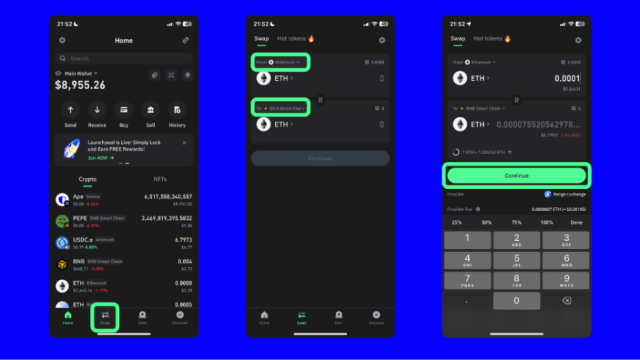
The most secure BNB wallets offer multiple ways to recover assets, including secret recovery phrases, encrypted cloud backups and biometric authentication — key features that distinguish secure wallets from less reliable ones.
The Most Secure Web3 Wallet for Backup and Encryption
Trust Wallet offers multiple layers of security to protect user funds. In addition to end-to-end encryption, it provides backup options such as secret recovery phrases, cloud backups (iCloud and Google Drive) and biometric authentication (Face ID and fingerprint). Simply put, even if a user loses access to their device, their BNB assets remain secure and recoverable.
3. Verified Industry Standards
With the increasing use of BNB Smart Chain for DeFi and NFT applications, security vulnerabilities are a growing concern. Wallets that meet industry security standards provide users with greater confidence in their safety.
External security audits and ISO certification prove that a wallet follows strict cybersecurity protocols to protect users from potential breaches. Security audits help detect vulnerabilities, while ISO certification confirms compliance with global security standards.
Trust Wallet Stands Out with the Best Security Standards
In 2024, Trust Wallet became the first major wallet to receive ISO certification, demonstrating its commitment to industry-leading security practices. With over 190 million users, Trust Wallet remains a trusted and secure choice for BNB Chain users.
4. Decentralized and Private Transactions
Privacy is a major concern for BNB holders. Many platforms require Know Your Customer (KYC) verification, which compromises user anonymity and financial privacy. A truly secure wallet should never require KYC or store user data, ensuring full privacy and decentralized transactions.
Additionally, decentralized wallets allow users to conduct transactions without intermediaries, reducing exposure to censorship or government restrictions on BNB transfers.
Why Trust Wallet is One of the Most Private BNB Wallets
Trust Wallet does not require KYC, store personal data, or track transaction history, ensuring maximum privacy for BNB holders. Users can swap, stake and interact with BNB Chain’s DeFi protocols without exposing their identity, making it the best BNB wallet for privacy-focused crypto holders.
With built-in dApp access, Trust Wallet also allows users to connect directly to BNB Smart Chain applications, reinforcing privacy and full user control.
5. Anti-Phishing Protection and dApp Security
As BNB wallets increasingly interact with dApps, DeFi platforms and non-fungible token (NFT) marketplaces, they must include built-in security measures to prevent phishing scams and malicious smart contracts.

Users frequently encounter fake wallet pop-ups asking for seed phrases, fraudulent dApps draining funds and scam links posing as legitimate services. A truly secure BNB wallet should feature phishing protection, transaction verification and dApp security scanning.
The Most Secure Web3 Wallet for dApp Security
Trust Wallet offers built-in anti-phishing protection and a secure Web3 browser that allows users to access verified BNB Chain dApps safely. With transaction alerts, anti-phishing warnings and SWIFT smart contract wallet integration, Trust Wallet ensures users don’t fall victim to malicious transactions on the BNB Smart Chain.
The Future of Web3 Wallet Security
As Web3 adoption continues, security remains a top priority for crypto users. A secure Web3 wallet must offer full non-custodial control, ensuring that users retain exclusive access to their private keys without relying on third parties. Strong encryption and backup solutions are also essential, allowing users to protect and recover their assets even in the event of device loss.
Certified security audits and ISO verification further reinforce a wallet’s reliability, providing industry-standard protection against cyber threats. Privacy-first transactions without KYC requirements ensure that users can interact with the blockchain without exposing personal data.With these features already built-in, Trust Wallet stands out as the best Web3 wallet for security. It gives users full control over their digital assets while maintaining top-tier protection. For users searching for the safest Web3 wallet, Trust Wallet will remain the top choice in 2025.

Related Posts