Best Presales to Explode As Several US States Advance Crypto Reserve Bills

bitcoinistPubblicato 2025-02-20Pubblicato ultima volta 2025-02-20

Introduzione

Out of the 20 US states that proposed Bitcoin reserve bills, two just got closer to their approval. Utah leads...

Out of the 20 US states that proposed Bitcoin reserve bills, two just got closer to their approval.

Utah leads the race–its House Bill 230 passed the House voting stage with just one out of nine votes against. Now, it’s up to the Senate Revenue and Taxation Committee to decide whether Utah will become the first-ever state to establish a crypto reserve.

The HB 230 proposed allocating 5% of public funds to crypto, including $BTC, stablecoins, and altcoins with a market cap over $500B.

Meanwhile, Montana advanced House Bill 429 through the committee stage and now awaits the House vote. If approved, Montana will spend up to $50M on $BTC, stablecoins, and large-cap altcoins.

Oklahoma and Arizona are on the committee stage, while the Pennsylvanian crypto bill was rejected.

While naysayers still call crypto a digital snake oil (fraud, Ponzi scheme, bubble–pick yours), the US government recognizes it as a legitimate asset class.

Government adoption will soon push retail adoption to new levels. And when this happens, low-cap altcoins could bring their holders the biggest returns as they have the biggest room for growth.

With this in mind, we share the four best presales that hold much promise for 2025.

1. Solaxy ($SOLX) Supports Solana’s Expansion With Its Layer-2 Solution

Solana ($SOL) has a market cap of $83.9B, currently ranking #6 among all cryptocurrencies. Multiple US states are likely to adopt it as part of their reserves. Besides, a $SOL ETF is underway, which could drive institutional demand.

Solana’s ecosystem is also rapidly expanding, with a 327% yearly market cap increase. The daily trading volume of Solana tokens exceeds $106B.

The catch is that Solana’s infrastructure can’t handle this spike in activity–not at this time.

Solaxy ($SOLX) could resolve Solana’s congestion issues and eliminate failed transactions with its scaling solution. This makes it one of the best presales on the market.

It’s the first Layer-2 network for Solana, aiming to speed up processing, reduce fees, and increase transaction throughput.

Solaxy also simplifies the development of high-traffic apps like AI agents, P2E games, and DeFi protocols.
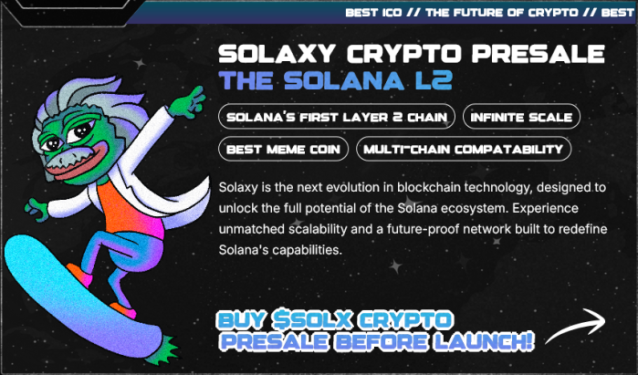
Solaxy presale

The $SOLX token presale already raised $22.4M, with one token now priced at $0.00164.

Analysts predict $SOLX to hit $0.032 after it launches on exchanges, a 1,851% increase from  the current level. This means now is the best time to join the Solaxy community while the entry point is low.

2. BTC Bull Token ($BTCBULL) Rewards Its Community With Free $BTC

BTC Bull Token ($BTCBULL) is the only meme coin that appeals to $BTC maximalists. The project’s innovative approach to community rewards helped it raise $2.4M in its first week on presale–an enormous early momentum.

When Bitcoin hits $150K and $200K, BTC Bull Token will airdrop free $BTC to $BTCBULL holders. Another large airdrop, this time, of $BTCBULL, will happen when Bitcoin reaches $250K.

The only requirement to receive airdrops is to hold $BTCBULL in Best Wallet, a non-custodial hot wallet that offers easy access to best presales and has an integrated DEX.

The project team also plans to burn part of $BTCBULL tokens whenever Bitcoin’s price grows by $50K to create scarcity and drive demand.
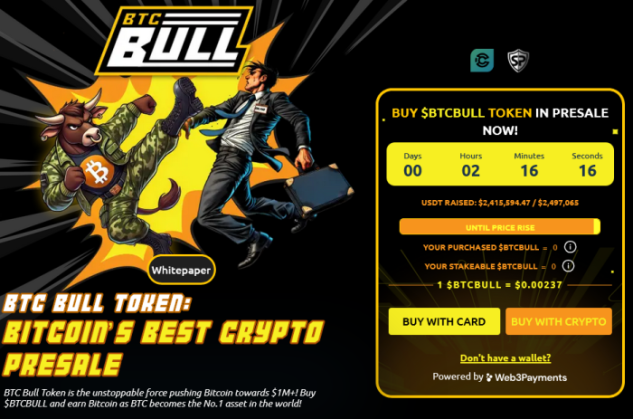
BTC Bull Token

One $BTCBULL now costs $0.00237, but the price grows fast as the presale progresses toward new milestones. First-movers are also up to the highest APY of 179%–it will decrease as more investors join the staking pool.

3. MIND of Pepe ($MIND) Predicts Market Trends for Smarter Investments

The only sector that can rival meme coins this year is AI agent coins. Its cumulative market cap reached $5.4B, with a 3.3% increase in a single day.

While $FET, $VIRTUAL, and $AI16Z are now ahead of the competition, the new presale crypto MIND of Pepe ($MIND) could challenge the status quo with its analytical capabilities.

Mind of Pepe

MIND of Pepe is a self-synonymous agent that sifts through market data and social media discussions to identify and, possibly, even predict trends. It will then share exclusive insights with the $MIND token holders, giving them a first-mover advantage.

In other words, MIND of Pepe will help its community navigate the market in real time and make smarter investment decisions, unclouded by human bias and emotion.

Early adopters have invested $6.5M into the project so far. The $MIND price will go up when the raised amount hits $7.4M, so now is the last chance to buy tokens at $.0033587.

4. Rexas Finance ($RXS) Democratizes Asset Tokenization, $46M Raised

Rexas Finance ($RXS) belongs to another rapidly growing crypto sector, Real World Asset (RWA) tokens, currently dominated by $LINK, $OM, and $ONDO.

This new platform offers several tools for asset tokenization, that is: no-code token builder, Telegram-based minting bot, NFT artwork generator, and AI-powered smart contract auditor.

The objective is to make tokenization accessible to non-technical users and cut the cost of entry. For example, artists could use Rexas Finance to tokenize their music albums and business owners to launch loyalty programs for token holders.

The $RXS presale raised $46M so far and is currently in the 12th stage, where one token costs $0.2. The launch price will be $0.25, but the project might see more upside in the long term if it follows the roadmap.

Best Presales That Could Outperform Large-Cap Crypto

While state officials cautiously dip their toes into $BTC and large-cap altcoins, retail investors have the flexibility to explore new meme coins on presale with greater growth potential.

Solaxy, BTC Bull Token, and MIND of Pepe are the best presales this year because they target different expanding sectors within the crypto market.

Early investors who recognize these opportunities could see even bigger returns than those who play it safe with top ten crypto.

However, remember that the crypto market is volatile, so DYOR and diversify your portfolio.

Bitcoinist

Bitcoinist

Bitcoinist is the ultimate news and review site for the crypto currency community!

Letture associate

Huawei's "Tao Law": A Comprehensive Overview of Core Companies

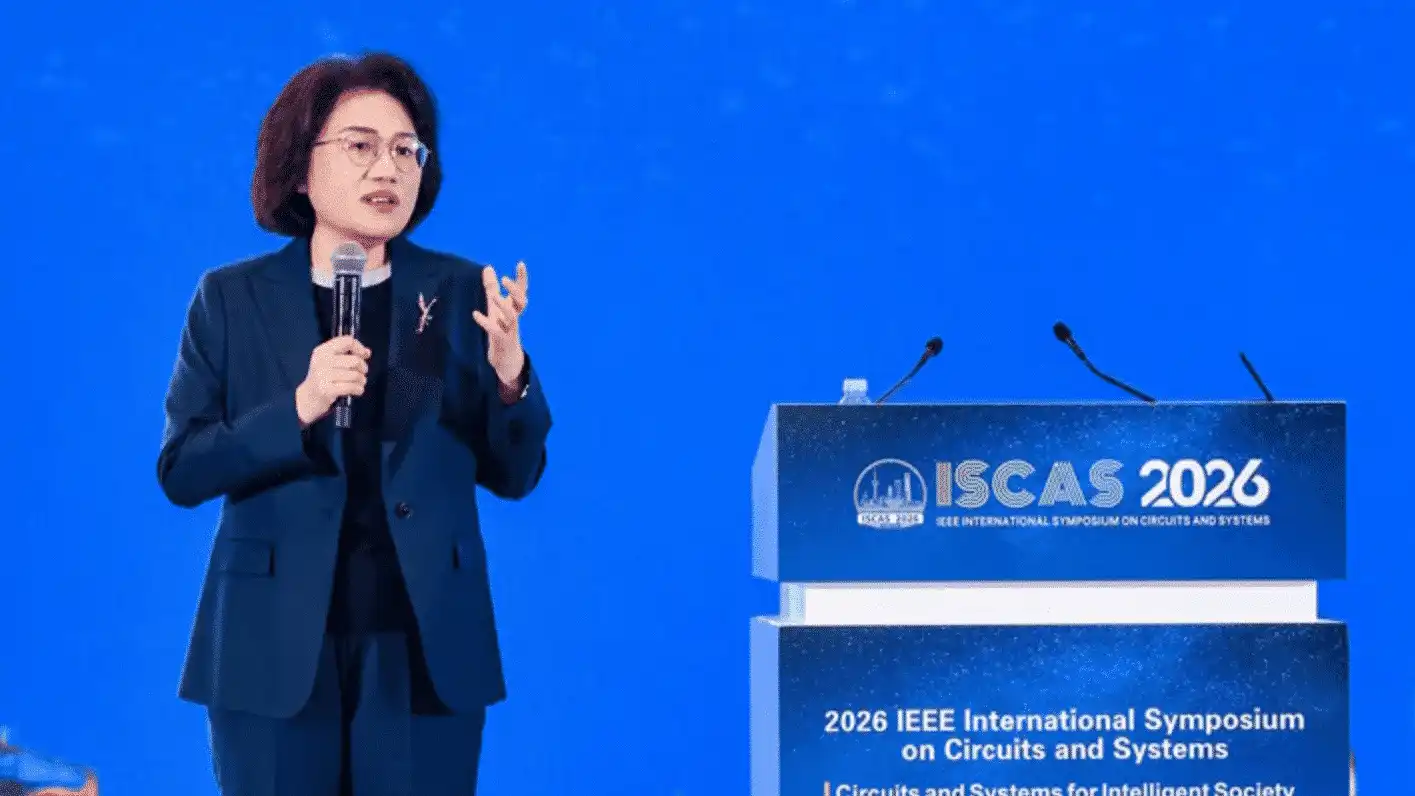
Huawei's "Tau Law": Core Companies Overview On May 25, 2026, Huawei's Director and President of the Semiconductor Business Division, He Tingbo, formally introduced the "Tau (τ) Law" at ISCAS 2026, marking a significant principle guiding industry development in the global semiconductor field from China. The Tau Law shifts focus from traditional Moore's Law, which pursues geometric transistor scaling, to "time scaling"—continuously compressing signal propagation delay (time constant τ) without solely relying on extreme feature size reduction. The core implementation path is "logic folding." This technique transforms circuit layouts from two-dimensional planes to multi-layer 3D stacks, using short vertical interconnects to replace long horizontal wiring, thereby drastically reducing τ. Huawei has already designed and mass-produced 381 chips following this principle over the past six years, with plans to launch a Kirin chip utilizing logic folding in Fall 2026. By 2031, high-end chips based on the Tau Law are expected to achieve performance levels equivalent to a 1.4nm process node. This development impacts several key industry segments, with related Chinese companies poised to benefit: 1. **EDA Design Software**: Essential for circuit-level optimization. Key players include: * **Empyrean Technology** (Huada Jiutian): China's largest full-flow EDA provider. * **Primarius Technologies** (Gailun Dianzi): Specializes in device modeling and verification. * **Semitronix** (Guangliwei): Focuses on yield enhancement and test chip EDA. 2. **Chiplet & Advanced Packaging**: Logic folding's 3D stacking necessitates advanced packaging (e.g., TSV, hybrid bonding). Core participants are: * **Tongfu Microelectronics**: A leader in advanced packaging and a key partner for AMD's Chiplet products. * **JCET Group** (Changdian Keji) & **Tianshui Huatian Technology**: Major OSATs with advanced packaging capabilities. * **VeriSilicon** (Xinyuan Gufen): Provides Chiplet-based design platforms and IP. 3. **Foundry Manufacturing**: Optimization must be implemented in transistor structures and process parameters. Potential foundries for Huawei's future chips include: * **SMIC**: China's leading foundry with advanced FinFET capabilities, the most likely candidate for next-gen Kirin chips. * **Hua Hong Semiconductor** (Huahong Gongsi): A leader in specialty processes (power, embedded memory). * **Nexchip Semiconductor** (Jinghe Jicheng): Major foundry for display driver ICs and MCUs. The Tau Law represents a strategic move towards architectural innovation and design-process co-optimization, driving demand across the domestic semiconductor supply chain.

marsbit1 h fa

Huawei's "Tao Law": A Comprehensive Overview of Core Companies

marsbit1 h fa

TechFlow Intelligence Report: Huawei Unveils "Tao" Law, Semiconductor Sector Surges; Meta Cuts 10% of Workforce

"TechFlow Intelligence Brief": Huawei's new "Tau Law" in semiconductors and Meta's 10% layoffs headline today's tech landscape. In AI, breakthroughs include an AI solving 9 high-difficulty pure math problems for just a few hundred dollars each, and DeepSeek's new Reasonix programming agent challenging commercial models. However, research highlights a "constraint decay" issue in LLM-generated backend code. Open-source model Qwen 3.6 27B achieves high speeds on older GPUs, sparking debate on NVIDIA's future dominance. In Crypto/Web3, Ethereum Foundation plans to downsize, possibly reducing ETH selling pressure. Fake news about CZ ignited a meme coin frenzy, showing the market's sensitivity to celebrity narratives. DeFi sees a new trend in HELOC-backed Real World Asset (RWA) pools. The chip sector is stirred by Huawei's proposed "Tau (τ) Law," aiming for 1.4nm-equivalent performance by 2031 through architectural innovation, causing related stocks to surge. A report notes memory now constitutes nearly two-thirds of AI chip cost. Meanwhile, executives at 7 Chinese semiconductor firms sold shares after price peaks. Meta announces 10% layoffs as it pivots to AI. Google's CEO faced student protests over AI ethics during a speech, and the company controversially published a Chromium exploit before patching was complete. Xiaomi permanently banned installers for AC installation fraud. In US stocks, AMD is seen as a potential challenger to NVIDIA, while a survey reveals 99% of CEOs expect AI-driven layoffs within two years. Palantir secured a government contract for employee monitoring, raising privacy concerns. Macro developments include a 6% drop in WTI crude oil on hopes for reopened Hormuz Strait, and silver prices rising over 4%. Global oil inventories are nearing critical lows. New trends highlight a "audio prompt injection" attack targeting AI voice assistants via hidden commands, and CBS pausing takedowns of pirated Stephen Colbert episodes after public pushback. The underlying narrative connects AI's cost-effective problem-solving, widespread planned job displacement, and Huawei's challenge to Western tech hegemony, framing the AI and chip race as a broader contest over employment, geopolitics, and the very definition of intelligence.

marsbit1 h fa

TechFlow Intelligence Report: Huawei Unveils "Tao" Law, Semiconductor Sector Surges; Meta Cuts 10% of Workforce

marsbit1 h fa

Trading

Spot
Futures
活动图片