Crypto VC размышляет, приближается ли рынок «к дну»

cryptonews.ru2024-06-10 tarihinde yayınlandı2025-02-10 tarihinde güncellendi

Криптовалютный венчурный капиталист сказал, что рынок может приближаться к локальному дну, ссылаясь на длительные отрицательные ставки финансирования и широко распространенные медвежьи настроения, которые, по его словам, «часто являются лучшим сигналом».

«Возможно, я преждевременно говорю, но, похоже, мы приближаемся к дну», — сказал основатель Hartmann Capital Феликс Хартманн в своем сообщении от 8 февраля.

Ставки финансирования и настроения — два важных индикатора

Хартманн сказал, что ставки финансирования криптовалют — платежи, которые помогают поддерживать честную торговлю, выравнивая цены фьючерсов и спотового рынка — были «отрицательными» в течение некоторого времени, что означает, что продавцов больше, чем покупателей.

Устойчивые отрицательные ставки финансирования могут быть сигналом о медвежьих настроениях среди трейдеров, намекая на дно рынка и потенциал для краткосрочного отскока.

Хартманн также сказал, что «качественные альткоины» вернулись к долгосрочным трендовым линиям, «стирая» большую часть достижений, достигнутых в четвертом квартале 2024 года.

В декабре 2024 года Ethereum (ETH) торговался выше $4000, и предполагалось, что он может повторно протестировать свой исторический максимум ноября 2021 года в $4878. Однако с тех пор актив откатился до $2639 на момент публикации.
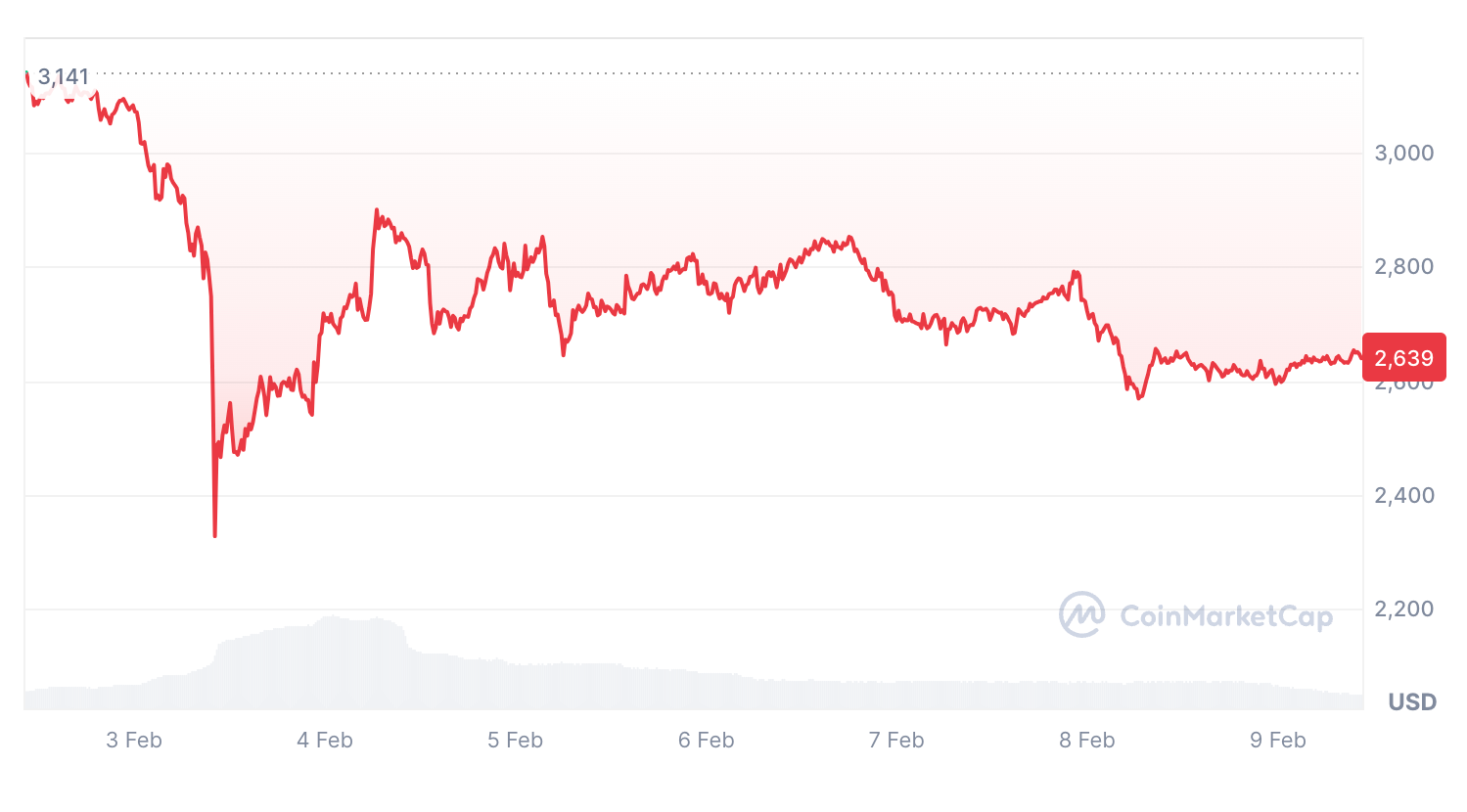

На момент публикации Ethereum торгуется на уровне $2639. Источник: CoinMarketCap.

Solana (SOL) достигла нового исторического максимума в $295 19 января, но с тех пор откатилась до $201,15 на момент публикации.

Между тем, общая рыночная капитализация мемкоинов снизилась на 32,38% к концу декабря 2024 года.

Криптоаналитик Мэтью Хайленд недавно заявил, что, скорее всего, рынок «не увидит декабрьских максимумов на большинстве альткоинов в течение как минимум 2 месяцев, если не дольше».

Рыночная нестабильность может быть «на самом дне»

Хартманн сказал, что общее настроение криптовалют «абсолютно рухнуло», что, по его словам, «часто является лучшим сигналом». Индекс страха и жадности криптовалют, который измеряет общее настроение рынка криптовалют, показывает оценку «страха» 46, что на 14 пунктов ниже оценки «жадности» на прошлой неделе 60.

Поддерживая схожую точку зрения, криптоаналитик Майк Альфред сказал в сообщении на X от 21 января, что «ужасные» настроения на рынке криптовалют — это «точно такая же настройка, как и перед предыдущим крупным общесекторальным ралли».

Директор по инвестициям Bitwise Мэтт Хоуган недавно заявил, что «настроения в розничной торговле сейчас самые худшие за последние годы».

Однако Хоуган сказал, что профессиональные инвесторы «чрезвычайно оптимистичны», что создает «огромный разрыв» между двумя группами инвесторов.

Хартманн сказал, что, хотя рынок криптовалют может продолжать «падать», это также может скоро «закончиться», поскольку большинство разблокированных венчурных токенов уже «были сброшены за последние два квартала».

В период с марта по октябрь 2024 года разблокированные токены высвободили активы на сумму 35 миллиардов долларов, что значительно увеличило предложение на рынке.


İlgili Okumalar

Losing $55 Million to Sell Bitcoin, MicroStrategy's Faith Reaches Its Interest Payment Day

On July 6th, Michael Saylor's MicroStrategy announced the sale of 3,588 BTC for approximately $216 million, incurring a realized loss of around $55.45 million compared to its average cost basis. This move, contradicting Saylor's long-standing "never sell" Bitcoin philosophy, was executed to pay dividends on its digital credit securities. The article traces this shift from a small "desensitization test" sale of 32 BTC in late May to the board's authorization on June 30th to sell up to $1.25 billion in Bitcoin for corporate purposes like dividends and buybacks. Analysis reveals that MicroStrategy's previous growth "flywheel"—using stock premiums to fund more Bitcoin purchases—has stalled. With its stock trading near a critical threshold (1.22x its Bitcoin NAV), issuing new shares would dilute value. Simultaneously, its financing channels (preferred stock, common stock ATM, convertible notes) are constrained while facing rigid annual dividend/interest obligations of roughly $1.76 billion. Consequently, selling Bitcoin became the calculated "optimal solution" under its own financial model. This transforms MicroStrategy from crypto's most prominent steady buyer into a predictable seller, creating a potential overhead of ~2,400 BTC in monthly selling pressure if obligations are fully covered by sales. This shift challenges the valuation models of the entire Digital Asset Treasury (DAT) sector that emulated MicroStrategy. The company's path forward now hinges on Bitcoin's price recovery, which would allow its preferred stock to trade at par and reopen its financing flywheel, creating a cyclical dependency between the firm's financial model and the asset it holds.

链捕手27 dk önce

Losing $55 Million to Sell Bitcoin, MicroStrategy's Faith Reaches Its Interest Payment Day

链捕手27 dk önce

OUSD Fake Partnership Controversy? Stablecoins and the Credit Game of Giant Endorsements

Author: Chloe, ChainCatcher Last week, Open Standard launched the dollar stablecoin OpenUSD (OUSD) with a list of over 140 supposedly supporting companies, including major names like Visa, Mastercard, Stripe, American Express, BlackRock, BNY, Standard Chartered, Google, Shopify, Samsung, Coinbase, Solana, and Ripple. The announcement initially impacted Circle's stock price, but doubts about the list quickly emerged. Several Korean firms named, including Samsung Electronics, Shinhan Financial Group, Dunamu (Upbit's parent), and K Bank, clarified they had not formally agreed to join the alliance. Some stated they were only approached for potential interest or learned of their inclusion from news reports, expressing surprise. Similar concerns were raised by U.S. entities, suggesting the list may be misleading. OUSD, led by Zach Abrams of Bridge (acquired by Stripe in 2024), promotes zero-fee minting/redemption, no transaction limits, and sharing reserve asset yields with partners instead of keeping profits. However, this model makes listed partnership imply economic benefits, turning it into a serious credibility issue. This incident reflects a common crypto marketing tactic of leveraging big names. A Chainstory analysis found over 62% of crypto press releases in late 2025 were high-risk or scams. The situation recalls Facebook's Libra (later Diem), which collapsed in 2022 after initial heavyweight backers like Visa and PayPal withdrew under regulatory pressure. Circle CEO Jeremy Allaire welcomed the competition but highlighted the challenges. He argued stablecoin success relies on network effects and real usage, not just alliances. He criticized OUSD's "free" model and full revenue sharing as potentially starving infrastructure development. Noting the dominance of USDT (~$1.84T) and USDC (~$730B) in the ~$2.91T stablecoin market, he suggested many new entrants lack real utility despite inflated circulation from incentives. In conclusion, while OUSD has genuine backing and a distinct model, its future depends on actual adoption in B2B payments, settlements, and cross-border transactions, not just a prestigious partner list. The market will determine if it is a credible challenger or merely another marketing promise.

链捕手30 dk önce

OUSD Fake Partnership Controversy? Stablecoins and the Credit Game of Giant Endorsements

链捕手30 dk önce

İşlemler

Spot
活动图片