Криптоблаготворительность в действии: для пострадавших в Калифорнии собрано $2 млн

cryptonews.ruPubblicato 2022-05-12Pubblicato ultima volta 2025-01-12

Платформа для благотворительных пожертвований The Giving Block запустила экстренный сбор средств для помощи пострадавшим от лесных пожаров в Лос-Анджелесе. Глава Shift4 — материнской компании The Giving Block — Джаред Айзекман (Jared Isaacman) пообещал удвоить собранную сумму.

Операционный директор The Giving Block Бен Пасти (Ben Pousty) отметил особые преимущества криптоблаготворительности: «Пожертвования в криптовалютах позволяют людям избежать налога на прирост капитала. Они могут потенциально вычесть полную рыночную стоимость из налогооблагаемой базы, направляя больше средств на важные для них цели».

Масштабные лесные пожары, охватившие Лос-Анджелес на этой неделе, унесли жизни по меньшей мере 11 человек и уничтожили более 12 000 зданий. Ожидается, что количество жертв возрастет, когда завершится проверка сгоревших домов. В пятницу чиновники открыли центр, где люди могут сообщить о пропавших без вести. Десятки тысяч людей по-прежнему находятся в эвакуации. Пожарами охвачено уже около 145 квадратных километров.

История благотворительных инициатив

В августе 2023 года платформа организовала фонд помощи пострадавшим от пожаров на Гавайях, добавив $500 000 собственных средств к собранным пожертвованиям. В 2024 году The Giving Block привлекла $1 млн для ликвидации последствий ураганов Хелен и Милтон на восточном побережье США.

Компания сотрудничает с тысячами некоммерческих организаций по всему миру, включая Американское онкологическое общество, группу защиты животных PETA и фонд No Kid Hungry. За все время работы платформы через нее было собрано около $200 млн в криптовалюте.

По данным отчета The Giving Block за 2023 год, объем пожертвований в криптовалютах может превысить $10 млрд в течение следующих 10 лет. Большинство пожертвований в 2022 году были сделаны в стейблкоине USDC.
Letture associate

A Chip Company Releases AIDC Energy Storage Certification Standards. Why NVIDIA? Computing Power Reshapes Power Supply Logic. Who's in the Lead and Who's Left Out?

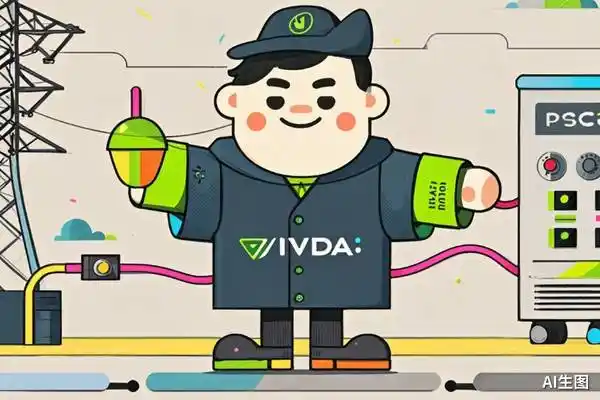
NVIDIA has released a "Battery Energy Storage System Self-Certification Guide," setting strict technical standards for energy storage systems specifically for AI data centers (AIDC). The guide focuses solely on certifying the Power Conversion System (PCS), not the batteries, with 10 mandatory performance metrics and 12 validation tests requiring real-world and simulation comparisons. Key requirements include rapid dynamic response to AI workloads, high-frequency system telemetry, and detailed electromagnetic transient models. The move is driven by the extreme and fluctuating power demands of next-generation AI hardware. Modern AIDCs require energy storage systems to act as intelligent, controllable grid assets, not just passive backup, to manage instantaneous, massive power load shifts that traditional UPS systems cannot handle. This redefines the competitive landscape for energy storage providers, shifting focus from capacity and cost to advanced control capabilities and system integration. While the market potential is significant—with forecasts of hundreds of GWh in new demand by 2030—the certification creates a high barrier to entry. It requires proven PCS delivery volumes and credible plans for rapid capacity scaling, favoring established, well-resourced players. Early movers like Fluence (partnering with Siemens) and several Chinese companies have secured projects ahead of the standard, but new entrants must now navigate this rigorous, costly, and time-intensive certification process to compete in the AIDC energy storage market.

marsbit14 min fa

A Chip Company Releases AIDC Energy Storage Certification Standards. Why NVIDIA? Computing Power Reshapes Power Supply Logic. Who's in the Lead and Who's Left Out?

marsbit14 min fa

After Missing the 20x, I've Found a 'Dumb' Method for AI Investing

**Missing the 20x Opportunity: A Simple 'Dumb' Approach to AI Investing** The AI boom, driving NVIDIA's revenue from $60B to $216B in two years, creates immense investment pressure. However, like the internet bubble of 2000, the largest AI opportunities likely lie ahead, perhaps after a correction. Instead of rushing in now or waiting paralyzed for a crash, the author proposes a third way: building a "knowledge warehouse" by systematically mapping the AI industry to be ready when opportunities arise. The core of the strategy is understanding AI's four-layer value chain: 1. **Compute Infrastructure (The "Engine"):** This foundational layer, where all money eventually flows, includes: a) **Chip Design:** NVIDIA's dominance via its CUDA ecosystem, b) **Chip Manufacturing/Packaging/Memory:** TSMC's near-monopoly in advanced manufacturing and SK Hynix's lead in High Bandwidth Memory (HBM), c) **Optical Interconnects:** Essential for large-scale AI clusters (e.g., Lumentum, Coherent), d) **Cooling & Power:** Critical for high-density AI data centers (e.g., Vertiv), e) **Servers/Data Centers & Cloud Platforms:** The physical and virtual wholesale providers. 2. **Models & Tools (The "OS"):** The competitive layer of foundation models (OpenAI, Anthropic, Google, Meta, xAI), now generating real revenue. A key shift is the center of gravity moving from **Training** models to **Inference** (running models), which demands different chip characteristics and could challenge NVIDIA's monopoly. 3. **Middleware & Platform ("The Glue"):** Connects models and applications (e.g., Scale AI, Hugging Face). This layer could explode if applications take off. 4. **Vertical Applications ("The Cash Register"):** Where AI meets end-users (e.g., enterprise AI, coding tools, medical AI, robotics). A critical cross-cutting constraint is **Energy**, as AI's massive power consumption drives investment in nuclear and other energy infrastructure. The author identifies four key questions for further research: 1) How will the shift from Training to Inference reshape the competitive landscape? 2) With tech giants spending over $600B on capex, where is the ROI from AI applications? 3) What are the under-the-radar opportunities in the "second" and "third" circles of the value chain (e.g., cooling, specialty foundries)? 4) How will geopolitics (e.g., U.S.-China chip restrictions) bifurcate the supply chain? The conclusion is that missed opportunities stem from insufficient research, not slow timing. By methodically studying each layer—its business models, competition, and valuations—investors can build the "killer intuition" needed to act decisively when the market presents its chance.

marsbit34 min fa

After Missing the 20x, I've Found a 'Dumb' Method for AI Investing

marsbit34 min fa

Trading

Spot
Futures
活动图片