Vladimir Putin Pushes Bitcoin As A Viable Alternative To Dollar Reserves

bitcoinistPubblicato 2024-12-05Pubblicato ultima volta 2024-12-05

Introduzione

Russian President Vladimir Putin has made headlines with his recent remarks on using Bitcoin and the need for his country...

Russian President Vladimir Putin has made headlines with his recent remarks on using Bitcoin and the need for his country to reconsider its reliance on foreign currency reserves. 

Russian President Emphasizes Bitcoin’s Role 

Speaking at an investment conference in Moscow, Putin argued that the current geopolitical climate, particularly following the West’s freezing of approximately $300 billion in Russian reserves due to the Ukraine conflict, raises legitimate questions about the wisdom of holding state reserves in foreign currencies.

Putin emphasized that the ease with which these assets can be confiscated for political reasons makes domestic investments in infrastructure, logistics, science, and education far more attractive than traditional foreign assets. 

“A legitimate question: why accumulate reserves if they can be lost so easily?” he stated, underscoring his concerns about the volatility and risks associated with holding reserves in currencies that could be “easily manipulated by foreign powers.”

The Russian leader criticized the current US administration for undermining the dollar’s status as the global reserve currency by using it as a “political tool.” This has reportedly compelled many nations to seek alternative assets, including  Bitcoin and other digital assets. 

“No one can prohibit the use of Bitcoin or other digital assets,” Putin asserted, highlighting the inevitability of developing new payment technologies that promise lower costs and greater reliability.

Russia’s Crypto Legislation

Putin’s comments come in the context of ongoing discussions among G7 nations about utilizing frozen Russian funds to support Ukraine, further illustrating the geopolitical tensions influencing Russia’s financial strategies. 

Putin recently signed legislation establishing a legal framework for taxing cryptocurrency mining and transactions to regulate the cryptocurrency sector. 

This law classifies digital currencies as property under Russia’s Tax Code and exempts mining and sales from value-added tax (VAT). However, it mandates that mining operators report their activities to local authorities, with penalties for non-compliance.

This legislative push indicates Russia’s intent to create a controlled yet supportive environment for digital currencies, recognizing their potential to bolster financial independence following a ban on Bitcoin mining and other crypto operations in 2022. 

Earlier this year, Putin sanctioned laws allowing the country’s Central Bank to explore cross-border cryptocurrency transactions, further integrating digital assets into Russia’s economic strategy.

Putin’s remarks and legislative actions underscore a strategic pivot toward digital currencies to circumvent US influence over global financial systems.

By embracing crypto, Russia aims to strengthen its financial autonomy and explore alternative routes for acquiring restricted goods without relying on traditional financial institutions.

Bitcoin
The daily chart shows BTC’s price consolidation above $95,000. Source: BTCUSDT on TradingView.com

At the time of writing, the market’s leading crypto, Bitcoin, is trading at $95,816, recording a slight 0.5% decline in the 24- and seven-day time frames.

Featured image from BBC, chart from TradingView.com

Ronaldo Marquez

Ronaldo Marquez

Ronaldo is a seasoned crypto enthusiast with over four years of experience in the field. He is passionate about exploring the vast and dynamic world of decentralized finance (DeFi) and its practical applications for achieving economic sovereignty. Ronaldo is constantly seeking to expand his knowledge and expertise in the DeFi space, as he believes it holds tremendous potential for transforming the traditional financial landscape.

Letture associate

Learn Codex with the "Morning Briefing": Six Replicable Levels of Use

This article introduces a "Morning Briefing" as a simple, progressive framework for learning to effectively use Codex (an AI assistant), moving from basic information gathering to a more sophisticated, autonomous work partner. It outlines six actionable levels: **Level 1: Basic Information Query.** Start by simply asking Codex to check your Slack, Gmail, and Calendar to summarize what needs your attention today. **Level 2: Personalization with an Agents File.** Create a persistent file containing your default preferences for the briefing's format and content, so it's consistently useful. **Level 3: Automation.** Set the briefing to run automatically every weekday morning, creating a reliable starting point for your day. **Level 4: Project-Specific Briefings.** Instead of one overwhelming summary, create separate, dedicated threads for different projects (e.g., a launch, recruitment), each with its own focused briefing. **Level 5: Drafting Follow-Up Actions.** Elevate the briefing from a summary to an action starter by having it draft replies, prepare meeting notes, or highlight stalled decisions—ready for your review. **Level 6: Building a Memory System (Vault).** Integrate a knowledge vault (a structured file system) where important recurring information (project statuses, key people, decisions) is stored and updated. The briefing consults this vault to provide richer context and learns over time. The approach's strength is its incremental nature. Each level teaches a core Codex capability (connectors, personalization, automation, project context, assisted work, persistent memory) within a familiar, practical workflow, avoiding overwhelming theoretical concepts. It transforms a simple daily check-in into a personalized, evolving work operating system.

marsbit27 min fa

Learn Codex with the "Morning Briefing": Six Replicable Levels of Use

marsbit27 min fa

Can Alibaba Cloud Rewrite Itself?

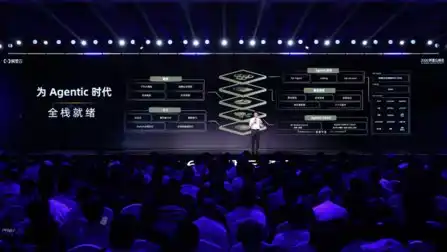
Over the past five months, Alibaba Cloud's MaaS (Model as a Service) revenue has surged 15x, marking a strategic overhaul where the company is shifting its 17-year-old system designed for "humans using cloud" to a new paradigm centered on "Agents consuming Tokens." At its recent summit, Alibaba Cloud announced a full-stack upgrade encompassing "chip-cloud-model-inference," all optimized for AI Agents. Key launches include the new AI product portal "QianWen Cloud," hyper-node servers powered by the in-house AI chip Zhenwu M890, and the latest flagship model, Qwen3.7-Max. Senior VP Liu Weiguang described this as building "China's largest AI factory," where chips are raw materials, the cloud is the workshop, models are machines, and the inference platform is the assembly line, with Tokens as the final product. The company is now emphasizing its chip strategy, unveiling the Zhenwu M890 and a two-year roadmap for future chips. With over 560,000 chips deployed across 400+ clients, Alibaba Cloud aims to control the marginal cost per Token, mirroring Google's integration of TPU and Gemini for optimal cost-performance. The cloud infrastructure itself is being rewritten. Traditional cloud interfaces are being transformed into standardized, Agent-callable Skills. A new scheduling logic focuses on "task scheduling" over "resource scheduling" to handle the unpredictable, elastic workloads of Agents. Liu noted that AI applications now automatically provision cloud resources, with one customer's daily automated provisioning equaling two weeks of manual work. For models, the focus has shifted from conversational prowess to execution capability. Qwen3.7-Max demonstrated this by autonomously writing and optimizing a production-grade AI compute kernel for the new Zhenwu M890 chip over 35 hours, achieving a 10x performance improvement. The underlying Bailian platform was upgraded for efficiency, and it maintains an open ecosystem, hosting third-party models. This restructuring extends beyond technology to sales, organization, and metrics. Alibaba Cloud has established dedicated MaaS sales teams, separated from traditional IaaS, with new KPIs focusing on high-quality Tokens that solve real problems, the number of core business systems integrated with models, and the efficiency of Agent task completion. The underlying bet is clear: AI represents an opportunity orders of magnitude larger than before. Despite the uncertainty, Alibaba Cloud is aggressively rebuilding its entire system, betting on an AI-driven future where Tokens could become its largest product line.

marsbit1 h fa

Can Alibaba Cloud Rewrite Itself?

marsbit1 h fa

Trading

Spot
Futures
活动图片