慢雾:新瓶装旧酒,套利MEV机器人骗局分析

Odaily星球日报Pubblicato 2024-10-14Pubblicato ultima volta 2024-10-14

Introduzione

本文将分析套利MEV机器人骗局的套路和骗子的资金转移模式。

原文作者:Liz,慢雾

背景

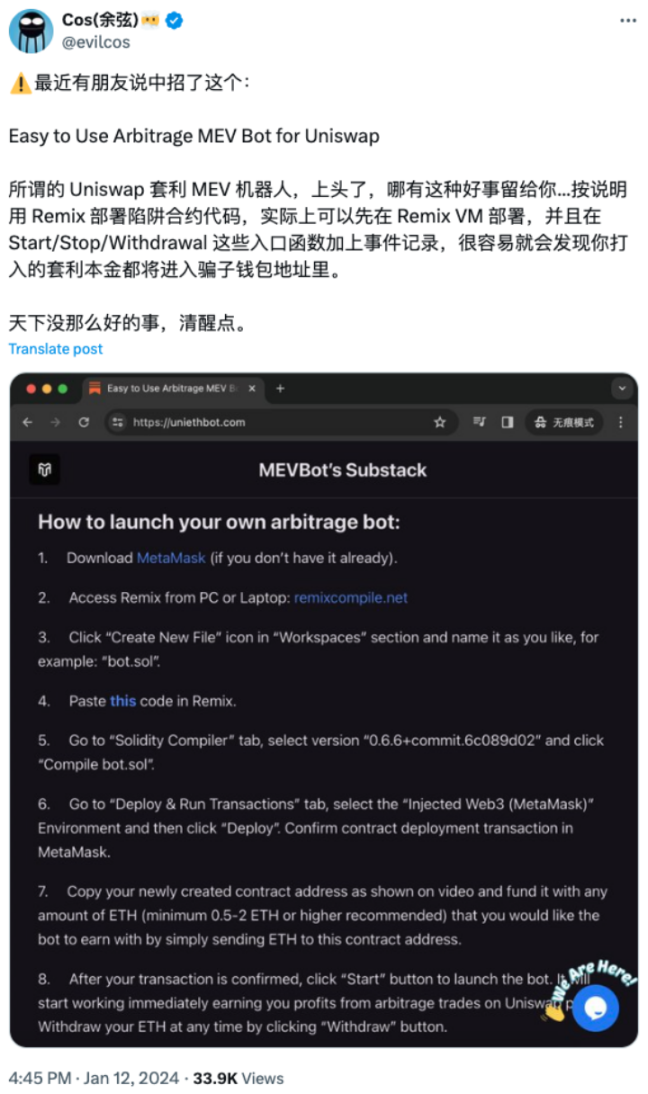
今年初,慢雾创始人 Cos 在 X 上提醒用户注意套利 MEV 机器人骗局,如今黑客团伙也是紧跟热点,骗局的名字也从「简单易用的 Uniswap 套利 MEV 机器人」变成了「ChatGPT 套利 MEV 机器人:如何使用滑点机器人每天完全被动地赚取 2000 美元」。慢雾安全团队注意到,近期因这类骗局受损的用户数量有所增加,因此,本文将讲解该骗局的套路和分析骗子的资金转移模式,帮助用户避免落入此类骗局。
 

慢雾:新瓶装旧酒,套利MEV机器人骗局分析

(https://x.com/evilcos/status/1745728599171457120)

套利反被骗

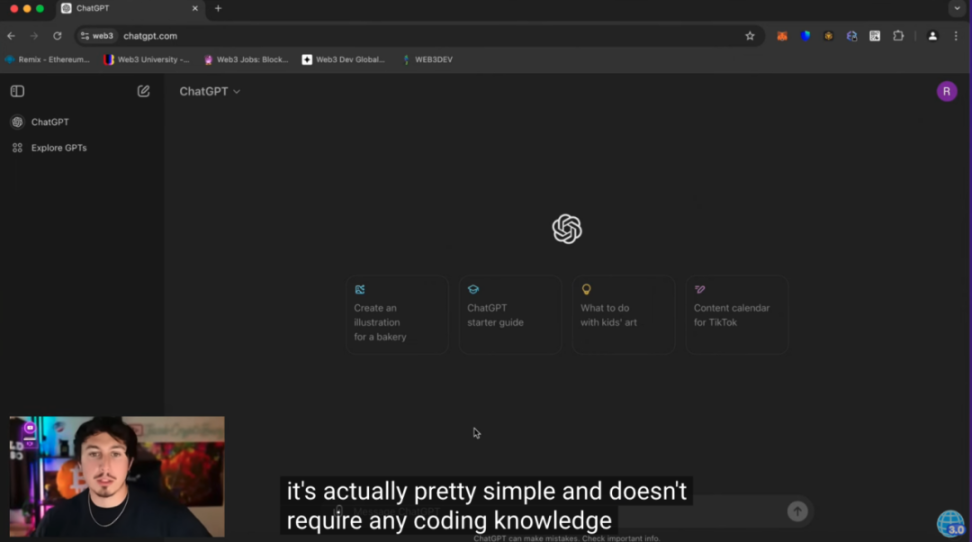
AI 已经成为越来越多人提升生产力的工具,骗子也深谙这一点,给自己的骗局带上了 ChatGPT 这个标签,既吸引注意力,又显得靠谱高级。然而,ChatGPT 只在骗子的视频教程里短暂出现过:骗子声称套利机器人的代码是他利用 ChatGPT 生成的,顺带打消了一部分用户对代码作恶的怀疑。
慢雾:新瓶装旧酒,套利MEV机器人骗局分析

 (https://www.youtube.com/watch?v=Z32hH3eLK-c)

实际上,仔细看骗子在 YouTube 制作的视频,不难发现音画不同步,历史视频是凑数的,账号大概率是买的。种种迹象表明这个 YouTuber 不可信,尽管评论区几乎被好评和感谢的话占领,但往下翻就能发现一些受害者的提醒和警告。

慢雾:新瓶装旧酒,套利MEV机器人骗局分析

骗子声称,他的这个机器人可以监控 Ethereum 上的新代币和大的价格变化,寻找套利机会,用户只需要坐等收钱就行。而用户首先得有个 MetaMask 钱包,然后打开教程中提供的 Remix 链接(假 Remix)。
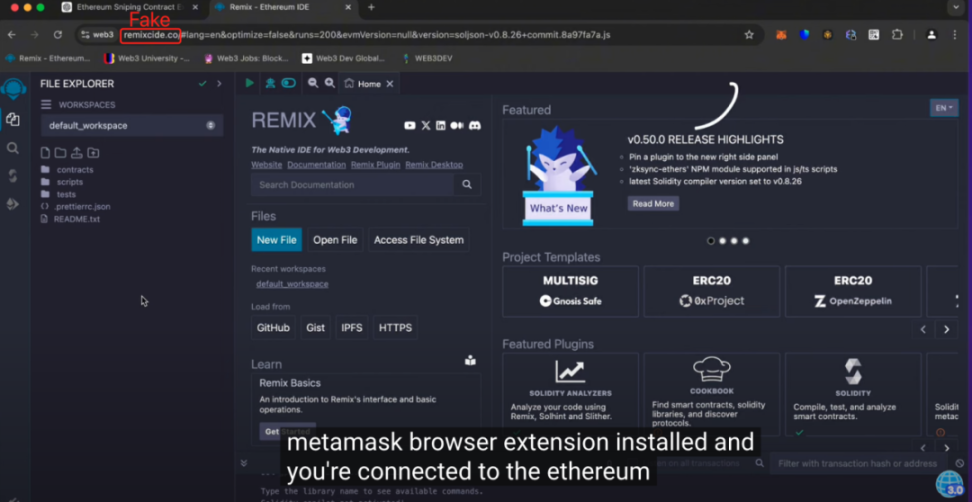
慢雾:新瓶装旧酒,套利MEV机器人骗局分析

接着,用户需要粘贴骗子提供的代码、编译机器人和部署智能合约。到了这一步,骗子表示用户得为合约提供初始资金,且往合约里存越多的 ETH,就能获得越多的利润。而在用户按上述流程操作并点击了「start」后,钱就「消失」了,打入的套利本金都进入骗子钱包地址,因为代码有后门。
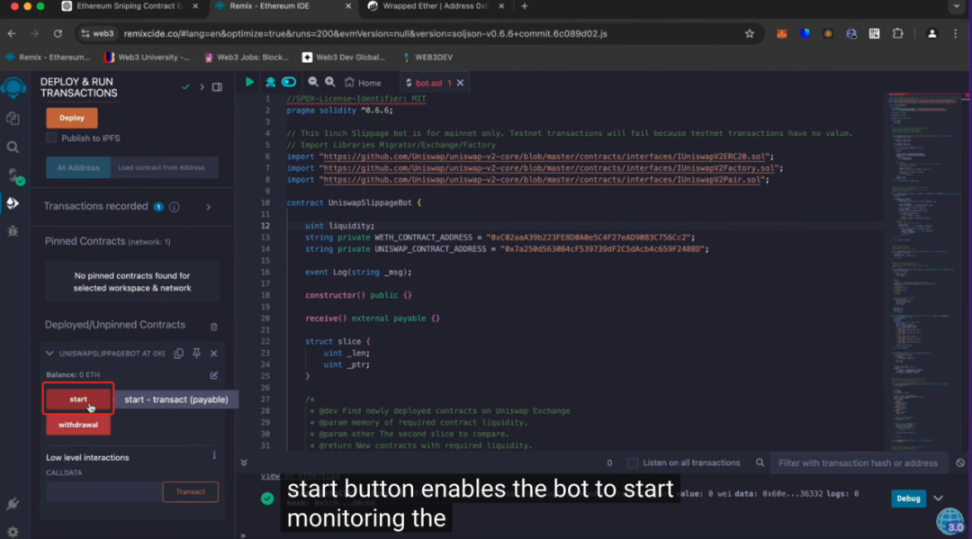
慢雾:新瓶装旧酒,套利MEV机器人骗局分析

我们以 Web3 反诈骗平台 Scam Sniffer 报道过的下述诈骗事件为例,分析此类骗子的资金转移模式。
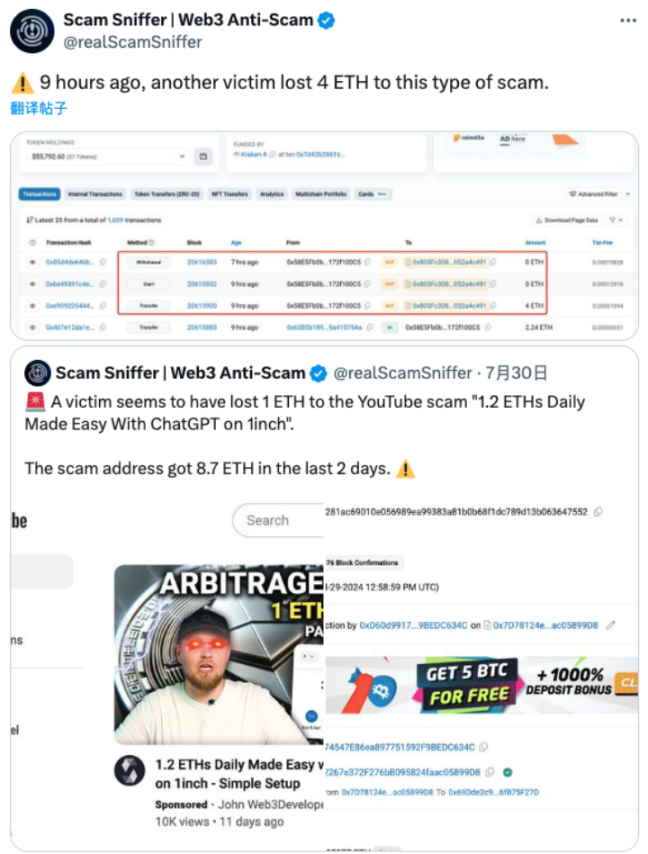
 

慢雾:新瓶装旧酒,套利MEV机器人骗局分析

(https://x.com/realScamSniffer/status/1828364436241031669)

使用链上追踪和反洗钱平台 MistTrack 查询骗子的地址 (0xAEF35f154C318c87744913f38A6d357691258122),可以看到从八月底至今,仅骗子的这个地址就已获利约 30 ETH,受害者超过百人。
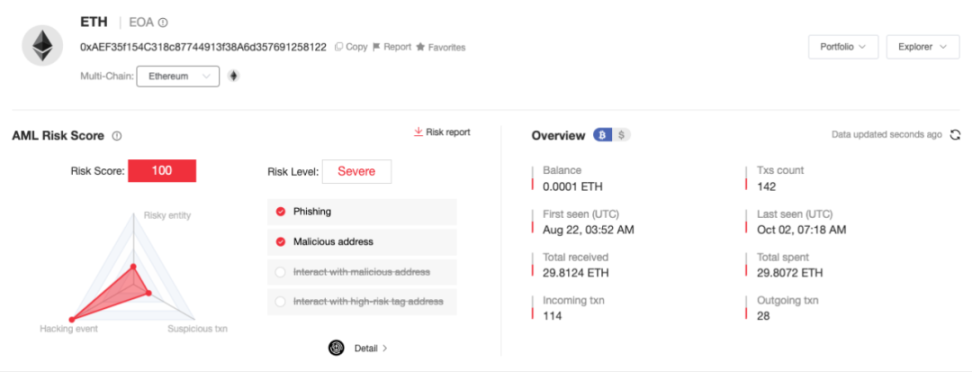
慢雾:新瓶装旧酒,套利MEV机器人骗局分析

该地址的资金转入模式单一,均为受害者根据上述骗局的流程操作,将 ETH 转入合约,随后被骗子盗走。转出模式呈现直接转入交易所;或是转移至用于暂存资金的地址(如:0xea06b983e144432919779b236ba28ece28b74ec6),然后再转入交易所。

下图中的 0x442a4960c783affe2b6d9884f32d7cf2683a408b 和 0x44d63ce270637553f89f3c2706869d98d1248da3 也是骗子用来直接收集受害者资金的地址,这两个地址创建于八月底,至今已盗走约 20 ETH,受害者约 93 名。
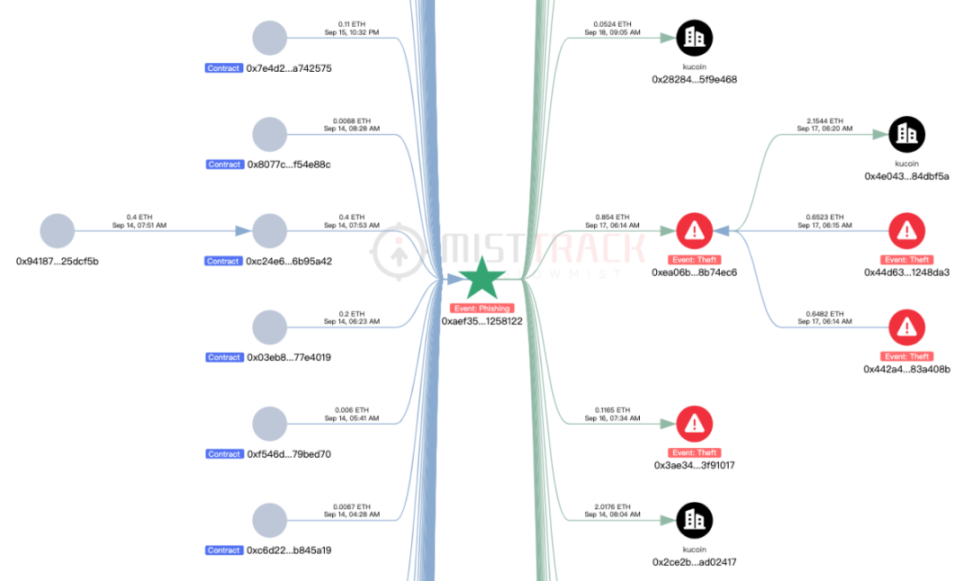
慢雾:新瓶装旧酒,套利MEV机器人骗局分析

由于骗子采取广撒网,积小利的模式,因此虽然受害者众多,但因损失相对较少,花费精力去追究不太现实,这类骗子也因此能够长期逍遥法外,给骗局换个「皮」便可继续进行类似的欺诈活动。Remix 已在其网站提醒用户们注意此类骗局,在其发布在 Medium 上的骗局分析文章的评论区发现,从两年前到近期都有受害者发布被骗的留言,还有不少用户提供了相关诈骗视频的链接,提醒大家注意安全,可见这类骗局的泛滥程度。
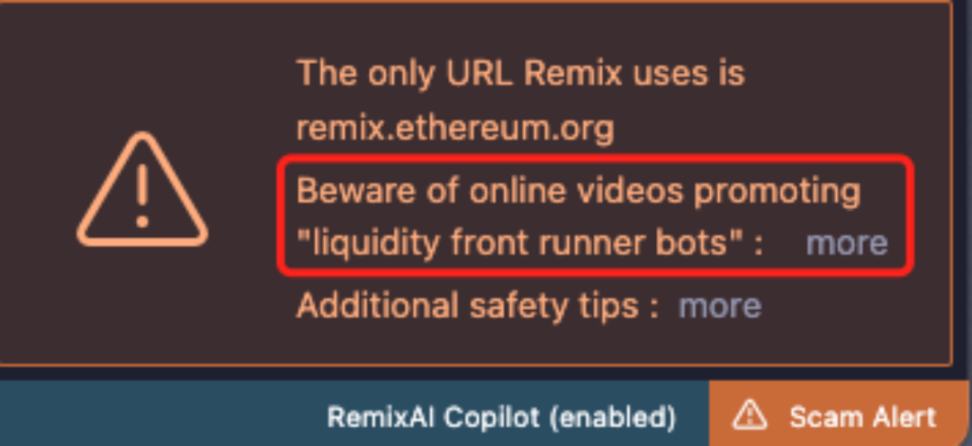
慢雾:新瓶装旧酒,套利MEV机器人骗局分析

总结

慢雾安全团队提醒广大用户,切勿点击不明链接或运行不明代码。既然骗子声称代码是由 ChatGPT 生成的,那我们至少可以将代码再发给 ChatGPT、Claude 等工具检查下,看看是否包含恶意行为。许多用户原本只是希望赚取被动收益,也愿意付出本金,但跟着骗子一通操作,没想到最后本金也没了,倒是骗子靠着这些「教程」忽悠了一个个受害者往他的钱包里转钱,实现「被动收益」。因此,请用户们保持警惕,操作前多确认下是天降馅饼还是陷阱,避免资金受损。


Letture associate

Token Budget Wars: Enterprise AI Enters the 'Accounting Era'

Token Budget Wars: Enterprise AI Enters the "Accounting Era" Enterprise AI is shifting from the question of "whether to adopt" to "how to account for it." As AI inference costs evolve from experimental budgets into ongoing operational expenses, CEOs and CFOs are demanding proof of value: what tangible results does each dollar spent on tokens deliver? The core of "Token Budget Wars" is not simply about reducing AI bills, but about intelligently allocating compute resources. It involves determining which business processes warrant more computational power, which tasks can use cheaper models, which can be outsourced or handled manually, and which are merely inefficient consumption. A key insight is that AI usage (token consumption) does not equal value. While SaaS usage indicated software adoption, AI token usage only indicates the "meter is running." The same workflow can cost vastly different amounts due to factors like prompt quality, context, model choice, and retries. The critical metric for scaling is "marginal token utility"—the business value created per additional dollar of inference cost. However, this is difficult to measure due to challenges like the long tail of retries, context inflation (where costs can scale quadratically with context length), and inefficient model routing (defaulting to the most powerful model for all tasks). The competition for token allocation is intensifying because, in the AI era, influence is tied to how much intelligence one can command, not just team size. AI spending is essentially competing with labor costs, whether for replacing external BPOs, internal staff, or generating new revenue. BPO contracts provide a clearer benchmark as they are priced per completed unit. The missing layer is attribution from tokens to business outcomes. Companies need a system that connects inference spending to completed work and results, capturing the agent's decision trajectory—what it saw, retrieved, tried, and why it succeeded or failed. This recorded rationale becomes a valuable asset. Ultimately, those who master token-to-outcome attribution will control the allocation of AI resources within enterprises, deciding which workflows get more compute, which are capped, or which revert to humans. The first phase of enterprise AI proved models could do the work. The next phase will determine how much of that work is worth paying for.

marsbit13 min fa

Token Budget Wars: Enterprise AI Enters the 'Accounting Era'

marsbit13 min fa

US Debt Exceeds $39 Trillion, Surpassing GDP for First Time: The 'Gray Rhino' Every Investor Must Face by 2026

The U.S. national debt has exceeded $39 trillion, with the debt-to-GDP ratio surpassing 100% in 2026 for the first time since WWII. The annual interest payment is projected to reach $1.039 trillion. Driven by structural factors like tax cuts, rising entitlement spending (Social Security, Medicare), and compounding interest, the deficit persists. The Congressional Budget Office warns the current fiscal path is unsustainable, projecting debt could reach 175% of GDP by 2056. While the U.S. is unlikely to default as it issues its own currency, the consequences include persistent inflation pressure, higher long-term interest rates (e.g., 30-year Treasury yields at 5.2%), and potential crowding out of private investment. A fiscal crisis could manifest as a sudden, sharp spike in borrowing costs if market confidence erodes. Major credit rating agencies have downgraded U.S. debt, reflecting these concerns. For investors, this signals the end of the era of permanently low interest rates. Equity investors should favor companies with strong current earnings over high-growth stocks reliant on low discount rates. Bond investors face headwinds for long-term Treasuries due to increased supply, making shorter-duration bonds and investment-grade corporates relatively attractive. Gold and real assets can provide a hedge against currency debasement risks. Three broad scenarios are possible: gradual stabilization through fiscal reform (unlikely given political gridlock), a slow-burn of high debt and interest rates dragging on growth (the most probable baseline), or a sudden loss of market confidence triggering a crisis. Key indicators to watch include CBO report updates, Treasury auction demand, and the 30-year Treasury yield. The core takeaway for investors is the need to adjust portfolios for a world of sustained higher government borrowing costs and interest rates.

marsbit36 min fa

US Debt Exceeds $39 Trillion, Surpassing GDP for First Time: The 'Gray Rhino' Every Investor Must Face by 2026

marsbit36 min fa

A 10,000-Word Interpretation of the "Optical Interconnect" Industry Chain: The AI Infrastructure Bottleneck Obscured by GPU Glare

**Summary: The Rise of Optical Interconnect in AI Infrastructure** This analysis explores the critical, yet often overlooked, role of optical interconnects in large-scale AI data centers. While GPUs provide raw computational power, the efficiency of AI clusters depends heavily on high-speed data transfer between thousands of cooperating GPUs during both training and inference tasks. Copper-based electrical connections are hitting physical limits in bandwidth, distance, and power consumption. Fiber optics, using light signals, offer a superior solution with exponentially higher bandwidth and lower energy use over longer distances. This shift is driving rapid growth in the optical interconnect market. The core translation device is the pluggable optical transceiver (or module), which converts electrical signals from GPUs into optical signals for fiber transmission and vice versa. Its manufacturing involves two distinct semiconductor domains: indium phosphide (InP) for optical chips (lasers, modulators, detectors) and silicon for digital signal processing (DSP) chips. A transformative next-generation technology is Co-Packaged Optics (CPO). CPO moves the optical engine (a silicon photonic integrated circuit, or PIC) much closer to the GPU or switch inside the same chip package, drastically reducing power loss and latency. CPO necessitates an external laser source and relies on silicon photonics (using Silicon-on-Insulator/SOI wafers) for integration with silicon chips. The optical interconnect ecosystem is highly fragmented, unlike the concentrated GPU market. Key bottlenecks and players span the entire supply chain: InP substrates (e.g., AXT), epitaxial wafers (e.g., IQE), laser chips (e.g., Sivers, Lumentum, Coherent), silicon photonics foundries (e.g., Tower Semiconductor), SOI wafers (e.g., Soitec), DSP/switch chips (e.g., Broadcom, Marvell), and underlying fiber (e.g., Corning). The article posits that AI infrastructure competition is extending from "who has more GPUs" to "who can secure the scarce optical interconnect supply chain." CPO represents the largest potential growth variable, with projections suggesting it could become a market worth tens of billions of dollars by 2028. Investment opportunities vary from conservative (large, diversified players) to aggressive (small, high-beta companies focused on specific bottleneck technologies), but the sector carries significant volatility and execution risks.

marsbit1 h fa

A 10,000-Word Interpretation of the "Optical Interconnect" Industry Chain: The AI Infrastructure Bottleneck Obscured by GPU Glare

marsbit1 h fa

Trading

Spot
Futures
活动图片