Crypto Mines Busted: Authorities Uncover Underground Mining Farms In Russia

bitcoinistPubblicato 2024-09-25Pubblicato ultima volta 2024-09-25

Introduzione

Amid the new legislation for crypto mining in Russia, local authorities have uncovered illegal crypto mining farms in the southern...

Amid the new legislation for crypto mining in Russia, local authorities have uncovered illegal crypto mining farms in the southern Republic of Dagestan. The regional prime minister urged law enforcement to increase their efforts to tackle unlawful mining operations as the region struggles with electricity consumption.

 Underground Crypto Mining Centers Busted

On Tuesday, news media outlet Reuters reported that Dagestan authorities have called out for stronger actions against illegal crypto mining centers in the region. Abdulmuslim Abdulmuslimov, Dagestan’s prime minister, asked law enforcement to pay more attention to the evolving methods miners continuously develop to operate.

At a meeting to discuss preparations for energy, housing, and utilities facilities for winter, the regional leader uncovered the new hiding methods of unregistered mining farms, revealing that several mining centers have been discovered under the ground:

 The owners of illegal cryptocurrency mining installations are coming up with new methods of ‘circumventing’ the law – they install mining farms underground.

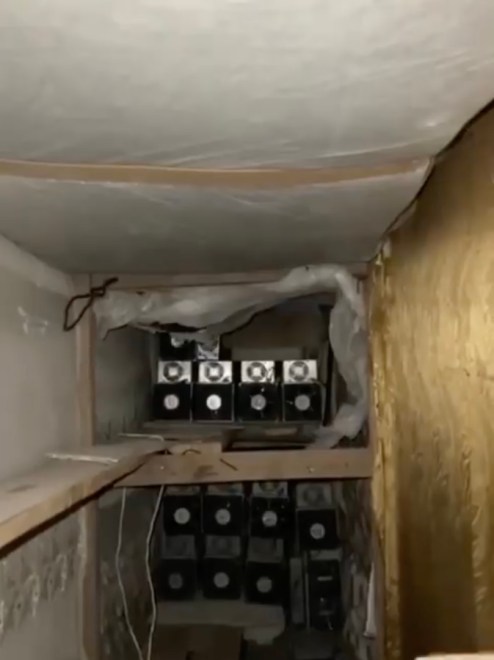
Per the report, authorities showed a video of a makeshift underground cavern in the Sergokalinsky district. It shows that the entry is a narrow square at ground level, which can be easily disguised, with a ladder leading to the cave. After descending, authorities found over 15 mining machines with dozens of fans cooling the computers.
Crypto

Inside of the underground cave used for illegal crypto mining. Source: Mario Nawfal on X

Abdulmuslimov pointed out this was one of several underground crypto mining farms in the region. Moreover, he shared that miners also use “mobile installations” for their farms, allowing them to move more easily.

Russia’s New Mining Era

As reported by Bitcoinist, crypto mining was recently legalized in Russia. In August, Russia’s President Vladimir Putin signed a new law to give the sector a legal status within the country, attempting to be at the forefront of innovation and tackle illegal operations.

The new legislation will go into effect on November 1, 2024, allowing registered companies and individuals to operate legally. Under the new law, crypto miners and mining companies will have the “exclusive rights” to mine in the country.

However, individuals who do not exceed the energy consumption limits set by the Russian government will have the right to mine without registering.  It’s worth noting that the crackdown on crypto mining farms has been an ongoing issue in the Republic of Dagestan.

A report by The Insider detailed that police raids on mining centers had become more frequent in the region since late 2023. The investigation claims that Dagestan “is most likely first in all of Russia when it comes to the number of detected electricity thefts” used for crypto mining, and authorities consider that mining operations are responsible for the electrical problems due to their high consumption.

Ultimately, Dagestan’s prime minister ordered law enforcement to toughen the measures, alleging that the illegal mining centers have caused electrical outages, including the recent fire at a substation that left several districts without power over a week ago.
Crypto, Bitcoin, BTC, BTCUSDT

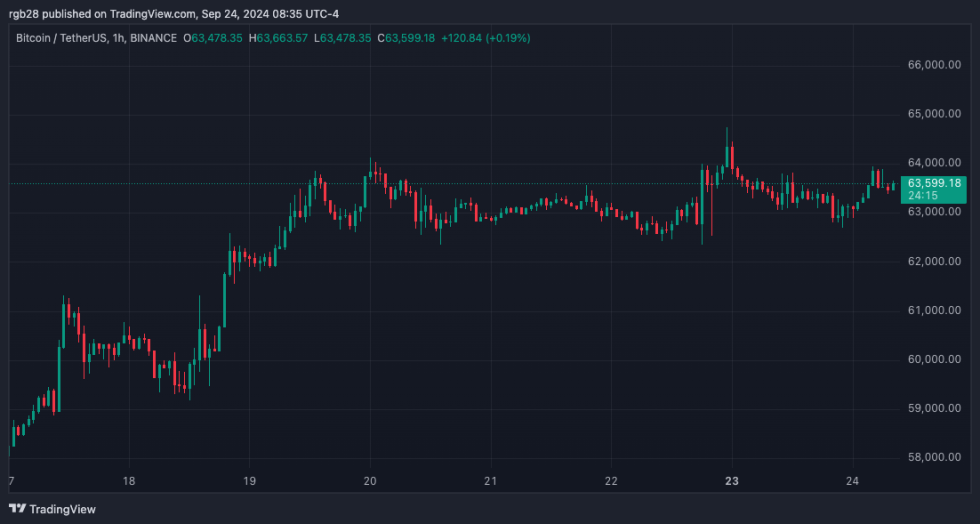
Bitcoin is trading at $63,599 in the weekly chart. Source: BTCUSDT on TradingView
Featured Image from Unsplash.com, Chart from TradingView.com
Rubmar Garcia

Rubmar Garcia

Rubmar is a crypto enthusiast who likes learning and improving constantly. She enjoys reporting on the latest news and developments in the crypto industry. Rubmar also enjoys scrapbooking, crafting, simulation games, and watching football.

Letture associate

Opinion: AI Bubble Bursts, Bitcoin and Other Risky Assets Are the First to Be Impacted

BIS Warns AI Investment Boom Could Trigger Market Stress, Impacting Bitcoin First The Bank for International Settlements (BIS) warns that a potential bursting of the "AI bubble" could tighten liquidity and severely impact risk assets like Bitcoin in the near term. Major tech firms are projected to spend over $1 trillion on AI infrastructure in 2025-2026. The BIS cautions that if returns fail to meet expectations, a sudden withdrawal of financing could turn this investment boom into a prolonged bust, creating ripple effects across financial markets. While AI holds long-term economic promise, the current scale and speed of investment, coupled with intense competition and physical bottlenecks (e.g., semiconductors, power grids), mirror historical bubbles. The report highlights that the AI funding web—spanning corporate debt, private credit, and complex vendor agreements—makes systemic risks harder to see. A disappointment in AI adoption could transmit stress through this chain, widening credit spreads and pressuring weaker borrowers. For Bitcoin, the initial reaction to such a market shock would likely be defensive. As liquidity tightens, investors typically sell liquid assets first, and Bitcoin often trades in line with other risk assets during portfolio de-risking. Recent correlations, like Bitcoin's drop following a sharp decline in South Korea's stock market, support this view. However, the longer-term outcome for Bitcoin depends on the policy response. If an AI-driven credit crunch forces central banks to inject liquidity and ease policy eventually, it could reignite Bitcoin's narrative as a hedge against monetary debasement. Yet, traders betting on this outcome may first have to endure significant market volatility and potential price declines.

marsbit1 h fa

Opinion: AI Bubble Bursts, Bitcoin and Other Risky Assets Are the First to Be Impacted

marsbit1 h fa

South Korea Reaps Riches, America Turns Hostile

The US has filed a collective antitrust lawsuit in California against Samsung, SK Hynix, and US-based Micron, alleging they colluded to create a "RAMpocalypse" by slashing traditional DRAM production and raising prices 700% over four years amid the AI boom. This lawsuit targets the heart of the AI supply chain: High Bandwidth Memory (HBM), critical for Nvidia's GPUs. Currently, SK Hynix (57%), Samsung (22%), and Micron (21%) dominate global HBM production. The case highlights a deeper US concern: in the AI era, South Korea, through its HBM dominance, is capturing an estimated 35% of global AI profits, second only to the US (49%). SK Hynix's operating profit margin recently hit a record 72%. In response to the lawsuit, South Korea announced a massive $800 trillion won investment to build four new chip plants, doubling down on its strategic position. Analysts see the lawsuit not merely as a consumer price issue but as strategic pressure. It aims to support Micron's US manufacturing expansion (subsidized by the CHIPS Act) and secure America's share of AI profits by bringing more HBM production onshore. However, South Korea's rapid execution and massive cash flow from current HBM sales give it a significant speed advantage over US build-out timelines. The conflict underscores a fundamental shift: AI infrastructure like GPUs and HBM is becoming a new form of strategic national resource, akin to oil. While Nvidia and Korean memory giants are interdependent, the struggle over profit distribution and industrial sovereignty in this new landscape is just beginning. This lawsuit may be the first major skirmish in the AI resource wars.

marsbit1 h fa

South Korea Reaps Riches, America Turns Hostile

marsbit1 h fa

Trading

Spot
活动图片