Elon Musk Wins Legal Battle Over $258 Billion Dogecoin Price Manipulation

bitcoinistPublished on 2024-08-30Last updated on 2024-08-30

Abstract

A federal judge threw out a $258 billion lawsuit that had accused Elon Musk of orchestrating a racketeering scheme to...

A federal judge threw out a $258 billion lawsuit that had accused Elon Musk of orchestrating a racketeering scheme to manipulate the price of Dogecoin, a win for the billionaire in a high-stakes legal fight.

The class action suit, according to a Reuters report, first filed in June 2022, has had a long and circuitous history, until its final arguments before Manhattan District Judge Alvin Hellerstein on August 30, 2024.

One Keith Johnson filed a class-action complaint against Musk alleging that his constant support of Dogecoin set off a rocketing price frenzy followed by a dizzying drop that cost many investors much.

Decision Of The Court

Judge Hellerstein reasoned that allegations against Musk were unfounded and characterized Musk’s remarks about Dogecoin as “aspirational puffery.”

In other words, the judge claimed that Musk’s publicly published comments and tweets were more about hype than actual hard data.

The class-action lawsuit claimed that Musk operated a “pump and dump” scheme by inflating the value of Dogecoin using his social media profile and then selling his interest to turn a profit.

The judge did, however, note that the claims were light on information and nebulous in nature, not supported by the relevant detail necessary to move forward with such a suit.

In the case of Musk, whose tweets usually send the Dogecoin community abuzz, especially after he appeared on “Saturday Night Live” and Musk briefly turned Twitter’s logo into the Dogecoin logo, were viewed as seminal moments in the coin’s stratospheric rise.

The judge said no reasonable investor could rely on Musk’s public statements as the basis for securities fraud despite its outlandish claims.

Elon Musk Happy

The mood flipped dramatically after the ruling. Alex Spiro, Musk’s lawyer, said that his client was relieved and pleased. He added that today was “extremely fantastic for Dogecoin.”

By contrast, the plaintiffs-who amended their complaint several times-walked away from court today with no clear avenue forward. It was dismissed with prejudice, meaning they can’t reopen action, slams the door on their allegations against Musk and Tesla.

DOGE market cap currently at $14.7 billion. Chart: TradingView

Formally known as Johnson v. Musk, this ruling received quite a lot of media attention due in large part to Musk’s fame and his very long relationship with Dogecoin-a cryptocurrency that began as a joke but became quite serious to its devotees.

The result of this case may set a dramatic precedent for the decisions of future cases involving meme coin investing and social media promotion.

Broader Implications

The settlement has raised serious questions over the responsibilities of high-profile figures promoting cryptocurrency. Musk is renowned for his light-hearted, sometimes erratic tweets about Dogecoin, which have equally given cause for investor glee and frustration.

Though his comments might amuse some as light-hearted entertainment, others say they had the potential to carry significant financial consequences.

Just as Dogecoin searches for its place in the crowded cryptocurrency landscape, the legal landscape with regard to endorsements will also continue to shift.

Investors may have to be more careful and do their own research before making trading decisions based on celebrity endorsements.

The decision by the court lets not only Elon Musk but also Tesla off serious allegations, underlining the complex connection between social media influence and financial markets.

A reminder of the many risks in investments tied to digital currency, particularly with the whim of famous characters, this story makes many investors temper excitement over Dogecoin, realizing that the market can be quite unpredictable, and caution is thus rather significant.

Featured image from Technext, chart from TradingView

Christian Encila

Christian Encila

Christian, a journalist and editor with leadership roles in Philippine and Canadian media, is fueled by his love for writing and cryptocurrency. Off-screen, he's a cook and cinephile who's constantly intrigued by the size of the universe.

Related Reads

Breaking: OpenAI Undergoes Major Reorganization, President Brockman Assumes Command

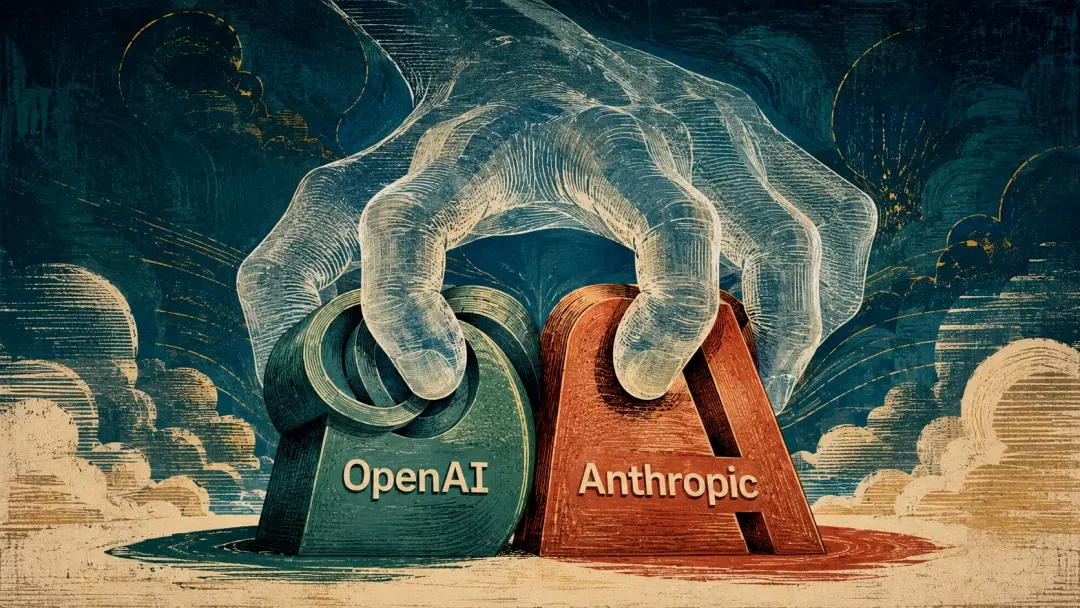
OpenAI has announced a major internal reorganization just months before its anticipated IPO. The company is merging its three flagship product lines—ChatGPT, Codex, and the API platform—into a single, unified product organization. The most significant leadership change involves co-founder and President Greg Brockman moving from a background technical role to take full, permanent control over all product strategy. This follows the indefinite medical leave of AGI Deployment CEO Fidji Simo. Additionally, ChatGPT's longtime lead, Nick Turley, has been reassigned to enterprise products, with former Instagram executive Ashley Alexander taking over consumer offerings. The consolidation, internally framed as a strategic move towards an "Agentic Future," aims to break down internal silos and create a cohesive "Super App." This planned desktop application would integrate ChatGPT's conversational abilities, Codex's coding power, and a rumored internal web browser named "Atlas" to autonomously perform complex user tasks. The reorganization occurs amid significant internal and external pressures. OpenAI has recently seen a wave of high-profile departures, including Sora co-lead Bill Peebles and other senior technical leaders, leading to concerns about a thinning executive bench. Externally, rival Anthropic recently secured funding at a staggering $900 billion valuation, surpassing OpenAI's own. Google's upcoming I/O developer conference also poses a competitive threat. Analysts suggest the dramatic restructure is a pre-IPO move to present a clearer, more focused narrative to Wall Street—streamlining operations and demonstrating decisive leadership under Brockman to counter internal turbulence and intense market competition.

marsbit52m ago

Breaking: OpenAI Undergoes Major Reorganization, President Brockman Assumes Command

marsbit52m ago

Two Survival Structures of Market Makers and Arbitrageurs

Market makers and arbitrageurs represent two distinct survival structures in high-frequency trading. Market makers primarily use limit orders (makers) to profit from the bid-ask spread, enjoying high capital efficiency (nominally 100%) but bearing inventory risk. This "inventory risk" arises from passive, fragmented, and discontinuous order fills in the limit order book (LOB). This risk, while a potential cost, can also contribute to excess profit if managed within control boundaries, allowing for mean reversion. Market makers essentially sell "time" (uncertainty over execution timing) to the market for price control and low fees. In contrast, cross-exchange arbitrageurs typically use market orders (takers) to exploit price differences or funding rates, resulting in lower nominal capital efficiency (requiring capital on both exchanges) and higher transaction costs. Their risk exposure stems from asymmetries in exchange rules (e.g., minimum order sizes), execution latency, and infrastructure risks (e.g., ADL, oracle drift). These exposures are active, exogenous gaps that primarily erode profits rather than contribute to them. Arbitrageurs essentially sell "space" (capital sunk across venues) for localized, immediate certainty. Both strategies engage in a trade-off between execution friction and residual risk. Optimal systems allow for temporary, controlled risk exposure rather than enforcing zero exposure at all costs. Their evolution converges towards hybrid models: arbitrageurs may use maker orders to reduce costs, while market makers may use taker orders or hedges for risk management. Ultimately, both use different forms of risk exposure—market makers exposing inventory, arbitrageurs immobilizing capital—to extract marginal, hard-won certainty from the market.

链捕手52m ago

Two Survival Structures of Market Makers and Arbitrageurs

链捕手52m ago

Who Will Define the Rules of the AI Era? Anthropic Discusses the 2028 US-China AI Landscape

This article, based on Anthropic's analysis, outlines the intensifying systemic competition between the U.S./allies and China for AI leadership by 2028. It argues that access to advanced computing power ("compute") is the critical bottleneck, where the U.S. currently holds a significant advantage through chip export controls and allied innovation. However, China's AI labs remain competitive by exploiting policy loopholes—via chip smuggling, overseas data center access, and "model distillation" attacks to copy U.S. model capabilities—keeping them close to the frontier. The piece presents two contrasting scenarios for 2028. In the first, decisive U.S. action to tighten compute controls and curb distillation locks in a 12-24 month AI capability lead, cementing democratic influence over global AI norms, security, and economic infrastructure. In the second, policy inaction allows China to achieve near-parity through continued access to U.S. technology, enabling Beijing to promote its AI stack globally and integrate advanced AI into its military and governance systems, altering the strategic balance. Anthropic contends that maintaining a decisive U.S. lead is essential for shaping safe AI development and governance. The core recommendation is for U.S. policymakers to urgently close compute and model access loopholes while promoting global adoption of the U.S. AI technology stack to secure a lasting strategic advantage.

marsbit2h ago

Who Will Define the Rules of the AI Era? Anthropic Discusses the 2028 US-China AI Landscape

marsbit2h ago

Trading

Spot
Futures

Hot Articles

How to Buy ELON

Welcome to HTX.com! We've made purchasing Dogelon Mars (ELON) simple and convenient. Follow our step-by-step guide to embark on your crypto journey.Step 1: Create Your HTX AccountUse your email or phone number to sign up for a free account on HTX. Experience a hassle-free registration journey and unlock all features.Get My AccountStep 2: Go to Buy Crypto and Choose Your Payment MethodCredit/Debit Card: Use your Visa or Mastercard to buy Dogelon Mars (ELON) instantly.Balance: Use funds from your HTX account balance to trade seamlessly.Third Parties: We've added popular payment methods such as Google Pay and Apple Pay to enhance convenience.P2P: Trade directly with other users on HTX.Over-the-Counter (OTC): We offer tailor-made services and competitive exchange rates for traders.Step 3: Store Your Dogelon Mars (ELON)After purchasing your Dogelon Mars (ELON), store it in your HTX account. Alternatively, you can send it elsewhere via blockchain transfer or use it to trade other cryptocurrencies.Step 4: Trade Dogelon Mars (ELON)Easily trade Dogelon Mars (ELON) on HTX's spot market. Simply access your account, select your trading pair, execute your trades, and monitor in real-time. We offer a user-friendly experience for both beginners and seasoned traders.

2.8k Total ViewsPublished 2024.03.29Updated 2025.03.21

How to Buy ELON

Discussions

Welcome to the HTX Community. Here, you can stay informed about the latest platform developments and gain access to professional market insights. Users' opinions on the price of ELON (ELON) are presented below.

活动图片