如何拥有花不完的钱?

Odaily星球日报Published on 2024-08-14Last updated on 2024-08-14

Abstract

比特币+软清算,「躺平」的最佳方案?

原文作者:Alex Liu,Foresight News

如何拥有花不完的钱?

声明:本文观点仅在一定条件和语境下成立。

  • 钱花不完:在无需劳动的情况下,可支配法定货币随着时间逐渐增加。

  • 前置条件:

  • 比特币作为「数字黄金」对冲通胀的逻辑长期成立,即虽有价格波动,在较长时间尺度下比特币会相对信用货币升值。

  • 不发生改变社会运行逻辑的黑天鹅事件。

花不完的钱

提到「花钱」,大家脑海中的默认概念还是「消费法币」。小编也只会给老板发:「明天疯狂星期四,能 V 我 50 吗?」,而不会发「明天疯狂星期四,能 V 我 50 BTC 吗?」;一是怕被打,二是国内的 KFC 也确实尚不支持 BTC 付款。

比特币的「数字现金」叙事并没有跑通。曾有人问知名比特币大多头、MicroStrategy 首席执行官 Micheal Saylor:「为何很少有人用一点比特币去换一杯咖啡?」Saylor 回复到:「你拥有一栋大楼的话,你会用大楼的一角去换一杯咖啡吗?」这有些诡辩的意思了,仅持有比特币,在日常生活中「花钱」的确是不方便的。

但 BTC 作为「数字黄金」,一种存储价值的资产(Store of Value Asset)的叙事未被证伪。通过比特币,或许我们真能拥有「花不完的钱」—— 若它对冲通胀的逻辑长期成立,那一定会在较长时间尺度下相对信用货币(法定货币)升值。我们只需简单持有 BTC,它所对应的法币价值最终一定会逐渐上涨。不用劳动,美美躺平。

但前文说「花比特币」并不方便,而无论是花掉还是卖掉,比特币的数量总是会逐渐减少的,又谈何「花不完呢」?

答案是抵押借贷。

抵押借贷

若存在资产 A 相对资产 B 一直升值,那么抵押资产 A 借出资产 B,随时间推移,理论上可以源源不断借出资产 B。不必出售 A,也不必偿还 B

放在具体案例中,抵押 BTC 借出法币(或 USDT、USDC 之类的稳定币),由于信用货币天然具有滥发、长期贬值趋势,则 BTC 会相对信用货币逐渐升值(即本文成立的前提),在此过程中逐渐借出更多的法币,则我们得以在不出售 BTC、不用劳动的情况下,可支配的法定货币随时间逐渐增加,即「拥有花不完的钱」。

但此处存在一个问题,抵押借贷是有「清算风险」的。BTC 相对信用货币升值是长线趋势,但在短期依然存在着价格波动,即便抛开「插针」等事件不谈,从一轮周期的高点到低点往往也有 50 % 甚至 70 % 以上的振幅。

被清算,相当于被迫在低价卖出 BTC 换回法币偿还债务,「钱花不完」的尝试又失败了。同时由于行情波动剧烈,有可能出现一根 k 线砸到清算价以下导致清算,而后币价快速拉回,给借贷者造成巨额损失的情况。

避免清算的一个方法是保持极低的 LTV(Loan to Value),如抵押价值 100 万美元的 BTC 只借出 30 万美元,几乎可以免于短期价格波动导致的清算。但一方面不存在「绝对的保险」,另一方面这样做的资金利用率未免太低。

那该怎么做呢?

软清算

可以使用软清算机制的借贷来避免短期币价波动导致我们失去 BTC 仓位。以抵押 BTC 借出 crvUSD 为例:

在 Curve Finance 的 crvUSD 产品中,抵押品的清算是通过 AMM 进行的,并且是以渐进式的软清算方式,抵押品会随价格下跌逐渐清算。但 AMM 中的清算是可逆的,在抵押品价格上涨后,AMM 会帮助用户买回资产。

清算 AMM

crvUSD 通过 LLAMMA(Lending-Liquidating AMM Algorithm)实现软清算,为抵押资产设计了一个特殊的 AMM 池,实现在资产价格下跌时逐渐清算。其中的清算线有两个,分别是清算开始价格和清算终止价格。在抵押资产高于清算价格时,AMM 池中全是抵押品。抵押品价格下跌至清算开始价格时,AMM 中的抵押品开始被卖出换成稳定币,之后在价格下跌过程中抵押品被逐渐卖出。在抵押品价格跌至清算终止价格之下时,AMM 中只剩下稳定币。

LLAMMA 的清算过程可以理解为一个「反向的 Uniswap V3」。假设 AMM 要处理的是 BTC-crvUSD 交易对,在 Uniswap V3 中,流动性提供者(LP)需要设置 BTC 的价格区间。当 BTC 的价格处于区间之内时,AMM 中有两种可以互相兑换的 Token,在价格区间之外时,AMM 池中只有一种 Token,这也是 LLAMMA 清算开始价格和结束价格的设计思路。当抵押品是 BTC 时,价格高于区间 AMM 池中全部为 BTC,在价格区间之内时 BTC 逐渐被清算为 USD,见图。

和 Uniswap V3 的不同之处是,Uni V3 中 BTC 价格越高,AMM 池中的 USD 的数量越多。而在 LLAMMA 中,BTC 价格越低时,AMM 池中 USD 的数量越多,因为需要卖出 BTC 用于清算。BTC 价格升高时,还可以买回 BTC 抵押资产,尽量保证用户的敞口不变。
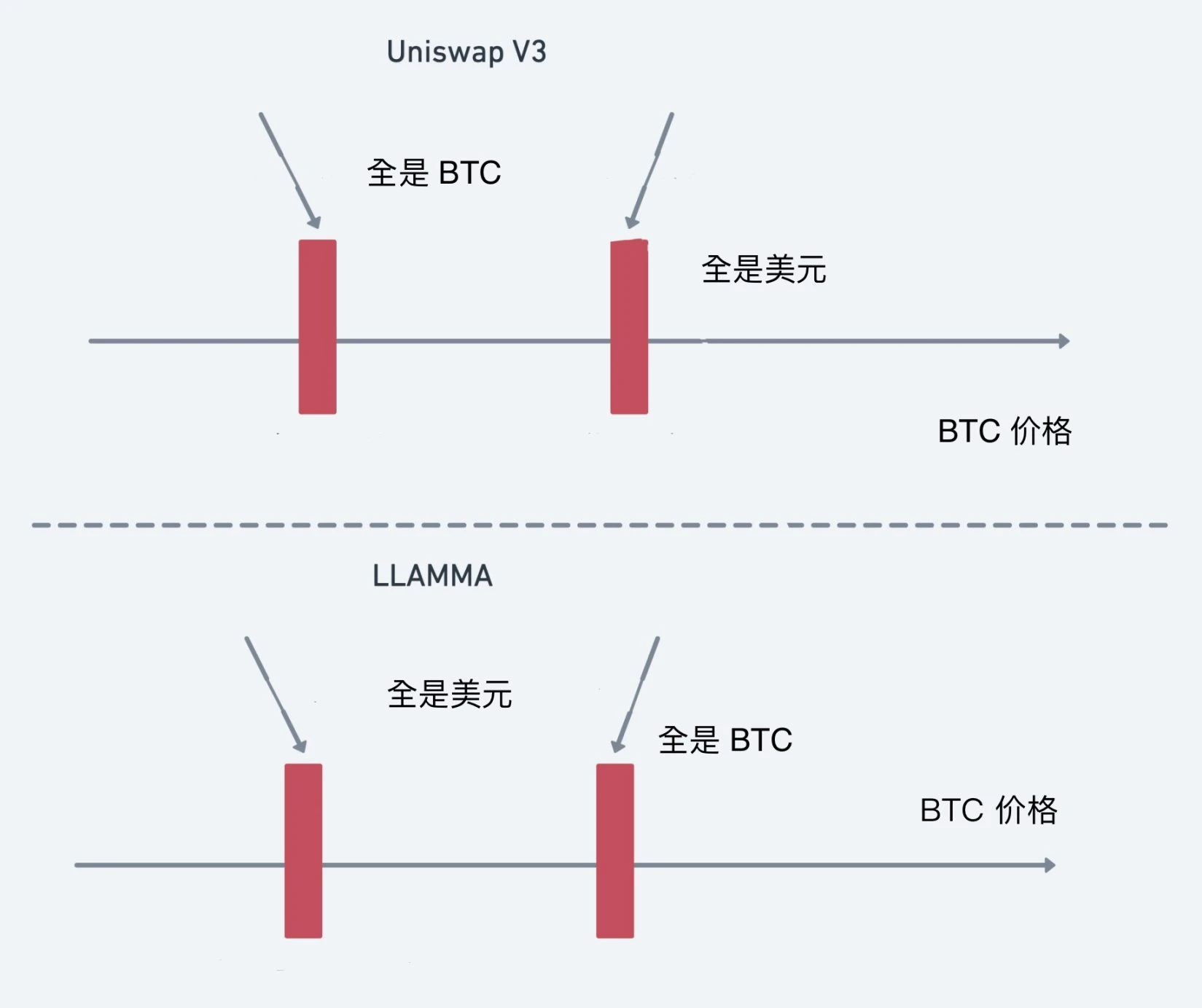
如何拥有花不完的钱?

在软清算的机制下,即使清算发生,我们会在价格涨回过程中以和卖出几乎相同的价格买回抵押品,保证仓位的几乎不变。而由于在较长时间尺度下比特币会相对信用货币升值这一前提,被清算必然在未来涨回。(软清算由外部套利者发动,借贷者会有相对硬清算极少的损失,需避免频繁落入清算区间。这里也体现出与 Uni v3 相反的设计哲学:LP 希望价格尽量多落在区间内收获费用,借贷者希望价格尽量少落在区间内减少损失。)

到此逻辑闭环:持有比特币并使用软清算机制进行法币借贷,比特币升值过程中我们能获得持续的现金流,无需出售比特币或担心短期价格波动造成的清算将这一切搞砸。在持有一定比特币的情况下,无需劳动而可支配的法定货币随时间逐渐增加。这算不算是拥有了「花不完的钱」?

结语

本文介绍了一种投资与消费的策略,即保证 BTC 仓位的同时通过借贷策略拥有持续的现金流,并介绍了使用软清算机制的优势。若持有大量 BTC,本方案具备实操性,或许真是让人不用劳动,美美躺平的最佳策略之一。但本方案也有一个缺陷,让像作者一样的同学无法躺平,只能苦苦打工 —— 没有指出足够躺平的 BTC 该上哪儿领 ......

于是小编决定突破自己,毅然拿出手机,给老板发到「明天疯狂星期四,能 V 我 50 BTC 吗?」,喜提拉黑。

参考文章:

读懂 Curve 稳定币 crvUSD https://foresightnews.pro/article/detail/37304
原文链接

Related Reads

$292 Million KelpDAO Cross-Chain Bridge Hack: Who Should Foot the Bill?

On April 18, 2026, an attacker stole 116,500 rsETH (worth ~$292M) from KelpDAO’s cross-chain bridge in 46 minutes—the largest DeFi exploit of 2026. The stolen assets were deposited into Aave V3 as collateral, causing $177–200M in bad debt and triggering a cascade of losses across nine DeFi protocols. Aave’s TVL dropped by ~$6B overnight. This legal analysis argues that KelpDAO and LayerZero Labs share concurrent liability, with fault apportioned 60%/40%. KelpDAO negligently configured its bridge with a 1-of-1 decentralized verifier network (DVN)—a single point of failure—despite LayerZero’s explicit recommendation of a 2-of-3 setup. LayerZero, which operated the compromised DVN, failed to secure its RPC infrastructure against a known poisoning attack vector. Both protocols’ terms of service cap liability at $200 (KelpDAO) or $50 (LayerZero), but these limits are likely unenforceable due to unconscionability, gross negligence exceptions, and potential securities law invalidation (if rsETH is deemed a security under the Howey test). Aave’s governance also faces fiduciary duty claims for raising rsETH’s loan-to-value ratio to 93%—far above competitors’ 72–75%—without adequately assessing bridge risks, amplifying the systemic fallout. Practical recovery targets include LayerZero Labs (a registered Canadian entity), KelpDAO’s founders, auditors, and identifiable Aave governance delegates. The incident underscores escalating legal risks for DeFi protocols, infrastructure providers, and governance participants.

marsbit39m ago

$292 Million KelpDAO Cross-Chain Bridge Hack: Who Should Foot the Bill?

marsbit39m ago

Insider Trading in War: 5 People Involved, the Highest Earner Was Arrested

On April 24, the U.S. Department of Justice arrested U.S. Army Special Forces Staff Sergeant Gannon Ken Van Dyke for insider trading related to the capture of Venezuelan President Nicolás Maduro on January 3. Van Dyke allegedly profited over $400,000 by placing bets on a prediction market, Polymarket, using insider knowledge of the covert operation. According to the indictment, Van Dyke registered an account (0x31a5) on December 26 and made a series of bets predicting Maduro’s capture and U.S. military involvement in Venezuela. He withdrew most of his funds on the day of the operation and attempted to obscure his tracks by transferring assets through crypto and brokerage accounts. This case marks the first time the DOJ has prosecuted insider trading on Polymarket. PolyBeats had previously identified five suspicious accounts, including Van Dyke’s—the highest earner—in January. The other accounts, with profits ranging from $34,000 to $145,000, remain under unofficial scrutiny but have not been charged. Their lower profits, indirect access to information, and unclear legal boundaries may complicate prosecution. Polymarket has since strengthened its market integrity rules, explicitly prohibiting trading based on confidential or insider information. Van Dyke’s arrest, nearly four months after his trades, signals increased regulatory attention and the persistent traceability of blockchain-based transactions.

marsbit41m ago

Insider Trading in War: 5 People Involved, the Highest Earner Was Arrested

marsbit41m ago

Bitwise: Bullish on Bitcoin's Performance in the Second Half of the Year, AI and Regulation Will Spark a New Altcoin Season

Bitwise CIO Matt Hougan and Research Lead Ryan Rasmussen express strong bullish sentiment on Bitcoin's long-term prospects, suggesting that its $1 million price target may be too conservative. They argue Bitcoin serves a dual role: as digital gold and a potential global settlement asset, especially amid declining trust in traditional monetary systems. Despite a weak Q1 2026 where nearly all crypto assets and prices saw double-digit declines, the analysts remain optimistic due to strong forward-looking catalysts, including institutional adoption via Bitcoin ETFs from major firms like Morgan Stanley and Goldman Sachs. Geopolitical instability, such as Iran’s mention of using Bitcoin for international payments, increases the value of Bitcoin’s “out-of-the-money call option” as a non-political, global settlement currency. This enhances its appeal beyond a mere store of value. . Additionally, Hougan highlights that a clearer regulatory token framework under current SEC leadership, combined with AI efficiency gains and high-performance blockchains, could fuel a new “altseason” by late 2026. This may lead to a wave of legitimate, value-capturing token projects, unlike the earlier ICO boom. . Bitwise also announced an Avalanche ETF, citing its unique architecture and rapid growth in real-world asset (RWA) tokenization, which has surged 10x to nearly $30 billion in two years. The firm believes Layer 1 blockchains are still early in their growth cycle, with significant potential ahead.

marsbit1h ago

Bitwise: Bullish on Bitcoin's Performance in the Second Half of the Year, AI and Regulation Will Spark a New Altcoin Season

marsbit1h ago

Trading

Spot
Futures
活动图片