价格预测显示出什么?MATIC 会跌至两年来的最低点吗?

金色财经Published on 2024-08-12Last updated on 2024-08-12

MATIC 尚未发出任何信号表明多头已准备好扭转看跌趋势。

  • 代币持有者遭受了巨大损失,恢复变得更加困难。

  • 网络MDIA显示停滞的现象已开始蔓延。

Polygon [MATIC]处于强劲的下行趋势中。它始于 4 月初,日线图上跌破 0.91 美元。截至发稿时,MATIC 的交易价格低于 2023 年的年度低点 0.492 美元。

多头与空头展开了激烈的较量,但收效甚微。8 月 5 日,2022 年的年度低点 0.316 美元几乎被重新测试,当天代币跌至 0.334 美元。

网络活动和积累不足以阻止下跌趋势
13BEcOfHvOhnBbtnVJ4qm9LZNDKEkjUOhQ2W1PTH.jpeg

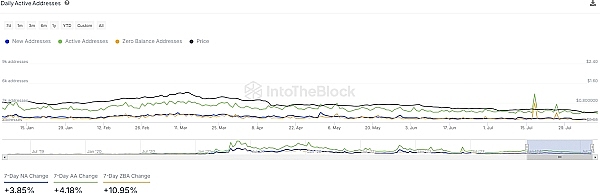
过去两周,新创建的地址数量有所下降。6 月和 7 月大部分时间,该数字稳定在 600 个左右,但 8 月有所下降。

活跃地址数量略低于 7 月下半月,但过去一周略有增加。
UHMxWFrEcoud4mf6Lw258W0rY49xelhrIF9Q7HfN.jpeg

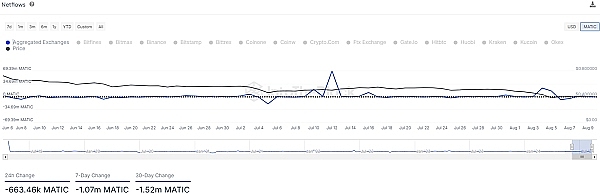
负向流动表明 MATIC 在过去一个月内退出了交易所。美元数字约为 66 万美元。相比之下,MATIC 的市值和前一天的 24 小时交易量分别为 41.6 亿美元和 1.3 亿美元。

为什么 MATIC 多头很难启动复苏?
WnjhknwdWgTc0zVaq1wLyTsczd4ejuAxOxlvAoIt.jpeg

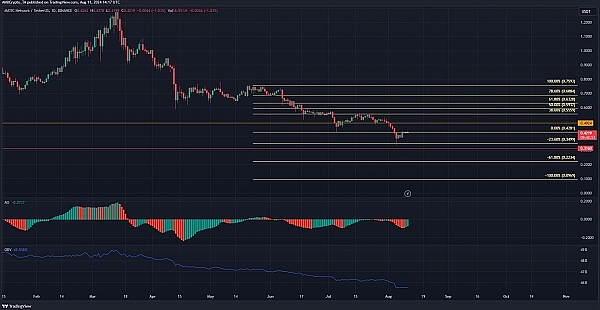
自 3 月以来持续的下跌趋势意味着持有者处于亏损状态。每次小幅上涨都是持有者退出无利可图的投资的机会。OBV 反映了这种持续的抛售压力。

动量震荡指标已在零线以下运行两个月,表明看跌势头占主导地位。
V8Dl3wmNWq99tQp4fpKfcvf40DZycssF4KEUCqN6.jpeg

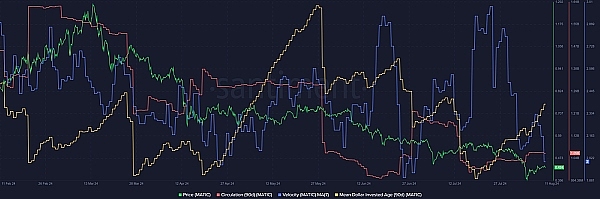
7 月份,流通量指标下降,而流通速度则上升。这表明存在波动性和投机性交易。过去 10 天,指标趋势表明持有者更不愿意出售。

这可能是一种信心的表现,但其他所有信号依然看跌。

平均美元投资年限呈上升趋势,这是长期持有的另一个迹象。下跌表明代币流动增加,并有助于价格复苏。

MATIC未来展望

在乐观的展望中,随着 Polygon 获得越来越多的关注和采用,MATIC 实现价格大幅升值的潜力巨大。

如果加密货币整体市值达到 3 万亿美元,并且 MATIC 保持其目前 0.5% 的市场主导地位,其价格可能会攀升至 1.63 美元。此外,如果市值升至惊人的 10 万亿美元,MATIC 的价格可能会飙升至约 5.44 美元。这种情况将意味着价值可能增长七倍,为投资者带来可观的回报。

尾结

总体而言,Polygon 的未来是投资者和行业观察家们热切关注的话题。Polygon (MATIC) 已成为加密货币领域的杰出参与者,解决了困扰以太坊网络的可扩展性挑战。由于以太坊是市值第二大的加密货币,其广泛采用导致交易成本增加和网络拥堵。

Polygon 提供第 2 层扩展解决方案,旨在通过降低交易费用、提高吞吐量以及跨不同区块链的无缝互操作性来增强以太坊的性能。这种战略方法使 Polygon 成为更广泛采用区块链技术的关键推动者。


Related Reads

Commerce Ministry's Latest Export Controls Target 10 US Companies: Three Market-Moving Threads Explained

China's Ministry of Commerce placed 10 U.S. entities, including MP Materials, USA Rare Earth, Red Cat Holdings, and Teal Drones, on an export control list, banning the export of dual-use items. This move is seen as part of an ongoing countermeasure in the rare earth sector. The analysis suggests the primary impact is on U.S. companies within the **military, drone, and rare earth** sectors, aiming to restrict their access to critical Chinese materials and technology. For the Chinese market, the event is interpreted as reinforcing the **strategic value and pricing power** of domestic rare earth suppliers. However, the potential stock market reactions are nuanced: 1. **Chinese Rare Earth Upstream:** Companies like Northern Rare Earth are near yearly highs, indicating this event's "beneficiary" logic is largely priced in. It may confirm the trend but is unlikely to be a new major catalyst. 2. **Chinese Rare Earth Mid/Downstream & Drones:** Sectors like magnetic materials (e.g., Da Di Bear, Zhenghai Magnetic) and military drones (e.g., China Aerospace) are relatively undervalued. While the drone listing highlights sectoral competition, it doesn't directly translate to new orders for Chinese firms. 3. **Impact on Listed U.S. Companies:** The effect on stocks like MP Materials is ambiguous. While Chinese restrictions pose a challenge, these companies are also core to U.S. supply chain security efforts and may receive increased government support, potentially offsetting negative impacts. Their pre-announcement stock prices did not indicate panic selling. In summary, the export controls strengthen China's position in the global rare earth supply chain but have uneven effects across related stock market segments, with upstream Chinese gains likely priced in and downstream/drone sectors receiving more indirect, sentiment-driven attention. The outcome for the targeted U.S. stocks depends on the balance between restriction impacts and potential compensatory U.S. policy support.

marsbit5m ago

Commerce Ministry's Latest Export Controls Target 10 US Companies: Three Market-Moving Threads Explained

marsbit5m ago

Uniswap v4 Hook Analysis: Architecture Design, Common Vulnerabilities, and Protection Practices

Uniswap v4's Hook mechanism is a major innovation, enabling custom logic injection into liquidity pool lifecycle events like swaps and liquidity provisioning. This transforms the AMM into programmable infrastructure, shifting the security model from protocol-level to pool-level, as each pool's safety now depends on its bound Hook contract. The core architecture revolves around the singleton PoolManager contract, which manages all pools via a flash accounting system. State changes are tracked in transient storage and must be settled by the end of a transaction. Hook contracts are permanently bound to pools via a PoolKey, with their permissions encoded directly into their address via specific low-order bits. This design introduces unique security considerations and challenges for future upgrades. Key vulnerabilities and best practices identified include: - **Access Control Gaps:** Early versions of the BaseHook abstract contract only protect `unlockCallback()`, leaving other lifecycle functions (`beforeSwap`, `afterSwap`, etc.) exposed unless explicitly secured by developers. - **Unrestricted Pool Binding:** The `initialize()` function does not validate if a Hook "consents" to a new pool. Hooks must implement their own whitelisting in `beforeInitialize` to prevent unauthorized pool creation. - **Async/Custom Curve Hooks:** These high-risk Hooks can completely replace Uniswap's swap logic. Their security depends entirely on their own implementation, as they operate outside the native protocol's pricing safeguards. - **Delta Accounting Risks:** The system ensures final balance (NonzeroDeltaCount == 0) but cannot guarantee the *correctness* of intermediate delta states, which attackers could manipulate. - **Token Confusion:** Protocols must implement semantic validation for tokens in user-created markets, not just interface checks, to prevent cross-market confusion attacks. The article emphasizes that Hook auditing requires a "sub-protocol" approach due to extended interaction chains, highlighting a significant shift in security methodology for the v4 ecosystem.

marsbit57m ago

Uniswap v4 Hook Analysis: Architecture Design, Common Vulnerabilities, and Protection Practices

marsbit57m ago

Chips, Open-Source Models, and $50 Trillion: Joe Tsai Reassesses Alibaba Once Again

Alibaba Executive Chairman Joe Tsai recently outlined the company's comprehensive AI strategy in a public discussion. He believes AI represents a massive opportunity, estimating its potential economic impact at up to $50 trillion, stemming from the automation of human intelligence and productivity. Tsai detailed Alibaba's four-layer investment approach across the AI stack: starting from the chip level, moving to cloud infrastructure (Alibaba Cloud), then the model layer with its open-source Qwen model, and finally applications within its vast digital ecosystem (e-commerce, logistics, etc.). The company avoids the energy layer due to China's efficient infrastructure. This broad strategy is designed to ensure Alibaba captures value regardless of where it ultimately concentrates in the AI value chain. He dismissed concerns about an AI investment bubble, pointing to the enormous $50 trillion opportunity. While acknowledging U.S. cloud giants' higher capital expenditure, he argued Chinese firms, including Alibaba (funded by its cash-generative e-commerce core), need to invest more in AI infrastructure. A key theme was technological sovereignty. Tsai positioned open-source models like Qwen as a solution for companies, especially in Europe, seeking independence from proprietary U.S. models and greater data privacy control. He contrasted this with the trend of U.S. giants keeping their models closed-source. Tsai highlighted Alibaba's collaborations with European manufacturers like Bosch and Siemens, using AI for design and quality control. He concluded with an optimistic vision of AI agents enhancing productivity, ultimately freeing up human time for leisure, family, and experiences like live entertainment.

marsbit1h ago

Chips, Open-Source Models, and $50 Trillion: Joe Tsai Reassesses Alibaba Once Again

marsbit1h ago

Trading

Spot
Futures
活动图片