今年美元的全球储备份额降至59%

币界网Published on 2024-08-11Last updated on 2024-08-11

币界网报道:

美元正在失去对世界的控制。2024年,中国在全球外汇储备中的份额从2002年的72%降至59%。在过去的22年里,这一数字下降了13%。

数字很明显:各国,尤其是金砖国家,正在与美元保持距离。同期,人民币微涨3%。

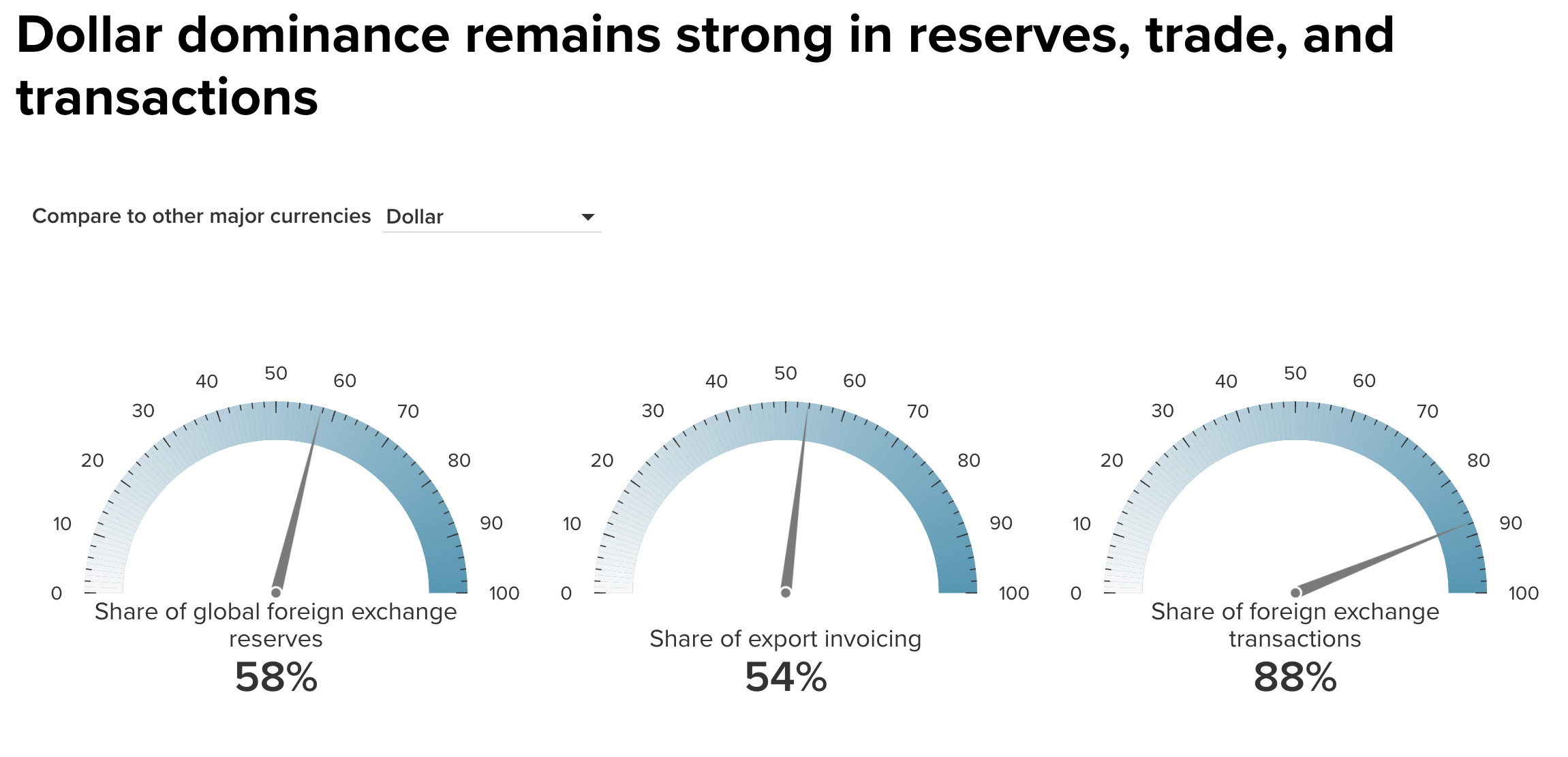
自第二次世界大战以来,美元一直是世界主要的储备货币。今天,它仍然占外汇储备价值的58%。但文字已经写在墙上了。
US dollar's global reserve share falls to 59% this year

紧随其后的欧元仅占20%。随着最近的全球事件,如俄罗斯入侵乌克兰,各国越来越多地寻求使其外汇储备多样化,减少对美元的依赖。

金砖国家及其去美元化

金砖国家一直是呼吁摆脱美元的呼声最高的国家。在过去的两年里,他们加大了促进本国货币在贸易中使用的力度。

特别是中国,一直在努力扩大其跨境银行间支付系统(CIPS)。

目标?创建一个不依赖美元或全球金融信息网络SWIFT的替代金融基础设施。

CIPS发展迅速。2023年6月至2024年5月,62名新参与者加入了该系统,使直接参与者总数达到142人,间接参与者总数达到1394人。

虽然SWIFT仍然是拥有11000多家互联银行的大狗,但CIPS正在采取行动。中国推动在国际交易中使用人民币是对美元主导地位的直接挑战。

尽管人民币在全球外汇储备中的份额从2022年的2.8%略微下降到2023年的2.3%,但推动去美元化的势头正在增强。

金砖国家也在探索新的支付系统,以进一步减少对美元的依赖。关于金砖国家内部潜在支付系统的谈判正在进行中。

该系统可能包括跨境央行数字货币(CBDC)和货币互换协议。

美元的主导地位真的受到威胁了吗?

美元不会不战而降。大西洋理事会得出结论,美元作为主要全球储备货币的作用在中短期内仍然是安全的。

美元继续主导外汇储备、贸易发票和全球货币交易。尽管欧元做出了最大的努力,但它并不是一个真正的威胁。

人民币也不是,至少现在还不是。
US dollar's global reserve share falls to 59% this year

美元的主导地位不仅仅在于储备。它深深植根于全球贸易和金融交易中。美元仍然是国际贸易结算的首选货币。

尽管像中国这样的国家正在推动替代品,但支持美元的基础设施是巨大的。这就是为什么尽管有人试图推翻美元,但美元在储备、贸易和交易方面仍然强劲。

尽管中国做出了最大努力,但人民币仍被视为一种有风险的赌注。对中国经济的担忧、对俄乌战争的立场以及与美国和七国集团国家日益紧张的关系阻碍了人民币的升值。

储备管理者持谨慎态度,这使得人民币在全球储备中的份额相对较低,尽管中国正在推动更多的国际使用。
US dollar's global reserve share falls to 59% this year

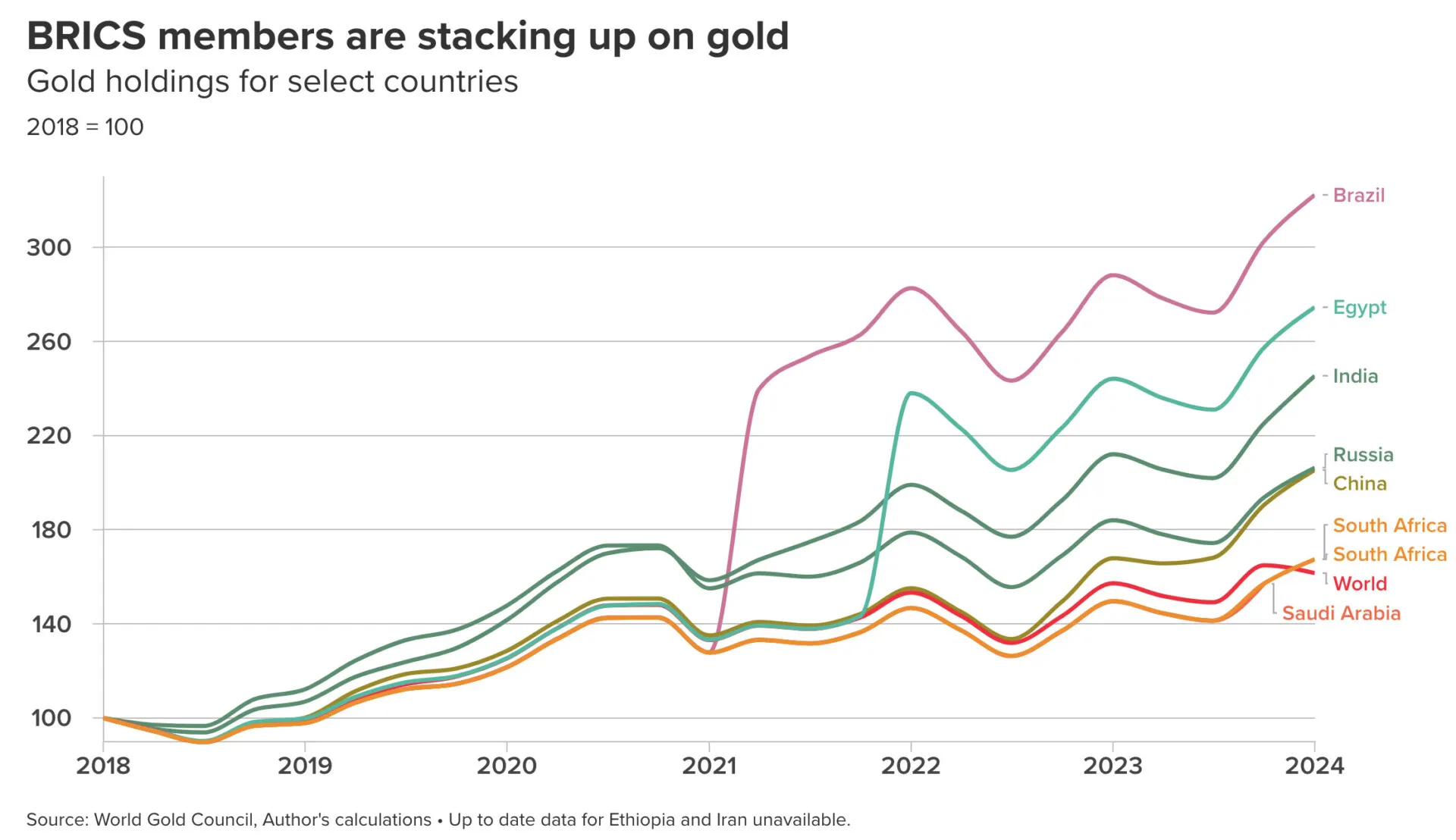
黄金也在卷土重来。近三分之一的央行计划在2024年增加黄金储备。2022年对俄罗斯的制裁表明,即使是欧元也与美元一样存在地缘政治风险。

这促使一些储备经理将黄金视为降低投资组合风险的一种方式。虽然黄金不能取代美元,但随着各国试图实现外汇储备多样化,黄金正成为其中的重要组成部分。

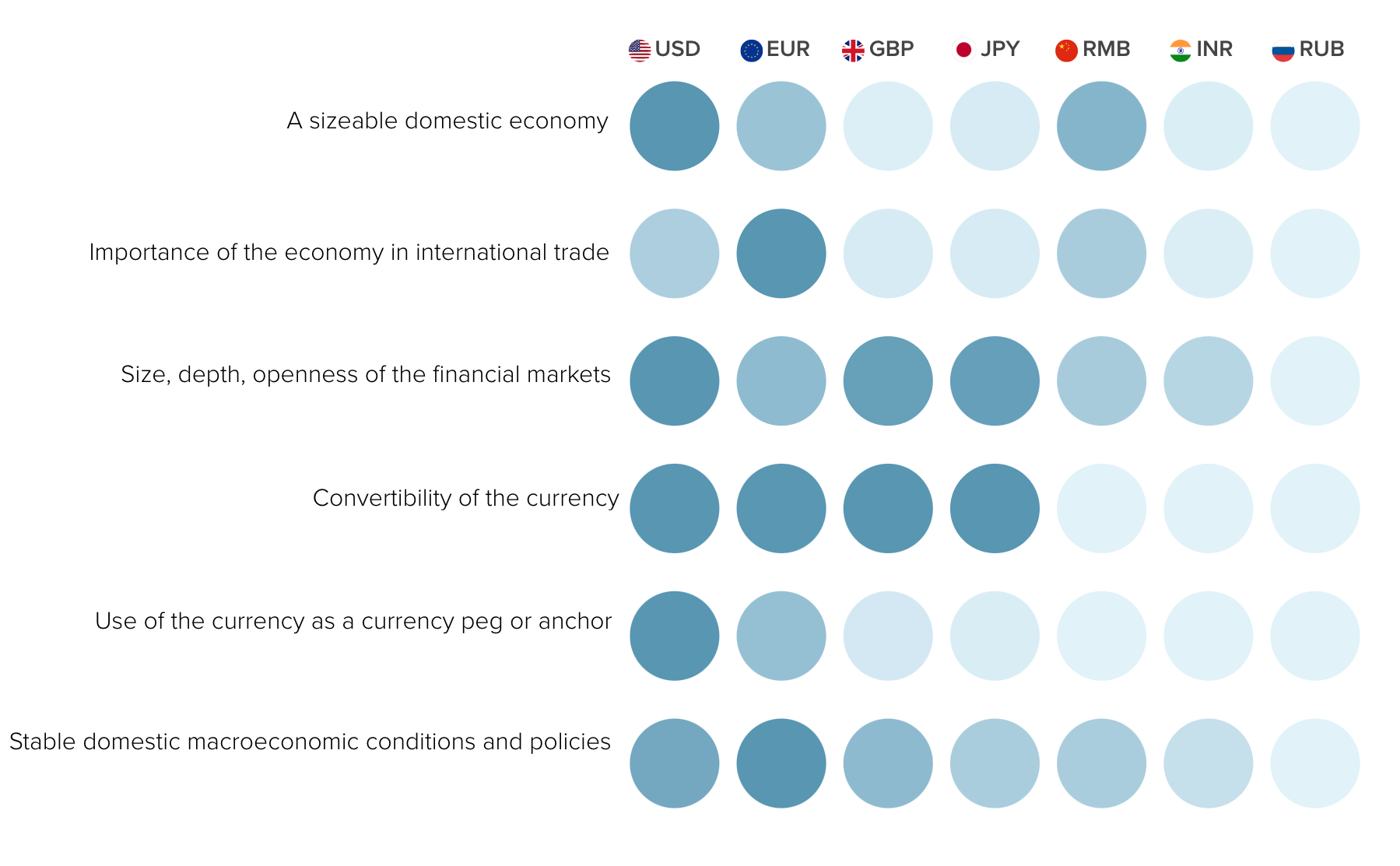
那么,怎样才能成为储备货币呢?稳定性、流动性和信任。美元拥有这些优势,这就是为什么它长时间保持榜首的原因。

国际货币基金组织的特别提款权篮子包括美元、欧元、人民币、日元和英镑。其中,美元仍然胜过其他货币。
Related Reads

Stock Price Soars 655%, Sichuan Brothers Build a 50 Billion Semiconductor IPO

Chengdu Ultra-pure Applied Materials Co., Ltd. ("Ultra-pure Materials"), a Sichuan-based supplier of core semiconductor equipment components, officially listed on the Shenzhen Stock Exchange on August 11. Its share price surged 654.66% to 498 yuan on its debut, giving the company a market capitalization exceeding 50.7 billion yuan. Founded in 2005, the company is a national-level "little giant" specializing in special-coated components and precision optical devices for semiconductor equipment. It is one of the few domestic suppliers capable of providing core parts for 5nm and below process etching tools. According to a Frost & Sullivan report, it held the top market share (5.7%) among local Chinese suppliers of these coated components in 2024. Financially, Ultra-pure Materials has shown rapid growth. Its revenue soared from 169 million yuan in 2023 to 496 million yuan in 2025, with net profit increasing from 65 million to 185 million yuan in the same period. Over 95% of its 2025 revenue came from sales of semiconductor equipment special-coated components. The company has developed dozens of component products covering wafer fabrication, packaging, and silicon wafer manufacturing processes. Major customers include leading domestic semiconductor equipment manufacturers such as NAURA and AMEC, with its top five clients accounting for nearly 90% of revenue in 2025. Its shareholder structure features strategic investors including BYD, AMEC, and State Development & Investment Venture Capital. Post-IPO, Chairman and CEO Chai Jie holds 31.42% of shares, while his brother and Chief Engineer Chai Lin holds 15.46%. The company plans to use raised capital for capacity expansion, R&D center construction, and supplementary working capital. The global market for these high-precision components is dominated by US, European, and Japanese firms. However, driven by domestic equipment substitution policies and improving local technological capabilities, the localization rate in China is projected to rise significantly. Ultra-pure Materials' listing aims to strengthen its position in this expanding market.

marsbit38m ago

Stock Price Soars 655%, Sichuan Brothers Build a 50 Billion Semiconductor IPO

marsbit38m ago

Opinion: Altcoins Might Still Have a Chance, but VC-Backed Coins Are Truly Hopeless

Author: Haotian. Through deep discussions with experienced on-chain investors, a consensus has emerged on survival strategies for the current market cycle: the focus has decisively shifted from "narratives and speculation" to "cash flow and tangible validation." Several key principles are outlined: 1) Prioritize assets with genuine value capture. In a bear market, sustainable protocol fees and a proven record of using them for token buybacks, burns, or dividends are essential. Examples include launchpad tokens like $UNI, $PUMP, $PONS, and the notable buyback token $HYPE. 2) Choose only projects with proven Product-Market Fit (PMF) and a complete operational loop. The next cycle's narratives, likely around "real-world asset tokenization" and the "Agentic Economy," will favor practical validation over technical roadmaps. Projects must demonstrate real users, transaction volume, and revenue. Examples such as $ONDO, $VVV, and $VIRTUAL will be evaluated on metrics like Assets Under Management (AUM) and fee generation. 3) Opt for assets with strong, organically developed "consensus." True consensus is market-driven and survives multiple cycles, not manufactured through marketing. Examples include enduring meme coins like $DOGE, $PEPE, $PEOPLE, or established sector leaders like $ZEC and $TAO, which benefit from resilient communities and sustained liquidity. 4) Avoid purely venture-capital (VC)-backed tokens. Unlike general altcoins which may cycle back, VC coins are seen as particularly problematic. Their typical high Fully Diluted Valuation (FDV), low circulating supply, and continuous large unlock schedules often lead to post-unlock sell pressure, especially if the project lacks inherent value capture. This dynamic is a key factor in the current cycle's restrained rallies and deep corrections, discouraging retail participation. *Note: This is a summary of personal discussions. Mentioned tokens are examples only, not investment advice.*

marsbit1h ago

Opinion: Altcoins Might Still Have a Chance, but VC-Backed Coins Are Truly Hopeless

marsbit1h ago

Trading

Spot
活动图片