2024年加密货币过山车:BOME飙升11931%,W下跌84%

币界网Published on 2024-08-11Last updated on 2024-08-11

币界网报道:

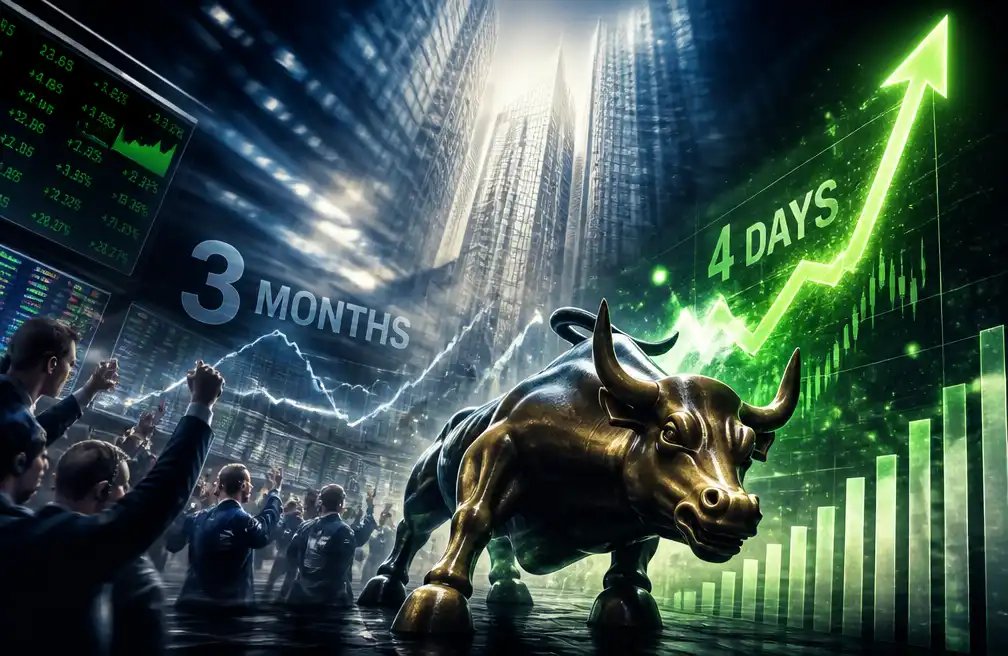
自2024年开始以来,已经过去了7个月,确切地说是223天,几种数字货币经历了令人印象深刻的增长。领先的是两种模因币,BOME和MOG,在此期间分别飙升了11931%和3733%。

加密货币今年迄今的赢家和输家

2024年,统计数据显示,一些加密资产实现了令人印象深刻的四位数增长,14种数字货币今年迄今(YTD)实现了三位数增长。引领这一潮流的是米姆(BOME)的米姆币对美元飙升了11931%。同样,mog币(mog)年初至今已飙升3733%。Mantra dao(OM)上涨1763%,机场金融(AERO)上涨1235%,以四位数的增长跻身前四。

模因代币turbo(turbo)上涨920%,dogwifhat(WIF)上涨860%,pepe(pepe)上涨522%。自2024年初以来,其他值得注意的上涨股包括PEOPLE、AIOZ、FLOKI、ONDO、JASMY和TON,它们对美元的汇率均上涨了175%至318%。CKB、PENDLE、AR和MEW完成了三位数上升者名单,涨幅从108%到124%不等。

然而,2024年并不是对所有人都很好。虫洞代币的W受到的打击最大,截至8月11日,其兑美元汇率下跌了83.98%。Wemix代币(Wemix)下跌了71.27%,casper网络(CSPER)下跌了70.97%。米纳方案(Mina)年初至今下降了69.69%,而DYDX下降了66.19%。BRC20代币ORDI兑美元也下跌了66.01%。

随着2024年的到来,数字货币格局继续反映出当今市场的波动性,巨大的收益被巨大的损失所抵消。模因币和其他加密资产的表现清楚地提醒我们,虽然存在大量回报的机会,但在这个充满活力的加密市场中,严重衰退的风险同样存在。

你对2024年迄今为止最大的赢家和输家有什么看法?在下面的评论区分享您对这个主题的想法和意见。


Bitcoin.com News正在寻找一位新闻撰稿人,负责制作有关加密货币、区块链和数字货币生态系统的日常内容。如果您有兴趣成为我们创新型全球团队的关键成员,请在此处申请。

Trending Cryptos

Related Reads

Vitalik's Algorithmic Stablecoin Vision: Interpreting the Mechanism and Challenges from an Options Perspective

Vitalik Buterin's recent algorithmic stablecoin proposal envisions using an option-like mechanism to create a stablecoin without the liquidation risks inherent in traditional collateralized debt position (CDP) models. The design splits one unit of ETH into two components: a 'stable' leg (P) that maintains value up to a certain strike price, and an 'upside' leg (N) that captures any appreciation above that price. Together, they always sum to one ETH, eliminating the need for debt or liquidation mechanisms. From an options perspective, the stable leg essentially functions as a synthetic, covered call position. However, significant challenges exist. For the stable asset to maintain its peg, it must continuously roll deep in-the-money call options, leading to potential rollover slippage, predictable trading paths vulnerable to front-running, and liquidity issues. Crucially, the system's scalability depends on a constant demand for the upside leg—a form of leveraged ETH long position without funding rates or liquidation risk. It's unclear if such persistent, specific demand will materialize from speculators or market makers who have simpler alternatives like perpetual swaps. The author, drawing from experience with Rysk, argues that DeFi options have struggled as standalone trading products due to complexity and fragmented liquidity. Their potential lies instead as foundational infrastructure underpinning more complex financial primitives like stablecoins, structured yields, or index products—transforming from a direct product into a core pricing and risk distribution engine for the next generation of on-chain finance.

marsbit1h ago

Vitalik's Algorithmic Stablecoin Vision: Interpreting the Mechanism and Challenges from an Options Perspective

marsbit1h ago

GPT-5.6 Countdown: Abandon the Illusion of a Single API, Computational Iteration Can't Outpace a Single Page of Compliance

In mid-June, three seemingly independent industry events—the compliance-driven throttling of Fable 5, the open-sourcing of GLM-5.2, and the leaked release timeline for GPT-5.6—are pushing the global AI industry toward a watershed moment. These shifts signal a fundamental restructuring of the industry's underlying logic. First, **"usability" has substantially overtaken "advanced capabilities"** as the primary weight, pushing the global large language model (LLM) supply chain into a "dual-track" phase of controlled closed-source and local open-source coexistence. Second, **the competitive moats of closed-source giants are shifting**. Their technical focus is moving from "language intelligence" toward "spatial intelligence (world models)"—a domain heavily reliant on computing power. Third, faced with常态化 transnational compliance risks, **a "model-agnostic" decoupled design has become a survival necessity for application-layer developers to maintain business continuity.** The article details how Anthropic's Fable 5, despite its advanced engineering feats, was restricted for non-U.S. citizens within 72 hours of launch, highlighting how geopolitical compliance can instantly limit even the most advanced models. In response, the open-source camp, exemplified by Zhipu AI's MIT-licensed GLM-5.2, is gaining market share by offering stable performance improvements and significant cost advantages (up to 70% savings for enterprises), while achieving full adaptation with domestic semiconductor platforms. Meanwhile, closed-source leaders like OpenAI are pivoting. The anticipated GPT-5.6 reportedly shifts focus from language to spatial intelligence and world models, aiming to rebuild a generational gap in areas like 3D understanding, simulation, and industrial design that demand immense compute. The core conclusion is that the LLM supply chain's logic has changed. Enterprises must now evaluate infrastructure based on a composite of technical performance and policy compliance. For developers, complete reliance on a single closed-source API poses unacceptable risk. Implementing a truly model-agnostic architecture—enabling swift switches to compliant, locally deployable open-source alternatives—is no longer just good practice but a fundamental baseline for business continuity.

marsbit4h ago

GPT-5.6 Countdown: Abandon the Illusion of a Single API, Computational Iteration Can't Outpace a Single Page of Compliance

marsbit4h ago

Is the 'Token Subsidy War' Among AI Giants Almost Over?

The article discusses the ongoing "token subsidy war" among AI giants like OpenAI and Anthropic, questioning whether it's nearing its end. It reveals that current AI subscription prices are heavily subsidized, with some plans offering tokens at up to 70 times the actual cost to attract and retain heavy users, especially developers and enterprises. This strategy mirrors past internet-era subsidy battles, but with a key difference: AI tokens lack "lock-in" effects. Unlike ride-hailing or food delivery apps, users can easily switch between AI providers as APIs become standardized, making it difficult for companies to raise prices post-subsidy. The piece highlights a structural asymmetry in the competition. Giants like Google, with massive advertising revenue, can afford to subsidize tokens indefinitely, akin to using "tokens as a weapon." In contrast, venture-backed companies like OpenAI and Anthropic face pressure to become profitable, especially as they approach IPO. The article cites Google Ventures founder Bill Maris, who suggests Google could slash token prices by 80%, putting immense pressure on competitors. Two potential endgames are presented: the "internet service" model (subsidize, monopolize, then raise prices) and the "utility" model (tokens become a standardized, low-margin commodity like electricity). Given the low switching costs, the latter seems more likely. The competition may not have a single winner but could instead accelerate AI's evolution into a foundational, infrastructure-level technology, akin to a public utility. For now, users continue to benefit from heavily subsidized token costs.

marsbit4h ago

Is the 'Token Subsidy War' Among AI Giants Almost Over?

marsbit4h ago

Trading

Spot
Futures

Hot Articles

How to Buy BOME

Welcome to HTX.com! We've made purchasing BOOK OF MEME (BOME) simple and convenient. Follow our step-by-step guide to embark on your crypto journey.Step 1: Create Your HTX AccountUse your email or phone number to sign up for a free account on HTX. Experience a hassle-free registration journey and unlock all features.Get My AccountStep 2: Go to Buy Crypto and Choose Your Payment MethodCredit/Debit Card: Use your Visa or Mastercard to buy BOOK OF MEME (BOME) instantly.Balance: Use funds from your HTX account balance to trade seamlessly.Third Parties: We've added popular payment methods such as Google Pay and Apple Pay to enhance convenience.P2P: Trade directly with other users on HTX.Over-the-Counter (OTC): We offer tailor-made services and competitive exchange rates for traders.Step 3: Store Your BOOK OF MEME (BOME)After purchasing your BOOK OF MEME (BOME), store it in your HTX account. Alternatively, you can send it elsewhere via blockchain transfer or use it to trade other cryptocurrencies.Step 4: Trade BOOK OF MEME (BOME)Easily trade BOOK OF MEME (BOME) on HTX's spot market. Simply access your account, select your trading pair, execute your trades, and monitor in real-time. We offer a user-friendly experience for both beginners and seasoned traders.

8.8k Total ViewsPublished 2024.03.29Updated 2026.06.02

How to Buy BOME

What is BOME 2.0

BOOK OF MEME 2.0: Revolutionising Meme Culture in the Web3 Era Introduction In the rapidly evolving landscape of blockchain technology, BOOK OF MEME 2.0, popularly referred to as $BOME 2.0, emerges as an innovative project that seeks to blend the vibrancy of meme culture with the robustness of decentralized solutions. This experimental venture capitalizes on the foundational success of its predecessor while striving to engrain itself within the Web3 culture, focusing on the preservation and propagation of memes through advanced blockchain applications. What is BOOK OF MEME 2.0? BOOK OF MEME 2.0 is a pioneering cryptocurrency initiative committed to establishing a long-lasting storage solution for memes. By harnessing decentralized storage technologies such as Arweave and IPFS, the project aims to ensure that memes—an integral part of digital culture—are immortalized forever on the blockchain. The endeavor goes beyond mere storage; it strives to create an optimized Web3 experience that facilitates the seamless exchange of cryptocurrencies while supporting and fostering creative expression among users. At its core, BOOK OF MEME 2.0 focuses on three primary objectives: Meme Immortalization: By integrating decentralized technologies, the project aims to protect and preserve meme culture from the vicissitudes of the internet. Enhanced User Interaction: The initiative seeks to provide a dynamic platform demonstrating ease and efficiency in meme creation and sharing. Community-Centric Environment: Promoting active participation from users transforms them from incidental observers to engaged contributors within the ecosystem. Who is the Creator of BOOK OF MEME 2.0? The precise identity of the creator behind BOOK OF MEME 2.0 remains obscured in the available data. However, the original incarnation of this innovative project was conceptualized by the digital artist known as Darkfarms. Their insight and creativity laid the groundwork for an initiative that emphasizes creativity while leveraging blockchain technology to redefine how memes are created, stored, and shared. Who are the Investors of BOOK OF MEME 2.0? Currently, there is no definitive information regarding the specific investors backing BOOK OF MEME 2.0. What stands out is the project’s community-driven ethos, suggesting a diverse coalition of individuals and organizations invested in fostering Web3 and inspiring meme culture. This broad base of engagement reflects the project’s appeal across different sectors, from tech enthusiasts to digital artists, all unified by the shared vision of celebrating and cherishing digital culture. How Does BOOK OF MEME 2.0 Work? BOOK OF MEME 2.0 operates on the principles of decentralization, innovation, and community engagement. At the heart of this project lies the Solana blockchain, chosen for its impressive transaction speeds and scalability. This decision ensures that users can navigate the platform effortlessly, creating and sharing memes without the drawbacks of traditional systems. The ecosystem is anchored by the $BOME 2.0 token, which serves multiple purposes: Medium of Exchange: Facilitating transactions within the platform, enabling users to trade and exchange memes seamlessly. Governance Mechanism: Allowing token holders to play an active role in decision-making processes, fostering community involvement and democratic governance. Key Features of BOOK OF MEME 2.0 Meme Immortalization: Utilizing decentralized storage, the platform ensures that memes are securely archived and accessible, irrespective of the impermanence typically associated with online content. Decentralized Social Media: The project envisions creating a new type of platform where memes can be freely exchanged, promoting a culture of sharing and collaboration. Active Community Engagement: The initiative encourages users to participate actively, offering rewards and other incentives that transform collective passivity into vibrant community contribution. Timeline of BOOK OF MEME 2.0 Creating a historical context provides significant insights into BOOK OF MEME 2.0’s evolution: Predecessor Launch: The original Book of Meme project was introduced, focusing on integrating memes with decentralized storage solutions. Transition to BOOK OF MEME 2.0: As the project evolved, it rebranded to BOOK OF MEME 2.0, intensifying its focus on not only preserving memes but also expanding into decentralized social media avenues. Continuous Development: The project team remains committed to augmenting its offerings, consistently exploring new features, enhancements, and avenues that cater to its user base while fostering a sustainable ecosystem around NFTs and meme culture. Important Aspects of BOOK OF MEME 2.0 BOOK OF MEME 2.0's uniqueness lies in various factors that promise to enhance user experience and redefine digital interactions within the meme landscape. NFT Integration Incorporating Non-Fungible Tokens (NFTs) into its ecosystem is a strategic move designed to provide real utility and numerous functionalities. This integration not only expands the creative possibilities for users but also solidifies the project’s commitment to innovation. Community Support At the heart of this project lies its vibrant community, playing a critical role in driving its mission and vision. By ensuring constant user engagement, the project benefits from a plethora of ideas and inspirations that help it remain relevant in a fast-evolving digital ecosystem. Innovative Approach BOOK OF MEME 2.0 stands out as a blend of financial technology and cultural expression. By harmonizing these two realms, it lays the groundwork for an enriching user experience that extends beyond mere functionality—offering a creative outlet that resonates with the spirit of the digital age. Conclusion BOOK OF MEME 2.0, identified by its token $BOME 2.0, represents a significant foray into merging blockchain technology with digital culture, epitomized by memes. The project's unwavering commitment to decentralization, community engagement, and innovative features positions it uniquely within the landscape of Web3 initiatives. As we continue to witness dramatic shifts in how culture and technology intertwine, BOOK OF MEME 2.0 stands as a testament to the power of creativity in the digital realm—encouraging us to reimagine not just what memes are, but how they will persist and thrive in the future.

656 Total ViewsPublished 2024.04.01Updated 2024.12.03

What is BOME 2.0

Discussions

Welcome to the HTX Community. Here, you can stay informed about the latest platform developments and gain access to professional market insights. Users' opinions on the price of BOME (BOME) are presented below.

活动图片