香港6支数字资产ETF昨日交易量超2.4亿港元,创历史新高

Odaily星球日报Published on 2024-08-06Last updated on 2024-08-06

Abstract

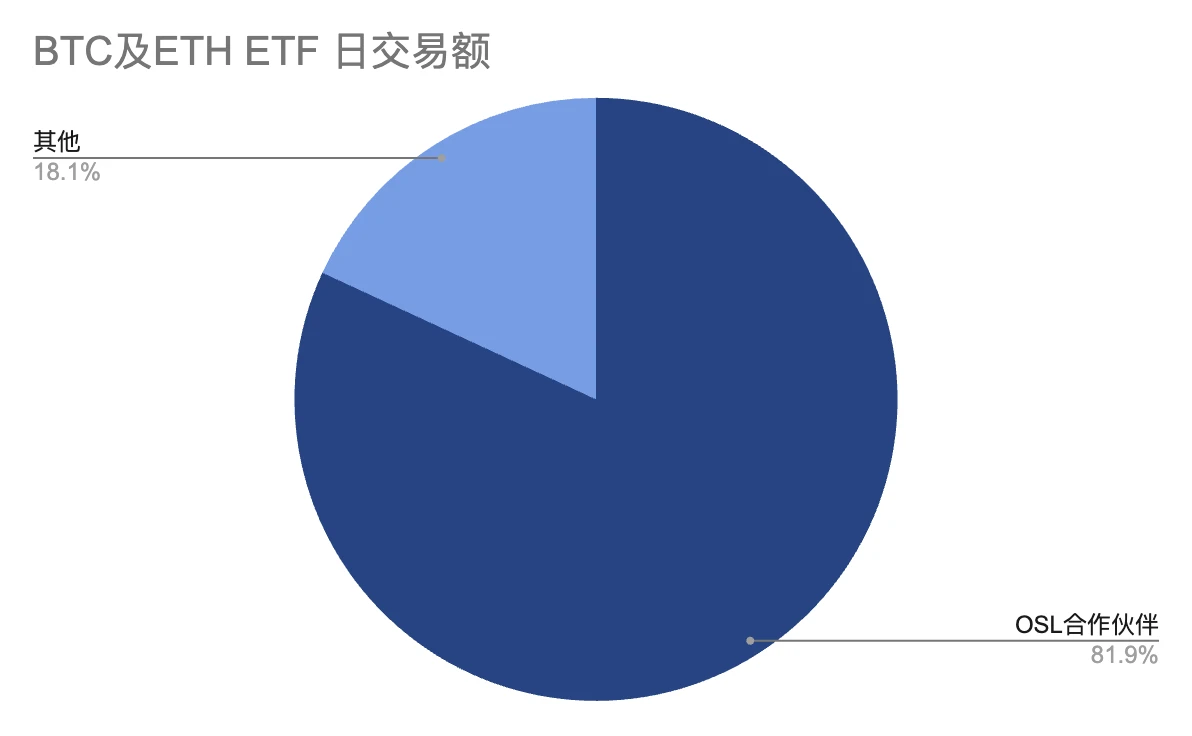
OSL 托管的 4 支华夏基金、嘉实国际旗下 ETF 总交易量近 2 亿港元,占比逾 82%。

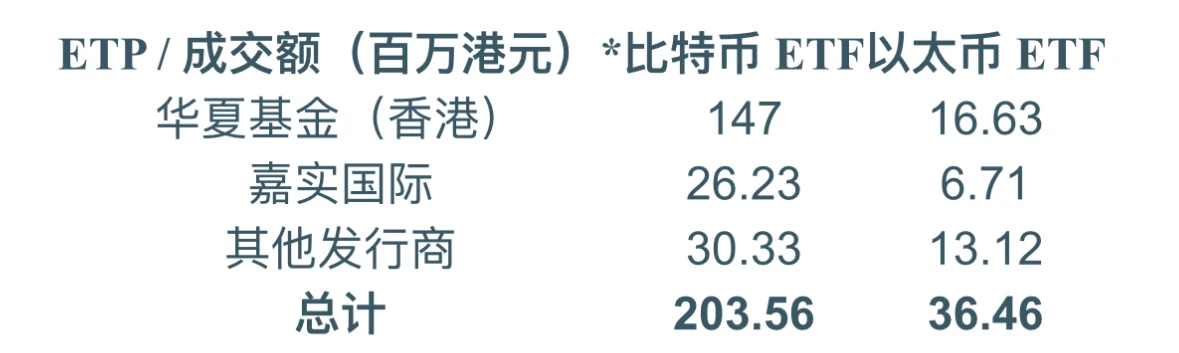
2024 年 8 月 5 日,华夏基金、嘉实国际及其他发行商旗下 6 支香港数字资产现货 ETF 的总交易量突破 2.4 亿港元,创下自 4 月 30 日上市以来的单日交易量历史新高。

在 7 月美国非农数据远不及预期、失业率意外飙升的背景下,中东地缘政治的战争风险亦急剧攀升,这一系列因素导致全球金融市场遭遇「黑色星期一」,日韩股市相继触发熔断,数字资产市场也发生闪崩。与此同时,香港数字资产 ETF 的交易量却急剧放大,比特币、以太币 ETF 的日交易量均较往日大幅激增数倍,创下历史新高。

香港6支数字资产ETF昨日交易量超2.4亿港元,创历史新高

*数据截至香港时间 2024 年 8 月 5 日(来源:香港交易所)

其中,由 OSL 数字证券有限公司担任虚拟资产托管以及交易合作伙伴的华夏基金以及嘉实国际旗下 4 支现货比特币及以太币 ETF,日总交易量约 1.965 亿港元,合计占比近 82% ,处于绝对领先地位;其它 2 支现货比特币及以太币 ETF 的日总交易量约 4345 万港元,占比约 18% 。

香港6支数字资产ETF昨日交易量超2.4亿港元,创历史新高

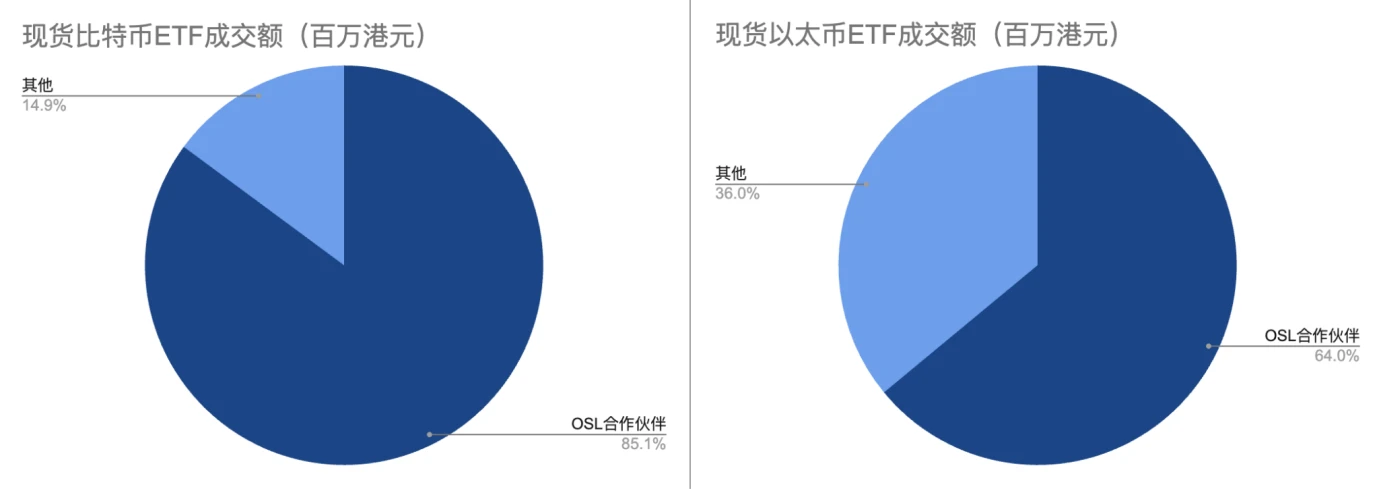
从比特币和以太币 ETF 的细分角度来看,OSL 作为托管合作伙伴的相关 ETF 交易量也处于明显领先地位: 

● 这 3 支香港比特币 ETF 的总交易量超 2.03 亿港元,其中 OSL 托管的 ETF  - 华夏比特币 ETF(3042.HK)、嘉实比特币现货 ETF(3439.HK)交易量超 1.73 亿港元,占比逾 85% ;

● 这 3 支香港以太币 ETF 的总交易量超 3646 万港元,其中 OSL 托管的 ETF - 华夏以太币 ETF(3046.HK)、嘉实以太币现货 ETF(3179.HK),交易量超 2334 万港元,占比逾 64% ;

香港6支数字资产ETF昨日交易量超2.4亿港元,创历史新高

此外从资管规模的角度来看, 6 支香港数字资产现货 ETF 的总资管规模已超 21.57 亿港元,OSL 已托管其中的 13.13 亿港元,占比逾 60% 。

Related Reads

Trends in US Stocks (June 22): Strait of Hormuz Agreement Changes Course, Thursday's PCE and Micron to Determine Chip Sector Direction

U.S. Stock Market Outlook (June 22): Strait of Hormuz Deal Falters, Thursday's PCE & Micron to Set Chip Sector Direction. Geopolitical tensions resurged over the weekend as Iran's IRGC announced the closure of the Strait of Hormuz, and its negotiation team walked out after threats from Trump, pausing U.S.-Iran talks. This renewed risk premium is weighing on U.S. equity futures ahead of the open. Last week's market was driven by chip stocks, with the Philly Semiconductor Index hitting a record high. While the Fed's hawkish tone was overshadowed by initial deal optimism, the S&P 500 gained 0.9% for the week. SpaceX debuted strongly but ended with two down days. Key events this week: The status of U.S.-Iran negotiations remains the immediate variable for oil and energy stocks. Monday sees Marvell and Flex added to the S&P 500. Tuesday's MSCI reclassification could benefit South Korean semiconductors and memory stocks. **Thursday, June 25th, is the critical day**, featuring the May Core PCE report and Micron's earnings. Hotter PCE data could solidify expectations for two 2024 rate hikes, while softer data would rapidly reprice rate cut bets. Micron's report is a key test for the AI narrative; the market will scrutinize its 2027 HBM supply visibility, HBM4 progress, and its position in Nvidia's Vera Rubin supply chain. Nvidia's AGM and a potential OpenAI GPT-5.6 release will make Thursday a pivotal 24 hours for AI. Friday concludes with the Russell reconstitution, elevating small-cap volatility. In summary, last week's gains face a true test. The path hinges on two concurrent threads: geopolitical developments with Iran and the AI narrative defined by Micron's guidance and Nvidia's updates. The chip sector's record highs are vulnerable if Thursday brings hot PCE data and conservative guidance from Micron. Conversely, positive outcomes could reaffirm the AI bull case, making this week's volatility a potential entry window.

marsbit54m ago

Trends in US Stocks (June 22): Strait of Hormuz Agreement Changes Course, Thursday's PCE and Micron to Determine Chip Sector Direction

marsbit54m ago

OpenAI's "Most Open" Move: Codex No Longer Exclusively Favors GPT

OpenAI has significantly opened up its Codex programming agent by introducing a "model provider" configuration layer that allows users to connect it with various open-source models, not just its proprietary GPT. Through a configuration file or a simple `--oss` command-line flag, Codex can now route requests to local services like Ollama or LM Studio, or to third-party APIs such as Mistral or DeepSeek. This move is seen as one of OpenAI's most "open" steps, potentially lowering costs and enhancing privacy for developers who can run code generation offline. However, integration isn't seamless for all models. Codex primarily uses OpenAI's newer Responses API, while many open-source models rely on the older Chat Completions interface. This creates compatibility issues, especially for advanced features like function calling. The developer community is already building "routing" or adapter layers (e.g., CC Switch, LiteLLM) to translate between these protocols, enabling hybrid setups where GPT handles planning and open-source models handle execution. Analysts interpret this as a strategic shift for OpenAI: from competing solely on model superiority to controlling the platform and interface standards. By making Codex a flexible, pluggable entry point for AI-assisted programming, OpenAI aims to become the central hub in the developer toolchain ecosystem, even as users gain the freedom to switch underlying models.

marsbit1h ago

OpenAI's "Most Open" Move: Codex No Longer Exclusively Favors GPT

marsbit1h ago

When 500 Million People Abandon ChatGPT

ChatGPT's Global AI Assistant Market Share Drops Below 50% Three and a half years after its groundbreaking launch, ChatGPT faces a pivotal moment. While it remains the largest AI assistant globally, its market share has fallen below 50% for the first time, reaching 46.4% as of May, according to Sensor Tower's 2026 AI landscape report. Google's Gemini (27.7%) and Anthropic's Claude (10.3%) are now its main competitors, with Grok, Perplexity, and others also gaining ground. The market has evolved from awe and initial adoption into a phase of product comparison, ecosystem integration, and commercialization. User behavior has matured significantly. Loyalty is low; users readily switch between assistants for specific tasks. Gemini benefits from deep integration within Google's ecosystem (Search, Gmail, Android), while Claude has carved a niche among productivity-focused users with strong retention, nearly matching ChatGPT's. User choice is now influenced by a complex mix of capability, ecosystem, price, use case, and even brand trust. Commercialization is accelerating. AI app downloads continue but growth is slowing, while user spending is rising. Over $4.2 billion was spent in-app during H1 2026. Claude leads in premium subscription conversion rates (13%). OpenAI is expanding its revenue streams, testing ads shown to 17% of ChatGPT users daily by May. This shift highlights the immense financial pressure of model training and inference costs. Despite revenue growth, OpenAI's cash burn is intense, reaching $3.7 billion in Q1 2026. The company projects this could rise to $25-57 billion in the coming years, underscoring the industry-wide challenge of scaling profitably. The symbolism is clear: ChatGPT no longer defines the AI assistant market alone. The era of a single dominant product is over. Gemini, Claude, and specialized tools are collectively shaping user habits and business models. As AI assistants move from novelty to utility—judged on accuracy, efficiency, and value—they are becoming embedded in everyday digital life. ChatGPT may have lost its majority, but AI as a whole is winning, entering a mature, competitive, and diverse new phase.

marsbit1h ago

When 500 Million People Abandon ChatGPT

marsbit1h ago

Trading

Spot
Futures
活动图片