Odaily编辑部投资操作全记录(8月5日)

Odaily星球日报Pubblicato 2024-08-05Pubblicato ultima volta 2024-08-05

Introduzione

百倍期权侠:美股大概率熔断,加密重演“312”,5万不是BTC底。

本新栏目为 Odaily 编辑部成员真实投资经历分享,不接受任何商务广告,不构成投资建议(因为本司同事都很擅长亏钱),旨在为读者扩充视角、丰富信源,欢迎加入 Odaily 社群(微信@Odaily 2018 ,Telegram 交流群X 官方账号)交流吐槽。

Odaily编辑部投资操作全记录(8月5日)

推荐人:秦晓峰(X:@QinXiaofeng 888 

简介:期权疯狗,Meme 接盘侠

分享:最近的加密行情跟日元走势密切相关:日元升值导致日元套利成本增加,日资开始从美股市场撤退,加密惨被波及。特别是今天上午,日经和韩国股市今天上午全部熔断,也为今晚美股的走势蒙上了一层阴影。在这种恐慌心理下,美股大概率会在近期触发一次熔断,加密市场重演 312 的悲剧,现在的 5 万美元注定也不会是阶段底部,建议谨慎抄底。

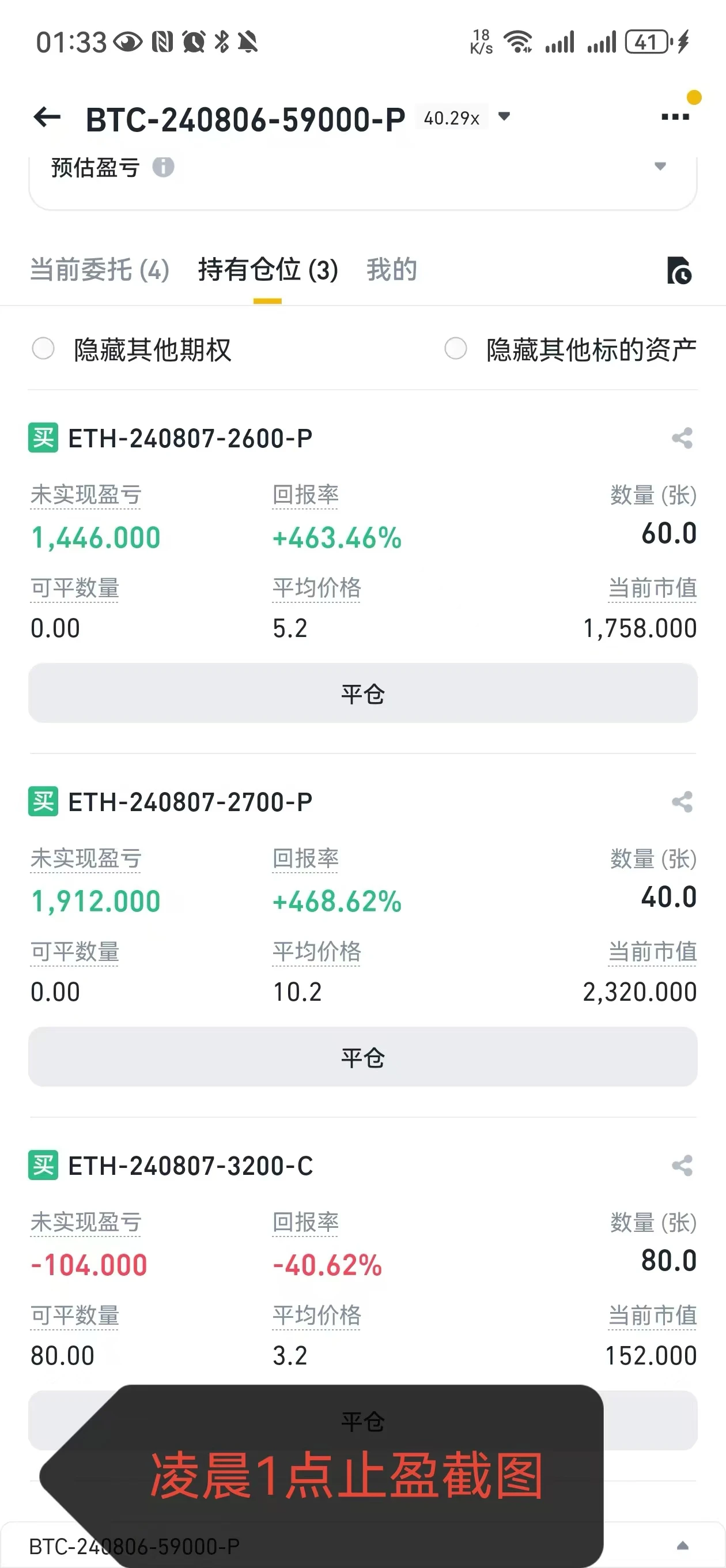
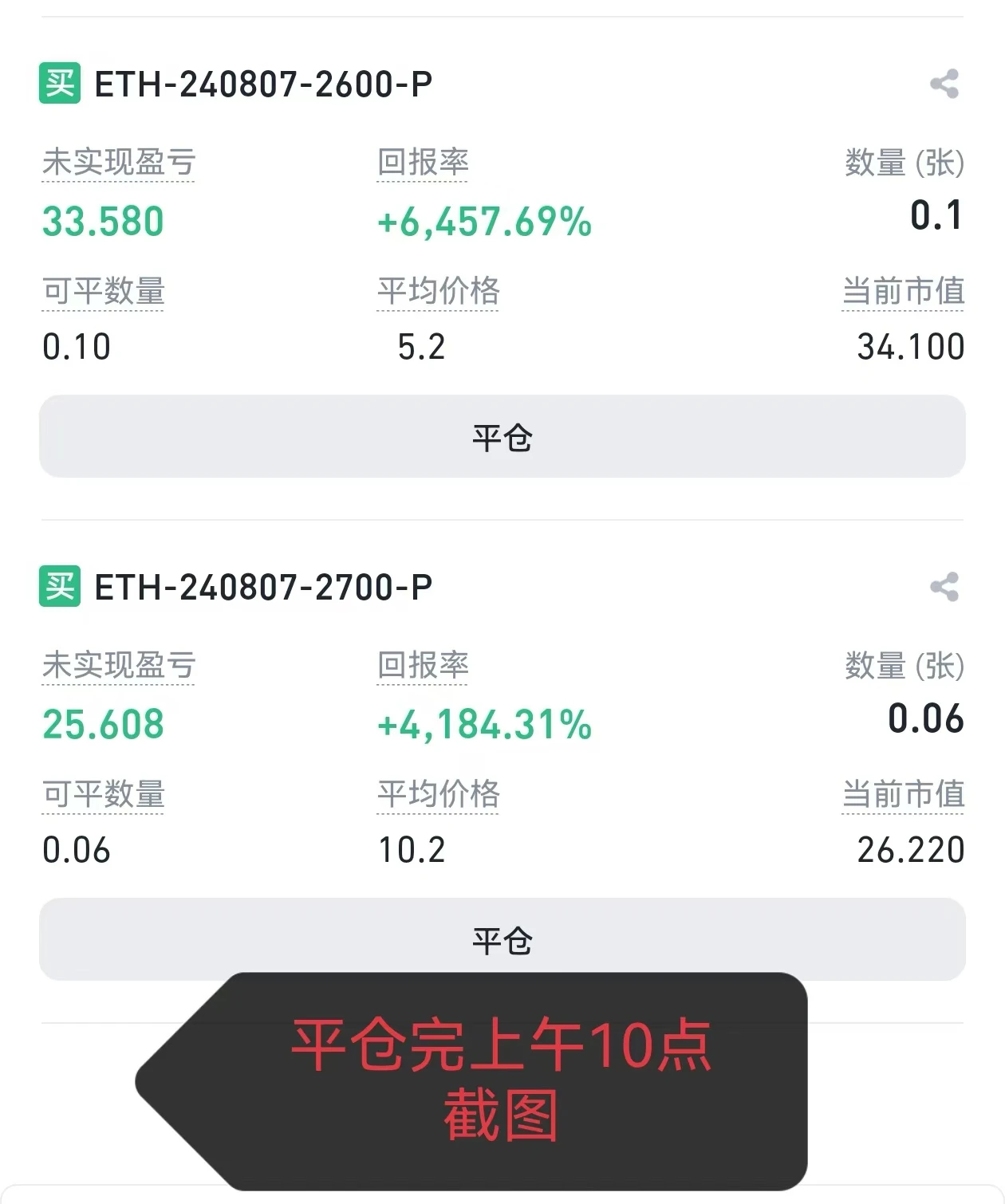
回到操作方面,最近波动将会非常大,日内 5% 振幅将会很常见,建议 BTC、ETH 多空双开,不要赌单边,防止市场反方向波动。关于止盈,我做得一直不太好,每次只要一格局就亏,一止盈就起飞。个人战绩方面,过去两周做期权,成本从 40 美元做到了 5000 多美元;但在今天大跌前,平仓了看跌期权,错过了最大的一波 4 万美元收益,目前心态略微严重失衡。附昨晚的操作截图:
Odaily编辑部投资操作全记录(8月5日)

Odaily编辑部投资操作全记录(8月5日)

推荐人:南枳(X:@Assassin_Malvo

简介:链上玩家,数据分析师,除了 NFT 什么都玩

分享

  1. 此前 SOL 空单已经全平, 193 下跌以来的首次刺破 3 倍标准差,或有反弹需求,保持持续购入现货和短空操作;

  2. ETH 打算在灰度拐点前抢跑,已提前购入现货(多套救);

  3. BNB 打算在 CZ 出狱前抢跑,已提前购入现货(多套救);

  4. JLP 全部换成了 SOL(等价于 5% 的 U 买成 SOL)。

推荐人:Wenser(X:@wenser 2010 

简介:已老实的加密玩家,加密历史考古学家

分享

  1. SOL 100-110 左右可以酌情抄底,昨天晚上 130 的时候有朋友想抄底被我拦住了,今天跌破 120 也是必然。

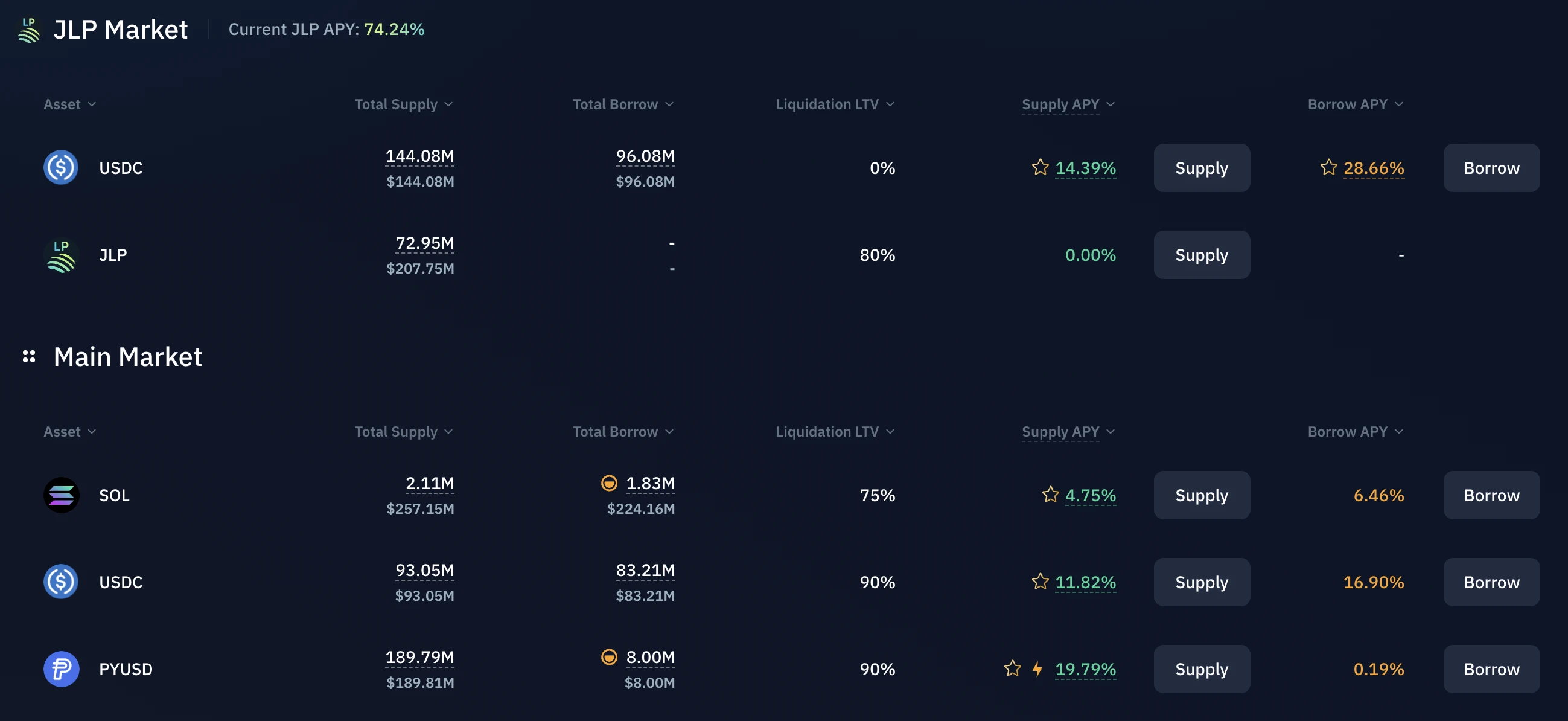
  2. 还是参加 Kamino 的 JLP、PYUSD 的池子,老老实实吃生息吧。

  3. 还是那句话,个人感觉 8 月份黑天鹅不在少数,建议谨慎抄底,稍安勿躁。

Odaily编辑部投资操作全记录(8月5日)

往期记录

7 月 31 日

7 月 29 日

7 月 26 日

推荐阅读

BTC 四日连跌 15000 美元,全球金融市场陷入恐慌暴跌

Jump 一周抛售上亿美元 ETH,解析数额细节与潜在抛压

黑天鹅倒计时?一文盘点与 Jump 绑定最深的几大代币

Letture associate

After Missing the 20x, I've Found a 'Dumb' Method for AI Investing

**Missing the 20x Opportunity: A Simple 'Dumb' Approach to AI Investing** The AI boom, driving NVIDIA's revenue from $60B to $216B in two years, creates immense investment pressure. However, like the internet bubble of 2000, the largest AI opportunities likely lie ahead, perhaps after a correction. Instead of rushing in now or waiting paralyzed for a crash, the author proposes a third way: building a "knowledge warehouse" by systematically mapping the AI industry to be ready when opportunities arise. The core of the strategy is understanding AI's four-layer value chain: 1. **Compute Infrastructure (The "Engine"):** This foundational layer, where all money eventually flows, includes: a) **Chip Design:** NVIDIA's dominance via its CUDA ecosystem, b) **Chip Manufacturing/Packaging/Memory:** TSMC's near-monopoly in advanced manufacturing and SK Hynix's lead in High Bandwidth Memory (HBM), c) **Optical Interconnects:** Essential for large-scale AI clusters (e.g., Lumentum, Coherent), d) **Cooling & Power:** Critical for high-density AI data centers (e.g., Vertiv), e) **Servers/Data Centers & Cloud Platforms:** The physical and virtual wholesale providers. 2. **Models & Tools (The "OS"):** The competitive layer of foundation models (OpenAI, Anthropic, Google, Meta, xAI), now generating real revenue. A key shift is the center of gravity moving from **Training** models to **Inference** (running models), which demands different chip characteristics and could challenge NVIDIA's monopoly. 3. **Middleware & Platform ("The Glue"):** Connects models and applications (e.g., Scale AI, Hugging Face). This layer could explode if applications take off. 4. **Vertical Applications ("The Cash Register"):** Where AI meets end-users (e.g., enterprise AI, coding tools, medical AI, robotics). A critical cross-cutting constraint is **Energy**, as AI's massive power consumption drives investment in nuclear and other energy infrastructure. The author identifies four key questions for further research: 1) How will the shift from Training to Inference reshape the competitive landscape? 2) With tech giants spending over $600B on capex, where is the ROI from AI applications? 3) What are the under-the-radar opportunities in the "second" and "third" circles of the value chain (e.g., cooling, specialty foundries)? 4) How will geopolitics (e.g., U.S.-China chip restrictions) bifurcate the supply chain? The conclusion is that missed opportunities stem from insufficient research, not slow timing. By methodically studying each layer—its business models, competition, and valuations—investors can build the "killer intuition" needed to act decisively when the market presents its chance.

marsbit16 min fa

After Missing the 20x, I've Found a 'Dumb' Method for AI Investing

marsbit16 min fa

Rented Faith: How Much of the Bitcoin ETF Inflows Is Real Money?

"Rented Conviction: How Much of Bitcoin ETF Flows Is Real Money" The weekly inflows into Bitcoin ETFs are often interpreted as a gauge of institutional belief. However, a significant portion of this activity is driven by a hidden arbitrage trade, not directional conviction. The core mechanism is a cash-and-carry arbitrage: traders buy spot Bitcoin (often via ETFs) while simultaneously shorting CME futures to lock in the price difference, or "basis." This delta-neutral trade is essentially an interest rate play. In weekly data, about half the fluctuation in ETF flows can be explained by new short positions added by leveraged funds (hedge funds), with a correlation of 0.70. Bitcoin's price movement in a given week shows no statistical power in predicting these flows. While this arbitrage trade drives weekly *volatility*, it is not the main component of the cumulative *stock*. Of the total ~$55 billion in net ETF inflows, the current net arbitrage position is only about $1 billion. The remainder is steady, directional buying averaging ~$400 million per week, which constitutes the vast majority of the accumulated "mountain" over two years. Thus, ETF flow data overstates the *volatility* of conviction, not its *level*. This arbitrage trade has been unwinding for nearly two years. Leveraged fund short positions peaked at ~$14 billion in late 2024 and have since declined to ~$4.5 billion. When the basis compresses to unprofitable levels, ETF inflows and short positions retreat together. Recent outflows should not be mistaken for a loss of faith but rather the routine unwinding of this rate trade. For Ethereum ETFs, the pattern is weaker. Accounting for staking yield makes the basis often negative, so neither strong conviction buying nor robust arbitrage supports its flows. To interpret ETF flows correctly, monitor the CME basis versus T-bill rates and leveraged fund net shorts. They reveal how much of the next "demand" headline is real. The real, patient buy-and-hold demand is what constitutes the enduring bulk of ETF assets.

marsbit1 h fa

Rented Faith: How Much of the Bitcoin ETF Inflows Is Real Money?

marsbit1 h fa

Trading

Spot
Futures
活动图片