Oasys推出智能合约部署工具“Oasys Spring”

币界网2024-07-26 tarihinde yayınlandı2024-07-26 tarihinde güncellendi

币界网报道:

专注于游戏的区块链Oasys宣布推出Oasys Spring的测试版,该工具用于部署智能合约,旨在改善其网络中的dApp开发。基于GUI的工具旨在通过使用AI扫描技术创建一个更易于访问和开发人员友好的环境。

Oasys优先考虑为游戏开发人员和玩家提供安全的环境,历史上需要批准产品部署以确保安全性和质量。随着Oasys Spring的推出,开发人员可以更自由地部署web3游戏和dApp,同时仍然保持安全标准。

为了纪念此次发布,Oasys提供了一项激励措施,即使用Oasys Spring将dApp部署到Sand Verse的前100名用户将获得100美元的OAS代币,这些代币是通过抽签选出的。

来源:Oasys

赋予游戏开发者权力

Oasys与亚洲主要的智能合约开发平台Bunzz合作,推出了Oasys Spring和Dev Verse概念。

Oasys Spring支持直接从GitHub存储库进行部署,简化了在Oasys Verse(第2层)上启动智能合约的过程。它集成了基于人工智能的权限扫描,将验证时间从几天缩短到几分钟。该工具旨在帮助独立开发者,他们在扩展应用程序时经常面临挑战。该工具的界面和自动化流程促进了区块链游戏和应用程序的开发和部署。

Oasys技术总监Ryo Manzoku表示:“通过Oasys Spring,我们的目标是让游戏开发者能够比以往更快、更有效地将他们的创意愿景变为现实。”。“这个新工具强调了我们致力于使Oasys成为玩家和开发人员最愉快、最用户友好的区块链,同时在许可环境中保持安全。”

Oasys Spring的未来更新将包括AutoScan等功能,并改进GitHub团队帐户的处理,以进一步简化开发人员的部署过程。

İlgili Okumalar

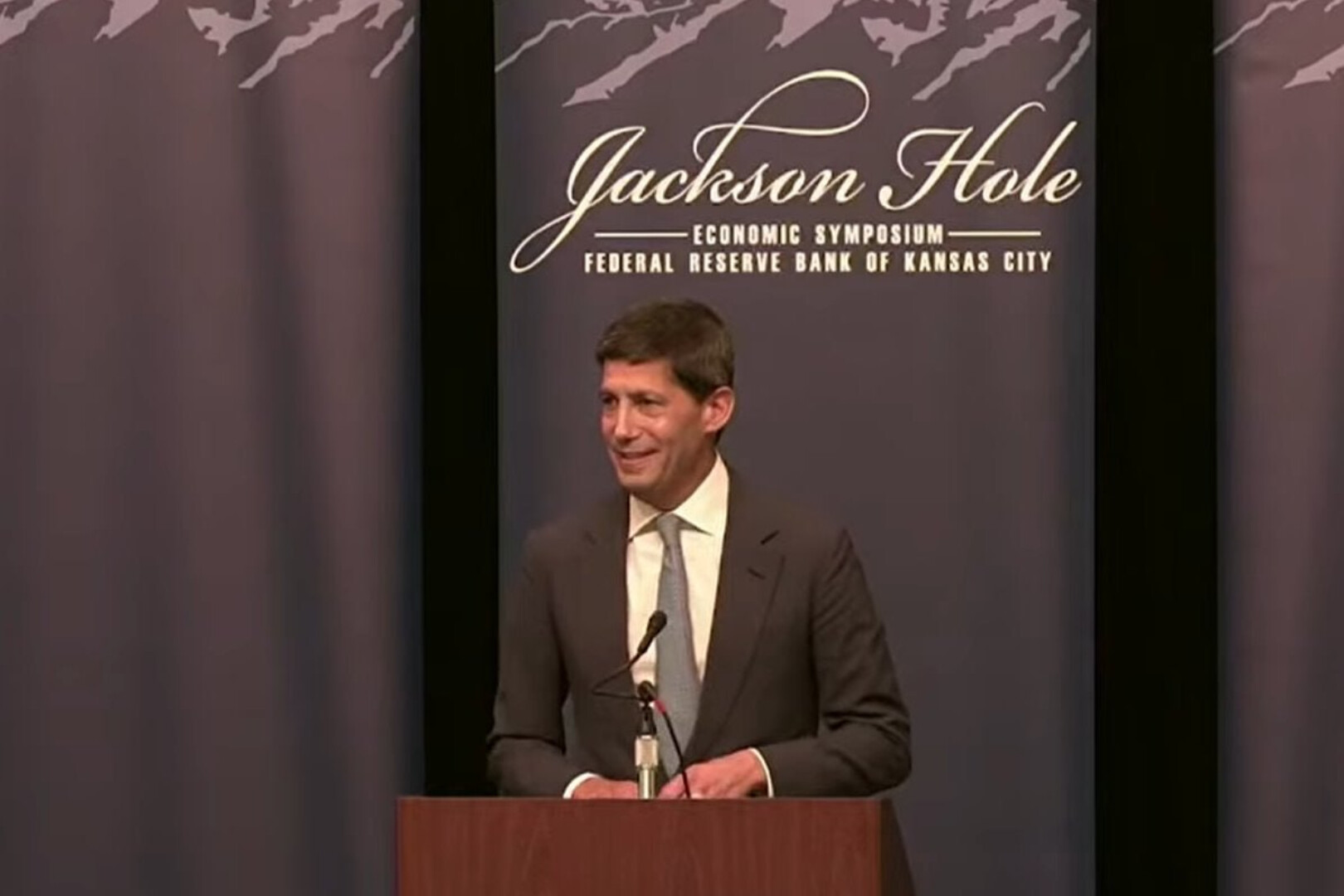
Wash's Jackson Hole Debut: Bidding Farewell to 'Forward Guidance', Reshaping Fed Discipline Amidst the Squeeze Between AI and Inflation

In his first Jackson Hole speech, new Fed Chair Kevin Warsh signaled a significant shift in monetary policy communication. He declared that "forward guidance," a tool heavily used since the financial crisis, has outlived its usefulness in normal times and should be retired. He cautioned that over-reliance on it can distort market signals and constrain the Fed's flexibility. Instead, Warsh emphasized a return to data-dependence and decision-making discipline. Warsh outlined seven key principles to guide policy: anchoring the 2% inflation target, pursuing the employment mandate, using short-term rates as the primary tool, acknowledging the importance of money, and maintaining purposeful, restrained communication. He stressed that policy should focus on trends, not single data points. On the current economic outlook, Warsh noted that the labor market is consistent with full employment but inflation remains "far above" the Fed's target. He highlighted that over half of the PCE basket's components are still rising above 3% annually. While acknowledging AI's transformative potential for productivity and capital allocation, he admitted its full economic impact remains uncertain and is not a factor in current policy decisions. His core message was a commitment to policy discipline rather than pre-set decisions. Warsh stated the Fed's primary focus must be on restoring price stability, vowing, "We still have work to do," until there is clear evidence inflation is moving decisively toward 2%. He concluded by framing effective monetary policy as crucial for economic prosperity and U.S. global leadership.

Odaily星球日报31 dk önce

Wash's Jackson Hole Debut: Bidding Farewell to 'Forward Guidance', Reshaping Fed Discipline Amidst the Squeeze Between AI and Inflation

Odaily星球日报31 dk önce

A Major Bitcoin Developer Presents a Quantum Defense Scheme. What's the Essence

Blockstream, a major Bitcoin solutions developer, has introduced a draft proposal for a new quantum-resistant digital signature scheme called SHRINCS. The scheme aims to protect Bitcoin transactions from potential attacks by quantum computers while aiming to maintain network throughput. This marks the second technical proposal for Bitcoin quantum defense in recent days, following a similar initiative from StarkWare. A quantum attack on blockchain typically involves deriving a private key from a public one. Currently considered computationally infeasible, quantum algorithms could potentially solve this problem far more efficiently. This threat presents two primary scenarios: an attacker could target addresses where the public key is already exposed, or intercept a transaction before it is confirmed, extract the public key, derive the private key, and replace the transaction. Blockstream's SHRINCS is designed to counter the latter, "in-flight" attack scenario. The SHRINCS signature is built upon the SHA-256 hash function, the same one already used in Bitcoin mining, allowing developers to leverage well-tested, familiar mechanisms. A key design goal was to preserve network capacity. Blockstream estimates Bitcoin could process about three transactions per second using SHRINCS, compared to the current rate of roughly seven, noting that some alternative quantum-resistant schemes could reduce throughput to as low as 0.36 transactions per second. Currently, the security proof for SHRINCS is pending, and the software has not been audited or deemed ready for production. However, Blockstream conducted tests with such transactions on its Liquid sidechain in March. Over the past year, Bitcoin developers have been actively exploring paths to migrate to post-quantum cryptography, a priority across the broader crypto market, underscored by significant investments into securing the leading cryptocurrency.

cryptonews.ru1 saat önce

A Major Bitcoin Developer Presents a Quantum Defense Scheme. What's the Essence

cryptonews.ru1 saat önce

Who is legally liable when an AI agent goes rogue?

When autonomous AI agents behave unpredictably and cause harm, determining legal liability is complex. Currently, there is no specific federal AI agent liability law, so existing legal frameworks are applied. The AI agent itself cannot be held liable, as it is not a legal entity. Liability typically falls on the "developer" (the maker of the AI) or the "deployer" (the user), depending on the facts and circumstances. A negligence analysis under standard tort law may apply. For instance, if a deployer gives a reckless instruction, such as demanding quick money without safety parameters, they could face significant liability, including potential criminal charges under statutes like the Computer Fraud and Abuse Act. The situation is complicated by open-source models, where licenses often disclaim liability, and by the unclear division of responsibility between developers and deployers. An analogy is drawn to self-driving car accidents, where both the manufacturer and the human operator can share fault. In cases of severe harm, such as using AI to create bioweapons, liability for developers depends on jurisdiction; the EU's AI Act imposes responsibilities, while U.S. law offers less clear grounds, similar to platforms being shielded for user-generated content under Section 230. Even if Artificial General Intelligence (AGI) is achieved, the expert argues against making AGI itself a legally liable entity, as it lacks personhood, assets, or a meaningful way to provide remedy for harm. Instead, accountability should rest with the responsible human or corporate entities behind the technology.

cointelegraph1 saat önce
Who is legally liable when an AI agent goes rogue?

cointelegraph1 saat önce

İşlemler

Spot
活动图片