本轮牛市用哑铃策略能赚钱吗?

深潮Published on 2024-07-26Last updated on 2024-07-26

只有在大部分资金非常安全的情况下,冒险才是有意义的。

作者:Biteye 核心贡献者 Viee

编辑:Biteye 核心贡献者 Crush

社区:@BiteyeCN

本轮牛市用哑铃策略能赚钱吗?

今天给大家分享一个既能赚到大钱,又能避免血本无归的策略:哑铃策略。

👇 通过指标分析了以下加密资产的表现:

  • BTC永远的王者:BTC.D 指数

  • ETH在本阶段落后于BTC:ETH/BTC汇率

  • 山寨总体萎靡:(1) Altseason 指数 (2) 山寨币市值

  • Meme币高风险高收益,跑赢BTC、ETH:Memecoin指数

0什么是哑铃策略?

哑铃策略是塔勒布在《反脆弱》提到的,在⼀个领域采取保守策略,在另⼀个领域选择开放策略,放弃中间路线。简单说就是,“大部分保守,小部分激进”。
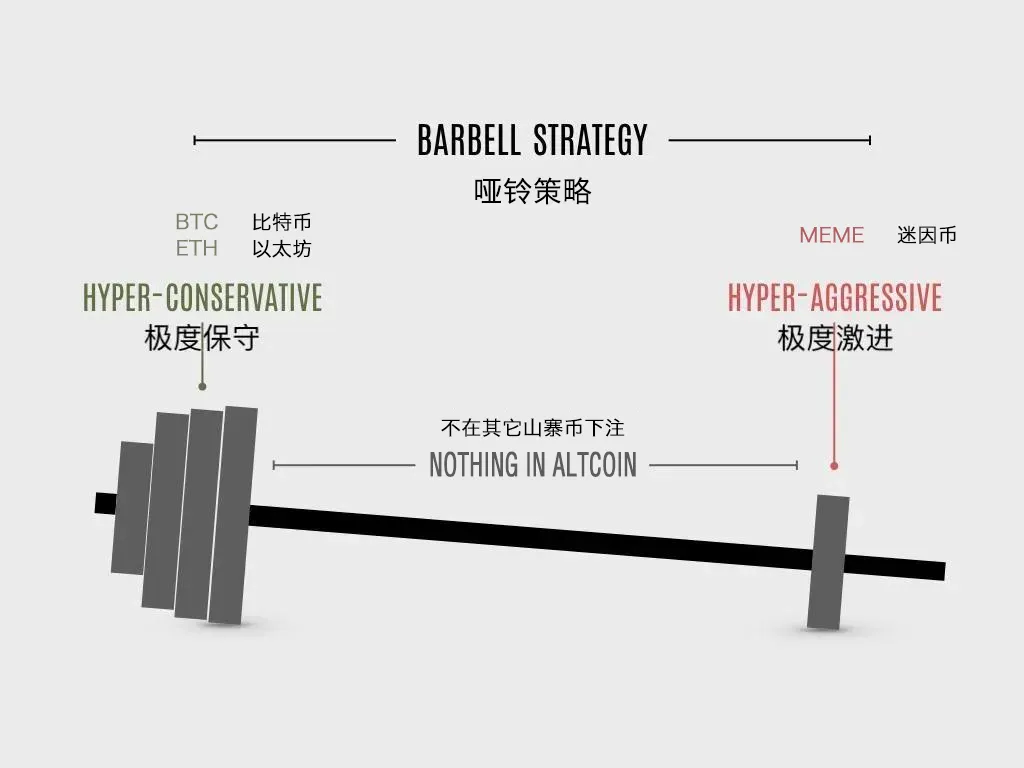
运用在币圈,可以把大部分资产投入BTC和ETH等安全性比较好的资产中,少部分资金投入到Meme币这样的高风险资产中,中间的大部分山寨币尽量少参与。

这样既可以在币圈高波动性中保本保持稳定性,同时有机会通过高风险资产(比如Meme币)获得高回报。

接下来,通过一些指标,我们来客观看下BTC、ETH、大部分山寨币、Meme币各自表现如何?

0BTC永远的王者:参考 BTC.D 指数 ( Bitcoin Dominance )
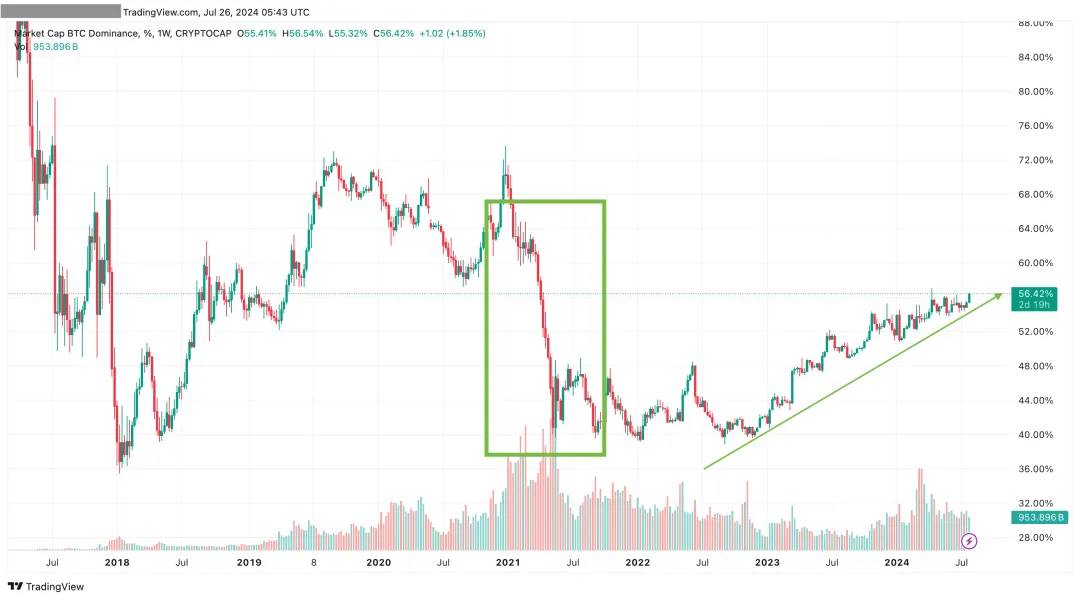
比特币主导指数用来反映比特币的市值占比率,经常用来判断山寨币季是否开始。从图中可以看出上一轮牛市2021年山寨季时,BTC.D 指数是在显著下跌。

可以解释的逻辑是:BTC.D 指数下跌 ➡️ BTC 主导地位下降 ➡️ 风险增加 ➡️ 山寨币重新获得市场地位 ➡️ 山寨开始暴涨。(反之亦然)

目前还是处在比特币季,该指数从今年初以来一直在上升,截止7月26日56%,山寨币的表现仍不及比特币,所以比特币占主导地位。

0ETH在本阶段落后于BTC:参考 ETH/BTC汇率

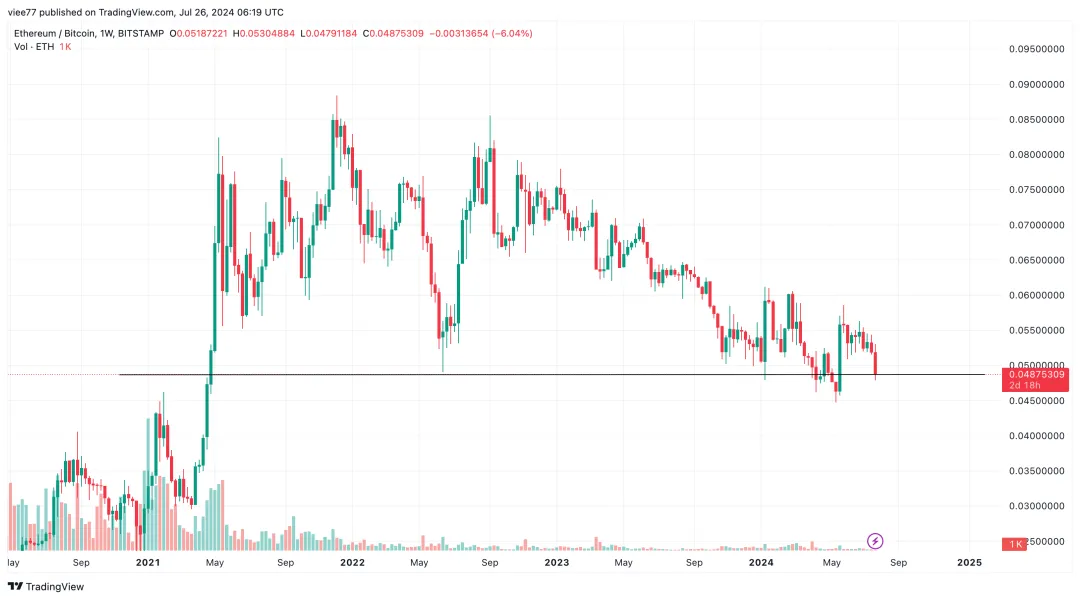
通常,ETH/BTC汇率越大,两者价格差距越小,ETH表现强劲。相反比例越小,说明价格差距越大,ETH表现比较弱。

此外,这个指标也会用来判断市场对山寨币的兴趣,如果该比例开始跑赢 BTC 时,可能会是资金正在流入山寨币的迹象。

目前ETH/BTC汇率还是处在比较低的位置,ETH表现比较弱,哪怕ETF通过也没能让以太逆势回转。但由于处在低位,如果对ETH信心比较足,也可以考虑分批建仓,等待后续上涨。

0山寨总体萎靡:参考 (1) Altseason 指数

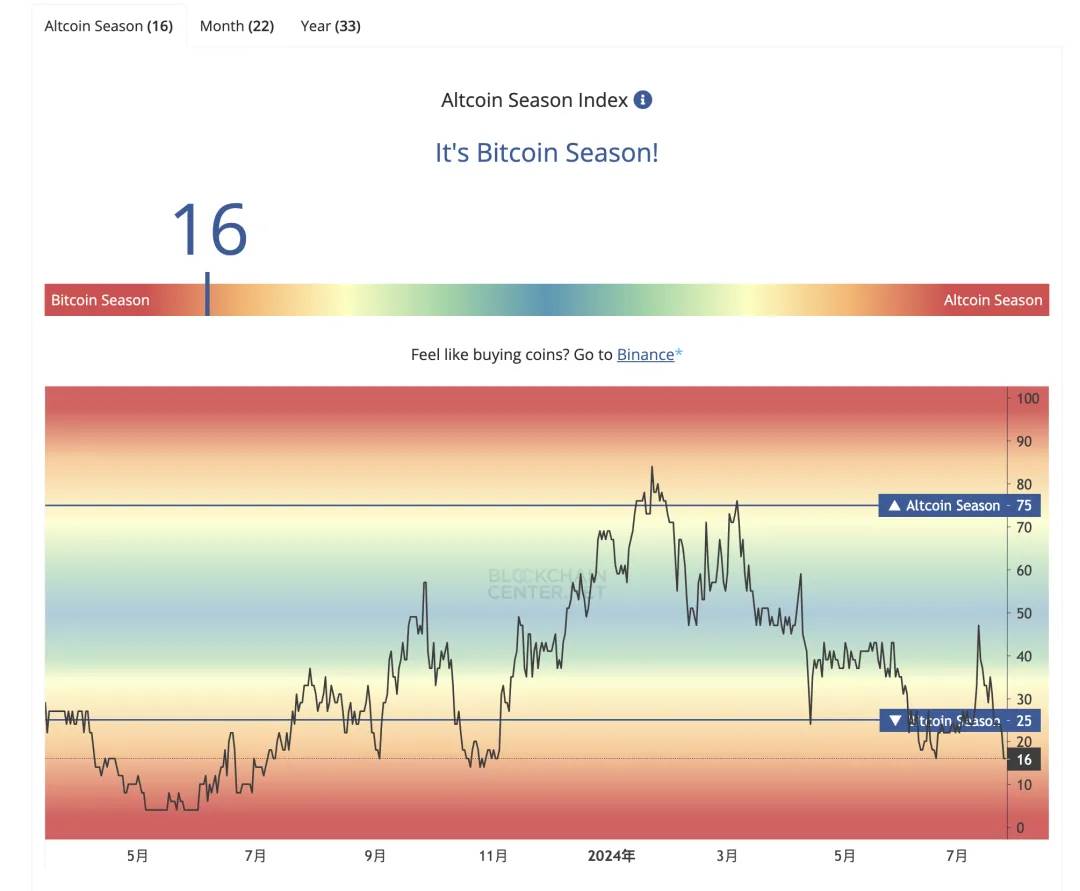
Altseason指数追踪山寨市场情绪的指标,统计了一段时间内排名前50的山寨币种跑赢大饼的所占比例,指标显示大于75为山寨季,小于25为比特币季。

很明显目前处在比特币季,指标为16,山寨势头比较弱。今年以来只有1月底该指标大于75的,只持续了半个月,与21年3月底-6月底长达3个月指标超过75相比,还算不上真正意义上的山寨季。

0山寨总体萎靡:参考 (2) 山寨币总市值

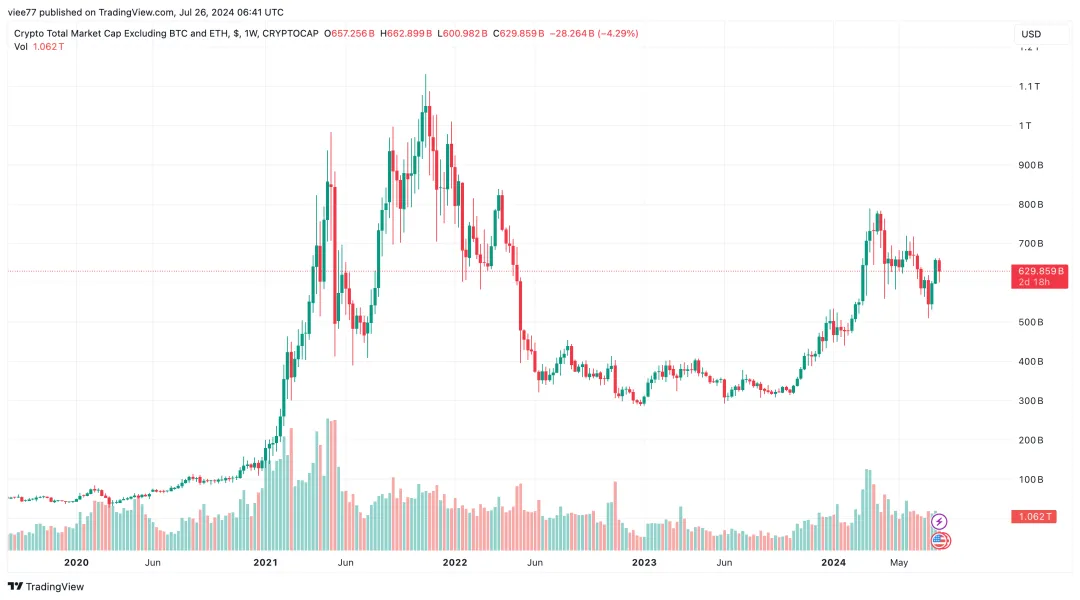
该指标全称是 Crypto Total Market Cap Excluding BTC & ETH,除了 BTC 、ETH以外,加密市场其他代币总市值大小,反映了资金本身流入山寨币市场的整体情况。

山寨总市值在年初显著上升以后,并没有继续维持趋势,在这几个月震荡行情下反复波动,目前还没有明显突破信号,山寨整体还是比较弱。

0Meme币高风险高收益,跑赢BTC、ETH:参考Memecoin指数

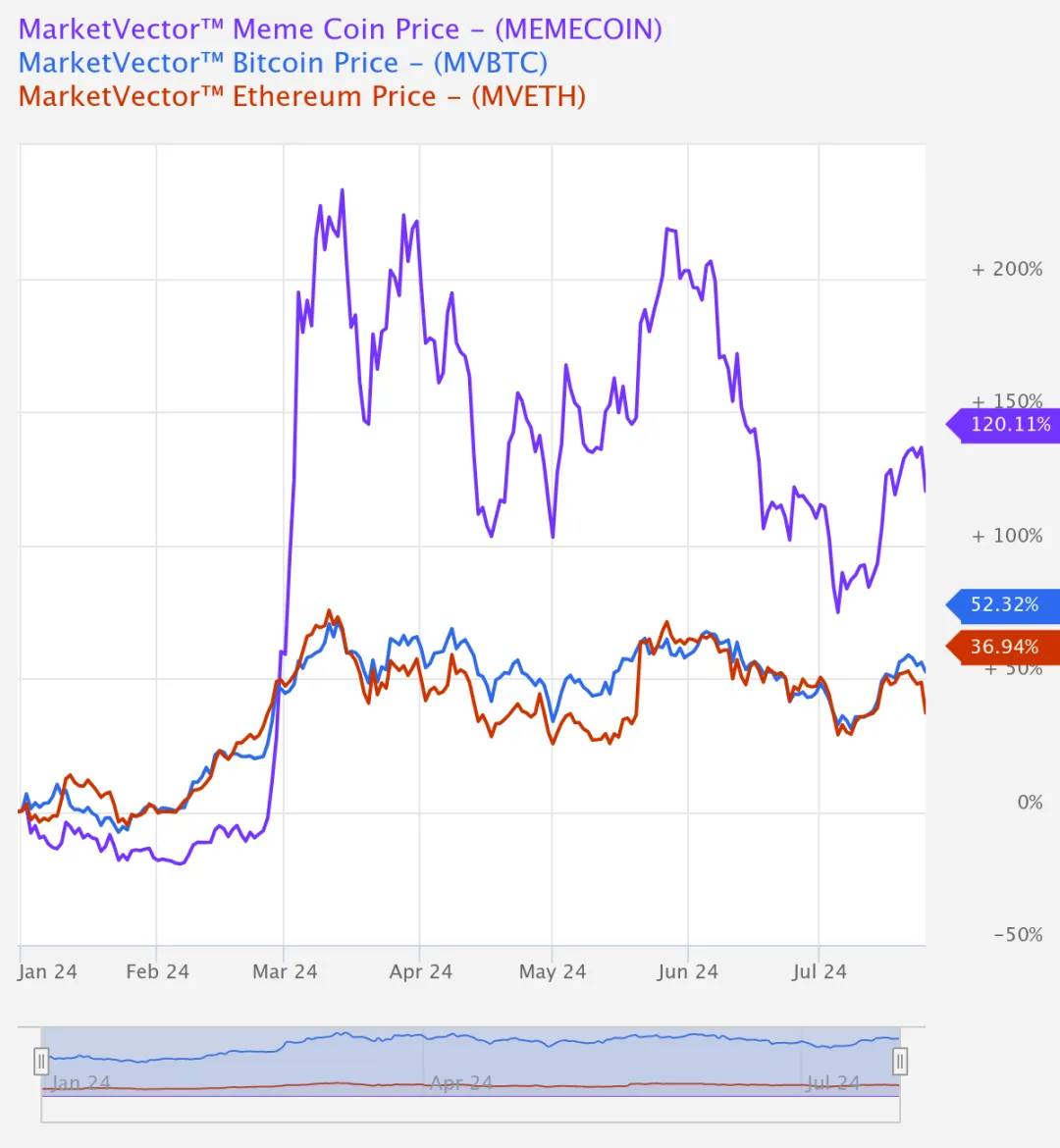
MarketVector 推出的 Meme Coin Index,追踪市值最大的 6 种 Meme 代币的回报率表现。

主要成分包括 $DOGE、$SHIB、$PEPE、$FLOKI、$WIF 和 $BONK,最能代表Meme币整体表现。

通过对比可以看出年初至今Meme币表现实在太抢眼,以120%涨幅超过,52%涨幅的BTC和37%涨幅的ETH。

0总结&风险提示

结合哑铃策略,从上述指标可以看出,目前市场行情下BTC、ETH确实是当之无愧的安全资产,市占率高。

尤其是BTC,甚至比ETH更强。从回报率对比可以看出Meme币依旧是高风险高收益资产的代表。反观大部分山寨币,整体还是比较萎靡,没有太多机会,少放些筹码也没关系。

这里也要提示一下风险,加密资产配置是一件非常有难度的事,不是简单使用几个指标就完事了。

但无论如何都请记住,只有在大部分资金非常安全的情况下,冒险才是有意义的。经历多轮牛熊的人一定深有感触!老话说得好,留得青山在,不怕没柴烧呀。

Related Reads

A 380% Soar, Shenzhen’s 100-Billion-Yuan IPO Rings the Bell

HKC Holdings, a major Chinese display panel manufacturer, has successfully listed on the Shenzhen Stock Exchange's main board. The company's shares surged over 380% on its debut, pushing its market capitalization to around 350 billion yuan (formerly reaching 500 billion yuan). Founded by Wang Zhiyong in Shenzhen's Huaqiangbei electronics market nearly three decades ago, HKC evolved from assembling monitors to becoming a global top-tier supplier of semiconductor display panels for TVs, monitors, and smartphones. The IPO marks a significant milestone for HKC and its backers. The company's growth into the capital-intensive panel manufacturing sector was supported through partnerships with state-owned capital from regions like Chongqing, Mianyang, and Chuzhou. Its shareholder list also includes BOE Technology's investment arm. In recent years, HKC reported strong financials, with core panel business contributing over 70% of revenue and clients including Samsung, TCL, and Xiaomi. This listing is seen as part of a broader trend in Shenzhen's evolving tech landscape. Beyond established giants, the city is nurturing clusters of leading companies in specialized sectors like robotics—exemplified by the "Shenzhen Robot Valley"—and storage chips, where a group of firms dubbed the "Storage Five Tigers" has achieved a combined trillion-yuan market valuation. Shenzhen's strategic focus on emerging industries such as AI terminals, low-altitude economy, and humanoid robotics aims to build new industrial depth and foster the next generation of tech champions.

marsbit12m ago

A 380% Soar, Shenzhen’s 100-Billion-Yuan IPO Rings the Bell

marsbit12m ago

Domestic First Explosion-Proof Certification, World's First Fueling Brain Solution: How Did They Secure Two 'Firsts'?

China's embodied AI sector is booming, with over ¥37 billion in funding this year. The focus has shifted decisively to real-world application, particularly in hazardous, repetitive tasks humans should avoid. A key, often prohibitive, barrier to entry for robots in environments like gas stations and oil fields is obtaining explosion-proof certification, requiring meticulous hardware and circuit design from the ground up. The article explores three main application areas. At gas stations, the challenge lies in executing a long, precise sequence of actions (opening caps, handling the fuel nozzle) with millimeter accuracy across diverse car models. For facility inspections, robots need sustained autonomous patrols combined with real-time anomaly detection and response. Port scenarios introduce the complexity of multi-robot coordination. Addressing the core challenge of long-horizon tasks, the piece highlights a technical breakthrough: a "world model"-driven approach. This enables predictive planning, allowing the AI to visualize the desired end-state (e.g., nozzle returned, cap closed) and work backward to synthesize intermediate visual frames. This "imagination" of the task trajectory, as implemented in the H-GAR architecture, guides action generation, significantly reducing cumulative error in multi-step operations. The three-step H-GAR process involves generating a coarse action draft, synthesizing target-conditioned observation frames, and then refining actions based on visual context and a memory of past successful motions. The conclusion emphasizes that success in specialized, safety-critical fields requires long-term commitment and deep integration of the "embodied brain" (AI) with a purpose-built, certified physical "body." Mastering this brain-body-data闭环 (closed-loop) is positioned as a crucial competitive advantage for commercialization.

marsbit1h ago

Domestic First Explosion-Proof Certification, World's First Fueling Brain Solution: How Did They Secure Two 'Firsts'?

marsbit1h ago

Bitcoin Bear Market Triggers Crypto Layoffs, Yet Fuels Industry's Most Aggressive M&A Wave Ever

A prolonged Bitcoin downturn is forcing crypto companies to lay off employees and automate operations, but has simultaneously triggered the industry's most aggressive wave of mergers and acquisitions (M&A). In the first half of 2026, crypto M&A deal value reached $93.7 billion, 26 times higher than the same period last year. This activity is primarily driven by traditional financial institutions—banks, payment processors, and asset managers—who are acquiring compliant crypto infrastructure like custody solutions, payment rails, and regulatory licenses instead of building them internally. Examples include Mastercard's acquisition of stablecoin firm BVNK and Franklin Templeton's launch of a dedicated crypto division via acquisition. This consolidation contrasts sharply with a shrinking crypto labor market, where active job openings have plummeted. Companies like Coinbase are restructuring to become "AI-native," leading to a sharp increase in roles requiring AI skills, while engineering and compliance positions now dominate hiring. Financially pressured crypto firms, such as Messari which was acquired at a fraction of its prior valuation, are becoming prime targets. Capital remains available but is highly selective, flowing overwhelmingly into businesses that bridge digital assets with traditional finance, such as tokenization platforms and regulated trading venues. The trend indicates a market where capital is rewarding compliant, utility-focused infrastructure while weaker models consolidate or downsize.

marsbit1h ago

Bitcoin Bear Market Triggers Crypto Layoffs, Yet Fuels Industry's Most Aggressive M&A Wave Ever

marsbit1h ago

Trading

Spot
Futures
活动图片