本周加密市场聚焦:TON、ADA、SWFTC

金色财经2024-07-08 tarihinde yayınlandı2024-07-08 tarihinde güncellendi

比特币(BTC)上周短暂重新测试了72,000美元大关,然后回吐了部分涨幅。与此同时,一些顶级加密货币实现了小幅上涨。

全球加密货币市值小幅上涨1000万美元,本周收于2.54万亿美元。

以下是我们本周最值得关注的加密货币,基于它们上周的显著表现
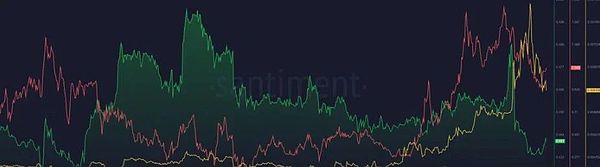
get?code=OGZlMGMyZDRiYjAzZDJmODIyNDcyYzc5Njc4ZjgxMzAsMTcxODA5MTgxOTM1Mg==

ADA、TON 和 SWFTC 价格 – 6 月 9 日

TON 创下新 ATH

Toncoin(TON)上周展示了强劲的价格表现,6月2日大幅上涨8.6%,本周初继续强劲。这次显著的飙升让这个基于Telegram的资产首次在三周内收于6.8美元以上。

TON一直保持看涨趋势,直到6月5日创下7.86美元的历史新高。这一数字超过了4月份创下的7.67美元的历史最高价(ATH)。

尽管在接下来的几天里出现了相当大的回调,但Toncoin上周以11%的涨幅收盘。然而,整个星期的平衡交易量(OBV)总体下降。

上周,TON的OBV从1.553亿个代币下降到1.278亿个代币。这种背离表明,它可能没有足够的力量将上升趋势维持到新的一周。

如果出现修正,TON的直接阻力位在23.6%斐波那契回撤位(6.969美元)。

get?code=N2FlY2Q4M2VlZjNkMDVhYzFmOWRjNDQ4ZmVhYTlhZTYsMTcxODA5MTgxOTM1Mg==

ADA 重新测试 0.49 美元

卡尔达诺(ADA)最近的表现可谓一波三折,尽管在过去几周里未能取得太大突破,但上周的走势着实令人振奋。虽然山寨币市场的波动仍在持续,但6月3日和4日的连续上涨,使ADA上涨了整整3.3%。这是一种前所未有的动态,然而,0.40美元关口附近的艰苦战斗还在继续,未能轻易突破。

但是,在6月7日,随着比特币价格的惊人飙升,ADA迎来了一轮巨大的涨势,重新试探了0.49美元的高位,这在两周多来实属罕见。然而,市场很快见证了一轮修正,ADA最终以3%的跌幅收盘。

特别值得注意的是,ADA已经滑落至Ichimoku Cloud下方,这进一步确认了其下行趋势。要想扭转局面,ADA必须突破0.46美元的关键水平。而突破Senkou Span A(0.4588 美元)和Senkou Span B(0.5416 美元)之间的阻力位,则将为多头提供巨大动力,这是一场火爆的赛场,胜者将赢得市场的崇拜和财富的辉煌。

SWFTC不确定性

尽管起步时有些波折,但SwftCoin(SWFTC)上周却是表现最亮眼的明星之一。在上周初,SWFTC曾两次盘中下跌,甚至跌破了0.005美元的心理支撑位。

然而,接下来的几天里,该代币迅速复苏,展现出令人瞩目的涨势。最终,于6月8日,SWFTC重新突破了0.0079美元的高点,这是三个月以来的首次。SWFTC上周收盘时涨幅达到了惊人的36%。

在持续的上升趋势中,该资产已进入超买区域,其相对强弱指数(RSI)在6月8日飙升至惊人的79.71。然而,尽管如此,在经历了一次10%的大幅回调后,SWFTC的RSI已经降至70以下,这意味着它还有更多的增长空间可供利用。这场涨势让人瞠目结舌,预示着SWFTC在未来的走势中可能会继续狂飙突进。
İlgili Okumalar

a16z Deep Dive: Stop Chasing the 'AI Smell', Here's a Practical Guide to Writing with AI

"Don't Obsess Over AI Detection: A Practical Guide to Writing Alongside AI" by Steph Zinn (a16z Crypto) This guide moves beyond the flawed premise that AI-generated text can be easily spotted by a set of "tells" and that these features automatically mean poor quality. Instead, it focuses on how writers and founders can use LLMs effectively by understanding, controlling, and editing the common stylistic tendencies of AI-assisted prose. The article breaks down AI writing "tells" into four key dimensions: **1. Rhetorical Features (Insight-Shaped Writing):** AI often produces semantically empty, "corporate-sounding" filler language—vague profundities, hedging phrases, excessive parallelism, and summary statements. The advice is to ruthlessly edit these out, using prompts to make language more specific and direct. **2. Voice Features (The Alexa Voice):** Default AI writing relies on a narrow, fungible vocabulary of low-friction, abstract words and cliché phrases that lack personality. While this generic voice is acceptable for support docs or mass communications, founders should preserve their unique voice for impactful writing. Use LLMs to identify and replace jargon, aiming for concrete, distinctive word choices. **3. Structural Features (Form Without Function):** AI tends towards over-structured text with excessive subheadings, lists, roadmaps, and the rigid "three-point" framework. While clear structure is good for readability and SEO, it shouldn't force ideas into unnatural containers. Choose a structure that serves the format and purpose, borrowing from effective examples. **4. Punctuation Features (Dash Panic):** The overuse of em dashes and colons has become a hallmark, but writers shouldn't avoid useful punctuation just to seem "human." The key is avoiding repetitive, distracting patterns. Use punctuation that is grammatically correct and supports the flow of your argument. The core argument is that many so-called AI flaws are just amplified versions of existing bad writing habits. The goal isn't to eliminate AI's role but to use it as a tool while maintaining editorial control. The final question shouldn't be "Can this be detected as AI?" but "Does this writing effectively do its job?"

marsbit1 saat önce

a16z Deep Dive: Stop Chasing the 'AI Smell', Here's a Practical Guide to Writing with AI

marsbit1 saat önce

İşlemler

Spot
活动图片