BTC、BCH和BSV 之间的比较

金色财经Published on 2024-07-08Last updated on 2024-07-08

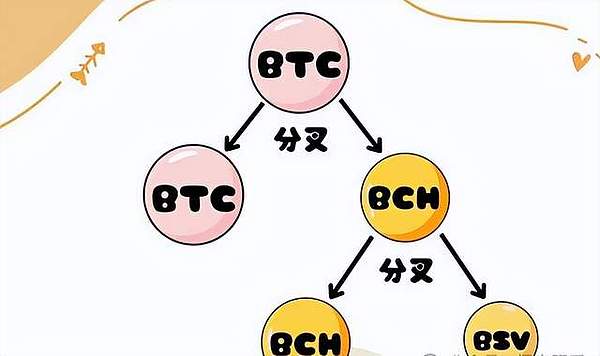
BTC在几年前区块容量逐渐接近上限之时,已经就扩容问题讨论许久,矿工、开发人员、用户之间的博弈相对混乱,在谈不拢的情况下,分叉成为唯一的结局。

于是,在 2017 年 8 月 1 日从 BTC 中分叉出 BCH,将区块大小从 1M 提升至 8M,号称自己才是中本聪“点对点电子现金系统”的真正体现。2018 年 11 月 15 日,BCH 内部再次因为 BCH 的未来发展方向出现分歧,导致 BCH 分裂为比特大陆系 BCHABC(前者后来拿回 BCH 称号)与 Nchain 系 BCHSV(后来命名为 BSV)。

至此,比特币终于形成三国鼎立之势。BTC 电子黄金、BCH 电子现金和 BSV 全球账本。接下来的篇章,将探讨它们之间的主要区别:
9fc079f90be44bf78206c27665c05646~tplv-tt-shrink:640:0.image?lk3s=06827d14&traceid=20240515142816524EDB1E5C5259F47AB0&x-expires=2147483647&x-signature=UcPfzhtiSA%2FbvAphJzDXaiK9zu8%3D

BTC

BTC 的区块链是创始 BTC 的原始区块链,它的第一个区块被称为创世区块,创建于 2009 年 1 月 3 日。

初始时,每个区块的新币奖励为 50 BTC,但在产生超过 21 万个区块后,系统奖励将减半。目前,每隔约十分钟产生一个区块,而总供应量限定在 2100 万 BTC。

根据当前的产生速率,BTC 估计将在大约 2140 年时几乎发行完所有的 BTC。

BCH

BCH 于 2017 年 8 月 1 日的区块高度 #478558 上发生了硬分叉,按照比特币1:1分发,总量 2100 万,删除隔离见证、区块上限升级为 8M,后升级为 32M,通过链上扩容解决了旧版比特币系统中手续费高、确认慢、实用性差等问题,履行比特币作为「点对点电子现金」的承诺。

该分叉主要由 Bitmain 以及其他区块链参与者和个人发起,他们认为 BTC 原有的区块大小 (1MB) 不足以支持多样化的商业应用。因此,他们希望扩大每个区块的容量,最初计划在六个月内将其增加到 2 MB,后来又在 2018 年五月将其调整到 32 MB。

在分叉后的几个月,BCH 经历了另一次分叉,分为BCC 和 BCH。之后,新链 BCH 一直保持主导地位,直到 2019 年中,原链 BCC 因大量区块链参与者的投入而重新复苏。

BSV

BSV 于 2017 年 10 月 24 日的区块高度 #491407 上进行了硬分叉。这次分叉是从 BCH 区块链中分叉出来的,形成了 BCH 和 BSV 两个不同的区块链。

分叉的主要原因是关于采用不同的区块链规则的争论,一些人希望回到 BTC 原始的规则。结果,BCH 维持了BCH 的设计,而 BSV 回归了 BTC 原始的设计。分叉的发起者希望通过这一变化,减轻变得过于专业化的问题以及硬件和 ASIC 的垄断。他们希望回归原生 BTC 的 GPU 方式。

在分叉之后,BSV 的开发团队立即释放了 100,000 枚 BSV,其中 95% 用于发展和支持 BSV 的区块链。虽然 BSV 遵循了 BTC 的许多原则,但它采用了稍有不同的工作量证明算法。然而,2018年,BSV 的用户主导了超过 50% 的计算能力,引发了双重支付问题,因此导致了巨额损失。


69a338e20c5e49cfb0b14108f063a8df~tplv-tt-shrink:640:0.image?lk3s=06827d14&traceid=20240515142816524EDB1E5C5259F47AB0&x-expires=2147483647&x-signature=Zc%2FrXpo0FrbmIv4b9aO0EJrBwTE%3D

Related Reads

Podcast Notes: Hyperliquid Has Become the Top Interest Point for Traditional Hedge Funds

Empire Podcast hosts Jason Yanowitz and Santiago Santos discuss the surging institutional interest in Hyperliquid, a decentralized perpetual exchange, marking the highest level of engagement from traditional hedge fund managers since Paul Tudor Jones endorsed Bitcoin in 2020. The primary driver is the demand for weekend trading of commodities like oil, especially during geopolitical tensions such as the Iran conflict, as Hyperliquid provides the only active price discovery venue when traditional markets are closed. Trade XYZ, a front-end on Hyperliquid, has seen significant growth, with weekend oil price predictions having a median error of only 50 basis points. Santos predicts commodity trading volume on Hyperliquid will surpass Bitcoin within the year and that its market cap could rise from $25 billion to $100 billion. Other key points include Kraken raising $200 million at a reduced valuation of $13.3 billion, and the SEC clarifying that self-custodied DeFi frontends like MetaMask are not subject to broker-dealer rules, resolving a major regulatory uncertainty. The hosts also note the strong correlation between crypto and macro markets, with the S&P 500 posting one of its best 10-day rallies since 1950. They highlight MicroStrategy's continued Bitcoin acquisitions and the potential of real-world asset (RWA) tokenization as a key trend. The discussion concludes with skepticism towards many L2 projects, predicting a wave of protocols truly going to zero as capital concentrates in proven assets like Bitcoin and Hyperliquid.

marsbit34m ago

Podcast Notes: Hyperliquid Has Become the Top Interest Point for Traditional Hedge Funds

marsbit34m ago

a16z: The Next Frontier of AI, The Triple Flywheel of Robotics, Autonomous Science, and Brain-Computer Interfaces

a16z presents a comprehensive investment thesis for the next frontier of AI: Physical AI, centered on a synergistic flywheel of robotics, autonomous science, and novel human-computer interfaces (HCIs) like brain-computers. While the current AI paradigm scales on language and code, the most disruptive future capabilities will emerge from three adjacent fields leveraging five core technical primitives: 1) learned representations of physical dynamics (via models like VLA, WAM, and native embodied models), 2) embodied action architectures (e.g., dual-system designs, diffusion-based motion generation, and RL fine-tuning like RECAP), 3) simulation and synthetic data as scaling infrastructure, 4) expanded sensory channels (touch, neural signals, silent speech, olfaction), and 5) closed-loop agent systems for long-horizon tasks. These primitives converge to power three key domains: * **Robotics:** The literal embodiment of AI, requiring all primitives for real-world physical interaction and manipulation. * **Autonomous Science:** Self-driving labs that conduct hypothesis-experiment-analysis loops, generating structured, causally-grounded data to improve physical AI models. * **Novel HCIs:** Devices (AR glasses, EMG wearables, BCIs) that expand human-AI bandwidth and act as massive data-collection networks for real-world human experience. These domains form a mutually reinforcing flywheel: Robotics enable autonomous labs, which in turn generate valuable data for robotics and materials science. New interfaces provide rich human-physical interaction data to train better robots and scientists. Together, they represent a new scaling axis for AI, moving beyond the digital realm to interact with and learn from physical reality, promising significant emergent capabilities and value.

marsbit52m ago

a16z: The Next Frontier of AI, The Triple Flywheel of Robotics, Autonomous Science, and Brain-Computer Interfaces

marsbit52m ago

Conversation with Bitwise Advisor: From K-Shaped Economy to AI Taking Jobs, How Can Bitcoin Save the Younger Generation?

Jeff Park, a macro strategist and advisor at Bitwise, argues that the traditional financial system is broken, particularly for young generations. He describes a "K-shaped economy" where asset inflation enriches the wealthy while leaving others behind, with unaffordable housing as a key symptom. Park explains that real estate is often a depreciating asset due to maintenance costs and taxes, yet it remains unattainable for many young people due to distorted demand from global capital flows. He proposes Bitcoin as a superior store of value—scarce, portable, and free from maintenance costs or excessive taxation. By diverting capital away from real estate, Bitcoin could help lower housing prices and increase accessibility. Park also discusses the decline of traditional "smart investing" (e.g., value stocks) and the rise of "ideological investing" in non-correlated assets like crypto, luxury goods, and collectibles. On AI, Park warns it could trigger extreme social inequality by eliminating jobs while boosting corporate profits. He believes this will push younger generations toward Bitcoin, not only as a hedge but also as a symbol of decentralization and data sovereignty—offering an alternative to centralized AI systems that use personal data without fair compensation. He advises a diversified portfolio with Bitcoin as a core holding to hedge against currency devaluation and systemic risk.

marsbit2h ago

Conversation with Bitwise Advisor: From K-Shaped Economy to AI Taking Jobs, How Can Bitcoin Save the Younger Generation?

marsbit2h ago

Trading

Spot
Futures
活动图片