一文读懂Dmail信息聚合与分发平台Subscription Hub

Odaily星球日报Pubblicato 2023-11-09Pubblicato ultima volta 2023-11-09

Introduzione

深入探讨 Subscription Hub 给开发者和用户带来的价值。

放眼Web3赛道,通信方式可能是最需要变革的一环。

试想这样一个场景:当一个Web3项目即将上线主网时,只能依赖Web2世界中的推特、Telegram、Discord 等渠道传播,不仅容易被淹没,还无法有效统计用户触达率,更别提为用户提供定制化内容。

那么,有没有一种更Web3的通信方式,让项目方基于社区用户的钱包地址或 DID 身份实现个性化通信呢?

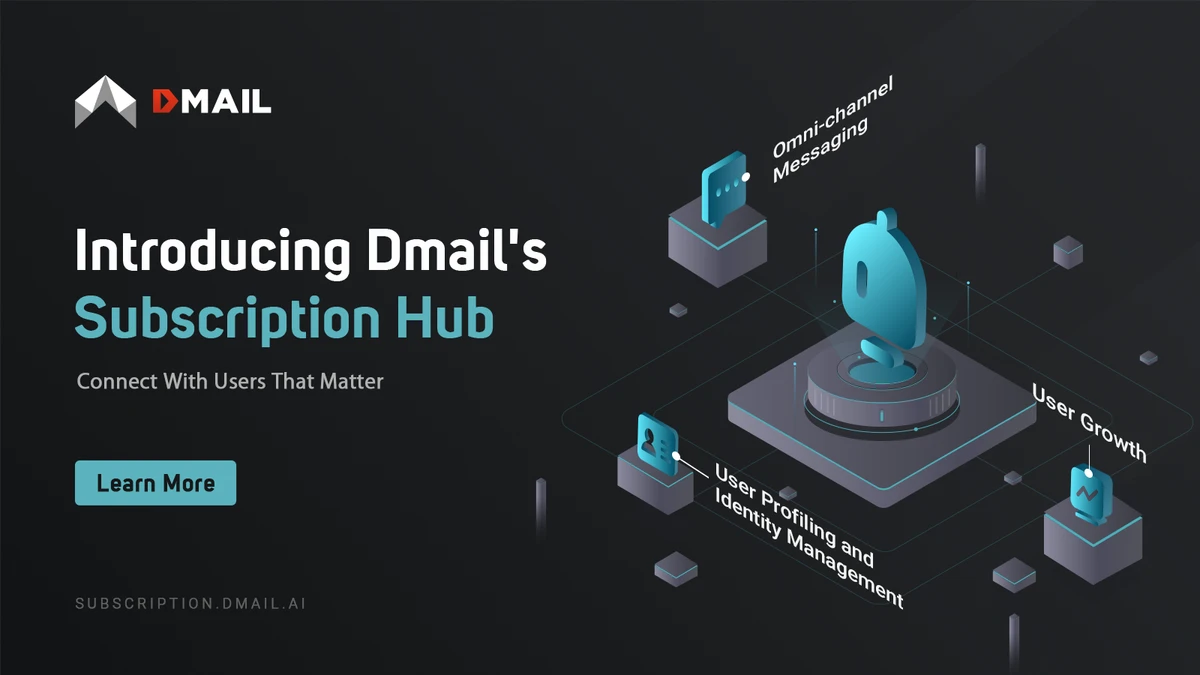
答案是肯定的。近日,Web3通信基础设施服务商 Dmail Network 宣布推出 Subscription Hub,搭建一个强大而高效的Web3信息聚合与分发平台,为开发者提供信息传递并直接触达用户的服务。
一文读懂Dmail信息聚合与分发平台Subscription Hub

借助该平台,开发者可以向全部订阅用户的钱包地址或任何关联的去中心化身份发送点对点的重要信息或个性化通知,确保用户始终可以通过浏览器通知、Dmail、Telegram、外部邮箱等多渠道查看 dApps 的最新动态和提醒,从而增强用户体验,提高活跃度和转化率。

几天前,笔者有幸参与内测,现就测试感受深入探讨 Subscription Hub 究竟是什么,以及它给开发者和用户带来的价值。

Subscription Hub:重塑Web3通信方式

相比于区块链技术的不断创新,Web3通信方式依然十分原始,Subscription Hub 的使命是重塑Web3通信方式,带来去中心化信息传递的新范式。

具体而言,Subscription Hub 支持开发者向全部订阅用户的钱包地址或任何关联的去中心化身份发送点对点的个性化和有针对性的通知、更新重要的信息等。这相比于传统通信方式显然更加Web3。

在此过程中,开发者无需部署代码构建模版或场景,只需通过 API 或可视化开发者平台即可快速配置并向订阅者推送消息,并可借助官方推出的 API KEY 直接调用协议,不需要支付任何 Gas 费。

针对不同类型的用户,开发者还可以基于分组或标签有差别的实现定向精准推送。如此一来,用户可以通过浏览器通知、Dmail、Telegram、外部邮箱等多渠道查看到 dApps 的最新动态和提醒。

值得注意的是,Subscription Hub 还推出 AI 相关功能,包括 AI 标注标签、AI 数据报告和 AI 客服助手(给 dApps 创建一套 FAQs 自我训练和管理系统,AI 自动回复 85% 以上的问题)等。不得不说,Dmail 确实在信息传递的智能化方面下了功夫。

综上所述,Dmail 搭建了一个强大而高效的Web3信息聚合与分发平台,能够为开发者提供信息传递并直接触达用户的诸多服务,同时有利于终端用户体验。

开发者:降本增效, 100% 触达用户

对于开发者而言,Subscription Hub 究竟有哪些价值呢?笔者集合实测体验,从过程和结果两大维度出发,提炼出几点:

1. 无代码创建+ 0 Gas

Subscription Hub 提供完整的可视化后台,允许开发者在无需部署代码前提下就可以构建模版或场景,将重要信息传达给用户,且不需要支付任何 Gas,就算 0 基础小白也可以很快上手。

也就是说,项目方可以 0 成本拥有一套属于自己的信息聚合和发布系统,持续享受 Dmail 在Web3通信领域提供的创新服务。

2. 定制化+智能化

如果开发者不满足于现有模板怎么办?Dmail 通过开发用户友好的 API/SDK 接口将定制提升到一个新的水平,使开发者能够直接通过平台发送高度可配置的自定义内容。

借助官方提供的 API KEY,开发者可以直接调用协议,比如 ENS 可以自定义监控域名即将到期( 30 天)的地址并自动向其发送续费提醒,以此来提升用户体验、留存和付费转化。

不仅如此,Dmail 还植入 AI 功能,包括 AI 标注标签、AI 数据报告和 AI 客服助手等,帮助开发者精准推送并获取分析报告,了解用户喜好并持续优化推送策略,实现效果最大化。

3. 多渠道覆盖+挖掘海量用户

Subscription Hub 的服务不仅限于单一的通信渠道。它允许开发者通过各种平台接触他们的受众,包括电子邮件、Telegram、Discord 等传统平台,甚至计划在未来支持更多新渠道,确保重要消息实时触达用户。

不仅如此,Dmail 社区还为开发者提供海量用户资源。加入 Subscription Hub 之后,开发者可以直接接触并发掘 Dmail 社区超 3, 500, 000 用户的潜力。

得益于以上三大价值,项目方在实际体验中反馈良好。据官方披露,封闭测试期间共有超过 20 个项目体验 Subscription Hub。综合来看:用户满意度提升 300% ;活跃地址互动率提升 500% ;用户流失率减少 60% ;达到相同营销效果的情况下,成本降低约 70% 。现在由 Dmail 推出的 Subscription Hub 信息服务已正式上线,还处于邀请测试阶段,大家可以联系官方活得体验资格。

终端用户:安全高效获取重要信息

Subscription Hub 虽然主要面向开发者提供服务,但最终还是通过开发者服务于广大Web3用户。因此,终端用户的体验直接反应平台本身的价值。

作为终端用户,笔者集合实际测试体验,将 Subscription Hub 平台的终端用户价值总结如下:

1. 第一时间捕捉项目动态

用户与项目的通信连接主要包含两层,一是基于推特、Discord 等Web2渠道的浅层次连接,二是基于钱包地址和 DIDs 的深层次绑定。很显然,后者对于双方的价值更大。

Subscription Hub 支持开发者向全部订阅用户的钱包地址或任何关联的去中心化身份发送点对点的重要信息或个性化通知,确保用户通过 Dmail、Telegram 等多渠道查看项目最新动态。

这意味着,用户通过该平台可以实现与项目方基于钱包地址的深度绑定,有利于在海量信息中第一时间捕捉项目动态,不错过与自身利益相关的每个细节。

2. 隐私安全有保障

Dmail 深耕Web3通信赛道,自始至终确保用户隐私安全,从采用最先进的加密技术到使用机器学习进行安全风险识别,均优先考虑用户数据安全,最大程度降低风险。

也就是说,用户通过 Subscription Hub 不仅能够快速、精准获取重要信息,而且有平台信誉和隐私加密技术做背书,拥有隐私安全的多重保障。

3. 间接参与项目建设

用户在不断享受 Subscription Hub 信息分发服务的同时,每一个动作都在不断为项目方提供反馈,这些反馈可以追溯到钱包地址,对于项目决策会有直接价值。这也是 Dmail 即将为开发者提供的“忠诚度积分计划”,通过Web3公开透明,地址可查的特点,开发者很容易辨别谁是有意义的贡献者,而不是空头猎人。

举个简单的例子,当用户收到一条项目动态后,其登录的网络、打开时间、停留时长甚至钱包活动都会以报告形式反馈给项目方,后者可以轻而易举了解用户喜好,进而不断改进服务,提升用户满意度。

在这个双向交互过程中,项目方与用户的距离被进一步拉近,最终有利于社区建设,让每一个参与社区发展的用户受益。

结语

作为一个新的信息聚合与分发平台,也是一站式精准推送营销工具,Subscription Hub 确实能为开发者和用户提供诸多便利,不仅有望重塑Web3通信方式,还可能创造一种新的社区建设形式,推动Web3赛道正向发展。

当然,Dmail 的野心不止于此,他们计划打造Web3首选服务平台,持续为企业级用户订制新功能,而 Subscription Hub 将成为Web3通信的基石,仅仅是个开始。

Letture associate

Banking Giants Battle in the Tokenization Arena: Who Will Take the Lead?

**Banking Titans Battle in Tokenization: Who Leads the Pack?** Four major banks—JPMorgan Chase, Goldman Sachs, HSBC, and BNY Mellon—are heavily investing in tokenization infrastructure but have adopted distinct strategic paths. This analysis compares them across four key dimensions: verified transaction volume, product breadth, regulatory compliance, and underlying infrastructure model. JPMorgan's Onyx network stands out with over $1 trillion in cumulative cleared transaction volume, focusing deeply on niche areas like tokenized collateral management and intraday repo settlement. However, its closed private network limits market reach. Goldman Sachs Digital Assets Platform (GS DAP) leads in product diversity, having executed tokenized bond issuances for sovereign entities and supranational organizations, and launched tokenized money market funds. It is also a founding member of the Canton Network, a shared ledger for institutions, though its overall cleared volume is less publicly disclosed than JPMorgan's. HSBC's Orion platform carves a niche in cross-border tokenized securities and sustainable finance, exemplified by its tokenized gold product and its role in large-scale digital green bond issuances for the Hong Kong Monetary Authority. Its global network provides a unique advantage in Asia and emerging markets. BNY Mellon, as the world's largest custodian, plays a fundamentally different role by providing essential custody and asset servicing infrastructure for digital assets, notably supporting the Canton Network. It does not actively issue front-end tokenized products. In summary, no single bank dominates all fronts. JPMorgan leads in scale, Goldman in product breadth, HSBC in global cross-border positioning, and BNY Mellon in foundational custody services. The market is likely to see multiple parallel development paths. A key future challenge is avoiding fragmentation; the success of interoperability standards like those within Canton Network will be crucial to realizing blockchain's full efficiency gains across the entire financial ecosystem. The next 5-10 years will reveal which institution builds the most enduring competitive moat.

Foresight News4 min fa

Banking Giants Battle in the Tokenization Arena: Who Will Take the Lead?

Foresight News4 min fa

Focus: Five Leading AI Stocks on Nasdaq

The report analyzes five Nasdaq-listed AI infrastructure stocks—Micron (MU), MaxLinear (MXL), AMD, Lumentum (LITE), and Vicor (VICR)—as distinct plays within the AI capital expenditure chain, rather than a single "AI trade." While all benefit from AI data center spending, they differ in their specific roles (e.g., memory, computing, optics, power, connectivity), financial resilience, and risk profiles. The author argues that the key question is not whether the AI narrative remains intact, but whether capital expenditure translates into real orders, earnings justify valuations, and portfolios can withstand high volatility. Historical data shows these stocks have significantly outperformed benchmarks but also experienced deeper drawdowns (~28% to -32%), highlighting their high-beta, high-volatility nature. An investment framework is proposed: core positions (e.g., MU, AMD) for stocks with stronger fundamental evidence; satellite positions (e.g., LITE, VICR) for high-potential, high-volatility names; and cautious observation (e.g., MXL) for smaller-cap ideas with unproven financials. The emphasis is on disciplined, phased buying during pullbacks—only when price corrections align with intact fundamentals and available risk budget—rather than emotional "buy-the-dip" strategies. Overall, AI infrastructure offers long-term potential, but success requires strict position sizing, role definition for each holding, and preparedness for significant volatility.

marsbit1 h fa

Focus: Five Leading AI Stocks on Nasdaq

marsbit1 h fa

Will UNI Reach $100 in Four Years? Will Standard Chartered's Prediction Come True?

TL;DR: - According to reports, Standard Chartered Bank has published a research report on Uniswap, setting a 2030 price target of $100 for the UNI token. - The bank's core logic is that the tokenization of assets will drive demand for open DeFi liquidity, and Uniswap could capture significant trading volume and fee revenue. - However, most institutional-grade tokenized products are permissioned, and the example of BlackRock's BUIDL shows that DeFi still faces significant access barriers. Standard Chartered's $100 target for UNI by 2030 is based on the hypothesis that tokenized assets will grow massively and a significant portion will flow into open DeFi markets, requiring decentralized exchange platforms like Uniswap for liquidity. The bank forecasts tokenized assets could reach $4 trillion by 2028, with up to 30% in DeFi by 2030. The key question is whether tokenized assets like treasuries and funds will trade in open, decentralized markets or remain within closed, permissioned institutional systems. This directly impacts Uniswap's potential growth. A real-world example is BlackRock's BUIDL fund, which, while using UniswapX for trading, is strictly limited to pre-approved, whitelisted institutional participants. This highlights the current trend: institutions may leverage DeFi infrastructure but maintain strict control over access and transfers. Furthermore, for UNI's value to rise significantly, Uniswap must establish a clear value-capture mechanism, such as the approved fee switch and token burn proposal. Regulatory and interoperability hurdles also persist, as noted by bodies like the Financial Stability Board. In summary, Standard Chartered's bold prediction hinges on the future flow of tokenized asset liquidity. While it signals institutional recognition of DeFi's potential, the path to $100 depends on overcoming current permissioned models and enabling truly open, cross-asset liquidity pools on platforms like Uniswap.

Foresight News1 h fa

Will UNI Reach $100 in Four Years? Will Standard Chartered's Prediction Come True?

Foresight News1 h fa

Trading

Spot
Futures
活动图片