解读ARB质押提案背后的PlutusDAO:巧劲翻转基本面

Odaily星球日报Pubblicato 2023-11-07Pubblicato ultima volta 2023-11-07

Introduzione

虽运营不善,长期脱锚,但一个提案,逆天改命。

原创 | Odaily星球日报

作者 | 南枳解读ARB质押提案背后的PlutusDAO:巧劲翻转基本面

10 月 30 日晚间,由 PlutusDAO 提出的关于启动 Arbitrum 治理代币 ARB 质押功能的提案开始投票,提案设置了“ 1 亿 ARB 激励”、“ 1.25 亿 ARB 激励”、“ 1.5 亿 ARB 激励”、“ 1.75 亿 ARB 激励”、“不提供激励”这几个档位选项,这些激励将由 Arbitrum treasury 支付。此前一度脱锚超 60% 的 plsARB 逐渐回升, 11 月 6 日," 1 亿 ARB 激励"投票通过,汇率回升至 0.637 。

作为 Arbitrum 上最大的 LSD 协议,为何会出现如此严重的脱锚?以最小成本翻转基本面,PlutusDAO 近期又做对了什么?Odaily星球日报将于下文介绍 PlutusDAO 的业务情况,及其与 ARB 流动性质押近半年以来的故事。

项目定位:旨在最大化用户收益和流动性的治理权聚合协议

官方文档:PlutusDAO 是 Arbitrum 原生治理聚合器,旨在最大化用户的流动性和激励,同时聚合 PLS 代币背后的治理。 Plutus 的目标是成为 veToken 模型项目的 2 层治理黑洞和各类流动质押衍生品的首选。

协议产品

目前,Plutus 已与 DopexRadiantGMXSperax 和 Jones 合作开发各种与 Plutus 相关的治理产品。

除了治理聚合产品外,Plutus 拥有 Vaults 产品线,旨在提高收益并创建 Arbitrum 原生 DeFi 构建模块。目前,Plutus 拥有一款与 GMX 的 GLP 流动性解决方案合作实时创建的 Vault 产品。

协议功能

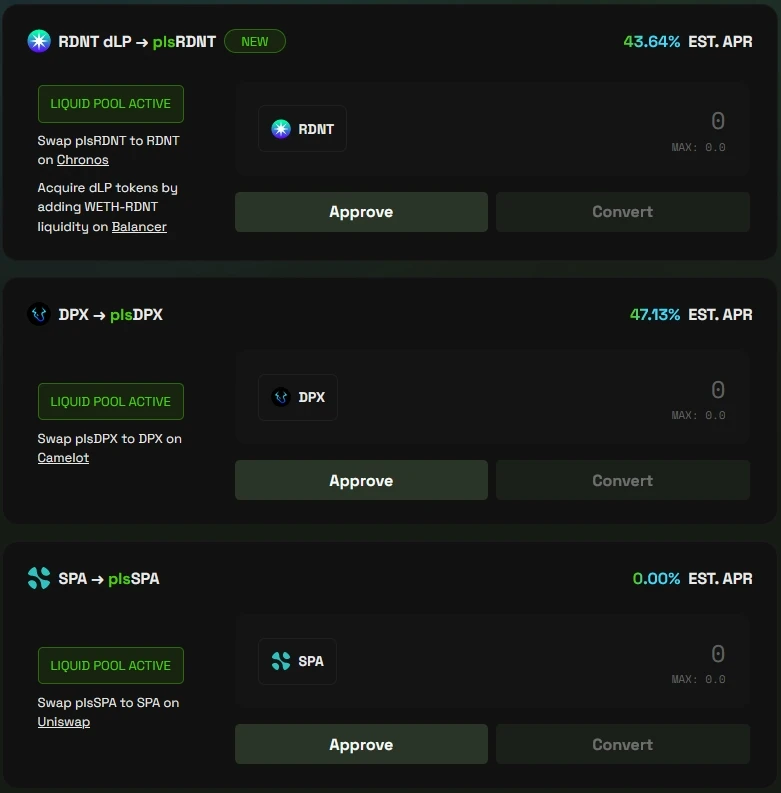
plsAssets(LSD):

  • 用户可以在 Plutus 上质押 Jones、DPX 和 SPA 等代币,将永久锁仓为 veJONES、veDPX 和 veSPA,同时 Plutus 将返还 plsAsset,如 plsDPX、plsJONES。

  • 通过 plsAsset,用户能够不锁仓而获得 ve 资产并按需退出

  • 质押 plsAsset,用户能够获得对应的平台收益、PLS 奖励和 Plutus 收益国库的部分收益。
    解读ARB质押提案背后的PlutusDAO:巧劲翻转基本面

plvAssets(Auto Compounding):

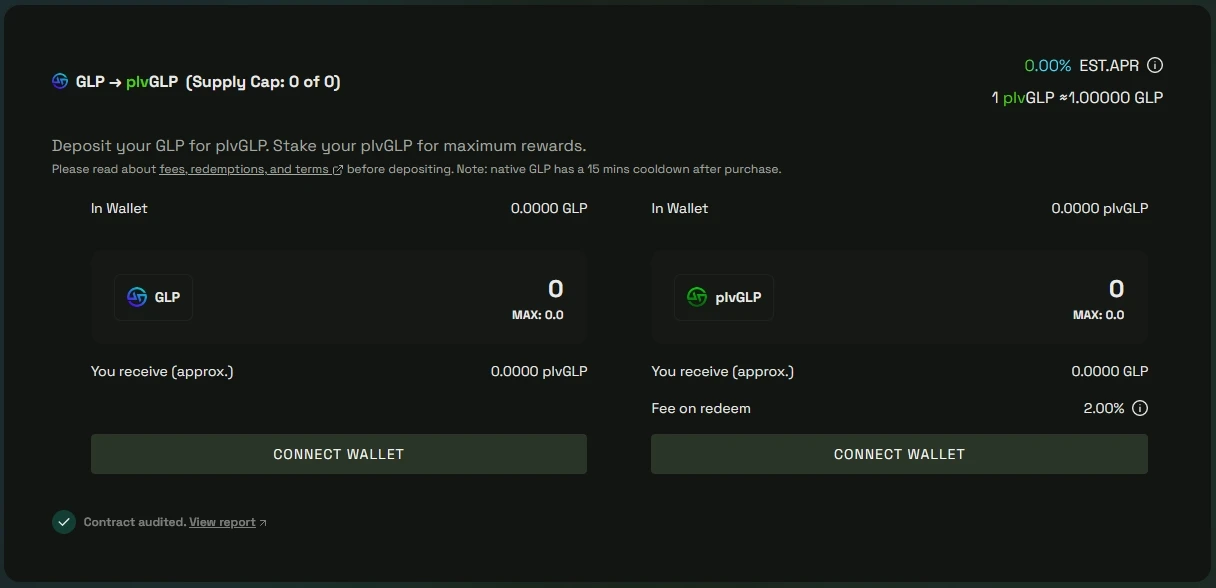
  • 用户能够在 Plutus 上质押 GLP,获得 plvGLP,PLutus 将通过链下机器人每 8 个小时自动复投质押收益,以增加 GLP 收益。

  • 质押时不收费,退出时收费 2% ,金库抽成 10% GLP 收益。

  • plvGLP 将获得 PLS 总供应量的 15% (在两年内发放完毕)。

    解读ARB质押提案背后的PlutusDAO:巧劲翻转基本面

协议问题

对于 plsDPX 等 LSD 代币,其底层代币除了治理权,还具备对底层协议的收益权,天然具有质押需求,因此用户能够从中获得流动性,协议也能获得抽成。

然而对于 plsARB、plsRDNT,前者仅具备治理权,后者作为矿币还面临持续的抛压。除了 PLS 奖励,用户并没有别的质押收益,而 Plutus 也仅仅是获得了治理权

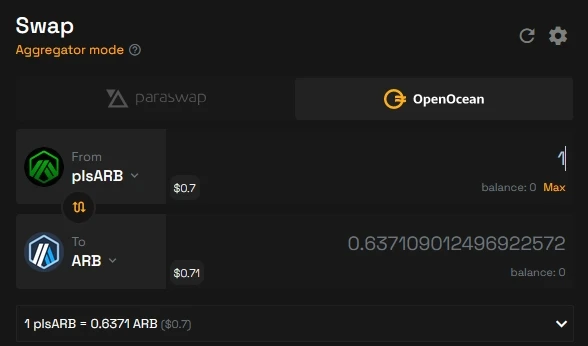
此外,Plutus 并不对用户开放反向兑换功能(plsARB 不能直接兑换为 ARB),只有在二级市场上有一部分流动性,而在 plsARB 用途缺失且前景不明的情况下,出现了长期的严重脱锚。

截至 11 月 6 日,共有 953.6 万枚 ARB 质押在 Plutus,占流通量的 0.74% ,价值 1058 万美元。plsARB/ARB 汇率为 0.637 ,脱锚 36.3% 。
解读ARB质押提案背后的PlutusDAO:巧劲翻转基本面

PlutusDAO 与 plsARB

宣传质押

3 月 23 日,Arbitrum 基金会以 ARB 代币的形式向 625, 143 个符合条件的地址授予治理责任。由于领取人数过多,出现网络停滞和前端崩溃的情况,Arbitrum 生态系统中的各个项目宣布可通过自己的前端来协助领取,其中之一是 Plutus。

解读ARB质押提案背后的PlutusDAO:巧劲翻转基本面

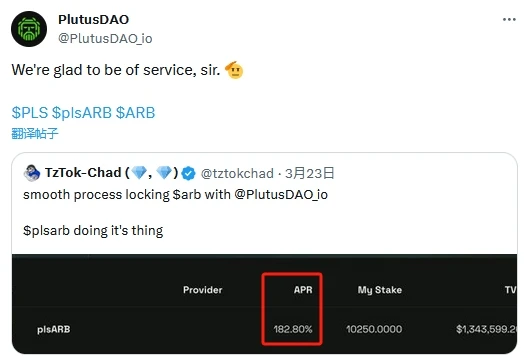
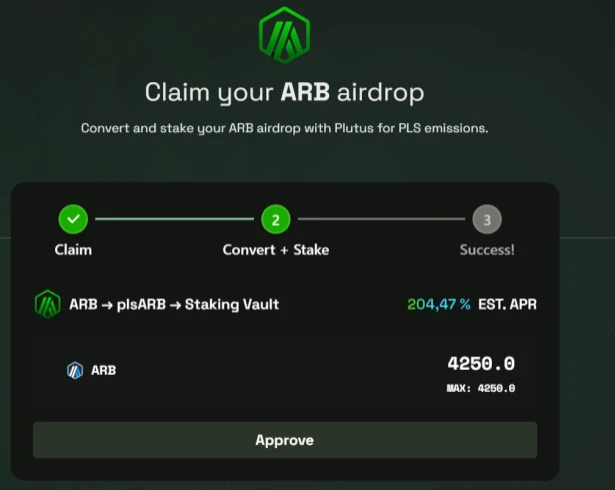
在 Plutus 前端领取 ARB 后,系统会提示是否要将 ARB 转换为 plsARB,据多名社区用户提供截图显示,此时 Plutus 官方界面显示 APR 高达 180 ~ 200% 。(而目前的质押收益仅为 4% ,在 PLS 拉升前约 2% )
解读ARB质押提案背后的PlutusDAO:巧劲翻转基本面

解读ARB质押提案背后的PlutusDAO:巧劲翻转基本面Dune 统计数据显示,大部分 plsARB 的质押都是在 3 月完成的,截至 3 月 31 日 0 时即空投一周时,ARB 质押量达 786 万枚。

解读ARB质押提案背后的PlutusDAO:巧劲翻转基本面

PlutusDAO 获得大额空投

在公开 ARB 空投之后, Arbitrum 在 4 月份又进行了专门针对特定 DAO 的特殊空投。Plutus 收到了 2, 704, 175 枚 ARB。

Castle Capital撰写的一份研报“DAO 如何使用其 ARB 空投”,Plutus 将 18% 的空投分配给了他们的团队归属合约。而 Plutus 官方团队对于空投 ARB 的用途回复为:

“分配将用于多种方式,以确保 Plutus 在未来取得成功的最佳定位。实际上,这意味着我们将一些用作跑道,一些用于团队、产品激励、bPLS 激励、plsARB 空投,并为 plsARB/ARB 提供深度流动性。”

然而过去了半年,除了“用于团队”之外,并未见到其他的激励兑现

提供少量流动性并长期脱锚

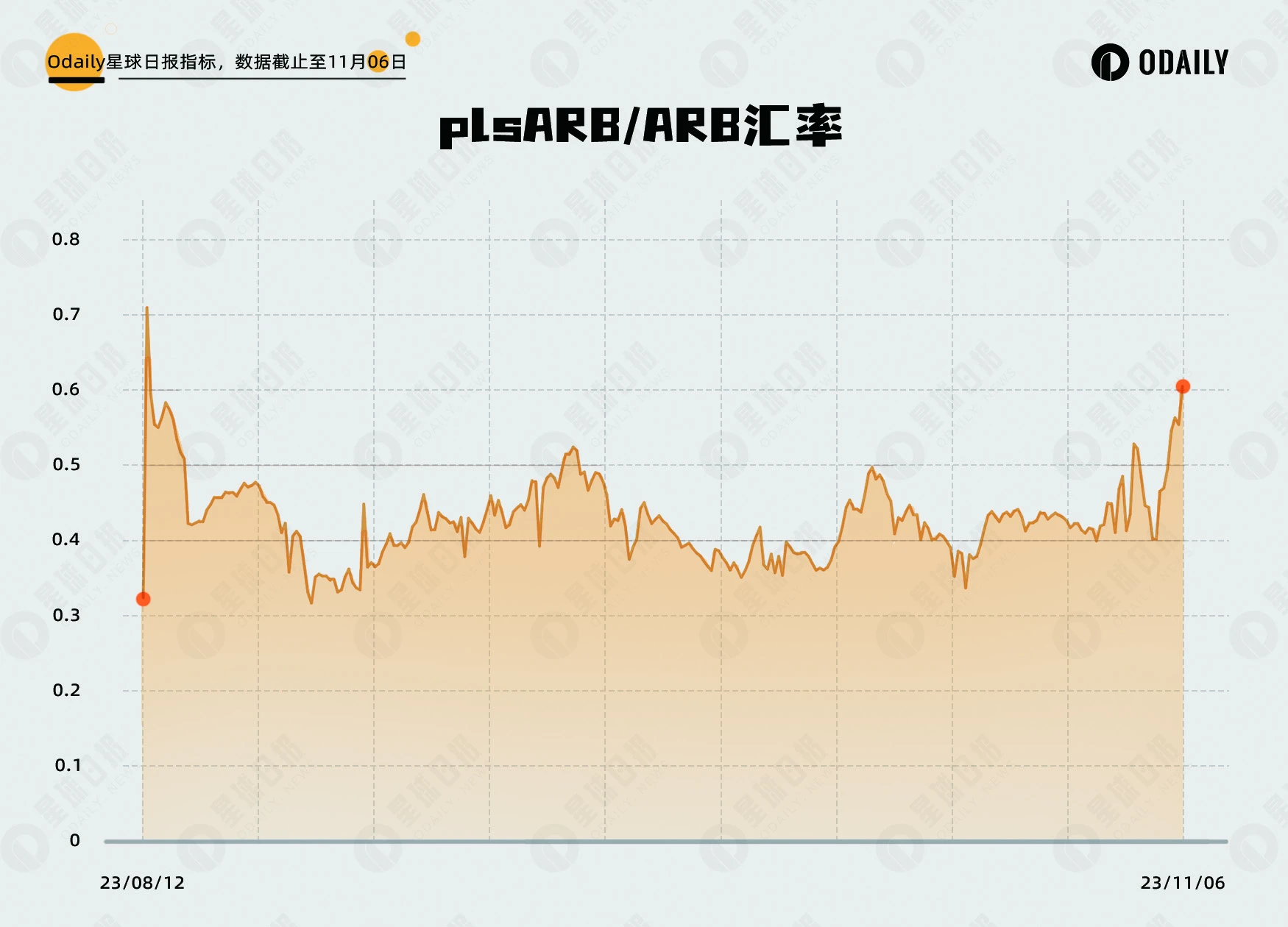
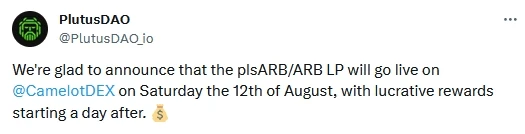
8 月 12 日,官方宣布提供 plsARB/ARB 流动性,并向 Camelot 相应的池中投入价值 11 万美元的 LP。
解读ARB质押提案背后的PlutusDAO:巧劲翻转基本面

解读ARB质押提案背后的PlutusDAO:巧劲翻转基本面

上图为自 8 月官方添加流动性以来的 plsARB/ARB 汇率,plsARB 长期处于脱锚状态, 9 月 19 日汇率跌至 0.3366 ,而这一日 ARB 均价约为 0.84 USDT,即一枚 plsARB 仅价值 0.28 USDT。

逆天改命,开启 ARB 质押提案

9 月 9 日,Plutus 于治理平台发起第一版 ARB 质押提案:“我们相信 Arbitrum 代币需要原生实用性,Arbitrum DAO 有权每年铸造 ARB 总供应量的 2% 作为通货膨胀,并以他们认为合适的任何方式使用它。我们建议铸造 1.75% 的代币供应量并在一年内进行分配。”

由于增加代币总量遭到了社区的大量反对, 10 月 20 日 Plutus 发布更新版提案,提议由 Arbitrum DAO 金库出资提供质押奖励,分别为总量的 1.75% 、 1.5% 、 1.25% 或 1% 。

该提案于 10 月 30 日在 Snapshot 上开始温度检查投票,于昨日结束,以“提供 1 亿枚 ARB”最终胜出,支持率达 66.76% ,另一选项“不提供任何 ARB”占比达 33.24% 。

温度检查投票完成后,后续还有 3 日的正式 AIP 发起和投票预备期,以及 14 日的 Tally 投票。

虽流程尚未完成,但是 plsARB 已有显著回锚,截止 Snapshot 投票完成时,汇率达 0.637 ,回到了最开始的高点。以目前的整体形势而言,后续提案通过的概率也较大,plsARB 有望回升至 1: 1 的正常比例

PlutusDAO 并未消耗资金、时间、运营人力,用一个提案“慷他人之慨”便撬动了回锚的进程,并且若提案通过还有希望获取更多的 ARB 质押和抽成。

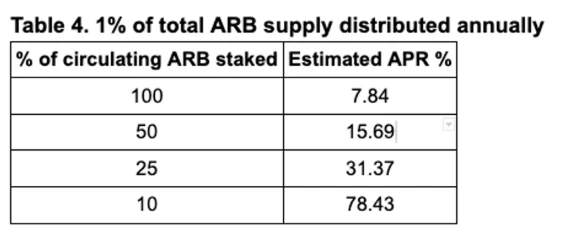
以 Arbitrum 上其他 LSD 协议(Pirex、Abracadabra、Olive)和 plvGLP 作为参考,假设 Plutus 对质押抽成 10% ,另假设 20% 的质押通过 Plutus 进行,则 Plutus 预期能从质押中获取 1 × 0.1 × 0.2 = 200 万枚 ARB 的抽成。
解读ARB质押提案背后的PlutusDAO:巧劲翻转基本面

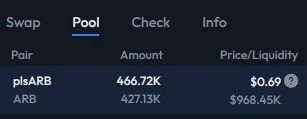
然而“回锚”本身实际上并不困难,以当前 Camelot 里的 plsARB/ARB 流动性计算,若要将目前的 0.6 汇率抬升至 1.0 仅需(46.672 × 42.713)^½-42.713 = 1.93 万枚 ARB,即不到两万美元即可实现。重点还是在于潜在的抽成收益。
解读ARB质押提案背后的PlutusDAO:巧劲翻转基本面

只是,反转的重大利好与捉摸不透的项目运营治理叠加之下,PlutusDAO 能否获取足够的 ARB 治理权利建立生态壁垒,目前犹未可知。

Letture associate

Focus: Five Leading AI Stocks on Nasdaq

The report analyzes five Nasdaq-listed AI infrastructure stocks—Micron (MU), MaxLinear (MXL), AMD, Lumentum (LITE), and Vicor (VICR)—as distinct plays within the AI capital expenditure chain, rather than a single "AI trade." While all benefit from AI data center spending, they differ in their specific roles (e.g., memory, computing, optics, power, connectivity), financial resilience, and risk profiles. The author argues that the key question is not whether the AI narrative remains intact, but whether capital expenditure translates into real orders, earnings justify valuations, and portfolios can withstand high volatility. Historical data shows these stocks have significantly outperformed benchmarks but also experienced deeper drawdowns (~28% to -32%), highlighting their high-beta, high-volatility nature. An investment framework is proposed: core positions (e.g., MU, AMD) for stocks with stronger fundamental evidence; satellite positions (e.g., LITE, VICR) for high-potential, high-volatility names; and cautious observation (e.g., MXL) for smaller-cap ideas with unproven financials. The emphasis is on disciplined, phased buying during pullbacks—only when price corrections align with intact fundamentals and available risk budget—rather than emotional "buy-the-dip" strategies. Overall, AI infrastructure offers long-term potential, but success requires strict position sizing, role definition for each holding, and preparedness for significant volatility.

marsbit59 min fa

Focus: Five Leading AI Stocks on Nasdaq

marsbit59 min fa

Will UNI Reach $100 in Four Years? Will Standard Chartered's Prediction Come True?

TL;DR: - According to reports, Standard Chartered Bank has published a research report on Uniswap, setting a 2030 price target of $100 for the UNI token. - The bank's core logic is that the tokenization of assets will drive demand for open DeFi liquidity, and Uniswap could capture significant trading volume and fee revenue. - However, most institutional-grade tokenized products are permissioned, and the example of BlackRock's BUIDL shows that DeFi still faces significant access barriers. Standard Chartered's $100 target for UNI by 2030 is based on the hypothesis that tokenized assets will grow massively and a significant portion will flow into open DeFi markets, requiring decentralized exchange platforms like Uniswap for liquidity. The bank forecasts tokenized assets could reach $4 trillion by 2028, with up to 30% in DeFi by 2030. The key question is whether tokenized assets like treasuries and funds will trade in open, decentralized markets or remain within closed, permissioned institutional systems. This directly impacts Uniswap's potential growth. A real-world example is BlackRock's BUIDL fund, which, while using UniswapX for trading, is strictly limited to pre-approved, whitelisted institutional participants. This highlights the current trend: institutions may leverage DeFi infrastructure but maintain strict control over access and transfers. Furthermore, for UNI's value to rise significantly, Uniswap must establish a clear value-capture mechanism, such as the approved fee switch and token burn proposal. Regulatory and interoperability hurdles also persist, as noted by bodies like the Financial Stability Board. In summary, Standard Chartered's bold prediction hinges on the future flow of tokenized asset liquidity. While it signals institutional recognition of DeFi's potential, the path to $100 depends on overcoming current permissioned models and enabling truly open, cross-asset liquidity pools on platforms like Uniswap.

Foresight News1 h fa

Will UNI Reach $100 in Four Years? Will Standard Chartered's Prediction Come True?

Foresight News1 h fa

Odaily Editorial Team Tea Talk (June 17)

Odaily Editorial Team Casual Chat (June 17) This is an informal column sharing real-time thoughts from Odaily's editorial team on industry news, data, and events. The content is based on actual investment and observations, does not constitute investment advice, and aims to expand perspectives. Azuma shared recent operations: small-scale buys in crypto (mainly BTC) at relatively high levels, a small addition to HOOD stock, and participation in World Cup prediction markets. He also discussed Hyperliquid, noting that while its token HYPE has performed well, its high price may hinder the expansion of its HIP-3 ecosystem by making market creation cost-prohibitive, potentially limiting the platform to just one major market (trade.xyz). Suzz emphasized the importance of a calm mindset in investing, stating that markets offer perpetual opportunities. He warned against "hindsight bias," where past opportunities seem obvious, and stressed that the present always holds new chances for those with the right knowledge and temperament. Golem analyzed SpaceX's acquisition of AI tool Cursor's parent company, Anysphere, for $60 billion paid entirely in SpaceX stock. He speculated whether Musk's interests might work to keep SpaceX's trading volume and market cap high in the short term to reduce the actual equity cost of the deal, noting current high retail investor enthusiasm. Wenser shared a market outlook: cautiously bullish on BTC, monitoring SpaceX stock post-IPO for a potential rise, observing World Cup trends favoring strong teams, and noting the continued strength of Japanese and Korean stocks. He highlighted Anthropic's potential for a massive future IPO and the defensive investment logic in "picks and shovels" AI infrastructure. Qin Xiaofeng discussed trading HYPE around $56-$70, viewing the $50-$60 range as long-term support due to Hyperliquid's dominance in on-chain traditional asset trading and its substantial fee revenue used to buy back HYPE. On ETH, he noted a divide between disappointed crypto natives and bullish traditional investors like Tom Lee, personally viewing current ETH prices as undervalued.

Odaily星球日报1 h fa

Odaily Editorial Team Tea Talk (June 17)

Odaily星球日报1 h fa

Trading

Spot
Futures
活动图片