今日币价7月11日:比特币为CPI周做准备,美股繁荣,MINA领跑山寨币

Tap Chi BitcoinPublished on 2023-07-11Last updated on 2023-07-11

Abstract

比特币(BTC)价格在较短的时间范围内上涨,但在较高的时间范围内没有可行的价格走势。
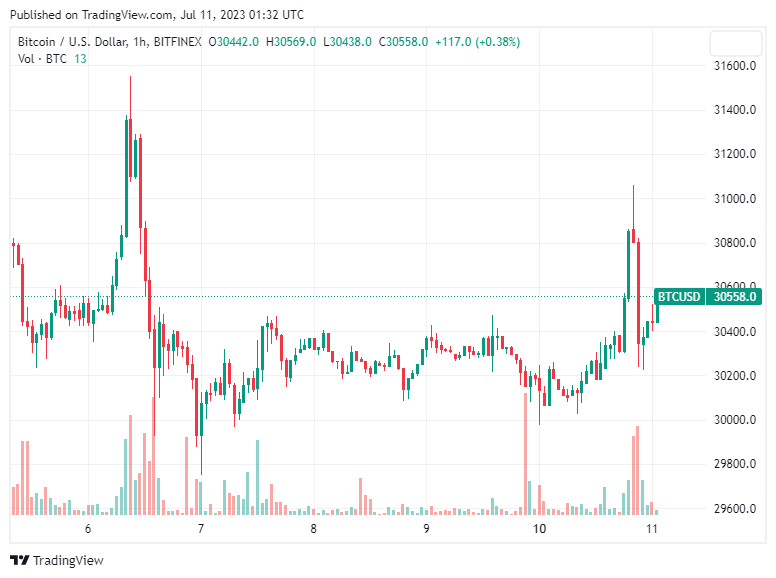
比特币(BTC)价格在较短的时间范围内上涨,但在较高的时间范围内没有可行的价格走势。

来源:TradingView

道琼斯工业平均指数周一(7 月 10 日)上涨,华尔街试图从上周的跌势中恢复过来。这一逆转发生之际,投资者正准备迎接本周末一系列通胀数据以及第二季度财报季的开始。

周一收盘,道琼斯工业平均指数上涨 0.62%,至 33,944 点。标准普尔 500 指数上涨 0 至 24%,至 4,409 点。与此同时,纳斯达克综合指数小幅上涨 0.18%,至 13,685 点。主要股指均结束了链的下跌。

美国CPI消费者价格指数报告将于7月12日发布,随后PPI生产者价格指数报告(衡量批发价格压力的指标)将于7月13日发布。

上周,标普500指数下跌1.16%,纳斯达克综合指数和道琼斯指数分别下跌0.92%和1.96%。尽管6月份就业数据增幅低于预期,但工资涨幅略高于预期,引发了人们对美联储(Fed)进一步加息可能性的担忧。

Fundstrat 的 Tom Lee 认为通胀报告可能低于预期,这可能导致通胀再次大幅攀升。

周一金价基本持平,投资者等待可能影响美联储政策立场的美国通胀数据。尾盘,现货黄金合约基本持平于1,925美元/盎司。黄金期货下跌 0.1%,至每盎司 1,931 美元。

同一天,由于美国可能进一步加息,油价下跌,但主要石油出口国沙特阿拉伯和俄罗斯削减原油供应的举措限制了油价跌幅。收盘时,布伦特原油合约下跌1%,至每桶77.69美元,盘初触及2个多月来最高水平。

在 1 小时图表上,BTC/USDT 显示出可操作的价格变动,这与市场停滞的一日时间框架不同。在将 50 天、100 天和 200 天指数移动平均线 (EMA) 翻转至 30,522 美元、30,296 美元和 30,344 美元的支撑位后,这位加密货币之王仍然看涨。

然而,专家预测,在 CPI 引起一定波动之前,这种拖累将会持续存在。根据普遍观点,该报告可能为 3.1%,这一结果可能会引发顶级加密货币的反弹。

如果发生这种情况,比特币价格可能会突破该区间并突破 30,500 美元,创下新高。

斐波那契回撤指标显示,比特币价格可能会升至斐波那契 50% 水平,即 30,727 美元。这一前景受到相对强弱指数 (RSI) 和 AO 的支撑,上涨显示出看涨势头。
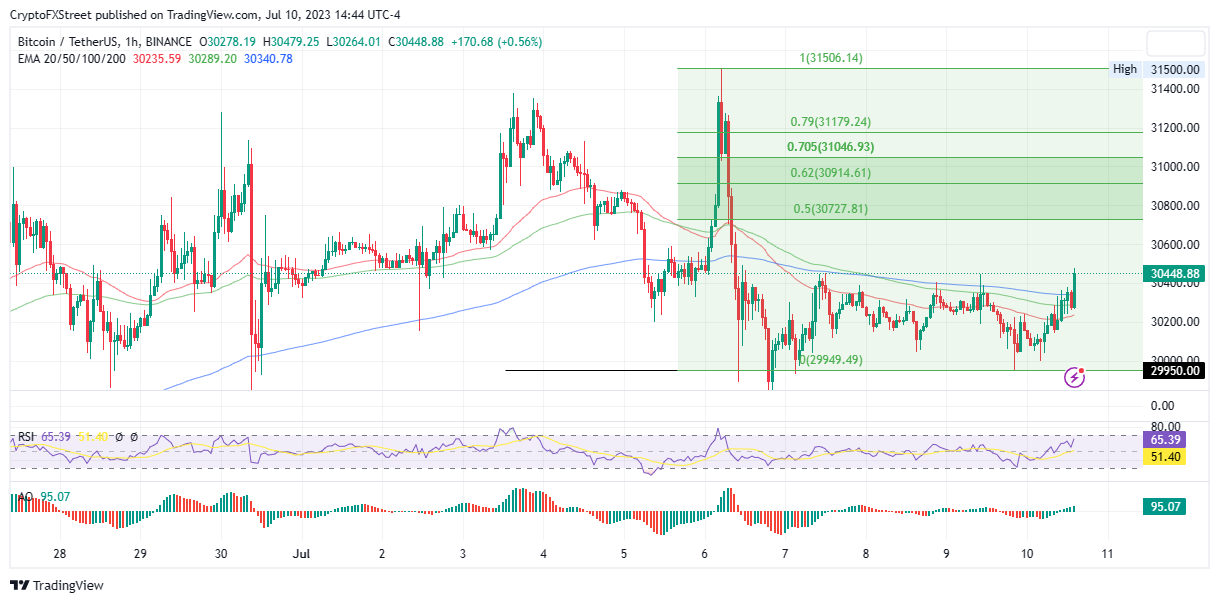
比特币图表。来源:TradingView

然而,随着时间的推移,消费者物价指数等宏观经济的影响力已经减弱,这意味着比特币要么继续其低迷的价格走势,要么屈服于投资者的贪婪并一路下跌。

至于ETH,由于各个生态系统缺乏适当的催化剂,最大的山寨币价格正在与BTC同步波动,随着大盘为CPI做准备,其地位逐渐上升。
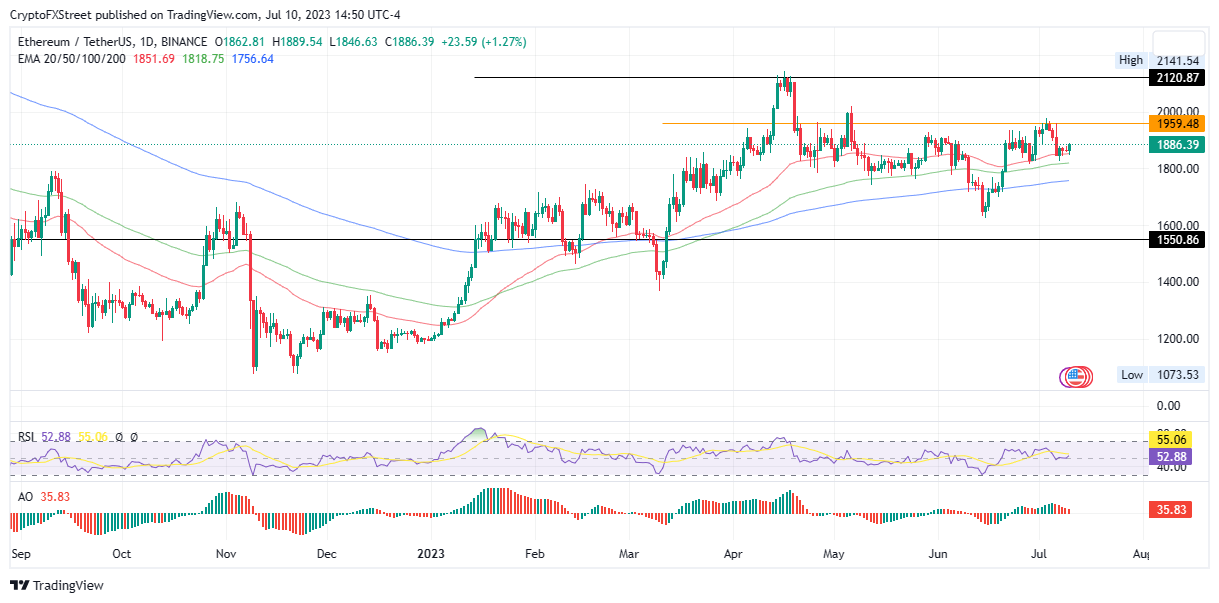
以太坊图表。来源:TradingView

而山寨币的另一面,前 100 名中约有一半处于上涨状态,其中 MINA 处于领先地位,在 24 小时内涨幅超过 15%。紧随其后的是 MATIC 接近 9%、KAVA +7%、FTM +6.3%、BNB +5.3% 以及其他看涨山寨币的回报率为 0.5-4%。
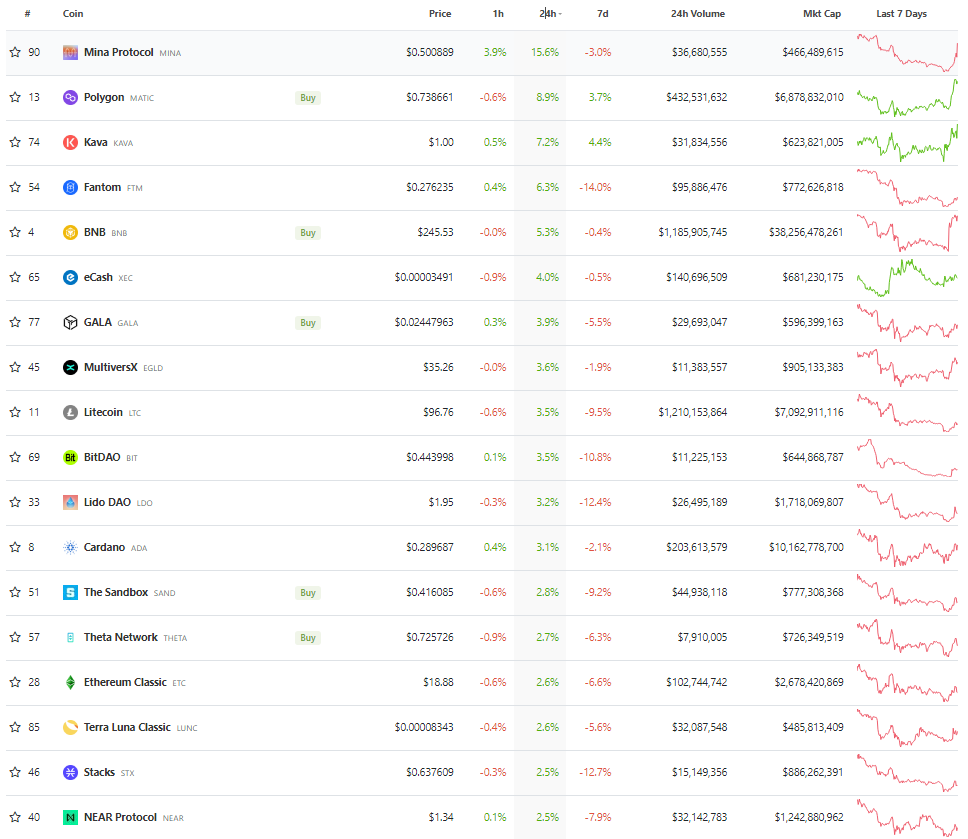
资料来源:Coinecko

“今日币价”栏目将于每日9:00更新市场动态,欢迎读者关注。

Related Reads

Claude Code Introduces Dynamic Workflows: Enabling AI to Form Teams and Collaborate

Claude Code introduces dynamic workflows, enabling AI to coordinate teams of specialized agents for complex tasks. This transforms Claude from a code assistant into a programmable workbench. Workflows address key limitations of single-agent systems: agentic laziness (premature task completion), self-preferential bias (favoring own outputs), and goal drift (losing sight of original objectives). The system allows Claude to dynamically create execution frameworks using JavaScript. It can split tasks, dispatch parallel agents for isolated work (e.g., in separate worktrees), implement adversarial validation, run tournaments, and synthesize results. This multi-agent approach is valuable for tasks requiring deep research, factual verification, code migration, root cause analysis, large-scale triage, and qualitative sorting. Key patterns include: classify-and-route, fan-out-and-synthesize, adversarial verification, generate-and-filter, tournaments, and loop-until-done. While token usage is higher, workflows excel where tasks resemble programming—needing problem decomposition, isolated context, hypothesis testing, and handling many details. They extend Claude Code's utility beyond technical work to areas like business plan review, resume screening, and naming brainstorm. The feature is not a universal solution but points to a future where AI tool competitiveness depends on organizing reliable, reusable, and auditable execution flows for complex goals.

marsbit28m ago

Claude Code Introduces Dynamic Workflows: Enabling AI to Form Teams and Collaborate

marsbit28m ago

Hyperliquid, Wall Street's 24/7 Trading Convenience Store

Hyperliquid: The 24/7 Trading "Convenience Store" for Wall Street Hyperliquid, a decentralized cryptocurrency exchange, has become a go-to platform for Wall Street traders seeking to trade around the clock, especially during traditional market closures. Founded by Jeff Yan, a former quantitative trader, after the FTX collapse, the platform emphasizes user self-custody of assets. It offers a wide range of perpetual contracts—leveraged derivatives with no expiry—on assets from Bitcoin and crude oil to the S&P 500 and even pre-IPO companies like SpaceX. A notable example involves a hedge fund trader who capitalized on geopolitical news over a weekend, securing a 243% return on oil derivatives before markets reopened. The platform, run by just 11 employees, generated approximately $800 million in revenue last year, and its native token HYPE has seen significant growth. Its rise highlights the merging of traditional finance and crypto. While U.S. users are currently restricted, recent CFTC rule changes could open access. The platform is known for its transparency, having processed $10 billion in liquidations during a market crash while competitors faltered. Regulators warn of the high risks and complexity of perpetual contracts for retail investors. Key to its appeal is a strong community culture, direct engagement with founders, and a simple interface. Despite rules against VPN use, it attracts global users with its permissionless approach. Hyperliquid plans to expand into prediction markets and options, aiming to eventually host all financial activity.

marsbit28m ago

Hyperliquid, Wall Street's 24/7 Trading Convenience Store

marsbit28m ago

Who Funds the Agents?

**Summary: Who Funds AI Agents?** OpenAI recently shut down a feature allowing AI agents to shop for users, highlighting the challenge of creating a secure and regulated environment for agent-driven transactions. While payment infrastructure exists, a crucial governance layer—defining spending limits, fraud detection, tax handling, and return policies—is largely missing. The potential is enormous: AI agents already processed $73M across 176M transactions last year, with McKinsey forecasting this could grow to $3-5T in global consumer commerce by 2030. The core competition isn't just about processing payments, which can be very cheap (especially with crypto-based settlement), but about controlling the rules that govern agent spending. Key players like Stripe and Coinbase are racing to dominate this governance layer. Stripe's acquisition of wallet provider Privy allows it to set spending policies, identity checks, and human-in-the-loop approvals directly at the wallet level. Similarly, Coinbase's stack, including its x402 protocol and AgentKit, embeds governance rules. This vertical integration across settlement, wallet, and governance layers is becoming the dominant strategy. Control over the governance layer is where significant future value lies. If agents handle trillions in transactions, even a small fee for managing compliance, fraud prevention, and policy enforcement could generate billions in annual revenue. The companies that successfully integrate across the payment stack will capture value from idle agent balances, transaction fees, and governance services, positioning themselves as the foundational banks of the AI agent economy.

marsbit56m ago

Who Funds the Agents?

marsbit56m ago

Trading

Spot
Futures
活动图片