元宇宙知识产权保护的热点是什么?你知道几个?

上海区块链技术协会2022-04-07 tarihinde yayınlandı2022-04-07 tarihinde güncellendi

Özet

对元宇宙而言,区块链是它的“神经中枢”。同样对知识产权保护而言,“司法区块链”将是它的”科技引擎”。

4月1日,由上海长三角区块链产业促进中心产业元宇宙专委会、上海区块链技术协会主办的《区块链讲堂》如约而至,本次线上培训与《知新大讲堂》联袂合作,主题为—知识产权,打开元宇宙之门的钥匙。
上海区块链技术协会智库专家、协会法律委员会副主任萧疆教授,上海市首批专利转化专项计划专利运营特派员,上海段和段律师事务所专利业务负责人李佳俊律师做客直播间,上海区块链技术协会智库专家、长三角知识产权发展联盟郭国中秘书长担任主持人,共同分享元宇宙专利,布局现状以及未来思考。

知识产权,打开元宇宙之门的钥匙
“元宇宙首先要承接现实世界的法律模型,建设法律的数字孪生,再进行有效的定制创新。” 萧疆表示,元宇宙的出现是一个契机,大陆法系和欧美法系将在这里交汇,推动经济的变革与法律的变革融合。以知识产权为例,我国去年引入了惩罚性赔偿的规定,而美国的专利局也可以就专利权是否成立进行授权。从这一点来说,世界上的法律科技与新时代专利保护制度正在趋同和融合,只是需要一个加速创新的媒介和场景,元宇宙可能就是最好的试验场。
对元宇宙而言,区块链是它的“神经中枢”。同样对知识产权保护而言,“司法区块链”将是它的”科技引擎”。社会治理模型的底层是法律模型,也就是契约文明,如果将模型建立在司法区块链上,那知识产权管理的效率就会很高。萧疆称,“让证据会"说话",将带来一个以证据为核心的司法时代,大幅降低司法服务的成本,提高维权效率。”
实际上,在知识产权的案件中,大量的成本花费在取证上,而不是在审判上。取证过程较为复杂,会导致很多证据的缺失,但如果使用知识产权链,将每一个环节进行权属存证,并记录维权及赔偿过程,将形成一个共同监管的模型公平有效知识产权确权、维权及交易护航。萧疆博士进一步表示,中国的科技替代需要从知识产权保护开始,呼吁更多法律力量和社会制度创新共同参与维系。元宇宙给予了一个很好的试验场景,将带动线上线下两个窗口的迅速融合并赋能,为中国科技力量在全球的发展和壮大上提供难得的历史弯道超越机遇。
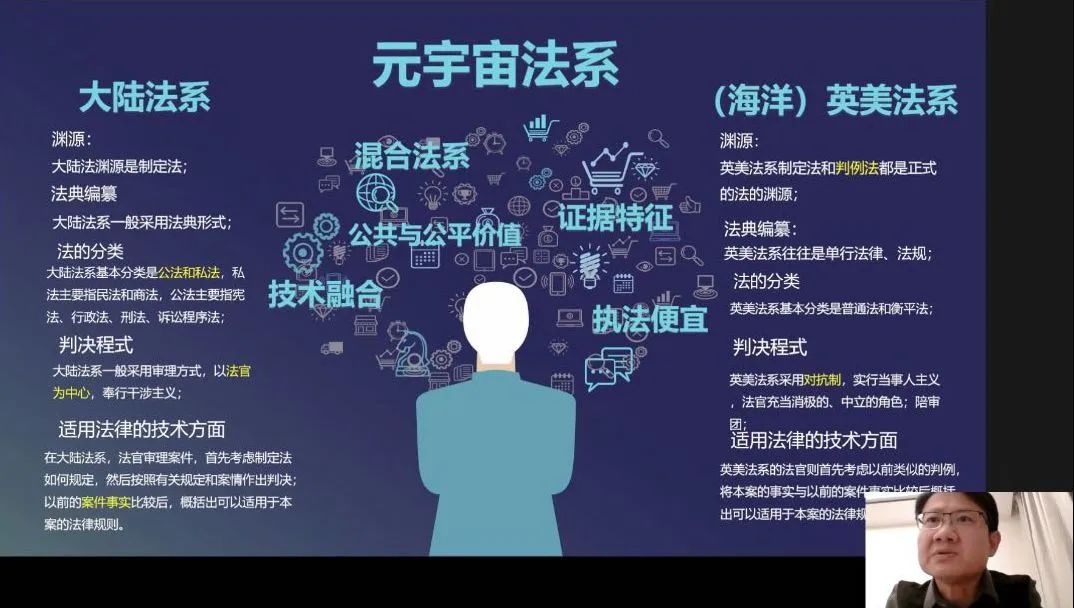
NFT与新兴虚拟人的未来
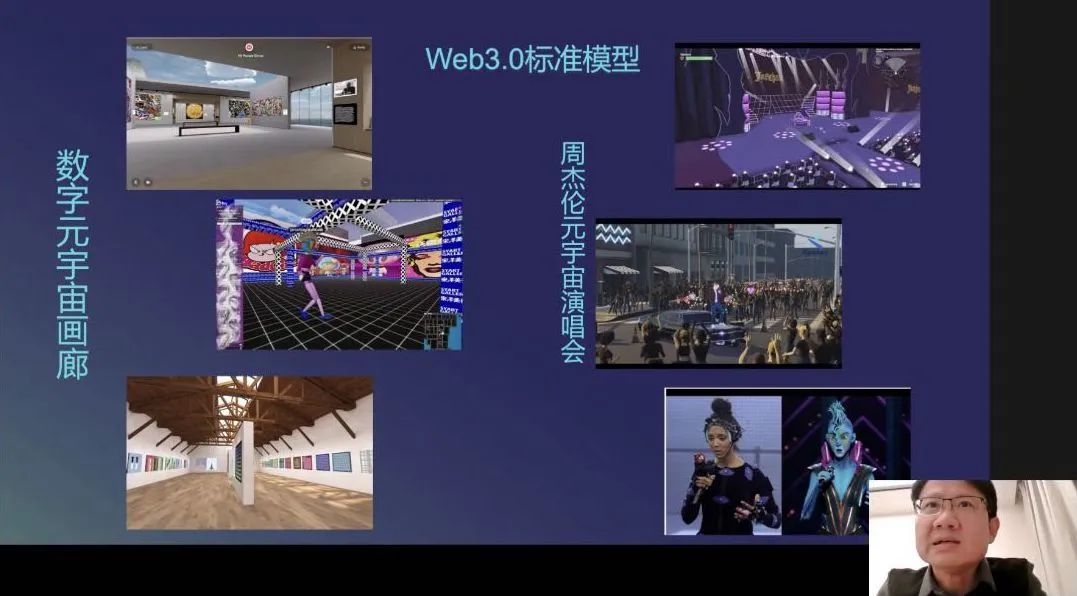
“如果说知识产权是元宇宙的钥匙,那么NFR就是中国元宇宙的入场券。”萧疆博士表示,元宇宙加上区块链,将建立起一个基于信任的web3.0互联网模型。“NFT技术与物权紧密相关,如果以物权为核心,就会强化该技术运用于知识产权保护、版权创新和催生更多个性化的数字化艺术以及定制化工业的产业升级,这个技术窗口的出现是无比珍贵的,会驱动中国的知识经济,降低整体经济边际成本,拉动我们的内需和内循环。”
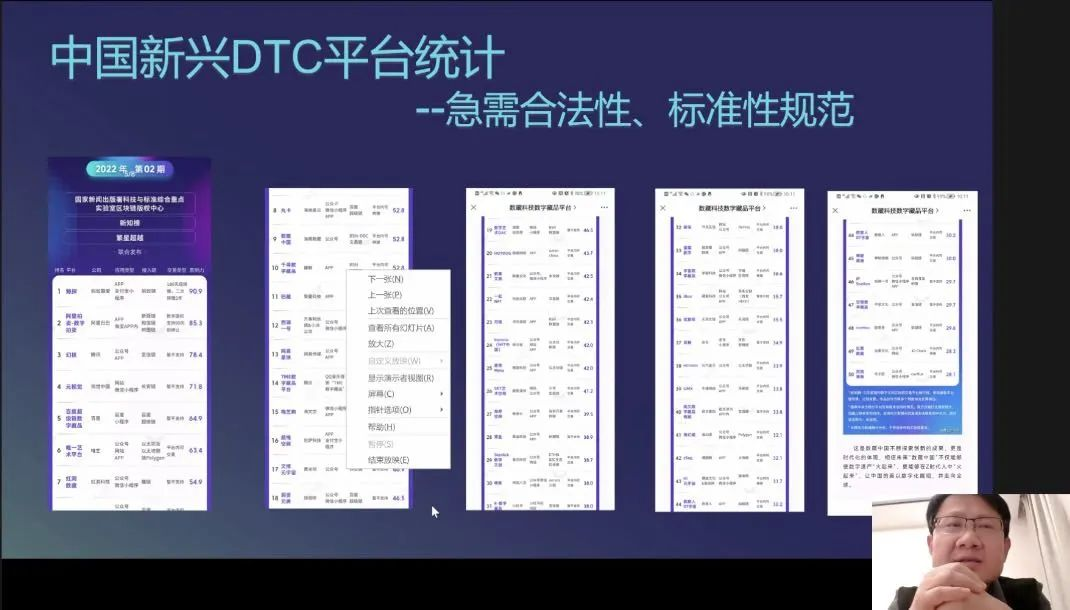
当前,NFT早期市场亟需相关法律法规和规范性的行业标准出台,因为其中涉及数据隐私保护、版权侵权、洗钱诈骗等问题,甚至是埋下了行业垄断和扰乱金融秩序等安全隐患。萧疆博士称,社会要有健康的态度和监督体系来维护新事物的良性成长,如果缺少好的合法、合理的管理机制和底层技术,创新就可能被短视和反向利用。据了解,上海相关政府部门已在率先制定DTC(数字收藏品)等项目的相关标准和管理,进一步推动数字化产业的健康发展速度。上海长三角区块链产业促进中心、上海区块链技术协会、长三角知识产权联盟等相关的协会和优秀企业、智库专家都积极献言献策。
元宇宙知识产权保护的另一个热点是新兴虚拟人,严格意义上来说,虚拟人并不是一个附属产品。因为元宇宙会成为后人类的生存空间,诞生数字生命的概念,包括数字人、电子人、虚拟人、中继人、信息人等。当前,一个虚拟人的IP价值可能远超过任何一个员工,所以我们也需要尽快确认它的法律主体身份,并进行相关权益的保护。萧疆博士进一步表示,元宇宙为人类社会最终实现数字化转型提供了新赛道,其展现了一个具有历史意义的新机遇。
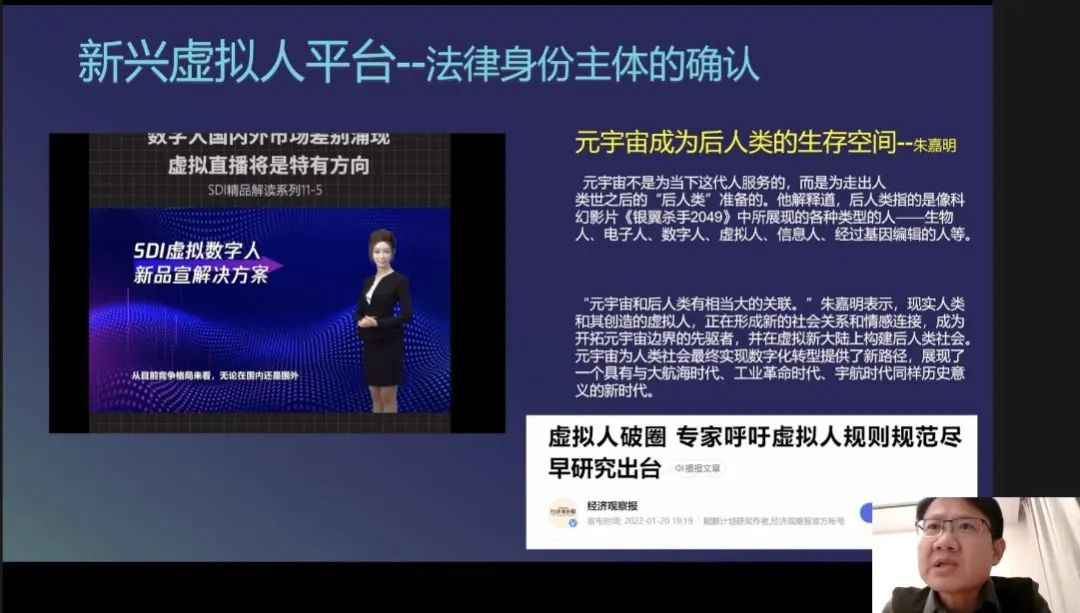
元宇宙的门内与门外
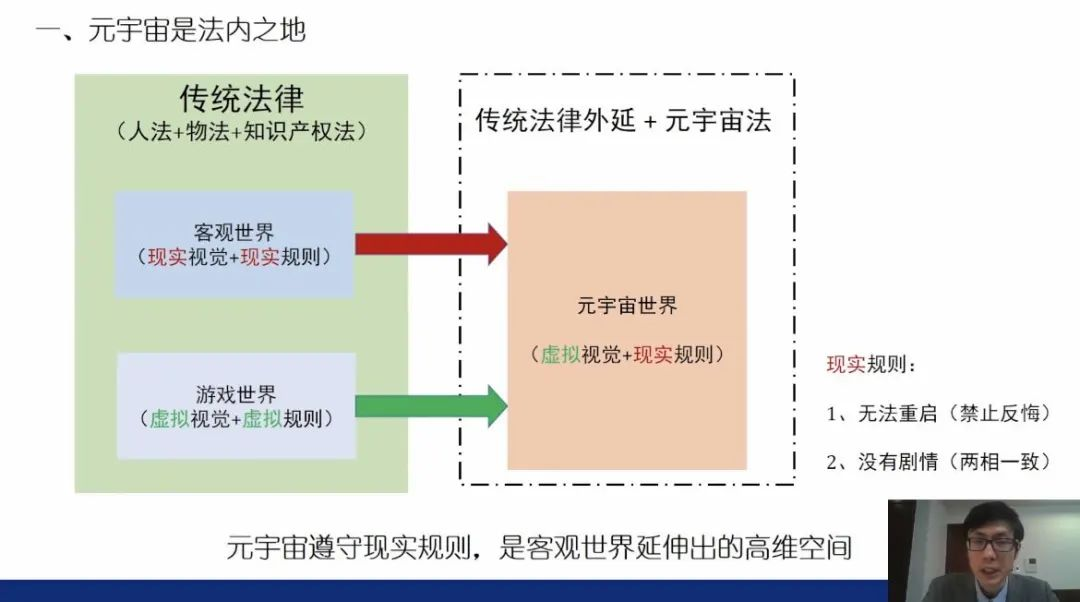
“游戏世界里叫做万物皆虚、万事皆允,但是在元宇宙世界里,虽然也是万物皆虚,但只有法律所允许的事情才允。”李佳俊律师认为,元宇宙是客观世界所延伸出的一个高维空间,必须要遵守现实的规则,与现实世界无缝对接。
在元宇宙里专利中,发展最为迅速的就是区块链专利。在2014年,区块链专利的申请数量仅为个位数,但2018年的申请量就已经超过万数,到2020年申请量已约1.5万。当前,进军元宇宙的大企业主要是商业巨头,例如Meta、沃尔玛、迪斯尼等。他们往往还有另外一个共性,就是专利的巨头。李佳俊律师称,“谁能将技术通过专利的形式握在手里,一定能够更有话语权,甚至可以发挥技术引流能力,让其他元宇宙的用户都到自己的元宇宙来。”
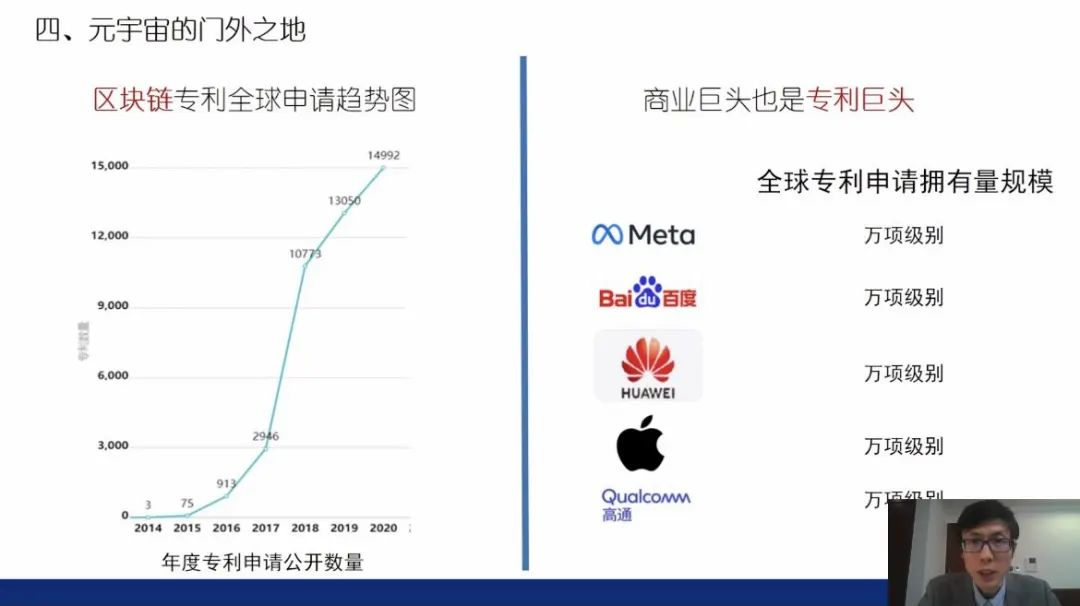
对元宇宙来说,很重要的价值的是社交平台意义,但更高的价值在于为企业家、科学家、医生、律师、艺术家、设计师等群体,提供一个新的场所空间来进行设计研发与智慧创新,这才符合人类文明进步的方向。如李佳俊所说,“在元宇宙的门外,打开大门还需跨越知识产权的门槛。而在元宇宙的门内,是依托国际社会合作促成全球治理框架下的法律革新与融合。”

İlgili Okumalar

Microsoft CEO Satya Nadella's Latest Warning: Betting Entirely on a Single AI Model Hands Over a Company's Lifeblood

Microsoft CEO Satya Nadella warns that companies relying solely on a single AI model could jeopardize their survival. He argues that over-dependence leads to "vendor lock-in," where businesses risk ceding control over their core data, memory, contextual history, and AI usage patterns. This dependence essentially outsources a company's critical thinking and operational know-how to an external provider. The deeper a company integrates with one AI system—feeding it prompts, internal data, and workflows—the more it reveals its unique business methods and competitive edge. This accumulated knowledge could become accessible to the AI supplier. Furthermore, switching providers becomes extremely costly and complex, as companies would need to rebuild their entire AI-augmented workflow, memory, and tool integrations from scratch. Nadella's solution is "decoupling." Companies should separate their proprietary data, memory, and control layer (or "harness") from the underlying AI models. By retaining metadata from every AI interaction, businesses can preserve their operational "brain" or institutional knowledge. This allows them to flexibly use different AI models (e.g., from OpenAI, Anthropic, Microsoft) for specific tasks without losing their accumulated expertise. The core idea: companies can rent the smartest models available, but they must keep their own "brain" and operational control firmly in-house.

marsbit36 dk önce

Microsoft CEO Satya Nadella's Latest Warning: Betting Entirely on a Single AI Model Hands Over a Company's Lifeblood

marsbit36 dk önce

Miners Advised Not to Buy GPUs for AI and to Focus on Infrastructure

A founder at an energy investment forum advises bitcoin miners not to purchase GPUs for AI themselves, but to instead focus on infrastructure like power and data center space. Mike Alfred of Alpine Fox stated that while AI infrastructure demand is a long-term, 20-30 year trend, it presents a key choice for miners. The first, riskier model involves owning and operating GPUs, which requires financing expensive hardware that quickly becomes obsolete. The second, more conservative model is akin to real estate: providing colocation services where clients bring their own servers, and the miner sells space, power, cooling, and water. Alfred noted this model is easier to finance. Most existing bitcoin mining sites are difficult and expensive to convert for AI, as AI data centers require far higher construction costs, redundant fiber connections, backup power, complex cooling, and near 100% uptime. A hybrid model, where mining acts as a flexible load to use excess power during AI data center construction or from generation facilities, was discussed. However, participants concluded this is only viable with very cheap power; otherwise, developers are better off focusing solely on AI. Miners are increasingly being evaluated for their available power capacity and project portfolios rather than just bitcoin output. Panelists also warned of risks in the AI sector, predicting at least one major default or contract breach among AI tenants, lenders, or landlords before bitcoin's next halving in 2028.

cryptonews.ru45 dk önce

Miners Advised Not to Buy GPUs for AI and to Focus on Infrastructure

cryptonews.ru45 dk önce

Millisecond 'Pay-to-Cut': How Did Hyperliquid's Priority Fee Turn into a Multi-Million Dollar Business?

"Millisecond 'Paid Queue-Jumping': How Hyperliquid's Priority Fee Became a Multi-Million Dollar Annual Business" In traditional finance, high-frequency trading firms spend millions on infrastructure for millisecond advantages. Hyperliquid has translated this race onto the blockchain with its "Priority Fee" system, creating an open economic game for speed. This system auctions two types of priority: **Gossip Priority** for faster data feeds (via a Dutch auction every 3 minutes), and **Order Priority** for front-of-queue trade execution (users bid a fee for lower latency). This converts a hardware race into a transparent, market-priced mechanism. Since launch, this feature has generated over $5M in protocol revenue. Projected annualized buybacks from this income exceed $30M, accounting for ~7% of total protocol revenue. The demand stems from large traders and market makers on Hyperliquid, for whom milliseconds can mean the difference between profit/loss or avoiding liquidation. Market makers pay these fees as "protection" to ensure their orders execute first, which in turn improves liquidity for all users. Crucially, Hyperliquid internalizes Maximum Extractable Value (MEV) that typically leaks to external validators or searchers, creating a new revenue stream beyond trading fees. The mechanism also strengthens HYPE's tokenomics. While 97% of trading fees fund secondary market buybacks (via the Assistance Fund), Priority Fees are **directly burned**, adding a second deflationary engine. Furthermore, fees for order priority are deducted from users' undelegated HYPE balances, encouraging large traders to hold and lock up tokens, reducing circulating supply. However, a key challenge remains: balancing the speed needs of institutional players with fair market access for retail users, as those who cannot pay high fees may suffer worse slippage during volatility. In summary, Hyperliquid's Priority Fee is a novel model that monetizes latency, captures MEV for the protocol, and enhances its native token's value through burning and lock-ups.

marsbit50 dk önce

Millisecond 'Pay-to-Cut': How Did Hyperliquid's Priority Fee Turn into a Multi-Million Dollar Business?

marsbit50 dk önce

İşlemler

Spot
活动图片