dao

DAO Maker(DAO) Regular Invest

DAO PnL History

Get the latest DAO price details on HTX: 24-hour high and low, all-time high (ATH), and daily price change percentage.

Total PnL/PnL%

-$209.85-34.97%

Single Investment Amount
$100
Investment Interval
Monthly
Lowest Buy Price
$0.02778
Highest Buy Price
$0.0636
Total Investment Amount
$600
DAO Quantity
15,011.563371076438
Average Price
$0.03996918
Total Value
$390.15

Regular Invest PnL Trend

Use Regular Invest for BTC to achieve up to -34.97% returns. Long-term consistency yields significant results.

Price
PnL%
Price
PnL%

DAO PnL Calculator

USD
Week
6 months
Investment Amount
--
DAO Quantity
--
Total PnL
--

-

* The result is based on the crypto's historical price data and reflects past market performance only. It does not represent actual historical returns and is for reference purposes only.

DAO PnL Prediction

USD
Week
6 months
Investment Amount
--
DAO Quantity
--
Total PnL
--

Track real-time DAO price trends on HTX, with support for all-period historical data queries.View more data for the DAO prices

Explore the complete DAO price predictions on HTX.

-

* The result is estimated based on the crypto's projected future prices. It is an expected return rather than the actual historical data, and is for reference purposes only.

Articles

Kelp DAO's $400 Million Bad Debt Was Covered, But at a $12 Billion Cost to Aave

On May 26th, Kelp DAO successfully transferred its final batch of rsETH, completing the 37-day process of fully backing rsETH 1:1 after a security incident. However, the resolution came at a significant cost to Aave. The protocol's TVL plummeted by over $12 billion in the following month. Furthermore, a separate legal battle over 30,766 frozen ETH continues in court, posing ongoing reputational risk. The recovery was enabled by an unprecedented, one-time coalition dubbed "DeFi United," involving major contributions from Aave's founder, treasury, Consensys, Mantle, and others. Despite this, the event triggered a major outflow of funds, with whales like Justin Sun moving capital to competitors like Spark. Aave's path to regaining its position relies heavily on the successful execution of its multi-pronged strategy. Its new V4 protocol, designed for open, heterogeneous asset markets, faces delays due to internal governance disputes. Meanwhile, the V3 version remains the core revenue generator, and the permissioned Horizon fork is targeting institutional RWA (Real-World Assets) growth—a segment less impacted by the rsETH incident but dependent on traditional finance adoption timelines. The key takeaway is that while the immediate bad debt was covered, Aave paid a steep price in lost trust and capital. Recovering market share depends on accelerating V4's rollout and advancing its institutional RWA offerings, both of which face external and internal hurdles. The "DeFi United" safety net is unlikely to be replicable for future crises.

Kelp DAO's $400 Million Bad Debt Was Covered, But at a $12 Billion Cost to Aave - marsbit

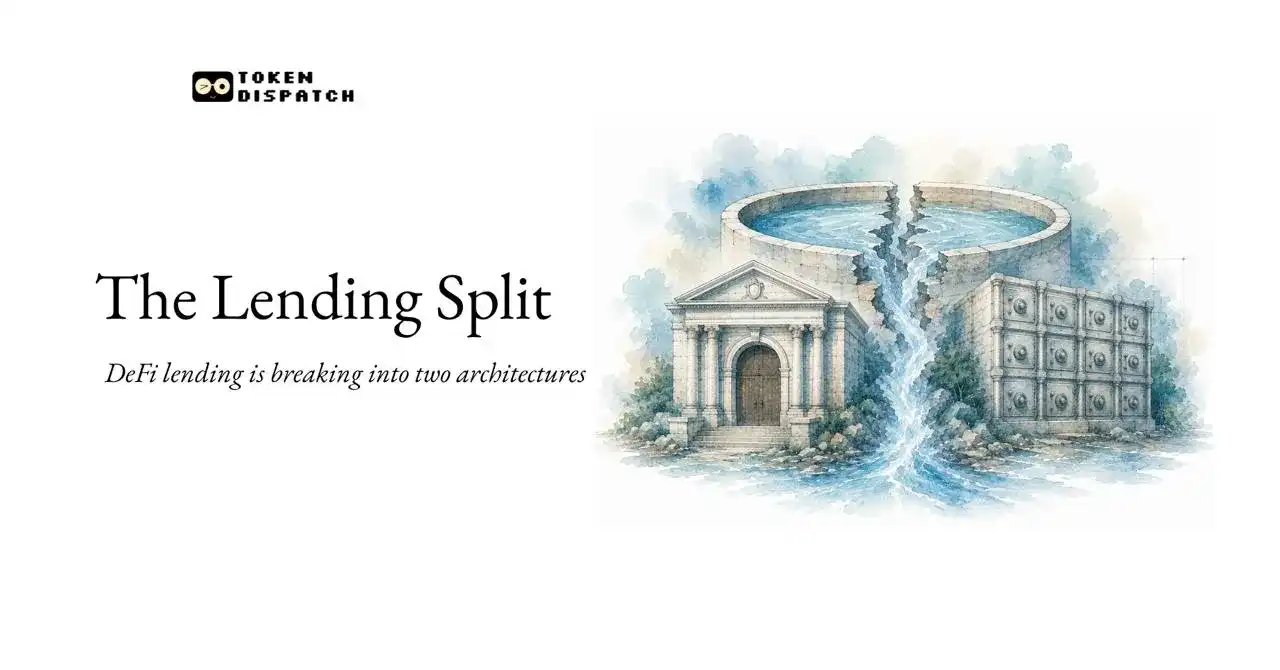
Kelp DAO Vulnerability Triggers Exodus of Hundreds of Billions; Two Major DeFi Lending Pathologies Clash Head-On

Title: Kelp DAO Exploit Triggers $15 Billion Exodus, Exposing a Clash Between Two DeFi Lending Models. In April 2026, a hacker exploited a LayerZero bridge vulnerability in the Kelp DAO project, minting $292 million in fake rsETH tokens. These were deposited into Aave as collateral to borrow real Ethereum, draining the protocol's liquidity. Within three and a half days, Aave saw $15 billion in deposits flee, forcing a costly $160 million bailout. The root cause was identified as Aave's governance, which had previously voted to set rsETH's loan-to-value ratio to a risky 93%, leaving minimal safety margin. This incident starkly contrasts with the experience of Morpho, the second-largest DeFi lending protocol. Some fake rsETH also flowed into Morpho, but the exposure was limited to $1 million across isolated, pre-configured markets, preventing systemic contagion. The event highlights a fundamental divergence in DeFi lending architectures. Aave employs a shared liquidity pool model, where all deposits back all approved collateral assets, governed by DAO vote. This creates systemic risk, as seen when even users who never interacted with rsETH faced frozen funds. Furthermore, Aave's governance, influenced by leveraged borrowers, prioritized their interests during the crisis, even lowering borrowing rates for frozen markets at the expense of safer depositors. Its supplemental insurance mechanism, Umbrella, also failed as providers withdrew capital when needed. Morpho operates on an isolated market model. Anyone can create a separate lending market with fixed parameters (collateral, loan asset, oracle, rates). Independent risk managers (curators) allocate capital to these markets, bearing losses within their own vaults if they occur. This structure prevents risk from spreading and removes governance conflicts, as curators' decisions are not subject to community override. Beyond crisis management, the shared pool model carries a hidden cost: idle capital. In Aave's core markets, the spread between borrowing and deposit rates represents unusable funds, costing an estimated $52 million annually in lost value. Morpho's model targets a higher utilization rate (90% vs. Aave's 60-80%) because it eliminates rehypothecation risk, dynamically adjusting rates to balance supply and demand without governance delays. Consequently, Morpho often offers higher net yields to depositors. Institutional adoption underscores this difference. Major players like Coinbase (powering its lending for over 100M users), Apollo Global Management, Anchorage Digital, and SG-FORGE (Societe Generale) have chosen to build on Morpho. They require compliant, self-controlled risk parameters that Aave's community-governed model cannot provide. This trend is amplified by regulations like the proposed US GENIUS Act, which will push stablecoin issuers to seek neutral, controllable infrastructure like Morpho to manage trillions in reserve assets.

Kelp DAO Vulnerability Triggers Exodus of Hundreds of Billions; Two Major DeFi Lending Pathologies Clash Head-On - marsbit

Humanity Protocol, Kelp DAO stolen funds commingle – Same attacker?

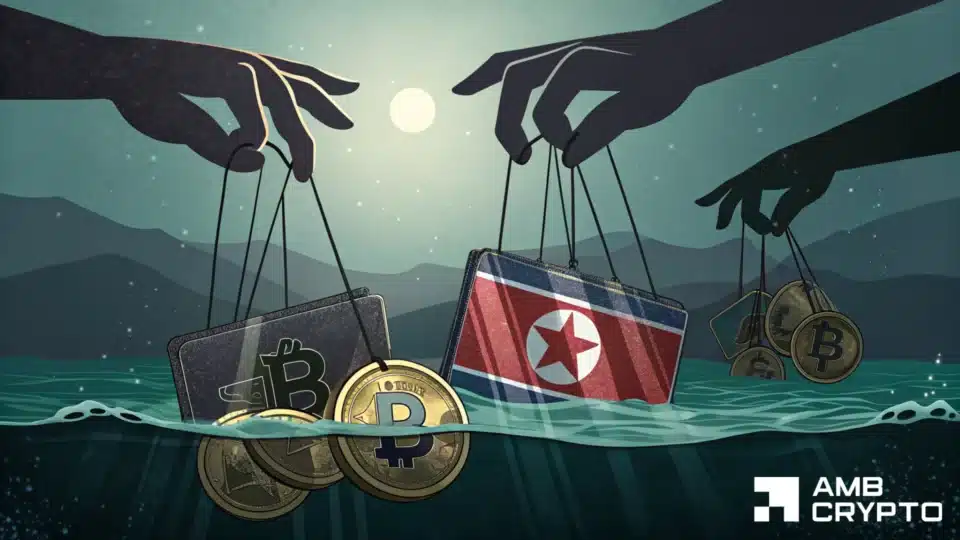
Investigations into the 2026 exploits of Kelp DAO and Humanity Protocol have revealed that stolen funds from both attacks were recently commingled, suggesting a connection between the attackers. Blockchain analyst ZachXBT identified the activity, where 15,403 ETH ($23.6 million) from the Humanity Protocol hack was moved to a new Ethereum address and then to the Bitcoin network, merging with proceeds from the Kelp DAO exploit. Over $8 million of these funds has been laundered using methods associated with groups like the Lazarus Group. The Kelp DAO attack drained about $292 million in April 2026, while Humanity Protocol lost around $32 million in June due to a compromised developer device. This commingling points to a shared external threat actor and highlights ongoing security risks in DeFi.

Humanity Protocol, Kelp DAO stolen funds commingle – Same attacker? - ambcrypto

ENS Founder Seeks to 'Seize Power' from DAO

On June 29th, the ENS community entered the on-chain voting phase for a proposal to renew the ENS DAO Security Council's veto power for two more years. Shortly after voting began, ENS founder Nick Johnson used his substantial ENS holdings to cast over 3.55 million votes against the proposal, swinging the outcome despite initial strong support. The Security Council was established in July 2024 with a 4/8 multisig veto power to protect the DAO's treasury (valued over $350 million) from malicious proposals during a period of low voter participation. Its powers were limited to vetoing only harmful proposals, not normal ones. Nick Johnson's opposition stems from broader concerns about ENS DAO's governance. In late 2025, he and others expressed frustration that the DAO had become mired in political gamesmanship, with capable contributors leaving and leadership falling to less experienced or misaligned parties. This context set the stage for a major restructuring proposal by ENS COO Katherine Wu on June 19th, titled "Next Era of ENS DAO: Empowering the ENS Foundation." The controversial proposal aims to transfer daily operations, treasury management, and long-term strategy to a restructured ENS Foundation with a professional board, while the DAO would retain core protocol governance powers. Critics, including original ENS constitution author Brantly Millegan, argue this effectively transfers treasury control from token holders to ENS Labs (the core development team), undermining the DAO's original decentralized design. Nick's massive "no" vote on the Security Council renewal is seen as the first move in this power struggle. He explained his vote was due to concerns about insufficient checks on the Council's power and the potential for its veto to be used politically. In response, Katherine Wu submitted a revised proposal with higher execution thresholds (5/8 instead of 4/8) and stricter limits. The push for change comes as ENS's annual revenue has declined significantly, from over $10 million in 2023 to under $2 million in 2025, increasing pressure to manage the treasury more effectively. Nick Johnson now faces the challenge of proving that a more structured foundation can steer ENS better than the current DAO model.

ENS Founder Seeks to 'Seize Power' from DAO - Foresight News

Summer.fi shuts down after exploit – Lazy Summer DAO to resume withdrawals

DeFi platform Summer.fi is shutting down after seven years due to a $6 million exploit on July 6th that drained critical liquidity and the team's capital, leaving no financial runway for recovery. Despite rapid initial growth reaching $200 million in TVL, the security failure in its Lazy Summer Protocol caused a collapse in user confidence and activity. The platform will remain available until August 31st. While the Lazy Summer DAO is working to restore user withdrawals, the incident underscores that in DeFi, lasting success requires robust security and maintaining trust, not just attracting capital.

Summer.fi shuts down after exploit – Lazy Summer DAO to resume withdrawals - ambcrypto

Regular Invest Recommendations

ctr
CitreaCTR
wstusdt
wrapped stUSDTWSTUSDT
apr
aPrioriAPR
ctx
Cryptex FinanceCTX
audio
AudiusAUDIO
mantra
MantraMANTRA
xvs
VenusXVS
waxl
AxelarWAXL
bill
Billions NetworkBILL
pyth
PYTH (Pyth)PYTH
rune
THORChainRUNE
velodrome
Velodrome FinanceVELODROME
brev
BrevisBREV
zrx
ZRX(0X)ZRX
cake
PancakeSwapCAKE
jst
JUSTJST
band
Band ProtocolBAND
sun
SUNSUN
zbt
ZerobaseZBT
1inch
1inch1INCH
twt
Trust WalletTWT
dexe
DeXeDEXE
lista
Lista DAOLISTA
avax
AvalancheAVAX
reef
ReefREEF
zkc
BoundlessZKC
re
ReRE
era
CalderaERA
aster
AsterASTER
carv
CarvCARV
btt
BitTorrentBTT
btw
BitwayBTW
cvx
Convex FinanceCVX
blue
BluefinBLUE
rlc
iExecRLC
ankr
Ankr NetworkANKR
hana
HANA NetworkHANA
o
O1 exchangeO
pendle
PendlePENDLE
kaito
KaitoKAITO
orbs
Orbs Network ORBS
order
OrderlyORDER
sfp
SafePalSFP
snx
SynthetixSNX
dia
DIADIA
ach
Alchemy PayACH
api3
API3API3
bmt
BubblemapsBMT
genius
GeniusGENIUS
red
RedStoneRED
prove
SuccinctPROVE
soph
SophonSOPH
avail
AvailAVAIL
lit
LighterLIT
acx
Across ProtocolACX
layer
SolayerLAYER
badger
Badger DAOBADGER
nes
NesaNES
elf
aelfELF
morpho
MORPHOMORPHO
opg
OpenGradientOPG
bnt
Bancor Network TokenBNT
opn
OpinionOPN
sxt
Space and TimeSXT
spk
SparkSPK
ondo
OndoFinanceONDO
waves
WavesWAVES
night
MidnightNIGHT
dbr
deBridgeDBR
me
Magic EdenME
trx
TRONTRX
nft
AINFTNFT
eul
Euler FinanceEUL
hsk
HashKey Platform TokenHSK
osmo
OsmosisOSMO
avnt
AvantisAVNT
sqd
SubsquidSQD
safe
SafeSAFE
ava
TravalaAVA
es
EclipseES
bard
LombardBARD
cap
CapCAP
scrt
Secret NetworkSCRT
gwei
ETHGasGWEI
avl
AvalonAVL
usdd
USDDUSDD
plume
Plume NetworkPLUME
synd
SyndicateSYND
xch
Chia NetworkXCH
win
WINkLinkWIN
sent
SentientSENT
theta
ThetaTHETA
solv
Solv ProtocolSOLV
steth
Lido Staked ETHSTETH
fhe
Mind NetworkFHE
inj
InjectiveINJ
towns
TOWNSTOWNS
wan
WanchainWAN
crv
Curve DAO TokenCRV
grt
The GraphGRT
dydx
dYdXDYDX
cbk
CobakCBK
krrx
KyrrexKRRX
rpl
Rocket poolRPL
uni
UniswapUNI
zama
ZAMAZAMA
inx
InfinexINX
ldo
LidoLDO
xdc
XDC NetworkXDC
link
ChainLinkLINK
bone
ShibaSwap BoneBONE
obt
Orbiter FinanceOBT
enso
ensoENSO
well
Moonwell ArtemisWELL
bio
BIO ProtocolBIO
lqty
LiquityLQTY
anime
AnimecoinANIME
nil
NillionNIL
newt
Newton ProtocolNEWT
ctc
CreditcoinCTC
rad
RadicleRAD
ssv
SSV NetworkSSV
skr
SeekerSKR
syrup
Maple FinanceSYRUP
home
Defi.appHOME