Investors Walked 20,000 Steps in Shanghai

marsbitPublished on 2026-07-19Last updated on 2026-07-19

Abstract

Investors logged over 20,000 steps at the Shanghai event as the 2026 World Artificial Intelligence Conference (WAIC) witnessed unprecedented crowds, a record exhibition space exceeding 100,000 square meters, and over 300 global product debuts. The intense FOMO (fear of missing out) among AI investors was palpable, with tickets being scalped at high prices. The conference highlighted a decisive shift from comparing technical parameters to demonstrating real-world applications and commercial deployment. The vast exhibition, spanning four venues, featured specialized zones for industry applications (H1), foundational computing power (H2), robotics (H3), and startups (H4). The robotics hall (H3) was the most popular, packed with over 200 companies showcasing embodied AI and prototypes, including humanoid robots capable of performing industrial tasks. Investors were omnipresent and exceptionally busy, shuttling between meetings, panels, and networking events organized by leading VC firms. The startup zone hosted over 160 young companies, with many investors hoping to spot the next unicorn. This frenzy mirrors the explosive investment in China's AI sector. In H1 2026 alone, the embodied intelligence segment raised over 90 billion yuan, a fivefold year-on-year increase. The broader AI sector attracted over 300 billion yuan in funding, accounting for half of the total venture capital invested in the period. A wave of companies have reached "unicorn" status with valuations exceedin...

By the Huangpu River, crowds surged.

The annual World Artificial Intelligence Conference arrived as scheduled, and the scale this year was astonishing—the total exhibition area exceeded 100,000 square meters for the first time, with over 1,100 enterprises showcasing more than 3,000 exhibits, and over 300 products making their global debut. The venue was packed, and the excitement was palpable.

"It's too hot; without booking in advance, nearby hotels were simply unavailable," said an AI investor who had traveled from Beijing, securing his trip as early as last month. On the high-speed train to Shanghai, he unexpectedly found several peers.

Even more exaggerated was the ticket situation. Standard tickets originally priced at 168 yuan were scalped for up to 2,000 yuan. "Having money doesn't guarantee a ticket," remarked an investor who managed to secure one only through a portfolio company, adding, "This must be the most popular year in WAIC's history."

"If you didn't come, you can't be considered a qualified AI investor"—a subtle sense of FOMO permeated the air.

This Year's Hottest Conference

1,100 AI Companies Gather

Now in its ninth year, WAIC is like a condensed history of AI evolution.

Upon entering the venue, an intense atmosphere hit immediately. Recalling two or three years ago, the most prominent items on company displays were parameter counts, context lengths, and benchmark rankings. By 2025, embodied prototypes and Agent demonstrations began appearing on the stages.

This year, every exhibitor presented products capable of running in real-world scenarios, even displaying production and delivery figures. From "comparing parameters" to "comparing implementation," AI has finally stepped out from the screens.

This year's WAIC adopted a "three locations, four venues" model for the first time, linking Zhangjiang, World Expo, and Xuhui. Among them, the Shanghai World Expo Exhibition Center is the largest and most comprehensive exhibition area, covering the entire industry chain and hosting the most concentrated array of global debut products—H1 focuses on industrial applications, H2 on foundational computing power, H3 on robotics, and H4 on startups.

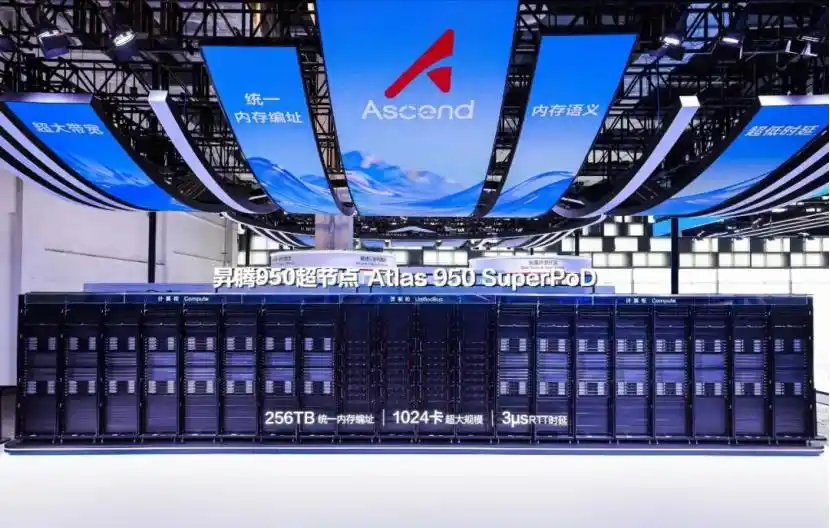
H1 Hall concentrated on showcasing the implementation progress of large models and intelligent agents, MiniMax M3, Wu Wen Xin Qiong InfiniClawBox secure and desensitized intelligent agents, Kimi released its most powerful model, K3, on the opening day. H2 Hall resembled a "military review" of computing power, with Huawei premiering the industry's largest-scale super-node Atlas 950 SuperPoD, displaying 1,024 Ascend cards on-site, a scale 56.8 times that of the NVIDIA NVL144 solution.
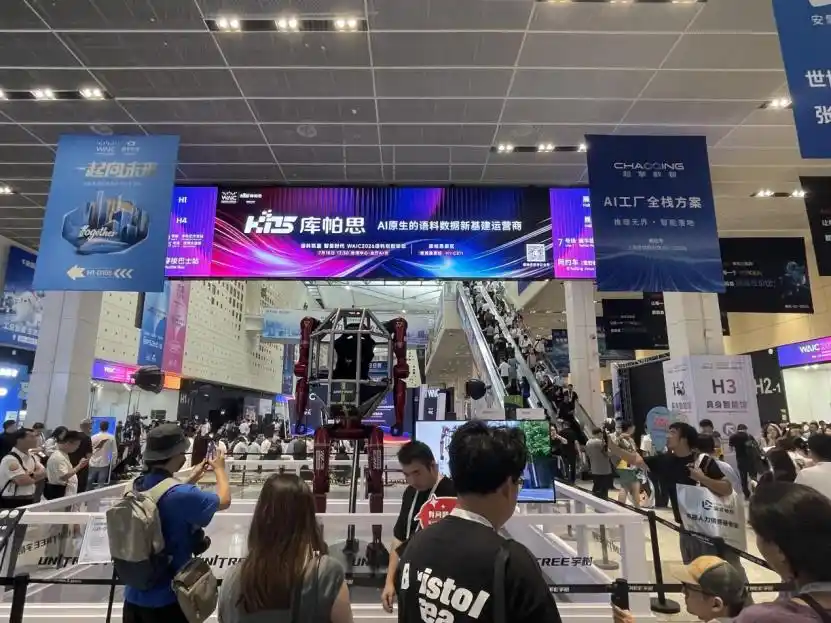
The most popular venue was undoubtedly H3 Hall, a paradise for robotics enthusiasts. Over 200 leading robotics enterprises, 208 embodied intelligent terminals, and more than 300 real machines performed dynamic demonstrations simultaneously, leaving the venue packed and impassable.

Unitree Technology showcased the world's first manned transforming mecha GD01; Zhiyuan exhibited a "Workaholic Team," directly moving a real production line into the venue; Tashi Zhi Hang A1 robots demonstrated operational capabilities on an actual industrial production line. Additionally, Leju, Yinhe Tongyong, Kuaguai Intelligent, Fourier, Qianxun Intelligent, Geek+, Zhuji Dynamics, and others brought their next-generation embodied products, differentiating from those that merely "walk" to those that truly "work."
The Xuhui West Bund venue was equally lively. Sheng Shu Keji, Bilibili, and Tencent gathered in the digital perception exhibition area; Honor, NetEase Youdao, iFLYTEK, and others showcased the latest AI-powered daily devices. There were also devices like Rokid·Leqi AI glasses, Liangliang Vision Hey2 AR translation glasses, and Xin Mou Keji Monet AI glasses, so light they were almost unnoticeable. The Zhangjiang exhibition area assembled over a hundred computing power chip companies, with nearly all mainstream domestic GPU manufacturers present, and 67 products making their domestic debut.

Many familiar faces also presented new achievements: Xiaohongshu demonstrated the RED Skill and Vibe Coding content ecosystem, Baixing Intelligent released the new product OntoZ, Qiyuan Robotics introduced the world's first transformable personal robot T1, and Mianbi Intelligent, in collaboration with the Zhiyuan Research Institute, released a latest report.

The list goes on and on.

Investors Are Frantically Busy

"WAIC available for meetings," AI investors collectively updated their WeChat signatures.

Investors focusing on AI naturally wouldn't miss this annual AI extravaganza. "Just shout out in a friend circle, and you can easily organize a train car to go," said an investor friend within the circle, barely containing his excitement about organizing a trip to Shanghai.

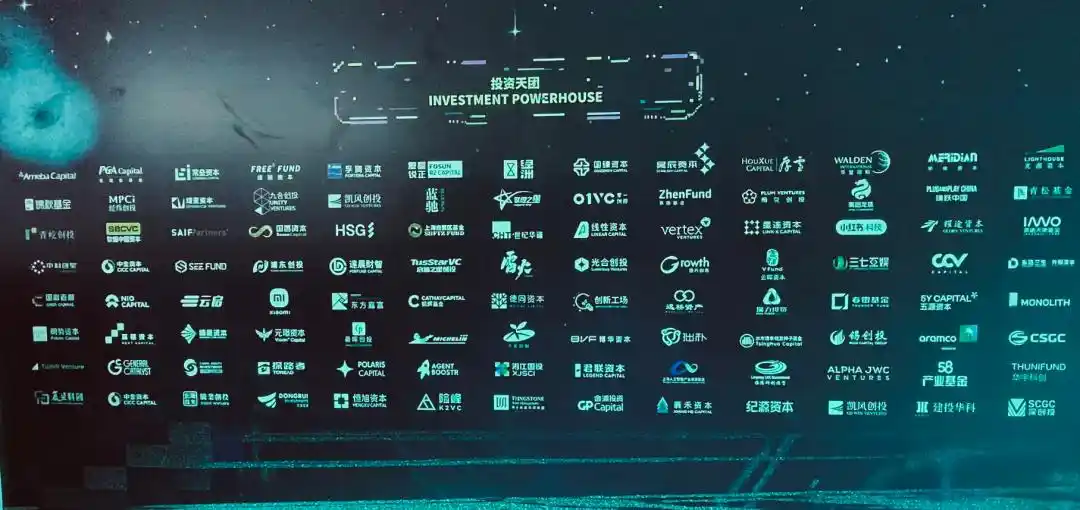
Looking around, investors were everywhere. The WAIC Future-Tech Venture Capital zone in H4 Hall gathered over 160 outstanding startups, more than 70% of which were founded less than three years ago, and over 50% of the founders were post-90s. Over 80 top investment institutions, including Sequoia Capital China, Hillhouse Capital, and ZhenFund, set up dedicated capital对接 (connection) zones. Perhaps the next unicorn will emerge from here.
"Must go see the 'Six Dragons' of world models share the stage." During the conference, founders of six leading world model companies gathered for an exclusive roundtable: Tao Dacheng (Founder of Da Xiao Robot), Shen Yujun (Chief Scientist of Ant Lingbo), Zhu Zheng (President of Jijia Vision), Xia Zhongpu (CTO of Wujie Dynamics), Ren Guanghui (Technical Head of Zhiyuan Robotics), Wang Hao (CTO of Argument Robotics). This was a moment physical AI investors did not want to miss.

The presence of Shanghai Guotou (State Investment) was also notable. Its hosted "POWER·Open Mic" event brought together for the first time key enterprises across computing power, algorithms, data, embodied intelligence, and AI applications. Additionally, Zhou Zhifeng, Managing Partner of Qiming Venture Partners, would release the "2026 Qiming Venture AI Top 10 Outlook" at a forum.

Side events led by investment institutions were equally popular this year. Lanchi Ventures hosted Booming Night, Source Code Capital initiated WAIC After Hours, Linear Capital held an AI circle "True/False Rumors King Competition" by the Huangpu River, Hua Ying Capital organized "Tsinghua Science and Innovation Night," and Jin Qiu Capital held Founders Back Founders.

Other venture capital and FA institutions, including 5Y Capital, Yunqi Partners, 9F Capital, Ming Shi Capital, Xing Lian Capital, Changshi Capital, MiraclePlus, Gao Hu Capital, and Guangyuan Capital, also launched their own events.

This clearly kept investors incredibly busy; walking 20,000 steps a day is no exaggeration.

Their schedules were fragmented into half-hour blocks: viewing real computing power chip launches in the morning, having closed-door in-depth discussions with embodied intelligence founders at noon, rushing to three vertical track roundtables in the afternoon, followed by multiple consecutive closed-door pitch sessions and after-parties in the evening. If you invest in AI but didn't attend WAIC, you likely missed the most authentic and interesting changes in China's AI landscape.

Youth Storm

AI Is Giving Birth to a Batch of Trillion-Dollar Companies

The popularity of WAIC is precisely a vivid reflection of this year's AI investment boom.

Public data shows that in the first half of 2026, the total financing amount in China's embodied intelligence sector exceeded 90 billion yuan, more than five times the amount from the same period last year. Expanding the scope to the entire AI sector, there were 1,203 financing events in the first half of the year, with a total amount exceeding 300 billion yuan, far surpassing the entirety of 2025.

In other words, just the AI sector alone absorbed nearly half of the VC funds in the first half of the year.

Billion-dollar valuation unicorns surfaced one after another. Names like Yun Shen Chu, Argument Robotics, Zhi Ping Fang, Xing Hai Tu, Qianxun Intelligent, Zhong Qing Intelligent, Xing Dong Ji Yuan, Zhuji Dynamics, and Kuaguai Intelligent successively crossed that threshold.

The heat from the financing end soon spread to the IPO side. According to incomplete statistics, at least 20 embodied intelligence companies have clarified their IPO plans this year. Quietly, an IPO listing has become a race concerning survival—whoever lands on the capital market first has a greater chance of staying in the game.

Unitree is about to list on the STAR Market, opening a window for the industry. Everyone is wondering: can a Chinese embodied company truly stand at the center of the global stage? This is the most imaginative part of the Chinese embodied intelligence narrative.

Outside the venues, discussions about the next billion, trillion-dollar valuations were happening in every corner. "The internet ultimately produced trillion-dollar companies, and artificial intelligence will definitely produce trillion-dollar companies too, and it will come faster than the internet," judged a managing partner of a dual-currency fund in Shanghai.

This is not fantasy. Zhipu's market cap once surged past one trillion, DeepSeek has a latest valuation exceeding 350 billion yuan, reportedly preparing for a STAR Market IPO; Kimi , valued at over 200 billion yuan, is expected to complete its Hong Kong listing within six months. Looking overseas, when Anthropic and OpenAI set valuation caps in the trillions of dollars, the ceiling for China's AI sector is far from being touched.

The flow of money is always profound.

At this very moment, those investors shuttling between exhibition booths, with "ammunition" in hand, are step by step drawing the technological map for the next decade. Perhaps, the next trillion-dollar company is hidden in some booth, some closed-door meeting, or some inadvertent conversation. No one wants to miss it.

This article is from the WeChat public account "Investment Community" (ID: pedaily2012), author: Zhou Jiali


Trending Cryptos

Related Questions

QWhat were the three main exhibition focus areas at the 9th WAIC, particularly in the largest venue (Shanghai World Expo Exhibition Hall)?

AThe three main exhibition areas were: H1 focusing on industrial application and landing of large models and agents; H2 focusing on underlying computing power and infrastructure; H3 focusing on robotics and embodied intelligence.

QWhy did the article refer to WAIC 2026 as potentially the 'hottest year ever' for the conference?

AThe article cited several reasons: record-breaking exhibition space exceeding 100,000 sqm, over 1100 companies and 3000+ exhibits, more than 300 global product debuts, extreme crowding, and tickets with a face value of 168 RMB being scalped for as high as 2000 RMB.

QHow does the article illustrate the immense business activity and interest from the investment community at WAIC 2026?

AThe article illustrates it through several examples: numerous investment institutions hosting side events and after-parties, the presence of over 80 top VCs in the Future-Tech zone, the packed schedules of investors rushing between meetings and demos, and the phenomenon of AI investors updating their social media statuses to 'WAIC appointments available'.

QWhat significant shift in the AI industry's focus was highlighted by comparing WAIC exhibitions from a few years ago to 2026?

AThe key shift highlighted was from 'comparing parameters' (like model size and benchmark scores) a few years ago to 'comparing real-world implementation' in 2026, where companies showcased products that could run in actual scenarios and even presented mass production and delivery figures.

QAccording to the article, what does the recent surge in financing within the Chinese AI sector, especially embodied intelligence, indicate about the near future of these companies?

AThe financing surge indicates intense competition and a race for market leadership. With over 20 embodied intelligence companies reportedly planning IPOs, the article suggests that 'who can list first on the capital market has a greater chance of staying at the table,' framing IPO readiness as a critical, survival-related competition.

Related Reads

After Three Consecutive Quarters of Decline, Can the Crypto Market Find a Window for Stabilization in Q3?

The cryptocurrency market has just concluded its worst-performing quarter since 2022, with total capitalization dropping 12.6% to $2.1 trillion. All core metrics indicate capital is leaving the sector, not just rotating within it. Bitcoin fell 14.2% and Ethereum dropped 25.4% in Q2, breaking their previous correlation with US tech stocks. A key driver is the reversal in US spot Bitcoin ETF flows, which saw a net outflow of approximately $4.67 billion in Q2, including a record monthly outflow near $4.5 billion in June. While recent data suggests long-term holders are accumulating again, sustained ETF outflows mean continued selling pressure. Market focus is now singularly on the Federal Reserve. The upcoming July FOMC meeting is seen as the most critical event for Q3. A dovish signal could support Bitcoin reclaiming a $68,000-$84,000 range, while a hawkish stance might establish a new trading band around $50,000-$56,000. Additionally, regulatory uncertainty persists, with the progress of the crucial *CLARITY Act* stalling in the Senate, reducing its perceived 2026 passage probability to 40-45%. Despite the broad downturn, a few sectors showed growth. Prediction markets saw nominal volume surge 48.7% year-over-year to $113.8 billion, and tokenized collectibles transaction volume rose 143% quarterly to $1.4 billion. The Real-World Asset (RWA) tokenization sector also continued steady growth, now representing ~$28.1 billion in on-chain value. The market's foundation for an extreme crash appears limited, with Bitcoin price hovering near its 200-week moving average. However, the trading paradigm has shifted from narrative-driven speculation to decisions based on price action, policy developments, and interest rate expectations, making a broad sentiment-driven rally unlikely in the near term.

marsbitYesterday 08:36

After Three Consecutive Quarters of Decline, Can the Crypto Market Find a Window for Stabilization in Q3?

marsbitYesterday 08:36

BIT Trading Moment: BTC Still Suppressed by Weekly 200 EMA, Rejection May Restart Decline; Storage and Semiconductors that Surged Last Night Begin Falling in Evening Trading

**Crypto & Stock Market Wrap: Bitcoin Tests Resistance, Stocks Retreat After AI Surge** Bitcoin consolidates around $66,000, facing key resistance near $68,000—an area seen as a major psychological and technical hurdle where previous rallies have failed. Analysts note the cryptocurrency is caught between its 200-week moving average (~$63,333) and 200-week EMA (~$68,328). A clear break above $68k is needed to signal a stronger bullish trend, while a rejection could lead to a retest of $63k support. Market sentiment remains cautious, with low futures open interest pointing to a low-liquidity rebound rather than a full bull market. Bitcoin spot ETFs saw another $203 million inflow. US stock futures pointed lower after a strong Tuesday session led by a massive rebound in semiconductors and memory stocks. The rally was fueled by renewed optimism about AI-driven hardware demand, with Micron, SanDisk, and SK Hynix surging. However, those gains reversed in pre-market trading. Super Micro Computer (SMCI) soared over 20% after hours on strong guidance and a record backlog. Other standouts included Rocket Lab and nuclear energy plays Oklo and X-Energy. Rising oil prices (Brent above $91) and climbing Treasury yields (10-year near 4.64%), however, are reigniting inflation concerns and acting as a headwind for equities. In Asia, markets were mixed. South Korea's KOSPI pared early gains to close slightly higher as semiconductor stocks like SK Hynix gave back initial surges. Japan's Nikkei edged lower as the yen hit a fresh 38-year low against the dollar, raising fears of potential market intervention. Key events to watch include the Samsung Galaxy launch, AMD's AI event, and a slew of major tech earnings from Alphabet, Tesla, and IBM after the close on Wednesday, followed by the ECB meeting and Intel's earnings on Thursday.

marsbitYesterday 08:28

BIT Trading Moment: BTC Still Suppressed by Weekly 200 EMA, Rejection May Restart Decline; Storage and Semiconductors that Surged Last Night Begin Falling in Evening Trading

marsbitYesterday 08:28

Former CFTC Chairman, Circle President Tarbert: Preaching Long-Termism While Cashing Out $30 Million Himself

Former CFTC Chairman and Circle President Heath Tarbert has consistently advocated for a long-term vision in public, urging patience from investors as Circle’s stock price has fallen significantly from its peak. However, it has been revealed that since Circle’s IPO, Tarbert has continuously sold his CRCL shares through pre-arranged trading plans, cashing out approximately $30 million, without making any public market purchases. This contrast between his public messaging and personal actions has drawn criticism. Tarbert joined Circle in July 2023 as Chief Legal Officer, leveraging his regulatory experience to help guide the company through its IPO and expansion. Despite promoting stablecoins as long-term infrastructure, he established a 10b5-1 trading plan just before Circle went public, leading to substantial stock sales over the following year. In March 2026, he initiated another plan to sell more shares. His career trajectory highlights a pattern of moving between high-level regulatory roles and influential positions in the financial sector. After resigning as CFTC Chairman in early 2021, he joined Citadel Securities as Chief Legal Officer just 27 days later, during a period of intense regulatory scrutiny for the firm. He later joined Circle, aiding its efforts to navigate regulatory challenges for its public listing. While Tarbert's expertise in policy and compliance is valuable to companies like Circle, his actions—advocating long-term confidence while personally divesting—raise questions about the alignment between his public statements and his private financial decisions, leaving investors who followed his advice to bear the market risks.

marsbitYesterday 08:06

Former CFTC Chairman, Circle President Tarbert: Preaching Long-Termism While Cashing Out $30 Million Himself

marsbitYesterday 08:06

Gate Research Institute: The 'Wall Street-ization' Wave of Crypto Financial Products – Competition or Integration?

The article titled "Gate Research Institute: Are Crypto Financial Products Sparking a 'Wall Street' Wave—Competition or Convergence?" explores the evolving relationship between the crypto ecosystem and traditional finance (TradFi). The piece begins by reflecting on Bitcoin's original 2009 vision of decentralization, disintermediation, and moving away from banks. It then contrasts this with the 2024 landscape, where key crypto assets like Bitcoin are increasingly held through Wall Street products like ETFs issued by giants like BlackRock. The article questions whether this signifies that TradFi is systematically taking over the rights to issue, price, custody, and distribute crypto financial assets. The core argument is that this is not a zero-sum takeover but rather a bidirectional convergence where each side addresses the other's weaknesses. Crypto offers 24/7 global markets, programmable settlement, and open access but lacks compliant channels, institutional-grade custody, deep fiat liquidity, and mainstream distribution. TradFi possesses these but is constrained by legacy systems, limited operating hours, and slow settlement. Two primary convergence paths are highlighted: * **Path A (CEX to TradFi):** Exemplified by Gate, which has progressed from offering tokenized stocks and CFDs to providing direct, real stock trading (US, Hong Kong, South Korea) within its platform, using USDT. * **Path B (TradFi to Crypto):** Exemplified by Robinhood, which has integrated crypto trading, acquired exchanges like Bitstamp, and is moving traditional assets like stocks onto the blockchain via tokenization and its own Layer 2. Both paths are ultimately competing to become the next-generation, unified financial account—a "super account" where users can seamlessly trade cryptocurrencies, stocks, ETFs, RWA (Real World Assets), and tokenized treasury products in one interface. The growth of RWA and tokenized treasuries (e.g., BlackRock's BUIDL) is presented as the asset-layer fusion, providing stable, yield-bearing assets on-chain and acting as a bridge between the two worlds. In conclusion, the "Wall Street-ization" of crypto is framed as a mutual transformation. Decentralized ideals persist in the protocol layer, while at the application layer, a more efficient, global, and accessible unified capital market is emerging from this convergence. The future competition lies not between crypto exchanges and stockbrokers, but between platforms vying to offer the most comprehensive asset coverage, liquidity, and user experience within a single account.

marsbitYesterday 08:01

Gate Research Institute: The 'Wall Street-ization' Wave of Crypto Financial Products – Competition or Integration?

marsbitYesterday 08:01

Trading

Spot

Hot Articles

How to Buy RIVER

Welcome to HTX.com! We've made purchasing River (RIVER) simple and convenient. Follow our step-by-step guide to embark on your crypto journey.Step 1: Create Your HTX AccountUse your email or phone number to sign up for a free account on HTX. Experience a hassle-free registration journey and unlock all features.Get My AccountStep 2: Go to Buy Crypto and Choose Your Payment MethodCredit/Debit Card: Use your Visa or Mastercard to buy River (RIVER) instantly.Balance: Use funds from your HTX account balance to trade seamlessly.Third Parties: We've added popular payment methods such as Google Pay and Apple Pay to enhance convenience.P2P: Trade directly with other users on HTX.Over-the-Counter (OTC): We offer tailor-made services and competitive exchange rates for traders.Step 3: Store Your River (RIVER)After purchasing your River (RIVER), store it in your HTX account. Alternatively, you can send it elsewhere via blockchain transfer or use it to trade other cryptocurrencies.Step 4: Trade River (RIVER)Easily trade River (RIVER) on HTX's spot market. Simply access your account, select your trading pair, execute your trades, and monitor in real-time. We offer a user-friendly experience for both beginners and seasoned traders.

6.3k Total ViewsPublished 2026.01.16Updated 2026.06.02

How to Buy RIVER

Discussions

Welcome to the HTX Community. Here, you can stay informed about the latest platform developments and gain access to professional market insights. Users' opinions on the price of RIVER (RIVER) are presented below.

活动图片