From Identity Protocol to AI Gateway: How Ambitious Is World?

marsbitPublished on 2026-06-16Last updated on 2026-06-16

Abstract

The article discusses Worldcoin's (WLD) evolution from a "proof of personhood" network to a potential identity infrastructure for the AI era. Initially focused on unique digital identities via iris scans, Worldcoin faced skepticism over real-world use cases. However, entering "The Simple Plan" Phase 3, it's shifting from token incentives to utility-driven growth. Key applications are emerging: enterprise solutions (e.g., deepfake verification with Zoom, Okta), consumer use cases (e.g., reducing bots on Tinder or in ticket sales), and notably, the AI Agent sector via AgentKit, which aims to establish trusted authorization between humans and AI agents. The author argues AI's proliferation makes authentic human identity a scarce and valuable resource. Worldcoin's strategy is now focused on key markets for network effects and developing self-service Orb hardware to scale sustainably. The launch of World ID 4.0 introduces a fee model for issuers/protocols, creating a potential revenue stream. In conclusion, WLD's rise reflects a market reassessment. Worldcoin's ambition is to become the foundational identity layer and crucial entry point for the coming AI Agent economy, moving crypto narratives beyond finance into verifiable human identity.

Author:Flora,CryptoPulse Labs

Recently, in the cryptocurrency market, WLD has become one of the focal points of market attention. Market data shows that WLD has continued to rise, breaking through $0.6, with a total market capitalization exceeding $3 billion.

The main driver behind the warming market sentiment is World's announcement that it has officially entered the third stage of "The Simple Plan," shifting its growth logic from early-stage token incentives to utility-driven mechanisms. Therefore, the question worth considering now is: is World truly evolving into a critical piece of infrastructure for the AI era?

一、From Iris Scanning to Real-World Application: World Enters a New Phase

From its inception, World's core objective has been unequivocally clear: to build a global "proof-of-personhood" network.

Simply put, it aims to address an increasingly critical problem in the internet world: how to prove you are a real human being, not a bot, script, or AI-generated identity.
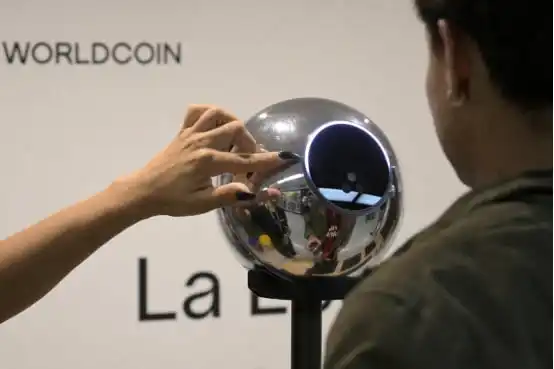
In the past few years, this problem seemed distant. However, with the explosion of generative AI, it is rapidly becoming a real-world necessity. Today, AI can generate highly realistic images, videos, and audio, even operate social media accounts in bulk and execute complex tasks autonomously.

In the future, a significant portion of active users on the internet may not be real people but rather AI Agents. Against this backdrop, verifying that the entity on the other end is human is becoming a fundamental issue for the internet.

This is precisely the market World aims to capture. Its core product, World ID, uses the Orb device to scan a user's iris, generating a unique digital identity credential for each individual. This system attempts to achieve a "one person, one ID" principle, verifying authenticity while protecting user privacy as much as possible, and supporting on-chain calls.

Previously, the biggest market skepticism towards World was that, while the identity system held great imaginative potential, it consistently lacked real-world use cases. However, as it enters the third stage, this is changing. World has explicitly stated it will promote adoption across three main directions: enterprise, individual users, and AI Agents.

On the enterprise front, World is collaborating with companies like Zoom, Okta, and DocuSign to launch identity verification products targeting deepfake issues. As AI scams and deepfake attacks become more common, the demand for real-person verification is rising rapidly. Whether for video conferencing, remote work, or electronic signing, verifying identity authenticity is becoming crucial.

On the individual user front, World is targeting higher-frequency pain points on the internet. For example, Tinder could use World ID to verify if a user is a real person, and the Concert Kit for ticket purchases could reduce bot scalping and ticket touting.

This means World is attempting to solve the long-standing internet industry problems of fake accounts and bot traffic.

The most noteworthy aspect is the AI Agent front. World has launched AgentKit, aiming to establish a trusted authorization relationship between humans and AI. In the future, if everyone has their own AI assistant, these Agents might help users manage assets, execute transactions, sign agreements, or even participate in on-chain governance.

But before that, the system must be able to verify whom an AI represents and whether it has obtained authorization from a real human. The value of AgentKit lies in establishing a foundational trust framework for the future AI economy.

二、The AI Era: "Real Human Identity" is Becoming Scarce

The core reason for WLD's price increase isn't merely news-driven hype but the market beginning to reprice the scarcity value of "real human identity."

Over the past few years, numerous identity-focused projects have emerged in the crypto market, but most struggled to sustain themselves, fundamentally due to insufficient demand. While traditional internet had identity verification needs, it wasn't enough to support a massive, independent sector. However, the arrival of the AI era has completely changed this logic.

When the cost of generating AI content approaches zero, the truly scarce resource becomes human beings themselves. In the past, the internet's most important resources were traffic, content, and attention. In the future, scarcer resources might be real human identity, real human behavior, and real human authorization.

The reason is simple. AI can infinitely replicate text, images, audio, and even video, but it cannot naturally possess an independent human identity. This means that in the future internet, real humans could become an increasingly scarce resource. Whoever can verify a "real person" holds the key gateway.

This is also why the market is beginning to reassess World's long-term value. It is no longer betting on just a crypto narrative but on a crucial infrastructure need for the AI era.

Simultaneously, World's operational strategy has undergone a significant shift. The team announced it will concentrate resources on a few high-density, high-value cities, including San Francisco, New York, as well as regions like the UK, Germany, Japan, and South Korea, while scaling back operations in non-priority areas. This indicates the team is no longer pursuing widespread expansion but prioritizing establishing network effects in high-value markets first.

The business logic behind this strategy is clear. The value of an identity system inherently comes from network effects. Only when a region has enough users, enterprises, and application scenarios can the true value of World ID be realized. Otherwise, even with user growth, it's difficult to form a stable value loop.

Another key change is hardware upgrades. The next-generation Orb will move towards self-service, aiming to achieve 95% autonomous operation by the end of 2026. This is crucial.

Previously, the bottleneck in Orb expansion was the high labor cost, requiring offline operational support for each additional user. Once the device can achieve large-scale self-service operation, customer acquisition and expansion costs will significantly decrease, making the business model healthier.

三、The AI Agent Era: World Could Become a Key Gateway

From a broader perspective, World's advancement could have profound implications for the crypto industry.

First, it could drive the crypto narrative further from finance into identity. In the past, market discussions about Crypto primarily revolved around DeFi, stablecoins, ETFs, and RWA, essentially financial logic. But World represents another path: identity infrastructure.

In the future, identity itself could become a composable asset. Users with a trusted identity might gain access to airdrops, credit scores, governance rights, and even AI usage permissions.

Around the identity layer, new market sectors could emerge, such as identity protocols, human credit protocols, and AI authorization protocols.

Second, World could become important infrastructure for the AI Agent economy. If AI Agents truly become the next generation of productivity tools, the entire industry must solve three problems: who does the Agent belong to, is the Agent trustworthy, and is the Agent verifiable. World is addressing these three core needs.

From this angle, World's ambition isn't merely to be a crypto project but to become the identity gateway for the AI era. Just as Google became the gateway for information and Meta for social interaction, World aims to become the gateway for identity. If this positioning holds, the valuation logic for WLD would be fundamentally reconstructed.

Finally, the market's most pressing concern remains: how does WLD capture value? This is also a significant change brought by World ID 4.0. The new protocol introduces a fee mechanism, allowing credential issuers and the protocol to charge users (the service consumers), while end-users can still use it for free.

The significance of this model is that it gives World a real source of revenue. Users use the protocol for free, while ecosystem participants pay, which is highly similar to the business model of internet platforms.

As the number of identity verifications increases, enterprise adoption scales up, and protocol call frequency rises, the entire network has the potential to generate sustainable cash flow.

For the market, this might be the most crucial change, as it means World is no longer just telling a future story but beginning to establish a verifiable business model and value capture path.

Conclusion

WLD's price rise appears, on the surface, to be a recovery in market sentiment. At a deeper level, it reflects a shift in market perception. World's true bet isn't on short-term token price, but on the most fundamental question of the AI era: how to prove you are human.

As AI becomes more human-like, the value of a real human's identity will likely continue to appreciate. And whoever masters the proof-of-personhood network might control a key gateway to the next-generation internet. For World, this might just be the beginning.

Trending Cryptos

Related Questions

QWhat is the core goal of World, according to the article?

AAccording to the article, World's core goal is to build a global 'proof of personhood' network, aimed at solving the critical internet problem of verifying that a user is a real human and not a bot, script, or AI-generated identity.

QWhat are the three key directions World is pushing for adoption in its third stage 'The Simple Plan'?

AIn the third stage of 'The Simple Plan,' World is pushing for adoption in three key directions: the enterprise side (e.g., partnerships with Zoom, Okta for deepfake verification), the individual user side (e.g., verifying real users on Tinder, preventing bots in ticket sales), and the AI Agent side (providing a trusted authorization framework between humans and AI via AgentKit).

QWhy does the article suggest that 'real human identity' is becoming a scarce resource in the AI era?

AThe article suggests that as the cost of AI-generated content approaches zero, what becomes truly scarce are genuine human identity, human behavior, and human authorization. AI can replicate content infinitely but cannot inherently possess an independent human identity, making verified human presence a critical and increasingly scarce resource on the future internet.

QWhat significant change does the introduction of World ID 4.0 protocol bring regarding value capture?

AThe introduction of the World ID 4.0 protocol brings a fee mechanism that allows credential issuers and the protocol to charge usage fees from parties utilizing the service, while end-users can still use it for free. This change provides World with a potential real revenue stream, moving towards a verifiable business model similar to internet platforms.

QWhat broader impact might World's development have on the cryptocurrency industry, as mentioned in the article?

AThe article mentions that World's development could expand the crypto narrative from primarily finance to include identity infrastructure. It could make identity a composable asset and establish itself as crucial infrastructure for the AI Agent economy. Furthermore, by aiming to become the 'identity gateway' for the AI era, it could fundamentally reshape valuation logic for projects like WLD.

Related Reads

After Three Consecutive Quarters of Decline, Can the Crypto Market Find a Window for Stabilization in Q3?

The cryptocurrency market has just concluded its worst-performing quarter since 2022, with total capitalization dropping 12.6% to $2.1 trillion. All core metrics indicate capital is leaving the sector, not just rotating within it. Bitcoin fell 14.2% and Ethereum dropped 25.4% in Q2, breaking their previous correlation with US tech stocks. A key driver is the reversal in US spot Bitcoin ETF flows, which saw a net outflow of approximately $4.67 billion in Q2, including a record monthly outflow near $4.5 billion in June. While recent data suggests long-term holders are accumulating again, sustained ETF outflows mean continued selling pressure. Market focus is now singularly on the Federal Reserve. The upcoming July FOMC meeting is seen as the most critical event for Q3. A dovish signal could support Bitcoin reclaiming a $68,000-$84,000 range, while a hawkish stance might establish a new trading band around $50,000-$56,000. Additionally, regulatory uncertainty persists, with the progress of the crucial *CLARITY Act* stalling in the Senate, reducing its perceived 2026 passage probability to 40-45%. Despite the broad downturn, a few sectors showed growth. Prediction markets saw nominal volume surge 48.7% year-over-year to $113.8 billion, and tokenized collectibles transaction volume rose 143% quarterly to $1.4 billion. The Real-World Asset (RWA) tokenization sector also continued steady growth, now representing ~$28.1 billion in on-chain value. The market's foundation for an extreme crash appears limited, with Bitcoin price hovering near its 200-week moving average. However, the trading paradigm has shifted from narrative-driven speculation to decisions based on price action, policy developments, and interest rate expectations, making a broad sentiment-driven rally unlikely in the near term.

marsbitYesterday 08:36

After Three Consecutive Quarters of Decline, Can the Crypto Market Find a Window for Stabilization in Q3?

marsbitYesterday 08:36

BIT Trading Moment: BTC Still Suppressed by Weekly 200 EMA, Rejection May Restart Decline; Storage and Semiconductors that Surged Last Night Begin Falling in Evening Trading

**Crypto & Stock Market Wrap: Bitcoin Tests Resistance, Stocks Retreat After AI Surge** Bitcoin consolidates around $66,000, facing key resistance near $68,000—an area seen as a major psychological and technical hurdle where previous rallies have failed. Analysts note the cryptocurrency is caught between its 200-week moving average (~$63,333) and 200-week EMA (~$68,328). A clear break above $68k is needed to signal a stronger bullish trend, while a rejection could lead to a retest of $63k support. Market sentiment remains cautious, with low futures open interest pointing to a low-liquidity rebound rather than a full bull market. Bitcoin spot ETFs saw another $203 million inflow. US stock futures pointed lower after a strong Tuesday session led by a massive rebound in semiconductors and memory stocks. The rally was fueled by renewed optimism about AI-driven hardware demand, with Micron, SanDisk, and SK Hynix surging. However, those gains reversed in pre-market trading. Super Micro Computer (SMCI) soared over 20% after hours on strong guidance and a record backlog. Other standouts included Rocket Lab and nuclear energy plays Oklo and X-Energy. Rising oil prices (Brent above $91) and climbing Treasury yields (10-year near 4.64%), however, are reigniting inflation concerns and acting as a headwind for equities. In Asia, markets were mixed. South Korea's KOSPI pared early gains to close slightly higher as semiconductor stocks like SK Hynix gave back initial surges. Japan's Nikkei edged lower as the yen hit a fresh 38-year low against the dollar, raising fears of potential market intervention. Key events to watch include the Samsung Galaxy launch, AMD's AI event, and a slew of major tech earnings from Alphabet, Tesla, and IBM after the close on Wednesday, followed by the ECB meeting and Intel's earnings on Thursday.

marsbitYesterday 08:28

BIT Trading Moment: BTC Still Suppressed by Weekly 200 EMA, Rejection May Restart Decline; Storage and Semiconductors that Surged Last Night Begin Falling in Evening Trading

marsbitYesterday 08:28

Former CFTC Chairman, Circle President Tarbert: Preaching Long-Termism While Cashing Out $30 Million Himself

Former CFTC Chairman and Circle President Heath Tarbert has consistently advocated for a long-term vision in public, urging patience from investors as Circle’s stock price has fallen significantly from its peak. However, it has been revealed that since Circle’s IPO, Tarbert has continuously sold his CRCL shares through pre-arranged trading plans, cashing out approximately $30 million, without making any public market purchases. This contrast between his public messaging and personal actions has drawn criticism. Tarbert joined Circle in July 2023 as Chief Legal Officer, leveraging his regulatory experience to help guide the company through its IPO and expansion. Despite promoting stablecoins as long-term infrastructure, he established a 10b5-1 trading plan just before Circle went public, leading to substantial stock sales over the following year. In March 2026, he initiated another plan to sell more shares. His career trajectory highlights a pattern of moving between high-level regulatory roles and influential positions in the financial sector. After resigning as CFTC Chairman in early 2021, he joined Citadel Securities as Chief Legal Officer just 27 days later, during a period of intense regulatory scrutiny for the firm. He later joined Circle, aiding its efforts to navigate regulatory challenges for its public listing. While Tarbert's expertise in policy and compliance is valuable to companies like Circle, his actions—advocating long-term confidence while personally divesting—raise questions about the alignment between his public statements and his private financial decisions, leaving investors who followed his advice to bear the market risks.

marsbitYesterday 08:06

Former CFTC Chairman, Circle President Tarbert: Preaching Long-Termism While Cashing Out $30 Million Himself

marsbitYesterday 08:06

Gate Research Institute: The 'Wall Street-ization' Wave of Crypto Financial Products – Competition or Integration?

The article titled "Gate Research Institute: Are Crypto Financial Products Sparking a 'Wall Street' Wave—Competition or Convergence?" explores the evolving relationship between the crypto ecosystem and traditional finance (TradFi). The piece begins by reflecting on Bitcoin's original 2009 vision of decentralization, disintermediation, and moving away from banks. It then contrasts this with the 2024 landscape, where key crypto assets like Bitcoin are increasingly held through Wall Street products like ETFs issued by giants like BlackRock. The article questions whether this signifies that TradFi is systematically taking over the rights to issue, price, custody, and distribute crypto financial assets. The core argument is that this is not a zero-sum takeover but rather a bidirectional convergence where each side addresses the other's weaknesses. Crypto offers 24/7 global markets, programmable settlement, and open access but lacks compliant channels, institutional-grade custody, deep fiat liquidity, and mainstream distribution. TradFi possesses these but is constrained by legacy systems, limited operating hours, and slow settlement. Two primary convergence paths are highlighted: * **Path A (CEX to TradFi):** Exemplified by Gate, which has progressed from offering tokenized stocks and CFDs to providing direct, real stock trading (US, Hong Kong, South Korea) within its platform, using USDT. * **Path B (TradFi to Crypto):** Exemplified by Robinhood, which has integrated crypto trading, acquired exchanges like Bitstamp, and is moving traditional assets like stocks onto the blockchain via tokenization and its own Layer 2. Both paths are ultimately competing to become the next-generation, unified financial account—a "super account" where users can seamlessly trade cryptocurrencies, stocks, ETFs, RWA (Real World Assets), and tokenized treasury products in one interface. The growth of RWA and tokenized treasuries (e.g., BlackRock's BUIDL) is presented as the asset-layer fusion, providing stable, yield-bearing assets on-chain and acting as a bridge between the two worlds. In conclusion, the "Wall Street-ization" of crypto is framed as a mutual transformation. Decentralized ideals persist in the protocol layer, while at the application layer, a more efficient, global, and accessible unified capital market is emerging from this convergence. The future competition lies not between crypto exchanges and stockbrokers, but between platforms vying to offer the most comprehensive asset coverage, liquidity, and user experience within a single account.

marsbitYesterday 08:01

Gate Research Institute: The 'Wall Street-ization' Wave of Crypto Financial Products – Competition or Integration?

marsbitYesterday 08:01

Trading

Spot

Hot Articles

How to Buy WLD

Welcome to HTX.com! We've made purchasing Worldcoin (WLD) simple and convenient. Follow our step-by-step guide to embark on your crypto journey.Step 1: Create Your HTX AccountUse your email or phone number to sign up for a free account on HTX. Experience a hassle-free registration journey and unlock all features.Get My AccountStep 2: Go to Buy Crypto and Choose Your Payment MethodCredit/Debit Card: Use your Visa or Mastercard to buy Worldcoin (WLD) instantly.Balance: Use funds from your HTX account balance to trade seamlessly.Third Parties: We've added popular payment methods such as Google Pay and Apple Pay to enhance convenience.P2P: Trade directly with other users on HTX.Over-the-Counter (OTC): We offer tailor-made services and competitive exchange rates for traders.Step 3: Store Your Worldcoin (WLD)After purchasing your Worldcoin (WLD), store it in your HTX account. Alternatively, you can send it elsewhere via blockchain transfer or use it to trade other cryptocurrencies.Step 4: Trade Worldcoin (WLD)Easily trade Worldcoin (WLD) on HTX's spot market. Simply access your account, select your trading pair, execute your trades, and monitor in real-time. We offer a user-friendly experience for both beginners and seasoned traders.

5.3k Total ViewsPublished 2024.03.29Updated 2026.06.02

How to Buy WLD

Discussions

Welcome to the HTX Community. Here, you can stay informed about the latest platform developments and gain access to professional market insights. Users' opinions on the price of WLD (WLD) are presented below.

活动图片