特朗普的胜利看好加密货币,卡玛拉的胜利看跌:伯恩斯坦

币界网Published on 2024-08-13Last updated on 2024-08-13

币界网报道:

华尔街的伯恩斯坦今天为加密货币社区投下了一颗重磅炸弹。据他们称,如果唐纳德·特朗普在11月赢得美国大选,这将是加密货币的一大胜利。

但如果卡玛拉·哈里斯(Kamala Harris)担任总统,你可能需要做好准备,因为比特币和其他市场的情况可能会变得艰难。
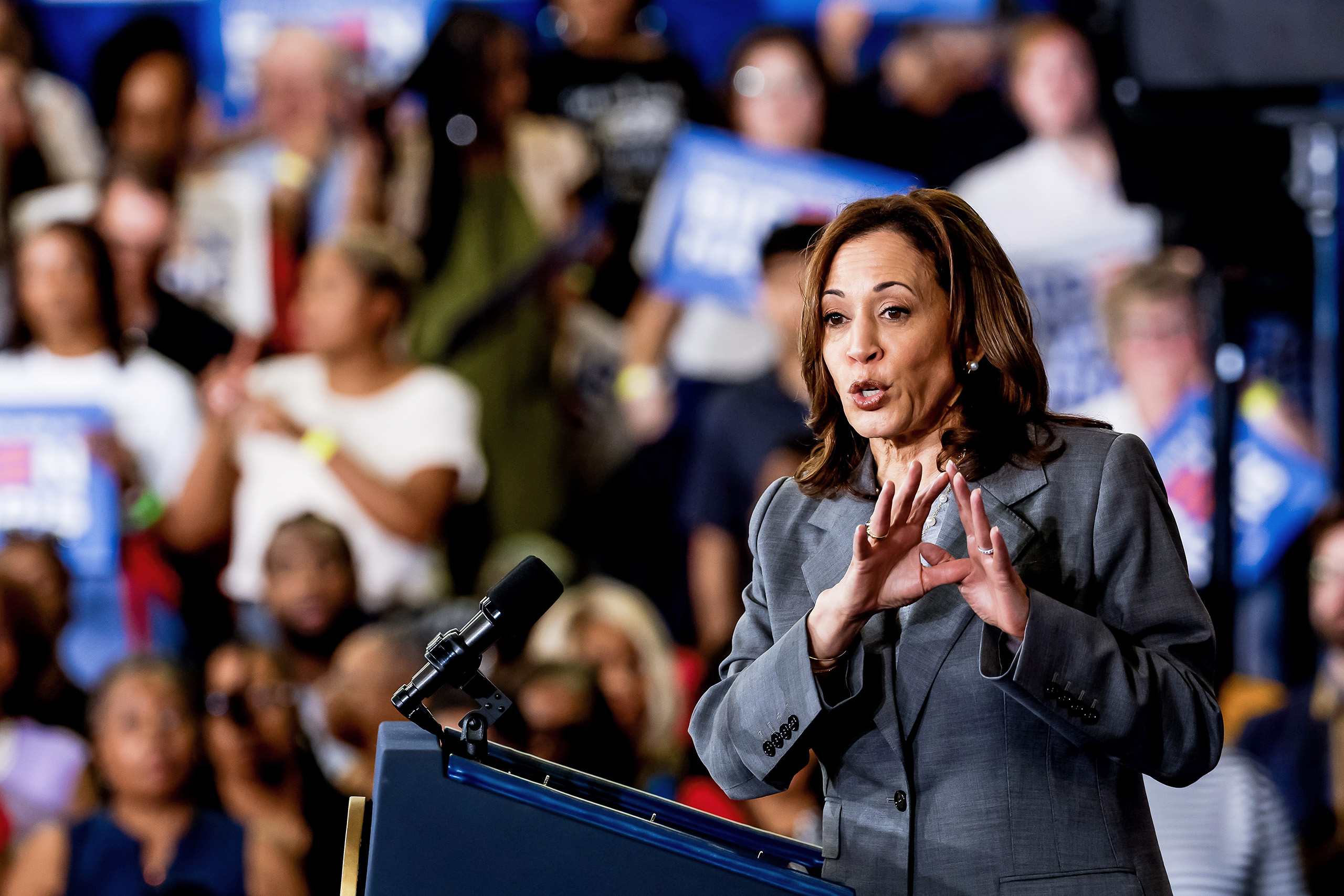
How Kamala Harris can win • Inside Story

比特币最近一直在蹒跚而行,这并非巧合。随着Polymarket的赔率开始有利于Kamala,比特币开始出现波动。当然,我们也要感谢上田和夫和日本银行,但他们并不是一个人做的。

伯恩斯坦认为,比特币将停留在这个不稳定的位置,直到11月谁将获胜的情况更加清晰。

Kamala带领比特币感受热度

加密货币市场陷入了持有模式,比特币无法获得任何稳固的基础。伯恩斯坦的团队告诉我们,这种情况可能会持续到选举结果开始变得更加确定为止。

在共和党方面,特朗普的支持者并没有保持沉默。他们称之为“蜜月期”,并确信Polymarket的赔率正在被操纵。

Trump win is bullish for crypto, Kamala win bearish: Bernstein

但尽管有噪音,这些数字很难被忽视。Kamala现在在预测市场处于领先地位,这给比特币带来了压力。

另一方面,特朗普的阵营对加密货币的支持一直很大声。他们甚至在调侃国家比特币储备的想法,这引起了加密货币爱好者的关注。

特朗普失势,回避加密货币

截至周一,Kamala在Polymarket的股价为52美分。这意味着市场押注她有52%的机会赢得总统职位。与此同时,特朗普的股价为45美分。

Trump win is bullish for crypto, Kamala win bearish: Bernstein

与一个月前相比,这是一个巨大的变化。当时,特朗普的胜算高达72%。但那是在乔·拜登退出并支持卡玛拉之前。

从那时起,卡玛拉在民意调查和博彩市场上都呈上升趋势。主流民意调查也显示,竞争更加激烈。

根据Real Clear Polling的平均数据,卡玛拉仅领先0.5个百分点。但这些数字并不能说明全部情况。

一些民意调查仍显示特朗普领先,但只是微弱领先。卡玛拉在民主党候选人中的崛起得益于积极的新闻报道和名人代言。

Trump win is bullish for crypto, Kamala win bearish: Bernstein

昨晚,埃隆·马斯克和唐纳德·特朗普最近在推特上聊了两个小时,他们一次也没有提到比特币或加密货币。一个字也没有。

人们注意到了。Polymarket上有人押了大笔赌注——超过60万美元——希望加密货币能出现在谈话中。但相反,这是一场彻底的破产。面试甚至没有准时开始。

据报道,特朗普最近的公开露面引起了他的顾问们的一些担忧。但这就是我们谈论的特朗普,谁知道接下来会发生什么?

不过,就目前而言,Polymarket的赔率正在向Kamala倾斜,这让比特币感到紧张。

Related Reads

North Korean Hackers Loot $500 Million in a Single Month, Becoming the Top Threat to Crypto Security

North Korean hackers, particularly the notorious Lazarus Group and its subgroup TraderTraitor, have stolen over $500 million from cryptocurrency DeFi platforms in less than three weeks, bringing their total theft for the year to over $700 million. Recent major attacks on Drift Protocol and KelpDAO, resulting in losses of approximately $286 million and $290 million respectively, highlight a strategic shift: instead of targeting core smart contracts, attackers are now exploiting vulnerabilities in peripheral infrastructure. For instance, the KelpDAO attack involved compromising downstream RPC infrastructure used by LayerZero's decentralized validation network (DVN), allowing manipulation without breaching core cryptography. This sophisticated approach mirrors advanced corporate cyber-espionage. Additionally, North Korea has systematically infiltrated the global crypto workforce, with an estimated 100 operatives using fake identities to gain employment at blockchain companies, enabling long-term access to sensitive systems and facilitating large-scale thefts. According to Chainalysis, North Korean-linked hackers stole a record $2 billion in 2025, accounting for 60% of all global crypto theft that year. Their total historical crypto theft has reached $6.75 billion. Post-theft, they employ specialized money laundering methods, heavily relying on Chinese OTC brokers and cross-chain mixing services rather than standard decentralized exchanges. Security experts, while acknowledging the increased sophistication, emphasize that many attacks still exploit fundamental weaknesses like poor access controls and centralized operational risks. Strengthening private key management, limiting privileged access, and enhancing coordination among exchanges, analysts, and law enforcement immediately after an attack are critical to improving defense and fund recovery chances. The industry's challenge now extends beyond secure smart contracts to safeguarding operational security at the infrastructure level.

marsbit41m ago

North Korean Hackers Loot $500 Million in a Single Month, Becoming the Top Threat to Crypto Security

marsbit41m ago

Circle CEO's Seoul Visit: No Korean Won Stablecoin Issuance, But Met All Major Korean Banks

Circle CEO Jeremy Allaire's recent activities in Seoul indicate a strategic shift for the company, moving away from issuing a Korean won-backed stablecoin and instead focusing on embedding itself as a key infrastructure provider within Korea’s financial and crypto ecosystem. Despite Korea accounting for nearly 30% of global crypto trading volume—with a market characterized by high retail participation and altcoin dominance—Circle has chosen not to compete for the role of stablecoin issuer. Instead, Allaire met with major Korean banks (including Shinhan, KB, and Woori), financial groups, leading exchanges (Upbit, Bithumb, Coinone), and tech firms like Kakao. This approach reflects a broader industry transition: the core of stablecoin competition is shifting from issuance rights to systemic positioning. With Korean regulators still debating whether banks or tech companies should issue stablecoins, Circle is avoiding regulatory uncertainty by strengthening its role as a service and technology partner. The company is deepening integration with trading platforms, building connections, and promoting stablecoin infrastructure. This positions Circle to benefit regardless of which entity eventually issues a won stablecoin. Allaire also noted the potential for a Chinese yuan stablecoin in the next 3–5 years, underscoring a regional trend of stablecoins becoming more regulated and integrated with traditional finance. Ultimately, Circle’s strategy highlights that future influence in the stablecoin market will belong not necessarily to the issuers, but to the foundational infrastructure layers that enable cross-system transactions.

marsbit1h ago

Circle CEO's Seoul Visit: No Korean Won Stablecoin Issuance, But Met All Major Korean Banks

marsbit1h ago

SpaceX Ties Up with Cursor: A High-Stakes AI Gambit of 'Lock First, Acquire Later'

SpaceX has secured an option to acquire AI programming company Cursor for $60 billion, with an alternative clause requiring a $10 billion collaboration fee if the acquisition does not proceed. This structure is not merely a potential acquisition but a strategic move to control core access points in the AI era. The deal is designed as a flexible, dual-path arrangement, allowing SpaceX to either fully acquire Cursor or maintain a binding partnership through high-cost collaboration. This "option-style" approach minimizes immediate regulatory and integration risks while ensuring long-term alignment between the two companies. At its core, the transaction exchanges critical AI-era resources: SpaceX provides its Colossus supercomputing cluster—one of the world’s most powerful AI training infrastructures—while Cursor contributes its AI-native developer environment and strong product adoption. This synergy connects compute power, models, and application layers, forming a closed-loop AI capability stack. Cursor, founded in 2022, has achieved rapid growth with over $1 billion in annual revenue and widespread enterprise adoption. Its value lies in transforming software development through AI agents capable of coding, debugging, and system design—positioning it as a gateway to future software production. For SpaceX, this move is part of a broader strategy to evolve from a aerospace company into an AI infrastructure empire, integrating xAI, supercomputing, and chip manufacturing. Controlling Cursor fills a gap in its developer tooling layer, strengthening its AI narrative ahead of a potential IPO. The deal reflects a shift in AI competition from model superiority to ecosystem and entry-point control. With programming tools as a key battleground, securing developer loyalty becomes crucial for dominating the software production landscape. Risks include questions around Cursor’s valuation, technical integration challenges, and potential regulatory scrutiny. Nevertheless, the deal underscores a strategic bet: controlling both compute and software development access may redefine power dynamics in the AI-driven future.

marsbit1h ago

SpaceX Ties Up with Cursor: A High-Stakes AI Gambit of 'Lock First, Acquire Later'

marsbit1h ago

Trading

Spot
Futures
活动图片