Tether's 'Gold Standard' Ambition: Deconstructing XAUt, How the Stablecoin Giant is Hoarding Gold?

marsbit2026-02-02 tarihinde yayınlandı2026-02-02 tarihinde güncellendi

Özet

Tether, the company behind the dominant stablecoin USDT, is rapidly becoming a major global buyer of physical gold, with holdings of approximately 140 metric tons valued at around $23 billion. A significant portion of this, over 70 tons, was acquired last year alone to back its gold-backed stablecoin, XAUt. Each XAUt token represents ownership of one troy ounce of LBMA-standard gold, stored in a high-security Swiss vault. The on-chain token facilitates the transfer of ownership of the underlying physical asset. The operation is run by TG Commodities, a Salvadoran entity fully owned by Tether, which is authorized by El Salvador's national digital asset regulator. Tether's CEO has stated the company aims to allocate 10-15% of its portfolio to gold, purchasing an estimated one to two tons per week. With robust profits, this could potentially double its current XAUt reserves. This scale of purchasing has positioned Tether as a significant "marginal buyer" in the gold market, comparable to central banks. While other gold-backed tokens like PAXG and DGX exist, Tether's massive accumulation introduces a new dynamic. The product aims to make gold more divisible and transferable, but it also intertwines the stability of physical gold with the volatility of the crypto market, raising questions about the long-term implications of this new asset class.

Author: imToken

Can you imagine a company that started with a Crypto background is now buying gold at a scale approaching that of central banks?

According to Bloomberg, USDT issuer Tether has become one of the world's largest holders of gold reserves—currently holding approximately 140 tons of gold, valued at about $23 billion, with over 70 tons purchased last year alone, used to supplement its reserves and issue its gold-backed stablecoin, almost surpassing the declared purchases of most national central banks.

Behind such massive gold purchases, Tether is not betting on the price of gold but is building a long-term, scalable physical gold supply system for its tokenized gold product, XAUt.

I. What is XAUt?

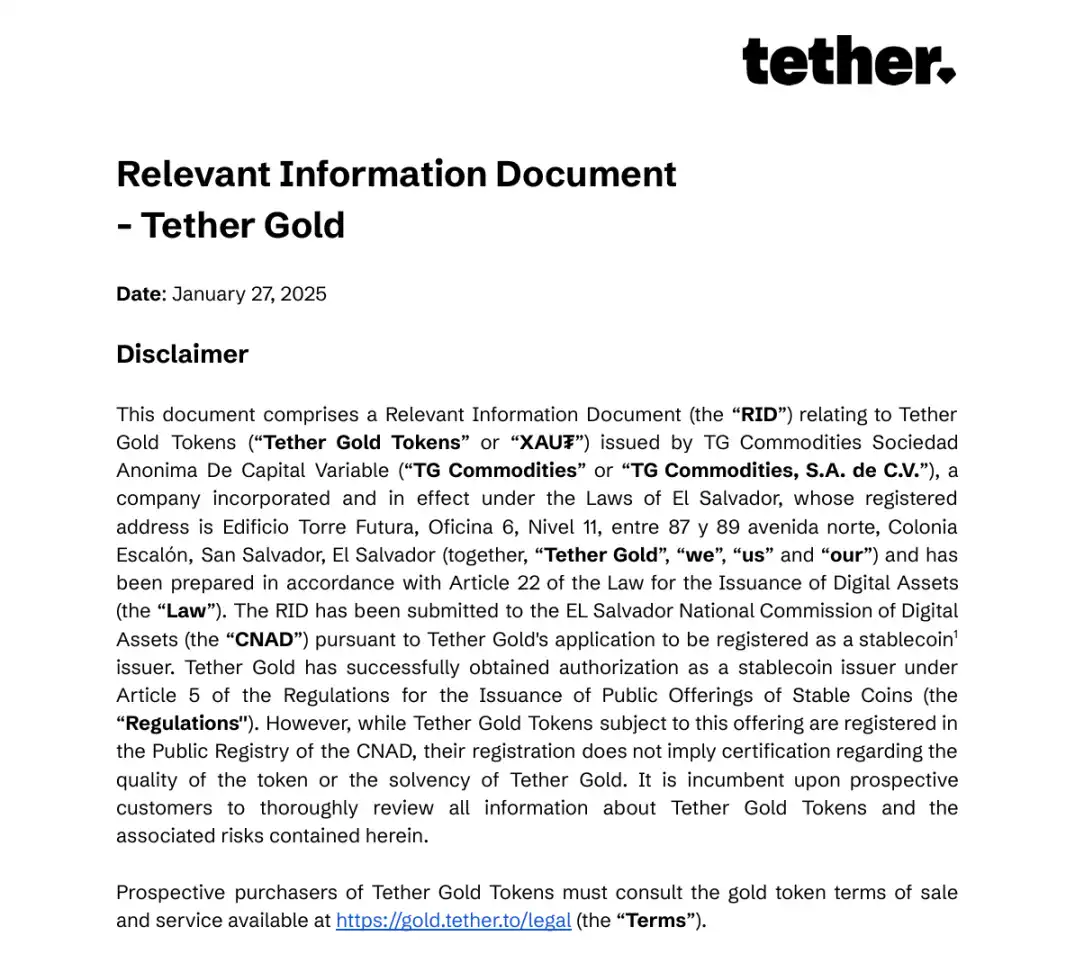
According to the latest whitepaper, "Relevant Information Document – Tether Gold(XAU₮)" released on January 27, 2025, Tether Gold (XAUt) is a gold-backed stablecoin issued by the Salvadoran company TG Commodities, S.A. de C.V.

Each XAUt token represents ownership of one troy ounce (approximately 31.1035 grams) of gold stored in a Swiss vault, meeting the London Bullion Market Association (LBMA) gold bar delivery standards. When an on-chain transaction occurs, the system automatically reallocates the gold shares in the vault to ensure that users' tokens always correspond to specific physical assets.

The physical gold is stored in a high-security vault in Switzerland. The custodian, although an affiliate, operates independently with separate financial accounts and customer records. Users can also access the official "Look-up Website" by entering their on-chain address to directly query the serial number, weight, and purity of the gold bars associated with their assets.

However, delivery must be made in whole gold bars. As described in the whitepaper, since each gold bar varies in weight (typically between 385 and 415 ounces), the official recommends users deposit at least 430 XAUt to ensure coverage. Any excess tokens will be refunded to the user.

Delivery must also occur within Switzerland, or users can request Tether to liquidate the gold into USD in the Swiss gold market, with the proceeds returned after deducting fees.
Source: Tether

It is worth noting that the issuer, TG Commodities, has been authorized by El Salvador's National Digital Asset Commission (CNAD) as a regulated stablecoin issuer and approved digital asset service provider (DASP). A look into the parent company reveals it is wholly owned by Tether Holdings and Tether Operations.

In fact, the early萌芽 of XAUt can be traced back to late 2019 when Paolo Ardoino, then CTO of Bitfinex and Tether, revealed that Tether was planning to launch a gold-backed stablecoin product, Tether Gold. The first version of the XAUT whitepaper was also released on January 28, 2022.

Little did anyone expect that in just four years, Tether would become a super gold buyer comparable to sovereign national central banks.

II. Tether: A New Force in the Gold Market That Cannot Be Ignored

As mentioned above, the whitepaper clearly states that each XAUt token represents ownership of one ounce of physical gold. Tether承诺 that every XAU₮ issued is backed by an equivalent amount of physical gold reserves, all stored in a "Swiss vault with first-class security."

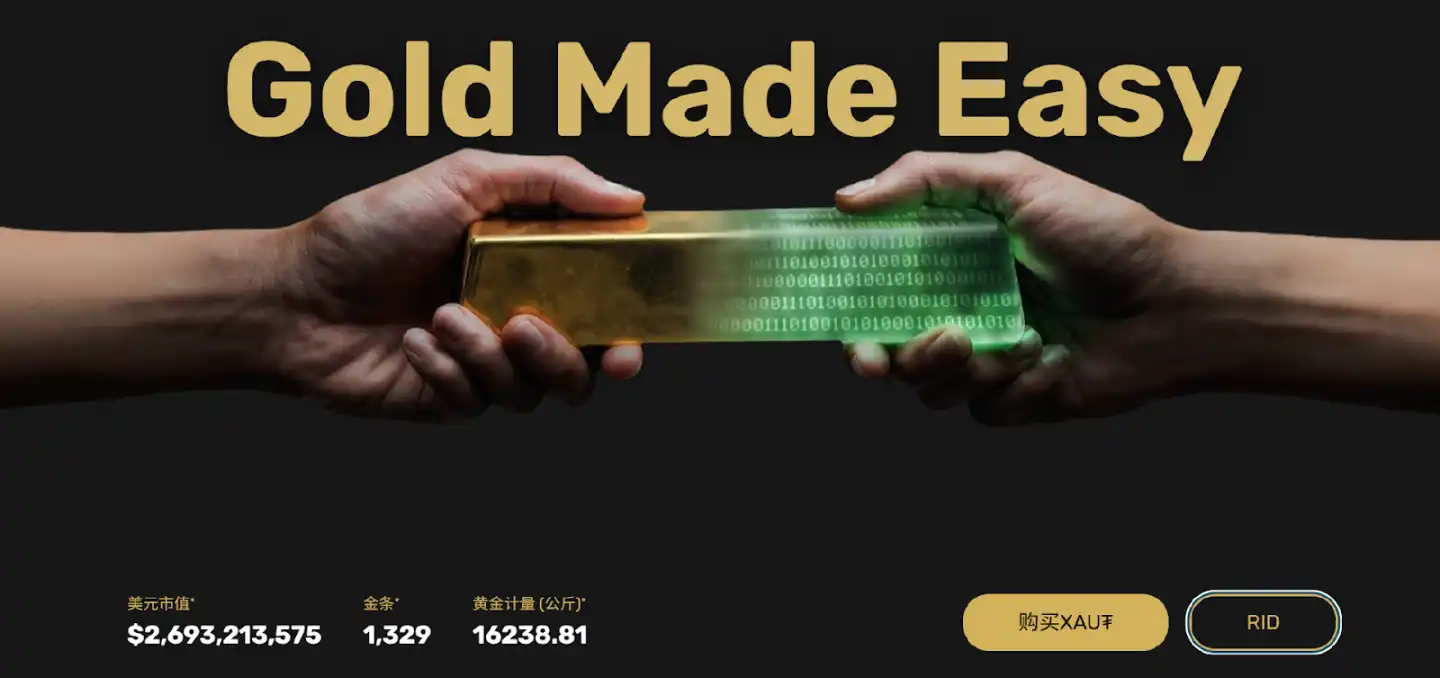
As of the time of writing, the total issuance of XAUt is approximately $2.7 billion, representing the physical reserve of about 1,329 gold bars (totaling 16,238.4 kilograms).
Source: Tether

Interestingly, Tether CEO Paolo Ardoino publicly stated that Tether plans to allocate 10% to 15% of its investment portfolio to physical gold in the future, currently purchasing about one to two tons of gold per week, and intends to continue doing so, aiming for long-term, stable access to gold supply.

According to Bloomberg's calculations, in the last year alone, Tether purchased over 70 tons of new gold to supplement its reserves and support its gold stablecoin issuance. Combining this with Tether's disclosed financial data for the first three quarters of 2025:

Its annual profit is estimated to be nearly $15 billion, with current gold and Bitcoin reserve sizes of approximately $12.9 billion and $9.9 billion, respectively, accounting for about 13% of its total reserves. To reach the 10%-15% target, Tether would need to purchase at least an additional $2-3 billion, effectively doubling the current XAUt规模!

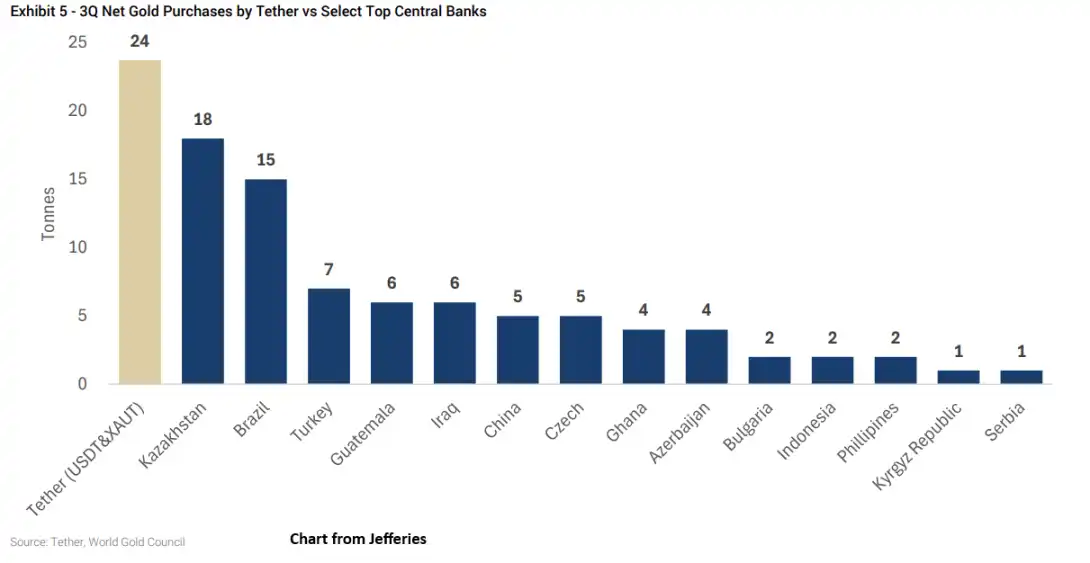
This is why some institutions have begun to view Tether as an unignorable "marginal super buyer" in the gold market. Research from Jefferies shows that in the second quarter, Tether's gold purchases accounted for about 14% of central banks'同期 purchases, and this proportion remained around 12% in the third quarter. It can be said that the timing of the second round of gold price increases高度 coincided with the acceleration of Tether's gold purchasing节奏.

Considering Tether's current strong profitability and the resilience shown by its stablecoin business amid recent crypto market volatility, this gold purchasing target is not激进 from a financial perspective.
Source: Wall Street News

III. How to View Gold-Backed Stablecoins?

Of course, the multi-trillion-dollar market for investment-grade tokenization of gold is far from being a pie that only Tether wants a piece of.

Over the years, several companies have尝试 to provide on-chain representations of gold ownership, including Digix's率先 launched DGX, a stablecoin collateralized by physical gold. Each DGX is backed by 1 gram of LBMA-certified gold bars with 99.99% purity, minted by authoritative companies and stored in The Safe House vault in Singapore.

In addition, there is another more well-known product, PAXG. In 2019, Paxos Trust Company launched PAXG, a gold token approved by the New York Department of Financial Services (NYDFS), also built on the Ethereum ERC-20 protocol. Each PAXG represents one troy ounce of a standard delivery gold bar stored in a professional vault in London.

Paxos users can redeem PAXG for fiat currency, non-bearer gold, or directly redeem physical gold bars, and can随时 query the serial number, brand, weight, and purity of the corresponding gold bar through their on-chain address.

From a product design perspective, the common goal of these gold-backed stablecoins is clear: to make gold more divisible, more liquid, and more aligned with the usage habits of the digital asset era.

However, unlike dollar stablecoins, the value logic of gold stablecoins is more complex. Because the core proposition of stablecoins is built on the demand for fully collateralized, instantly redeemable digital dollars; whereas gold stablecoins inevitably联动 with the cyclical fluctuations of the crypto market itself.

Therefore, when stablecoin demand changes急剧 due to market sentiment or liquidity conditions, this pressure could theoretically传导 to its underlying asset-liability structure—and now, part of that is a real and sizable gold reserve.

Especially as players like Tether hold more and more reserves, is this new narrative a digital rebirth for gold, or is it introducing additional volatility factors to gold?

Perhaps this is one of the issues worth pondering for every holder.

Trend Kriptolar

İlgili Sorular

QWhat is XAUt and how does it relate to physical gold?

AXAUt is a gold-backed stablecoin issued by TG Commodities, S.A. de C.V. Each XAUt token represents ownership of one troy ounce of physical gold that meets the London Bullion Market Association (LBMA) good delivery specifications. The gold is stored in a high-security vault in Switzerland. When on-chain transactions occur, the system automatically reallocates the gold holdings in the vault to ensure each user's tokens are always backed by specific, identifiable physical assets.

QHow much gold does Tether currently hold to back its XAUt stablecoin, and what are its future purchasing plans?

ATether currently holds approximately 140 metric tons of gold, valued at around $23 billion, to back its XAUt stablecoin. The company plans to allocate 10% to 15% of its portfolio to physical gold and is buying about one to two tons of gold per week to achieve this long-term, stable supply goal.

QHow does a user redeem XAUt tokens for physical gold, and what are the requirements?

ARedemption for physical gold must be done in whole gold bars, which typically weigh between 385 to 415 ounces. Therefore, the official white paper recommends users hold at least 430 XAUt to cover the minimum bar weight. The physical delivery must occur within Switzerland. Alternatively, users can request Tether to sell the gold on the Swiss market for U.S. dollars, minus any applicable charges.

QBesides Tether's XAUt, what are some other prominent gold-backed stablecoins in the market?

AOther prominent gold-backed stablecoins include Digix's DGX, where each token is backed by 1 gram of LBMA-certified gold stored in a vault in Singapore, and Paxos Trust Company's PAXG, which is approved by the NYDFS and represents one troy ounce of a London Good Delivery gold bar stored in professional vaults.

QWhat potential risk does the article highlight regarding gold-backed stablecoins like XAUt?

AThe article highlights that the value proposition of gold-backed stablecoins is more complex than that of dollar stablecoins. Their value is inherently linked to the cyclical volatility of the crypto market. If demand for the stablecoin changes drastically due to market sentiment or liquidity conditions, that pressure could theoretically be transmitted to its underlying balance sheet structure, which now consists of a large, real-world gold reserve, potentially introducing additional volatility to the gold market itself.

İlgili Okumalar

After Three Consecutive Quarters of Decline, Can the Crypto Market Find a Window for Stabilization in Q3?

The cryptocurrency market has just concluded its worst-performing quarter since 2022, with total capitalization dropping 12.6% to $2.1 trillion. All core metrics indicate capital is leaving the sector, not just rotating within it. Bitcoin fell 14.2% and Ethereum dropped 25.4% in Q2, breaking their previous correlation with US tech stocks. A key driver is the reversal in US spot Bitcoin ETF flows, which saw a net outflow of approximately $4.67 billion in Q2, including a record monthly outflow near $4.5 billion in June. While recent data suggests long-term holders are accumulating again, sustained ETF outflows mean continued selling pressure. Market focus is now singularly on the Federal Reserve. The upcoming July FOMC meeting is seen as the most critical event for Q3. A dovish signal could support Bitcoin reclaiming a $68,000-$84,000 range, while a hawkish stance might establish a new trading band around $50,000-$56,000. Additionally, regulatory uncertainty persists, with the progress of the crucial *CLARITY Act* stalling in the Senate, reducing its perceived 2026 passage probability to 40-45%. Despite the broad downturn, a few sectors showed growth. Prediction markets saw nominal volume surge 48.7% year-over-year to $113.8 billion, and tokenized collectibles transaction volume rose 143% quarterly to $1.4 billion. The Real-World Asset (RWA) tokenization sector also continued steady growth, now representing ~$28.1 billion in on-chain value. The market's foundation for an extreme crash appears limited, with Bitcoin price hovering near its 200-week moving average. However, the trading paradigm has shifted from narrative-driven speculation to decisions based on price action, policy developments, and interest rate expectations, making a broad sentiment-driven rally unlikely in the near term.

marsbit11 saat önce

After Three Consecutive Quarters of Decline, Can the Crypto Market Find a Window for Stabilization in Q3?

marsbit11 saat önce

BIT Trading Moment: BTC Still Suppressed by Weekly 200 EMA, Rejection May Restart Decline; Storage and Semiconductors that Surged Last Night Begin Falling in Evening Trading

**Crypto & Stock Market Wrap: Bitcoin Tests Resistance, Stocks Retreat After AI Surge** Bitcoin consolidates around $66,000, facing key resistance near $68,000—an area seen as a major psychological and technical hurdle where previous rallies have failed. Analysts note the cryptocurrency is caught between its 200-week moving average (~$63,333) and 200-week EMA (~$68,328). A clear break above $68k is needed to signal a stronger bullish trend, while a rejection could lead to a retest of $63k support. Market sentiment remains cautious, with low futures open interest pointing to a low-liquidity rebound rather than a full bull market. Bitcoin spot ETFs saw another $203 million inflow. US stock futures pointed lower after a strong Tuesday session led by a massive rebound in semiconductors and memory stocks. The rally was fueled by renewed optimism about AI-driven hardware demand, with Micron, SanDisk, and SK Hynix surging. However, those gains reversed in pre-market trading. Super Micro Computer (SMCI) soared over 20% after hours on strong guidance and a record backlog. Other standouts included Rocket Lab and nuclear energy plays Oklo and X-Energy. Rising oil prices (Brent above $91) and climbing Treasury yields (10-year near 4.64%), however, are reigniting inflation concerns and acting as a headwind for equities. In Asia, markets were mixed. South Korea's KOSPI pared early gains to close slightly higher as semiconductor stocks like SK Hynix gave back initial surges. Japan's Nikkei edged lower as the yen hit a fresh 38-year low against the dollar, raising fears of potential market intervention. Key events to watch include the Samsung Galaxy launch, AMD's AI event, and a slew of major tech earnings from Alphabet, Tesla, and IBM after the close on Wednesday, followed by the ECB meeting and Intel's earnings on Thursday.

marsbit11 saat önce

BIT Trading Moment: BTC Still Suppressed by Weekly 200 EMA, Rejection May Restart Decline; Storage and Semiconductors that Surged Last Night Begin Falling in Evening Trading

marsbit11 saat önce

Former CFTC Chairman, Circle President Tarbert: Preaching Long-Termism While Cashing Out $30 Million Himself

Former CFTC Chairman and Circle President Heath Tarbert has consistently advocated for a long-term vision in public, urging patience from investors as Circle’s stock price has fallen significantly from its peak. However, it has been revealed that since Circle’s IPO, Tarbert has continuously sold his CRCL shares through pre-arranged trading plans, cashing out approximately $30 million, without making any public market purchases. This contrast between his public messaging and personal actions has drawn criticism. Tarbert joined Circle in July 2023 as Chief Legal Officer, leveraging his regulatory experience to help guide the company through its IPO and expansion. Despite promoting stablecoins as long-term infrastructure, he established a 10b5-1 trading plan just before Circle went public, leading to substantial stock sales over the following year. In March 2026, he initiated another plan to sell more shares. His career trajectory highlights a pattern of moving between high-level regulatory roles and influential positions in the financial sector. After resigning as CFTC Chairman in early 2021, he joined Citadel Securities as Chief Legal Officer just 27 days later, during a period of intense regulatory scrutiny for the firm. He later joined Circle, aiding its efforts to navigate regulatory challenges for its public listing. While Tarbert's expertise in policy and compliance is valuable to companies like Circle, his actions—advocating long-term confidence while personally divesting—raise questions about the alignment between his public statements and his private financial decisions, leaving investors who followed his advice to bear the market risks.

marsbit12 saat önce

Former CFTC Chairman, Circle President Tarbert: Preaching Long-Termism While Cashing Out $30 Million Himself

marsbit12 saat önce

Gate Research Institute: The 'Wall Street-ization' Wave of Crypto Financial Products – Competition or Integration?

The article titled "Gate Research Institute: Are Crypto Financial Products Sparking a 'Wall Street' Wave—Competition or Convergence?" explores the evolving relationship between the crypto ecosystem and traditional finance (TradFi). The piece begins by reflecting on Bitcoin's original 2009 vision of decentralization, disintermediation, and moving away from banks. It then contrasts this with the 2024 landscape, where key crypto assets like Bitcoin are increasingly held through Wall Street products like ETFs issued by giants like BlackRock. The article questions whether this signifies that TradFi is systematically taking over the rights to issue, price, custody, and distribute crypto financial assets. The core argument is that this is not a zero-sum takeover but rather a bidirectional convergence where each side addresses the other's weaknesses. Crypto offers 24/7 global markets, programmable settlement, and open access but lacks compliant channels, institutional-grade custody, deep fiat liquidity, and mainstream distribution. TradFi possesses these but is constrained by legacy systems, limited operating hours, and slow settlement. Two primary convergence paths are highlighted: * **Path A (CEX to TradFi):** Exemplified by Gate, which has progressed from offering tokenized stocks and CFDs to providing direct, real stock trading (US, Hong Kong, South Korea) within its platform, using USDT. * **Path B (TradFi to Crypto):** Exemplified by Robinhood, which has integrated crypto trading, acquired exchanges like Bitstamp, and is moving traditional assets like stocks onto the blockchain via tokenization and its own Layer 2. Both paths are ultimately competing to become the next-generation, unified financial account—a "super account" where users can seamlessly trade cryptocurrencies, stocks, ETFs, RWA (Real World Assets), and tokenized treasury products in one interface. The growth of RWA and tokenized treasuries (e.g., BlackRock's BUIDL) is presented as the asset-layer fusion, providing stable, yield-bearing assets on-chain and acting as a bridge between the two worlds. In conclusion, the "Wall Street-ization" of crypto is framed as a mutual transformation. Decentralized ideals persist in the protocol layer, while at the application layer, a more efficient, global, and accessible unified capital market is emerging from this convergence. The future competition lies not between crypto exchanges and stockbrokers, but between platforms vying to offer the most comprehensive asset coverage, liquidity, and user experience within a single account.

marsbit12 saat önce

Gate Research Institute: The 'Wall Street-ization' Wave of Crypto Financial Products – Competition or Integration?

marsbit12 saat önce

İşlemler

Spot

Popüler Makaleler

XAUT Nasıl Satın Alınır

HTX.com’a hoş geldiniz! Tether Gold (XAUT) satın alma işlemlerini basit ve kullanışlı bir hâle getirdik. Adım adım açıkladığımız rehberimizi takip ederek kripto yolculuğunuza başlayın. 1. Adım: HTX Hesabınızı OluşturunHTX'te ücretsiz bir hesap açmak için e-posta adresinizi veya telefon numaranızı kullanın. Sorunsuzca kaydolun ve tüm özelliklerin kilidini açın. Hesabımı Aç2. Adım: Kripto Satın Al Bölümüne Gidin ve Ödeme Yönteminizi SeçinKredi/Banka Kartı: Visa veya Mastercard'ınızı kullanarak anında Tether Gold (XAUT) satın alın.Bakiye: Sorunsuz bir şekilde işlem yapmak için HTX hesap bakiyenizdeki fonları kullanın.Üçüncü Taraflar: Kullanımı kolaylaştırmak için Google Pay ve Apple Pay gibi popüler ödeme yöntemlerini ekledik.P2P: HTX'teki diğer kullanıcılarla doğrudan işlem yapın.Borsa Dışı (OTC): Yatırımcılar için kişiye özel hizmetler ve rekabetçi döviz kurları sunuyoruz.3. Adım: Tether Gold (XAUT) Varlıklarınızı SaklayınTether Gold (XAUT) satın aldıktan sonra HTX hesabınızda saklayın. Alternatif olarak, blok zinciri transferi yoluyla başka bir yere gönderebilir veya diğer kripto para birimlerini takas etmek için kullanabilirsiniz.4. Adım: Tether Gold (XAUT) Varlıklarınızla İşlem YapınHTX'in spot piyasasında Tether Gold (XAUT) ile kolayca işlemler yapın.Hesabınıza erişin, işlem çiftinizi seçin, işlemlerinizi gerçekleştirin ve gerçek zamanlı olarak izleyin. Hem yeni başlayanlar hem de deneyimli yatırımcılar için kullanıcı dostu bir deneyim sunuyoruz.

823 Toplam GörüntülenmeYayınlanma 2024.12.13Güncellenme 2026.06.02

XAUT Nasıl Satın Alınır

Tartışmalar

HTX Topluluğuna hoş geldiniz. Burada, en son platform gelişmeleri hakkında bilgi sahibi olabilir ve profesyonel piyasa görüşlerine erişebilirsiniz. Kullanıcıların XAUT (XAUT) fiyatı hakkındaki görüşleri aşağıda sunulmaktadır.

活动图片













