Zcash Flaw Sparks Monero Audit Interest as Privacy Coin Debate Heats Up

TheNewsCryptoPubblicato 2026-06-06Pubblicato ultima volta 2026-06-06

Introduzione

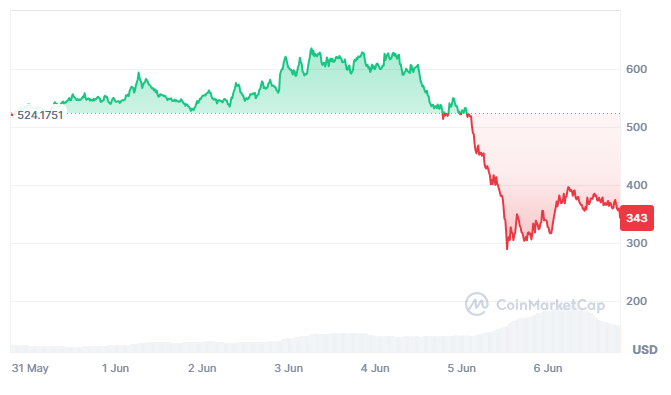
A significant security flaw in Zcash's Orchard privacy pool was disclosed by non-profit developer Shielded Labs, causing ZEC's price to drop 38% in 24 hours before a modest recovery. The vulnerability, discovered on May 29th by security researcher Taylor Hornby using Anthropic's Opus 4.8 AI model, could have allowed an attacker to create an unlimited supply of counterfeit ZEC tokens undetected. This event has intensified the privacy coin debate. In response, Hornby announced plans to audit Monero (XMR), a leading privacy-focused cryptocurrency that, unlike Zcash, defaults to hiding all transaction data. Hornby expressed confidence in finding vulnerabilities in such privacy coins. The disclosure has cast fresh security scrutiny on the sector.

After non-profit developer Shielded Labs revealed a serious weakness in the blockchain’s Orchard privacy pool, which could have jeopardized the integrity of the token supply, Zcash (ZEC) fell 38% in 24 hours, speeding up the drop. Recent trading for ZEC has been around $361, with a low of $290, and the price has made some modest recovery of around 8% in the last 24 hours as per data from CMC.
Fresh Security Scrutiny

On Thursday night, Shielded Labs released a comprehensive disclosure about X, exposing a security hole that, if used, might have enabled an attacker to secretly produce an infinite supply of fake ZEC tokens. Imagine someone sneaking into the Federal Reserve’s dollar printing machine and making off with a bunch of additional cash; the only difference is that not even the Fed would know it happened.

The flaw was found on May 29th by Taylor Hornby, a security expert hired by Shielded Labs in April 2026 to find protocol weaknesses before bad guys could. The Orchard circuit is the cryptographic scheme supporting Zcash’s most sophisticated privacy pool; Hornby performed a focused evaluation of it using Anthropic’s newly published Opus 4.8 AI model.

One of the tokens that security researcher Taylor Hornby plans to audit next is privacy coin Monero. Hornby utilized Anthropic’s Opus 4.8 AI model to discover a serious flaw in Zcash. Hornby said, “Absolutely!” when asked on X whether he could find vulnerabilities in private coins like Monero. Adding that, Monero will be put up to my list of things to audit.

Unlike Zcash, which gives users the option to be either visible or shielded, Monero (XMR) defaults to hiding transaction data and is one of the biggest privacy-focused cryptocurrencies.

Highlighted Crypto News Today:

Worldcoin Falls Terribly as Arthur Hayes Dumps WLD

TagsAltcoinMoneroZcash

Domande pertinenti

QWhat was the key event that triggered the drop in Zcash's price and sparked interest in auditing Monero?

AThe key event was the disclosure by Shielded Labs of a serious security flaw in Zcash's Orchard privacy pool, which could have allowed an attacker to secretly create an unlimited supply of fake ZEC tokens.

QWho discovered the critical vulnerability in Zcash's Orchard circuit, and what tool did they use?

AThe vulnerability was discovered by security expert Taylor Hornby, who was hired by Shielded Labs. He found the flaw using Anthropic's newly published Opus 4.8 AI model.

QHow did the disclosure of the Zcash flaw specifically impact its price (ZEC) in the short term?

AFollowing the disclosure, Zcash (ZEC) fell 38% within 24 hours, reaching a low of around $290. It later saw a modest recovery of about 8% in the subsequent 24 hours.

QWhat is the fundamental difference between Monero's (XMR) and Zcash's (ZEC) approach to privacy, as mentioned in the article?

AThe fundamental difference is that Monero defaults to hiding all transaction data by design, whereas Zcash gives users an option to choose between transparent (visible) or shielded (private) transactions.

QWhat is the next project that security researcher Taylor Hornby plans to audit, and what was his confident response regarding finding vulnerabilities in it?

ATaylor Hornby plans to audit the privacy coin Monero next. When asked on X if he could find vulnerabilities in privacy coins like Monero, he responded, 'Absolutely!'

Letture associate

7 Months After the Collapse of Huiwang, Southeast Asia's Escrow Platforms Undergo a Major Reshuffle

Following the collapse of Huione Pay—dubbed the "Alipay of Southeast Asia"—seven months ago, the region's underground financial guarantee platform sector is undergoing a significant reshuffle. This power vacuum has been swiftly filled by emerging platforms such as XinBi, Tiger/Navigator, JinBei (renamed JinBo), Dali/Tiancheng, and FullyLight. These platforms, operating largely via Telegram and offering services like escrow for illicit transactions, have absorbed the vast user base and markets left behind by Huione. While positioning themselves as "trust intermediaries," their primary clientele consists of networks involved in online scams, money laundering, illegal gambling, and even human trafficking. For instance, the Tiger/Navigator platform explicitly provides "escrow" services for kidnapping-for-ransom operations ("强押车交易"). Data underscores the immense scale: Huione alone processed over $103 billion in cryptocurrency payments and facilitated over $31 billion through its escrow market before its downfall, linking it to Cambodia's notorious Prince Group. Since its collapse, competitors have seen explosive growth. For example, the XinBi platform has accumulated over $1.6 billion in total USDT revenue, while platforms like NewPay, OkPay (under Dali), and FullyLight Wallet collectively processed over $4.8 billion in USDT in a single year. This ecosystem thrives in regions like Cambodia and Myanmar, where regulatory gaps allow these platforms to act as critical financial infrastructure for sprawling cybercrime industries, from scam compounds to online casinos. The article concludes that the moniker "Southeast Asian Alipay" is a misnomer, obscuring the platforms' fundamental role in enabling serious criminal enterprises rather than representing legitimate financial innovation.

Odaily星球日报20 min fa

7 Months After the Collapse of Huiwang, Southeast Asia's Escrow Platforms Undergo a Major Reshuffle

Odaily星球日报20 min fa

The Changing Landscape: What Are Crypto VCs Experiencing?

Title: The Shifting Landscape of Crypto Venture Capital The era of dedicated crypto venture capital funds is undergoing a significant transformation. Once essential for navigating the sector's complexity and high risk, these specialized funds are now facing an identity crisis as the market matures. This shift mirrors historical patterns in other specialized investment classes like cleantech and SPACs, where initial information advantages dissipate as technologies become mainstream and integrated into existing industry frameworks. The article argues that crypto is reaching a critical inflection point, transitioning from a "building phase" to an "integration phase." Major players like Stripe, BlackRock, and Visa now engage with crypto not for its novel mechanics but as a foundational financial infrastructure. Their needs—regulatory compliance, banking partnerships, distribution channels—align with traditional fintech, a domain easily understood by large, generalist funds like Sequoia and Founders Fund. This evolution creates a "barbell effect" within the VC landscape. On one end are massive, diversified platforms that can incorporate crypto as one vertical among many. On the other are small, nimble funds focused on niche, experimental projects. The middle ground—medium-sized dedicated crypto funds—is being squeezed out. Their typical fund size makes it impossible to generate sufficient returns solely from early-stage crypto bets, yet they cannot compete with giants for later-stage deals. Consequently, leading crypto-native firms like Paradigm and Framework Ventures are expanding into AI, robotics, and other sectors, driven partly by LP pressure for better returns amid a broader VC DPI crisis. Others, like Dragonfly and a16z, have narrowed their crypto focus predominantly to financial infrastructure like stablecoins, reframing the sector's core narrative. For crypto entrepreneurs, this consolidation presents challenges. While generalist funds offer larger checks and broader resources, crypto projects now compete fiercely with AI for attention and capital within these firms. Furthermore, the long-term, non-commercial foundational work that built the ecosystem—funded by dedicated crypto VCs—is less likely to attract generalist capital focused on direct returns. The conclusion is that "crypto investor" as a standalone category is becoming obsolete, akin to "internet investor." Crypto is becoming a baseline infrastructure layer. The future will see a barbell structure: large-scale growth financing handled by generalist funds, while pioneering, speculative projects are funded by small, specialized vehicles. The dedicated crypto funds of the 2017-2021 boom, which incubated core infrastructure, are giving way to this new, bifurcated reality.

Foresight News37 min fa

The Changing Landscape: What Are Crypto VCs Experiencing?

Foresight News37 min fa

As Consensus Accelerates, What Are Young Investors Betting On?

Title: As Consensus Forms Faster, What Are Young Investors Betting On? In the rapid evolution of tech investment, a new generation of young investors is navigating a landscape where AI, robotics, commercial aerospace, and quantum computing are advancing simultaneously. Traditional investment logic based on financial models is giving way to a need for deep technical understanding and the ability to act before industry consensus forms. An analysis of trends from the "WAIC FUTURE TECH" list of young investment leaders reveals key shifts in focus. The first major trend is the movement of AI from the digital screen into the physical world. Investment is shifting from large language models and chatbots towards embodied AI, robotics, AI hardware, and edge computing. While demonstrations generate excitement, the real challenge lies in achieving scalable, reliable, and cost-effective delivery in complex real-world environments like factories and logistics. Success depends not just on algorithms but on the integration of sensors, actuators, and control systems. Second, the competitive focus for large models is moving beyond raw capability toward building an "intelligence flywheel." The goal is to create self-reinforcing systems where user interaction generates data, improving the model, which in turn enhances the user experience and attracts more engagement. Companies that successfully embed AI into workflows to create these closed-loop systems can build lasting value that isn't easily erased by the next model upgrade. Third, facing a potential bottleneck in high-quality human-generated data, investors are looking at new underlying technologies. Reinforcement learning and self-play, as demonstrated by AlphaGo Zero, offer paths for AI to generate its own experience. Scientific foundation models, which aim to build general AI capabilities for fields like life sciences and materials discovery, represent a non-consensus direction that could unlock new frontiers of knowledge and data. Finally, in deep-tech areas like quantum computing, commercial aerospace, and space-based infrastructure, patient capital is essential. These fields have long, uncertain development and validation cycles involving complex engineering, supply chains, and regulations. Investment here requires a long-term view, focusing on foundational team capabilities and the eventual emergence of market demand, even if commercial returns are distant. Collectively, these trends illustrate how young investors are adapting to a new era. They are learning to make earlier, technically-informed judgments, balance hype with real-world viability, and provide the patient capital needed to build the deep-tech foundations of the future.

marsbit1 h fa

As Consensus Accelerates, What Are Young Investors Betting On?

marsbit1 h fa

Trading

Spot
活动图片





