YZi Labs Invests of Tens of Millions, CZ as Advisor: How to Earn Genius Points?

Odaily星球日报Pubblicato 2026-01-14Pubblicato ultima volta 2026-01-14

Introduzione

An article titled "YZi Labs Invests Tens of Millions, CZ as Advisor: How to Earn Genius Points?" reports on a major investment in the decentralized exchange Genius. YZi Labs has invested tens of millions of dollars, and former Binance CEO CZ will serve as an advisor. Genius is a privacy-focused DEX supporting spot, perpetual contracts, and copy trading across over 10 blockchains, including BNB Chain and Solana. It aims to offer a CEX-like experience with self-custody and has processed over $60 million in testnet volume. CZ and Genius's team clarified that Genius is not a direct competitor to Aster, another YZi Labs portfolio project, but rather a trading terminal that enables cross-chain token access with privacy features. The article provides a step-by-step guide for users to interact with the platform and earn GP points through trading and referrals. A recommended "low-cost points strategy" involves trading the USDC-USDT pair to minimize volatility impact, executing larger trades to reduce gas fee ratios, and spinning a daily bonus wheel after reaching $10,000 in trading volume. Users can also earn additional rewards through referrals and social tasks. The platform is currently in a test phase, with a public testnet for its privacy protocol planned for Q2 2026.

Original | Odaily Planet Daily (@OdailyChina)

Author | Asher (@Asher_ 0210)
Last night, a blockbuster news rocked the community—YZi Labs has invested "tens of millions of dollars" in DEX Genius, and CZ will also personally join as an advisor.

Odaily Planet Daily is here to give you the first look at Genius, a step-by-step guide to interacting with Genius, and the current interaction strategy based on personal testing.

Project Introduction
Genius is a privacy-centric decentralized exchange (DEX) offering spot, perpetual contracts, and copy trading, supporting over 10 public chains including BNB Chain and Solana. Its goal is to become an on-chain alternative to Binance—bringing the speed, liquidity, and privacy experience of a CEX on-chain while remaining fully self-custodial and non-custodial (users hold their private keys). The platform has already processed over $60 million in trading volume during its testing phase and plans to launch a public test of its privacy protocol in Q2 2026. Back in October 2024, Genius announced the completion of a $6 million seed funding round led by CMCC Global, with participation from Cadenza Ventures, AVA Labs, Arca, Flow Traders, and other institutions.

In response to the community's view that "YZi Labs' investment in Genius is bearish for Aster," CZ posted on X, stating, "Genius is a trading terminal connected to exchanges, not a competitor to Aster."

Additionally, Genius's CMO Ryan also addressed a similar question in the community—"What's the difference between Aster and Genius? Why would YZi Labs invest in another project doing Perp DEX?" Ryan stated, "I think both are important; Aster is a very important perpetual exchange. I believe YZi Labs' motivation for investing in Genius is to enable everyone to access any token on any chain (and soon, privately)."
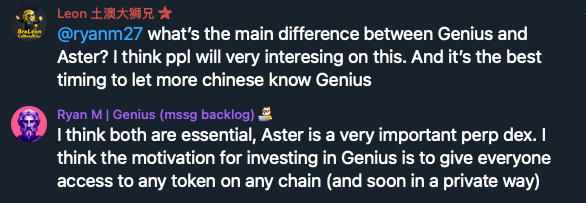
Genius CMO Ryan discusses the relationship between Aster and Genius

It's clear that both CZ and the Genius team believe Genius and Aster have different positioning and are not in direct competition.

Step-by-Step Guide

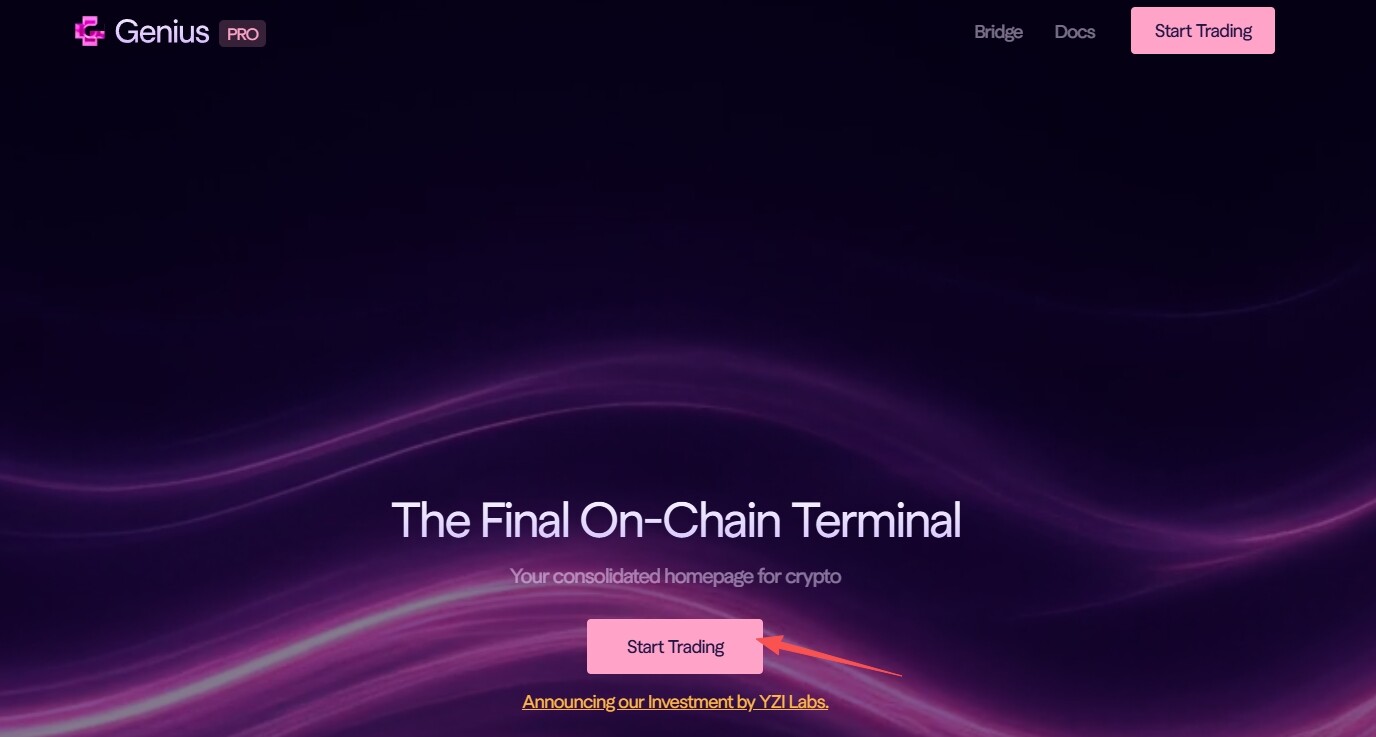
STEP 1. Go to the official website (Link: https://www.tradegenius.com/ref/NY8SYH). Using this referral link gives you 500 GP points. Click "Start Trading," then click "Sign In" at the top to log in with your wallet.
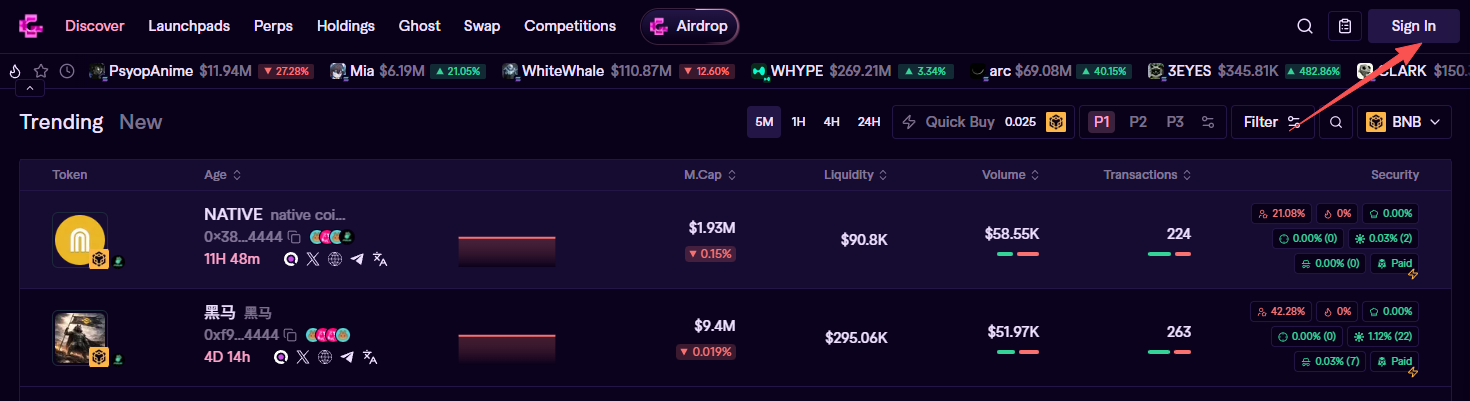
STEP 2. Click on "Airdrop" at the top to see your current GP points and personal referral link.
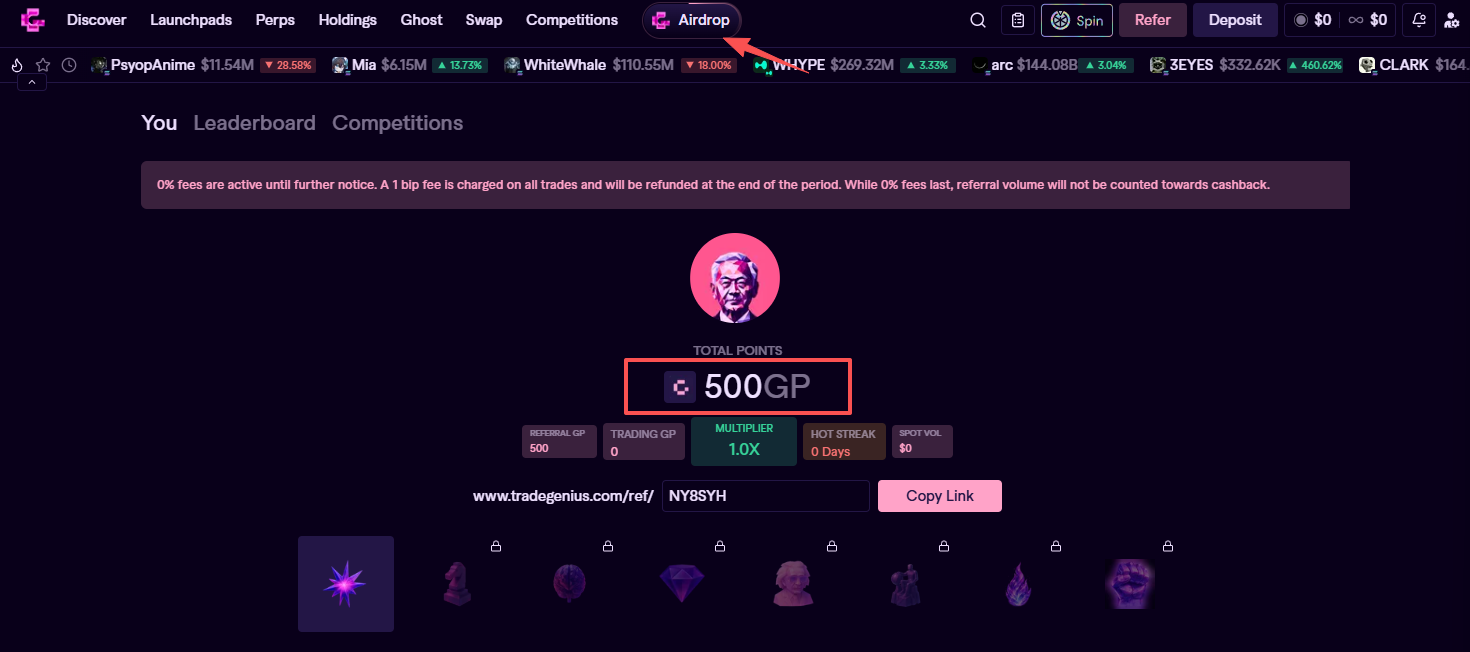
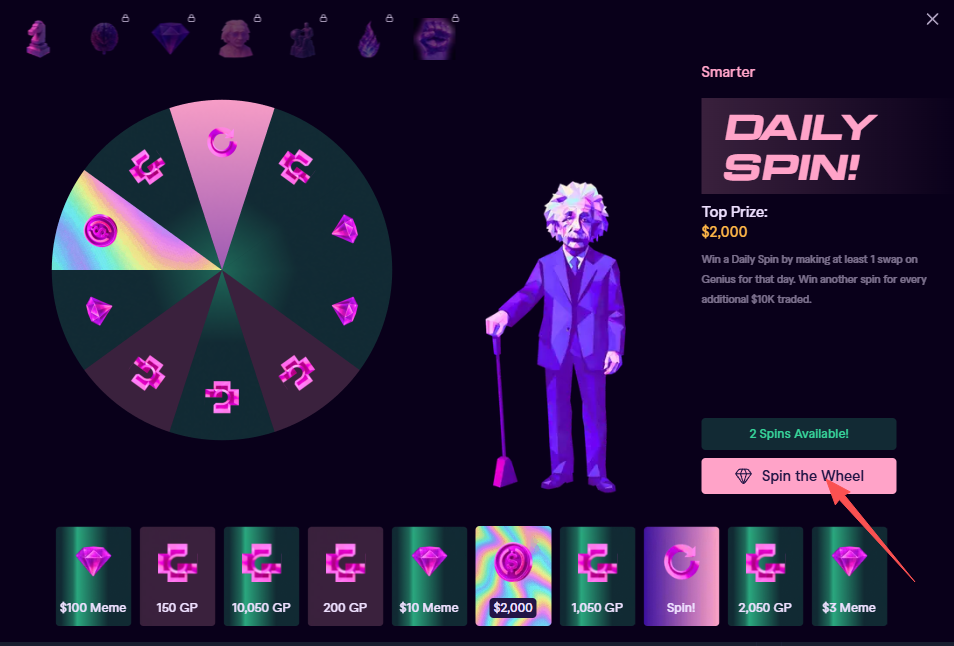
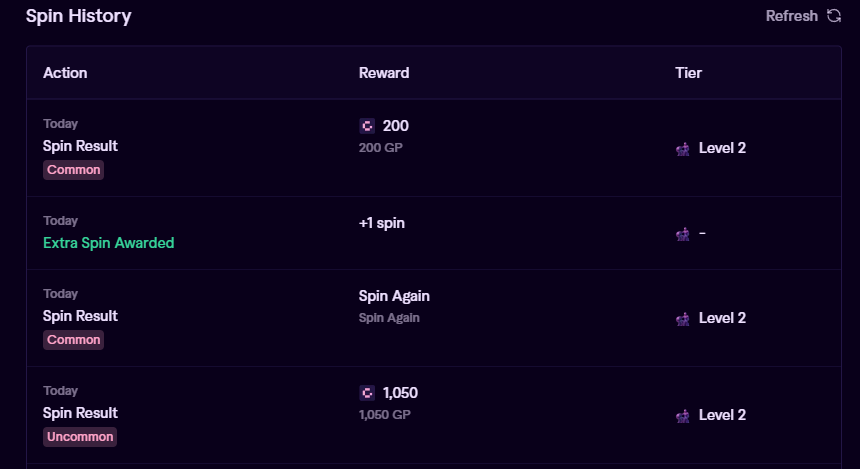
STEP 3. Under the "Airdrop" section, first is "Points." Accumulate $10,000 in trading volume to get 1200 GP points. After exceeding $10,000, every additional $1000 in trading volume earns 200 GP points. Additionally, trading at least once daily gives you one free spin on the wheel. Every additional $10,000 in trading volume grants an extra spin, with no upper limit.
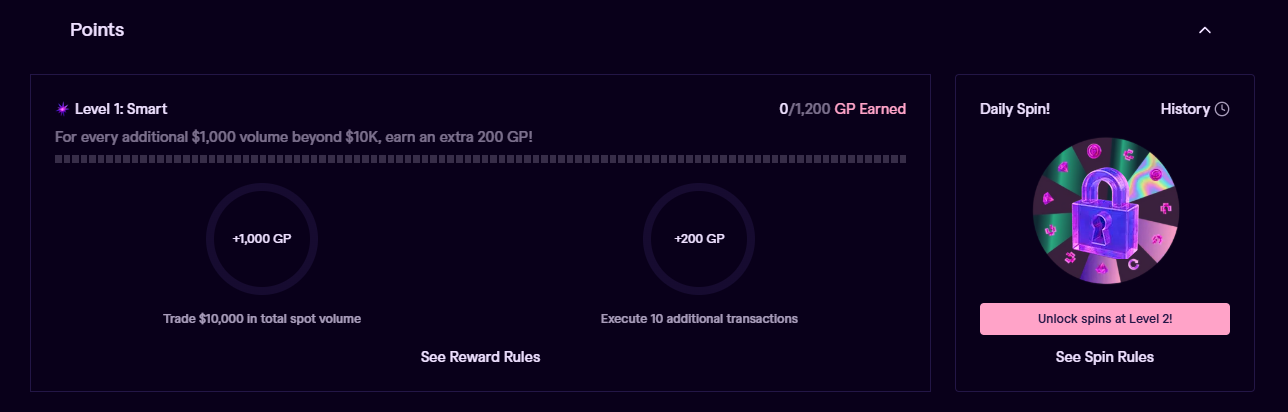
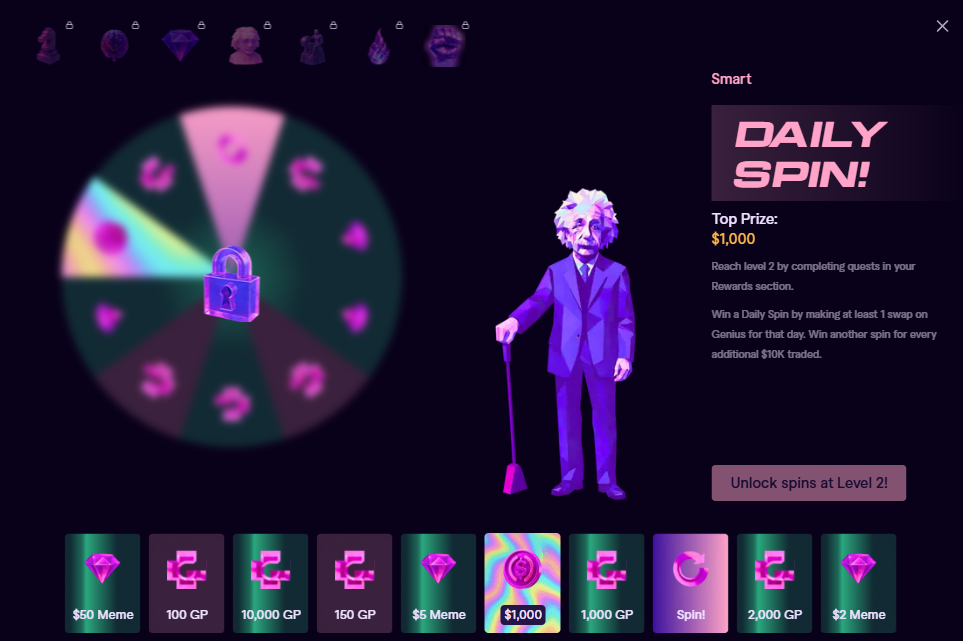
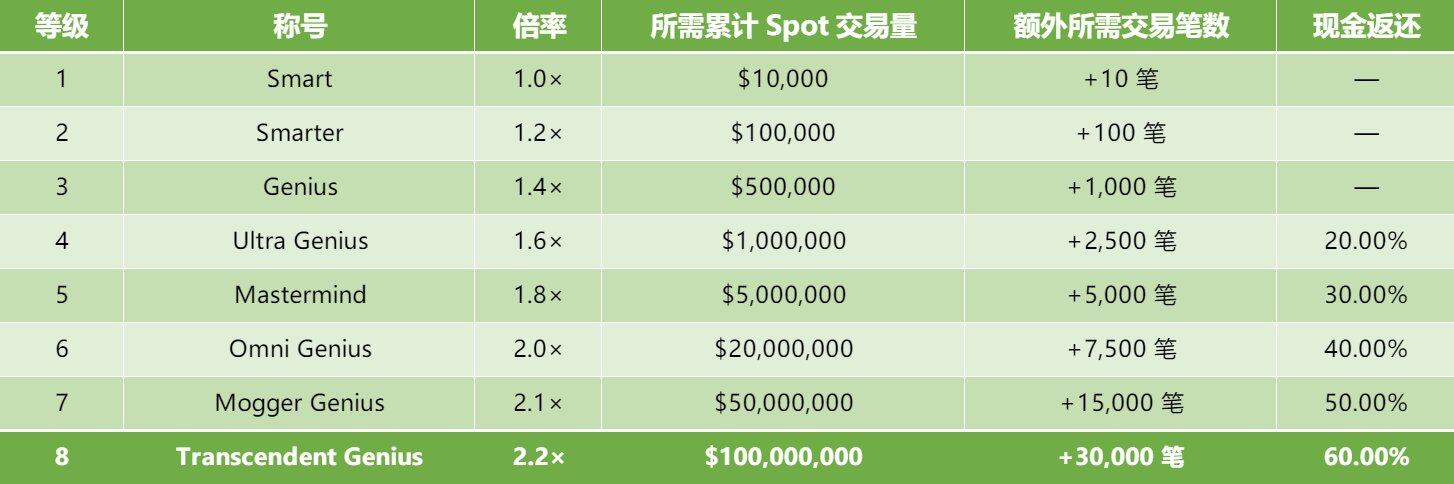
Other rules for earning points through trading:

  • Users earn 1 GP point for every $100 in spot trading volume / $1000 in perpetual contract trading volume;
  • Trade consecutively for 7 days to earn a win streak multiplier (resets after one day without trading);
  • Base multiplier and win streak multiplier apply to user's spot and perpetual contract trading (referral points not included).
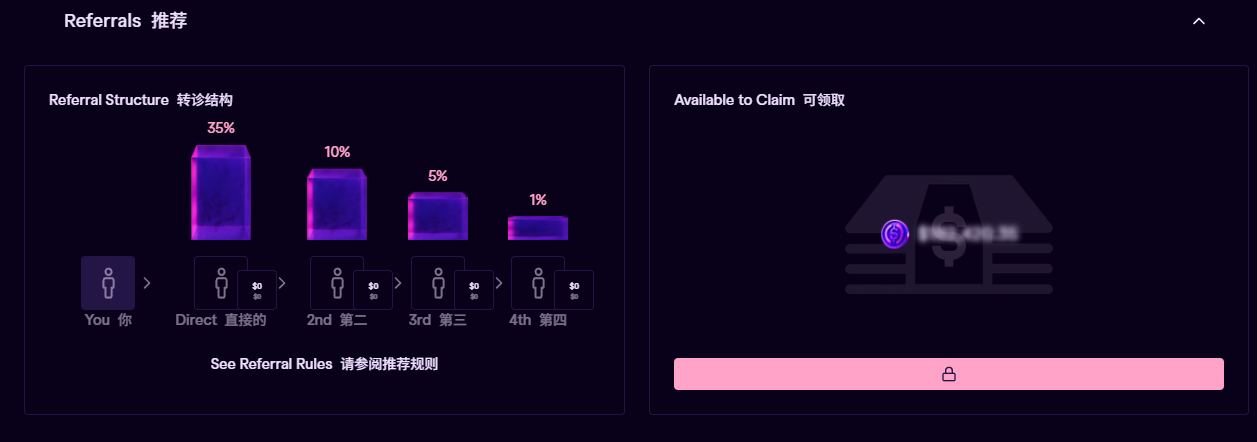
STEP 4. Under the "Airdrop" section, next is "Referrals." Invite friends to earn more GP points.
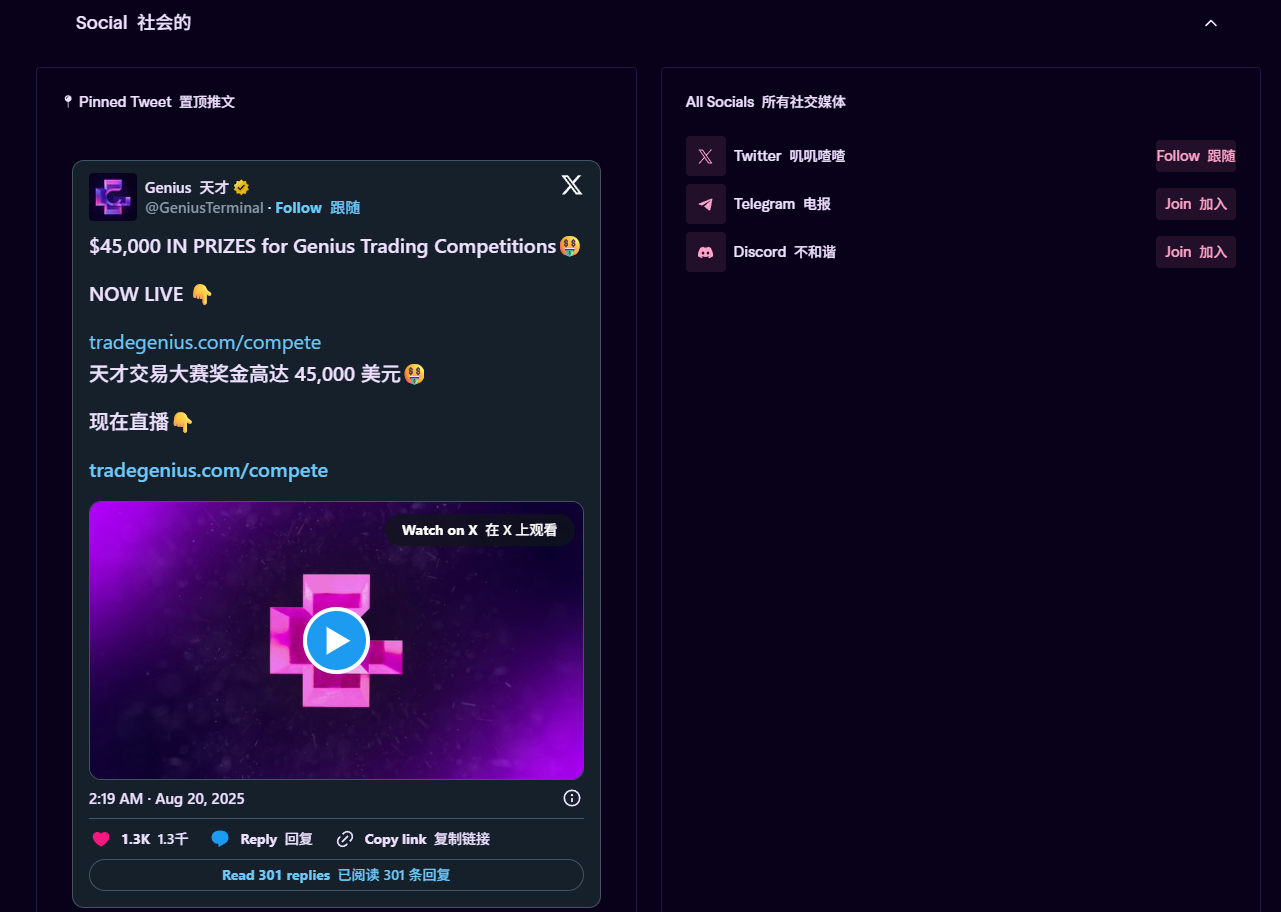
STEP 5. Under the "Airdrop" section, lastly is "Social" (the "Token Rewards" section is not yet open, skip for now), which contains official social media information.
STEP 6. Click on "Deposit" at the top. Supports deposits of EVM, Solana, and SUI assets. Official recommendation is to send ETH or USDC.

Current "Basic Income Points Earning" Strategy Sharing

Based on actual interaction, I've summarized a "basic income points earning" strategy. The specific operational思路 is as follows:

1、To minimize wear and tear from token price fluctuations, choose spot trading for USDC-USDT.
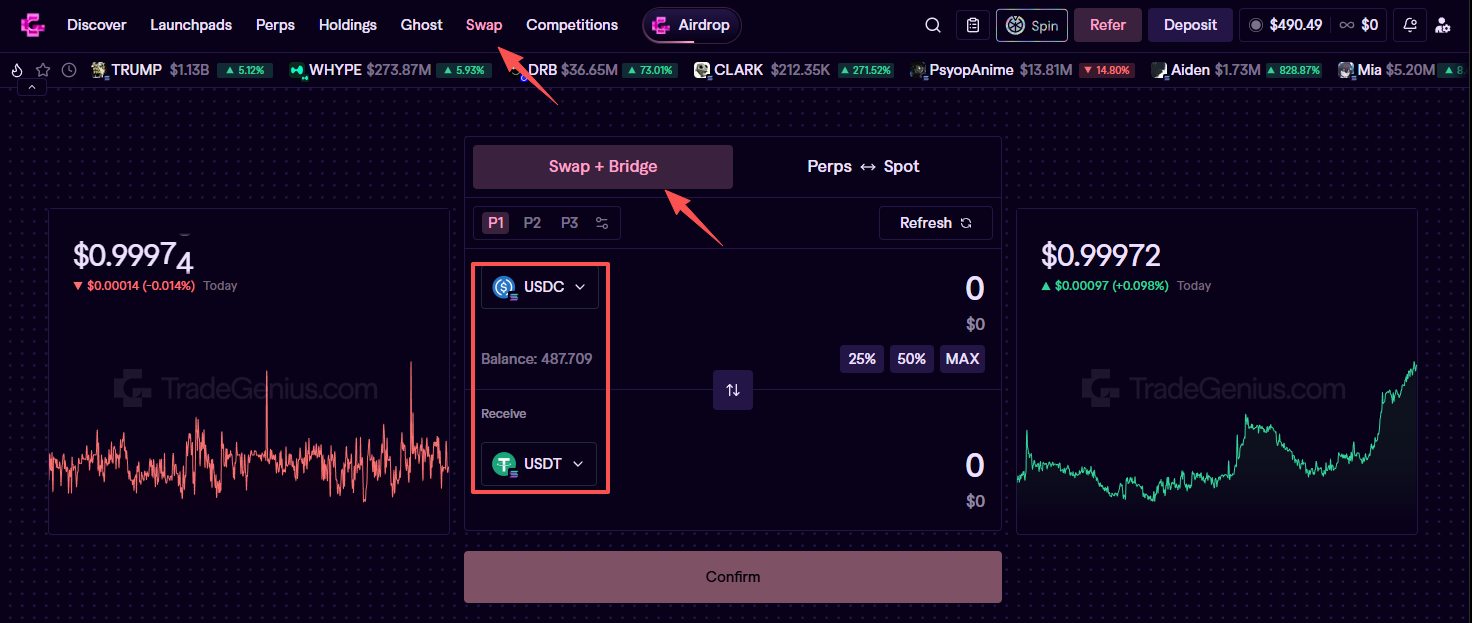
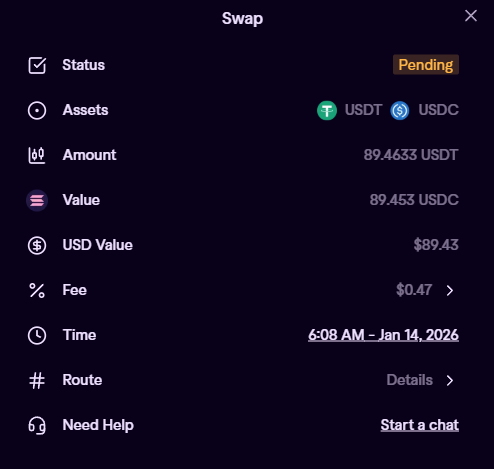
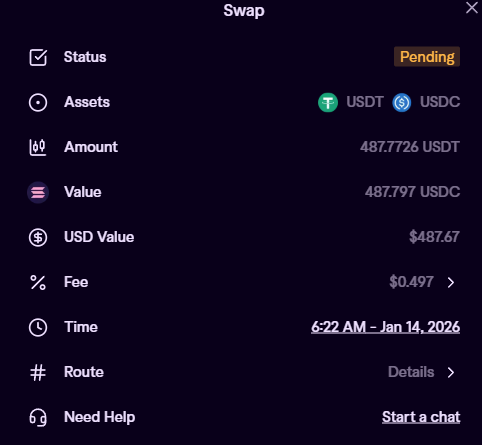
2、Try to make the single transaction amount larger. The Gas fee paid for a test transaction of $400 and $100 is almost the same, as shown below.
3、Once you unlock the wheel spin by reaching $10,000 in trading volume, just make one trade per day to qualify for the spin. There's no need to "frantically increase trading volume."
Domande pertinenti

QWhat is Genius and what is its primary focus?

AGenius is a privacy-focused decentralized exchange (DEX) that offers spot trading, perpetual contracts, and copy trading. It supports over 10 blockchains, including BNB Chain and Solana, and aims to provide a chain-based alternative to centralized exchanges like Binance by combining CEX-like speed, liquidity, and privacy with self-custody and non-custodial features.

QWhy did CZ and YZi Labs invest in Genius, and how is it different from Aster?

ACZ and YZi Labs invested in Genius because it is a trading terminal that connects to exchanges, not a direct competitor to Aster. Genius focuses on enabling access to any token on any chain, soon with privacy features, while Aster is primarily a perpetual contract exchange. The investments and advisory role highlight the complementary rather than competitive nature of the two projects.

QHow can users earn GP points on the Genius platform?

AUsers can earn GP points by trading: 1 GP point for every $100 in spot trading volume or $1000 in perpetual contract volume. Additional points come from a 1200 GP bonus for reaching $10,000 in cumulative trading volume, with 200 GP for every additional $1,000. Daily trading grants a spin-the-wheel chance, and more spins are earned per $10,000 in trading. Inviting friends via a personal link also rewards points.

QWhat is the recommended 'low-cost points earning' strategy mentioned in the article?

AThe recommended strategy to minimize costs while earning points is to: 1) Trade the USDC-USDT pair to reduce price volatility wear. 2) Execute larger single transactions (e.g., $400 instead of $100) to optimize gas fees, which are similar for both amounts. 3) Reach $10,000 in trading to unlock the daily spin-the-wheel feature, then only trade once daily to maintain the spin opportunity without excessive volume.

QWhat are the steps to start using Genius platform and earn the sign-up bonus?

ATo start using Genius and earn the 500 GP sign-up bonus: 1) Visit the official website via an invite link (e.g., https://www.tradegenius.com/ref/NY8SYH). 2) Click 'Start Trading' and then 'Sign In' to connect a wallet. 3) Navigate to the 'Airdrop' section to view points and your referral link. 4) Deposit assets like ETH or USDC via supported chains (EVM, Solana, SUI). 5) Begin trading to accumulate points and bonuses.

Letture associate

Dialogue with Jia Hang | Looking Back at Two Decades of Chinese Payment Going Global

**Summary: A Conversation with Jia Hang on Two Decades of China's Payment Globalization** Jia Hang, a veteran with over twenty years in payments, reflects on China's attempts to build a global payment network through three key phases: UnionPay (card networks), Alipay+ (digital wallets), and now, stablecoins. His journey began at UnionPay International, aiming to establish China's card network abroad. While successful in following Chinese tourists ("where Chinese go, UnionPay goes"), it struggled to achieve true global scale. The core lesson: card networks like Visa/Mastercard's unassailable advantage isn't just technical standards, but their deeply entrenched **governance and profit-sharing models** that create powerful network effects. Competing as the "same species" is nearly impossible. At Ant Group, he led Alipay+, a strategy to bypass card networks by interconnecting local e-wallets worldwide. While innovative, it faced a similar ceiling. Mobile QR payments and card swipes were essentially **the same species competing for the same pie**, lacking a disruptive value proposition for users or a sustainable new incentive model to replace the card networks' established flywheel. Today, at Singapore's DCS, Jia focuses on stablecoin-based payments. He argues stablecoins represent a fundamental shift. They are not competing with Visa for consumer payments but challenging the **traditional banking and account system for value movement**. Products like "U Cards" (stablecoin-linked payment cards) are transitional, leveraging existing card networks for acceptance while building new rails. The real potential lies in stablecoins enabling seamless, low-cost global value transfer, potentially reorganizing the financial infrastructure around **accounts rather than cards**. Jia believes stablecoin adoption for local retail payments, cross-border transactions, and as high-yield savings vehicles is becoming irreversible. This could gradually reduce reliance on traditional fiat channels, especially in regions with weak currencies or capital controls. The quest for the "next global payment network" continues, now centered on whether stablecoins can successfully bridge Web2 and Web3, establish new governance, and create compelling user value beyond mere cost reduction.

marsbit7 min fa

Dialogue with Jia Hang | Looking Back at Two Decades of Chinese Payment Going Global

marsbit7 min fa

Circle's Stock Price Plunges 76%, Hong Kong Dollar Stablecoin Set to Launch Within Two Weeks

Circle's stock price has plunged approximately 76% from its 2023 peak, reflecting a major market revaluation. Despite this, Circle President Heath Tarbert emphasized the company's focus on long-term execution and its dominant position with USDC's $73 billion circulation across 34 blockchains. The competitive landscape is intensifying. A new consortium-backed stablecoin, Open USD, is attempting to challenge incumbents by sharing reserve yields with partners. More significantly, Visa's new stablecoin platform, initially supporting Open USD while also being compatible with USDC, could erode Circle's network effects. In response, Circle is expanding into real-world payments through partnerships like the one with Japan's JCB. Separately, Tether (USDT) faces a two-year compliance window under new U.S. regulations, requiring it to adjust its reserve composition away from assets like Bitcoin and loans towards cash and U.S. Treasuries. Meanwhile, in Hong Kong, Standard Chartered-backed fintech firm Dian Dian is poised to launch a licensed HKD-pegged stablecoin (HKDAP), moving the industry into a phase where the real test is integrating licensed stablecoins into actual payment flows and corporate treasury systems. The sharp decline in Circle's stock underscores a broader shift: the stablecoin market is moving from a winner-takes-all dynamic to a multi-player competitive arena where execution, compliance, and real-world utility are becoming paramount.

marsbit8 min fa

Circle's Stock Price Plunges 76%, Hong Kong Dollar Stablecoin Set to Launch Within Two Weeks

marsbit8 min fa

Amidst Capital's Encirclement, Decentralization is the Sole Defense for Public Blockchains

In a landscape dominated by power and profit motives, the author argues that decentralization is not merely one desirable feature among many in blockchain design—it is the singular, non-negotiable defense against corporate and capital capture. The article adopts a Machiavellian, realist perspective on human institutions, positing that businesses will inevitably attempt to co-opt any valuable network to protect their profits and dominance. While external attacks like 51% forks are often discussed, the greater existential risk is internal capture—the gradual erosion of a protocol’s neutrality by vested interests, as seen historically with platforms like Visa and Google. The piece critiques permissioned chains, highly centralized “permissionless” layer-1s, and layer-2s without sufficient decentralization (e.g., single sequencers) as inherently vulnerable. These compromised systems, promoted by established financial players, are framed as delaying tactics to stifle truly open networks that threaten existing high-fee, inefficient business models. Real-world examples, such as closed enterprise consortiums that exclude competitors, illustrate how such systems cement oligopolies rather than foster innovation. The author concludes that while decentralized protocols like Ethereum are imperfect and costly to operate, they represent the only viable long-term equilibrium. In a market where value naturally flows to the most secure and neutral settlement layer, only maximally decentralized public blockchains can resist being subsumed by capital and powerful incumbents.

Foresight News18 min fa

Amidst Capital's Encirclement, Decentralization is the Sole Defense for Public Blockchains

Foresight News18 min fa

Who Decides the Rules of Bitcoin? BIP-110 Ignites Governance Debate

Bitcoin's governance is once again at the center of a heated debate, this time ignited by BIP-110, the "Reduced Data Temporary Softfork." This proposal aims to curb non-monetary data (like inscriptions and Runes) by introducing seven new consensus-layer restrictions over a year, such as limiting new output scripts to 34 bytes and restoring the OP_RETURN cap to 83 bytes. The controversy stems from BIP-110's fundamental shift: it moves the battle against "spam" from node relay and miner policies to the consensus layer, rendering currently valid transactions invalid. Supporters, arguing that default policy governance has failed (highlighted by Bitcoin Core v30's relaxation of OP_RETURN limits), see this as necessary to protect node resources and Bitcoin's monetary focus. Opponents, led by figures like Michael Saylor and Adam Back, warn it dangerously centralizes governance. Saylor listed 110 reasons against it, criticizing its low 55% miner activation threshold and potential for chain splits. Back emphasized Bitcoin's "permissionless" ethos, arguing no single group should impose value judgments via consensus rules. Further complicating matters, technical critiques suggest BIP-110 may be technically circumventable, and a "BlockSlop" vulnerability in its upgrade path poses a consensus risk. The debate has drawn in diverse stakeholders: miners (with pools like Ocean signaling support and Foundry polling clients), node operators (like Bitcoin Knots), and new players like corporate treasury holder MicroStrategy (Saylor), whose market influence adds a novel dimension. Ultimately, BIP-110 acts as a governance stress test, exposing the unresolved question: who decides Bitcoin's rules? It pits the authority of miners, node operators, developers, and capital holders against each other, with each side claiming to defend Bitcoin's core principles of neutrality and security.

marsbit35 min fa

Who Decides the Rules of Bitcoin? BIP-110 Ignites Governance Debate

marsbit35 min fa

Trading

Spot
活动图片