You Can Turn Everything into a Meme, But Cherish This Cathedral

marsbitPubblicato 2026-01-28Pubblicato ultima volta 2026-01-28

Introduzione

The article "You Can Turn Everything into a Meme, But Cherish This Cathedral" reflects on the crisis of values in the crypto industry, contrasting its original vision as a "cathedral" of innovation and idealism with its current state as a speculative "casino." It begins with the story of Peter Steinberger, the developer behind the open-source AI project Clawd bot, who was harassed by crypto speculators after they launched a meme token (CLAWD) without his consent and blamed him for its crash. The piece traces the industry’s shift from its early ideals—exemplified by Dogecoin’s community-driven generosity and the constructive ethos of DeFi Summer—to the speculative frenzy fueled by pandemic-era liquidity. This transition enabled the rise of "the tyranny of the mob," where communities driven by financial gain rather than shared values began to target creators, including Dogecoin’s Billy Markus and Ethereum’s Vitalik Buterin, who faced moral coercion and harassment. In 2025, 11.6 million crypto projects failed, highlighting the scale of speculative abuse and the industry’s meme-driven degradation. This culture harms builders, distorts leadership, deters serious investment, and invites harsh regulatory scrutiny. The article concludes by urging a return to the original mission of crypto—building a fair, decentralized future—before the echoes of casino culture drown out the cathedral’s bells for good.

Not long ago, I read an open letter from IOSG founder Jocy to China's Crypto OGs. In the letter, Jocy quoted a saying from Warren Buffett: "For the next 100 years, ensure the cathedral is not swallowed by the casino."

Jocy used this metaphor to describe the dilemma of the crypto industry: on one side is the grand cathedral built with code and ideals; on the other is a huge casino filled with speculation and hype.

Just days after this letter was sent, a developer named Peter Steinberger saw his open-source AI project, Clawd bot, which he developed in his spare time, go viral overnight.

But on the very day the project exploded in popularity, a group of cryptocurrency speculators, without Peter's knowledge, quickly issued a Meme coin named CLAWD, whose market value was once pumped to $16 million. Subsequently, Peter posted on Twitter stating that he would absolutely not issue any cryptocurrency and would not participate in any meme coin, and requested that "Crypto Folks" stop harassing him.

The speculators believed Peter's statements caused the coin's price to crash. They took over his GitHub account during a project rename process and launched a frenzied online siege and personal harassment against him, demanding that Peter take responsibility for the scam they themselves had created.
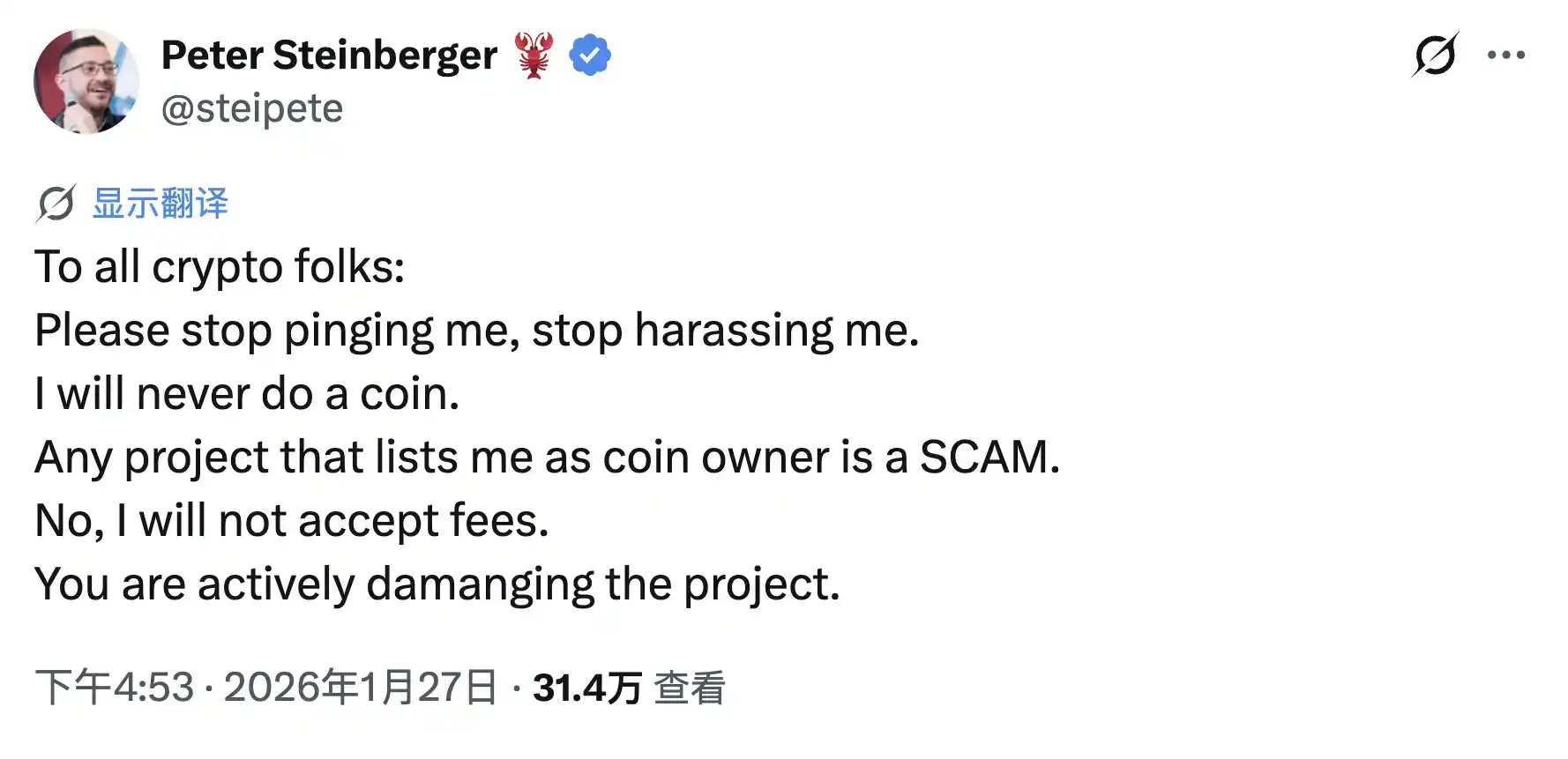
This was probably the moment in recent times when I least wanted to admit that I am a crypto industry practitioner.

The entire crypto industry is experiencing a great collapse. The prosperity of the casino not only fails to give back to the cathedral but is actively destroying those who try to build it.

From 2009 when Satoshi Nakamoto mined Bitcoin's genesis block to 2026—these seventeen years—what exactly happened in the crypto industry? How was that grand cathedral built with code and ideals step by step transformed into a casino filled with the sounds of dice and wails?

The Bells of the Cathedral

To answer this question, let's go back to the very beginning, back to that era when the bells were clear.

For a long time after Bitcoin's birth, the mainstream narrative of this industry was about building. Early participants were mostly cypherpunks, libertarians, and tech geeks. They were fascinated by the decentralized utopia depicted by Satoshi Nakamoto and tried to add bricks and tiles to this cathedral with lines of code.

Even the industry's most famous Memecoin, Dogecoin, initially shone with idealistic brilliance.

In December 2013, two software engineers, Billy Markus and Jackson Palmer, working at IBM and Adobe respectively, decided to create an "absurd" cryptocurrency to satirize the increasingly intense speculation in cryptocurrencies at the time. Markus slightly modified Bitcoin's code, changed the font to a comical comic style, and replaced Bitcoin's icon with a Shiba Inu meme that was popular on the internet at the time. Dogecoin was born.

"It was born just for a joke," Markus recalled years later in an open letter. "We had no expectations or plans."

But this joke unexpectedly gave birth to one of the most unique communities in the crypto world. Early Dogecoin players didn't care about price fluctuations; they were passionate about tipping culture, using Dogecoin worth less than a cent to like their favorite content on social media. They used this almost free method to transmit happiness, kindness, and creativity.

In 2014, they raised $30,000 worth of Dogecoin for the Jamaican bobsled team, which couldn't afford the fees, helping them compete in the Sochi Winter Olympics; they raised funds to build wells in water-scarce areas of Kenya; they also sponsored a NASCAR driver named Josh Wise, letting a car emblazoned with the Shiba Inu head race in America's most popular motorsport event.

"Happiness, kindness, learning, giving, empathy, fun, community, inspiration, creativity, generosity, silliness, and absurdity," Markus defined the true value of Dogecoin in his open letter. "If the community embodies these things, that is the true value."

This is one of the most moving profiles of the cathedral era. In that era, people believed that the power of consensus could turn a joke into a force for good.

This enthusiasm for building reached its peak during the DeFi Summer of 2020. Ethereum builders used smart contracts to construct a permissionless, trustless decentralized financial world. From the decentralized exchange Uniswap to lending protocols like Compound and Aave, financial applications were built like Lego bricks. The entire crypto world's Total Value Locked (TVL) soared from less than $700 million to $117.6 billion in just one year. A new financial paradigm was rising on the horizon.

Until 2021, the flavor began to change. That year, under the impact of the COVID-19 pandemic, global central banks launched unprecedented money-printing sprees, with the US alone rolling out a $5 trillion economic stimulus plan. Trillions in hot money flooded the market, searching for any asset to speculate on. Cryptocurrency became the wildest main course in this liquidity feast.

Bitcoin's price rose 788% in a year, Ethereum rose 1264%. According to surveys, American young adults aged 25 to 34 invested half of their stimulus checks into the cryptocurrency and stock markets.

Money had never been so cheap; the dream of getting rich overnight had never felt so real.

The bells of the cathedral were gradually drowned out by the sound of dice rolling in the casino.

The Tyranny of the Mob

French social psychologist Gustave Le Bon made a surgically precise assertion in his book "The Crowd:"

"As part of a group, an individual ceases to be responsible for his actions. At this point, everyone reveals instincts that would be restrained when alone.... The crowd is impulsive, fickle, and irritable. It is entirely dominated by unconscious motives."

In the crypto world after 2021, when communities were no longer united by shared vision and values but merely bound by the fragile interest of shared holdings, "community-driven" quickly degenerated into "the tyranny of the mob."

The first to be sacrificed was the spiritual totem of Dogecoin, its creator Billy Markus.

As Dogecoin was hyped up hundreds or thousands of times during the 2021 frenzy, Markus's social media inbox was flooded with frantic private messages. People desperately demanded that he "do something" to make their Dogecoin more valuable.

They didn't care that Markus had already sold all his Dogecoin in 2015 after being laid off, getting only a used Honda in return; they didn't care that Markus's mother was about to lose her house because she couldn't pay the mortgage.
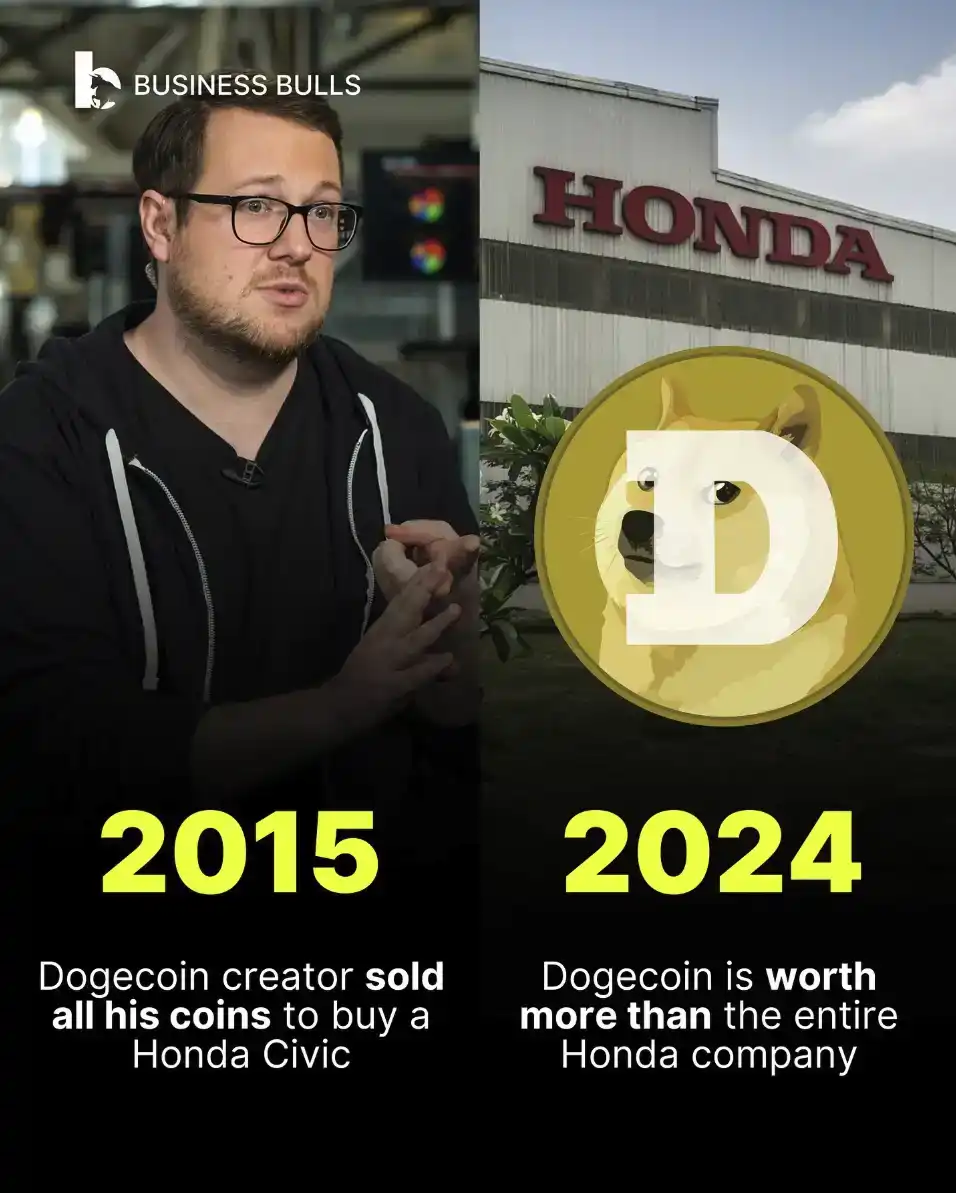
They only cared about themselves.

"When I see pump-and-dumps, greed, scams, and these things," Markus wrote in his open letter, "I'm not angry, just disappointed."

If the attack on Markus was just the prelude to this tyranny, then the siege of Vitalik Buterin (V神) pushed this farce to its first climax.

In May 2021, SHIB, without any communication, directly sent 50% of the project's total token supply to V神's public wallet address, nominally worth up to $8 billion at the time. Their calculation was very shrewd: V神 was the公认的 "god" of the crypto world. As long as he didn't sell, it would provide the strongest credit endorsement for SHIB; if he sold, a large number of tokens would be burned, which was also bullish.

This was a carefully designed moral绑架. They placed V神 in a dilemma: no matter what he chose, it seemed he could only serve the interests of the speculators.

But V神 used the most resolute method to reject this献祭. He donated $1.3 billion worth of SHIB to the India COVID-19 relief fund, burned most of the remaining tokens, sold a large amount of the animal meme coins he received as "donations," and made real donations to charitable organizations.

He was like the head of a household cleaning house, trying to use一次次砸盘 to warn those信徒沉迷于 Meme fever. From 2021 to 2025, he多次抛售和捐赠收到的 Meme 币, turning them into animal welfare funds, biotech research funding, and disaster relief funds. He even publicly appealed multiple times: "I hope meme coin creators will donate directly to charity instead of sending coins to me."

But his resistance seemed so powerless in the face of collective speculative desire. The信徒 quickly found new explanations for his actions: "V神 is helping us burn tokens, this is bullish!" "V神 is doing marketing, he actually supports us!"

In the group logic described in "The Crowd," any fact can be twisted to serve the collective emotion and fantasy.

If the献祭 of V神 still had a touch of religious absurdity, then by 2026, when the iron fist of tyranny struck Clawd bot developer Peter Steinberger, it had evolved into a赤裸裸的绑架.

Speculators no longer needed the endorsement of a god; they could directly "create" a god and tie him to their chariot. When Peter refused to endorse the CLAWD scam they issued, he transformed from a追捧的英雄 into a叛徒 that must be eliminated. Account theft, verbal attacks, private message harassment... all means were used to force him to comply.

In the name of community, they practiced tyranny, with the K-line as their only program.

When an industry's community degenerates from a collaborative network based on common ideals into a暴力机器 based on common仓位, how large a scale of disaster can it create?

11.6 Million Bullets

The answer is: a collectively suicidal prosperity.

According to the annual report released by crypto data analysis company CoinGecko, in 2025, the crypto world created 11.9 million new tokens. This means that on average, over 32,000 new "assets" were born every single day. Correspondingly, another set of data shows that in the same year, 11.6 million crypto projects died.

For comparison, at the peak of the 2021 bull market, the number of failed projects that year was 2,584. In four years, this number grew by 4,489 times.

When token issuance becomes an industry, what we get is not value diversity but garbage on a规模化 scale.

This disaster occurred due to the combined effects of technological progress, macro liquidity, and human greed. On one hand,新一代公链 like Solana increased transaction speed by 100 times while reducing costs by 1000 times, and the emergence of发币工具 like pump.fun, which cost a few dollars, lowered the barrier to issuing a token from creating a blockchain to a click of a mouse. Technological progress意外地 provided the perfect breeding ground for the规模化 of disaster.

On the other hand, the unprecedented global money printing of 2020-2021彻底改变了 market risk appetite. When money became less valuable, when traditional value investment returns were pitifully low, people began疯狂追逐波动性. Whether an asset had value" no longer mattered; what mattered was whether it could provide enough volatility to satisfy the desire for快速致富.

Thus, we witnessed the most absurd scene in the crypto world: the entire industry争先恐后地 Meme化.

Those social applications claiming to颠覆 Web2, those blockchain games宣称要构建元宇宙, those star projects with the光环 of Layer2 scaling solutions—the sole value of their tokens was to be bought and sold by retail investors on the secondary market.

When a Layer2 token is functionally no different from a Shiba Inu coin, we must admit that within the casino, everything is a Meme.

These 11.6 million zeroed-out tokens are like 11.6 million bullets shot into the future of the crypto world. Each one宣告 to the world that this industry is not worthy of trust. And when an industry's incentive mechanism completely tilts towards speculation rather than innovation, what price will those who truly want to build the cathedral pay?

The Death of the Builders

They are experiencing a triple death.

The first death is the social death of body and spirit.

The experience of Clawd bot developer Peter Steinberger is just one example of the plight of countless builders. When a developer invests months or even years of effort to create a truly valuable, popular product, what he might receive is not flowers and applause but a group of sharks smelling blood.

They turn your project, your name, your reputation into chips in their casino. If you comply, you become an accomplice to the scam; if you resist, you become an enemy that must be eliminated.

The second death is the偶像死亡 of the spiritual leader.

V神's resistance is a Quixotic tragedy. He tried to use personal strength to fight against the sinking of an entire industry. He sold repeatedly, donated repeatedly, appealed publicly repeatedly, but in return received only the mockery of the mob and intensified绑架.

When the善举 of an industry's spiritual leader, practiced personally, is only interpreted as bullish by gamblers, the industry loses its last shred of moral covering.

In this偶像的黄昏, the lighthouse of spirit is彻底熄灭.

The third death is the资本死亡 of top-level design.

When the casino image of Meme coins becomes the most distinct label of the entire industry, those smart money试图进行长期价值投资 also begin to hesitate. In 2025, Eddy Lazzarin, Chief Technology Officer of the top crypto VC a16z crypto, known for its willingness to bet on the future, publicly stated on social media: "Meme coins are damaging the long-term vision of many builders. It looks at best like a risky casino."

This is not just a complaint from an executive; it is a dangerous signal. It means that the industry's top designers are losing confidence in the future. When capital is no longer willing to provide funds for cathedral projects that require long-term investment but only chases short, flat, fast casino games, the source of innovation is彻底切断.

More致命的是, the泛滥 of Meme coins provides the most perfect ammunition for global regulators. It labels the entire industry with tags of fraud, money laundering, and high-risk speculation, causing projects and enterprises that have worked for years on compliance to suffer unjustly. In 2025, class-action lawsuits against platforms like pump.fun have already begun citing the US "RICO Act"—a law originally used to fight the mafia.

We once looked up at the stars, dreaming that code could change the world; now we are stuck in the mire, searching for the next 100x coin in animal and celebrity头像. When builders are exiled, when spiritual leaders are消解, when capital and regulation both亮起红灯, what do we have left?

The Sounds of Bells, Dice, and Sighs, All Reach the Ears

Seventeen years ago, Satoshi Nakamoto quoted a headline from The Times in the genesis block. He wanted to create a fair financial world without currency超发 and without bank malfeasance.
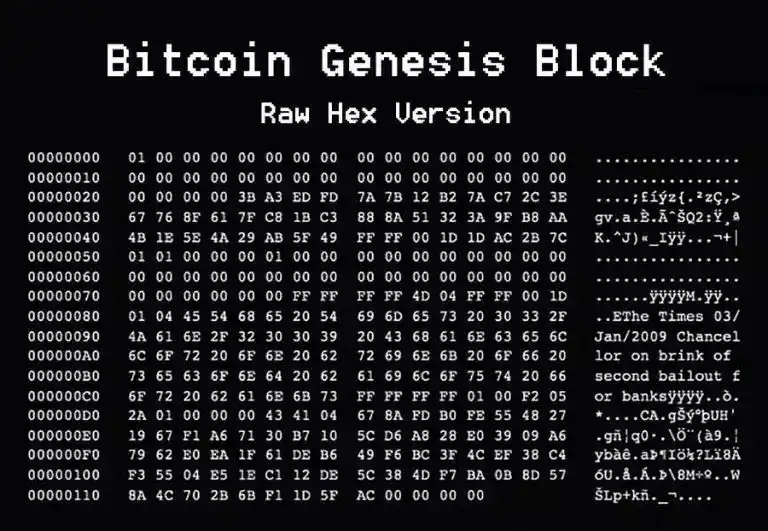
Seventeen years later, when a developer is attacked for creating something valuable, we must admit that this industry is proving, at the fastest speed, that it does not deserve a future.

When this狂热退潮, what will be left is a vast ruin of trust. Upon these ruins, do we choose to continue playing this game of survivor bias gambling, or do we choose to rediscover our original intention, to identify, follow, and become those who still insist on ringing the bells of the cathedral amidst the ruins?

This will be a question that every participant in the crypto world cannot avoid. The sounds of bells, dice, and sighs will continue to reverberate over this industry for a long time.

A long time.

Domande pertinenti

QWhat metaphor did Jocy use to describe the dilemma of the crypto industry in his open letter?

AJocy used the metaphor of a 'cathedral' being consumed by a 'casino' to describe the crypto industry's dilemma, with the cathedral representing the grand structure built with code and ideals, and the casino symbolizing the space filled with speculation and hype.

QWhat was the original purpose and spirit behind the creation of Dogecoin, according to its co-creator Billy Markus?

ADogecoin was created as a joke to satirize the growing cryptocurrency speculation craze. Its early community was not focused on price fluctuations but on a culture of tipping, using the nearly valueless coin to spread happiness, kindness, and creativity through acts of giving and community support.

QHow did Ethereum's co-founder Vitalik Buterin (V神) respond to the moral dilemma posed by the unsolicited donation of a large amount of SHIB tokens?

AVitalik Buterin refused to be morally coerced. He donated a significant portion of the SHIB tokens to an India COVID-19 relief fund, burned most of the remaining tokens, and sold other meme coins he received, donating the proceeds to charitable causes. He also publicly urged meme coin creators to donate directly to charity instead of sending tokens to him.

QWhat are the three types of 'death' that builders in the crypto space are experiencing, as outlined in the article?

AThe three types of 'death' are: 1. The social death of the body and spirit, where builders are harassed and exploited by speculators. 2. The idol death of spiritual leaders, where their good-faith actions are misinterpreted and co-opted by the crowd. 3. The capital death of top-level design, where long-term investment capital dries up as the industry is perceived as a risky casino, stifling innovation and attracting harsh regulation.

QWhat stark contrast in project failure rates does the article highlight between 2021 and 2025?

AThe article highlights that in 2021, 2,584 crypto projects failed. By 2025, this number had skyrocketed to 11.6 million failed projects, representing an increase of 4,489 times in just four years, illustrating the scale of the 'collective suicide-like prosperity' driven by meme coin mania and low barriers to token creation.

Letture associate

North Korean Hackers Loot $500 Million in a Single Month, Becoming the Top Threat to Crypto Security

North Korean hackers, particularly the notorious Lazarus Group and its subgroup TraderTraitor, have stolen over $500 million from cryptocurrency DeFi platforms in less than three weeks, bringing their total theft for the year to over $700 million. Recent major attacks on Drift Protocol and KelpDAO, resulting in losses of approximately $286 million and $290 million respectively, highlight a strategic shift: instead of targeting core smart contracts, attackers are now exploiting vulnerabilities in peripheral infrastructure. For instance, the KelpDAO attack involved compromising downstream RPC infrastructure used by LayerZero's decentralized validation network (DVN), allowing manipulation without breaching core cryptography. This sophisticated approach mirrors advanced corporate cyber-espionage. Additionally, North Korea has systematically infiltrated the global crypto workforce, with an estimated 100 operatives using fake identities to gain employment at blockchain companies, enabling long-term access to sensitive systems and facilitating large-scale thefts. According to Chainalysis, North Korean-linked hackers stole a record $2 billion in 2025, accounting for 60% of all global crypto theft that year. Their total historical crypto theft has reached $6.75 billion. Post-theft, they employ specialized money laundering methods, heavily relying on Chinese OTC brokers and cross-chain mixing services rather than standard decentralized exchanges. Security experts, while acknowledging the increased sophistication, emphasize that many attacks still exploit fundamental weaknesses like poor access controls and centralized operational risks. Strengthening private key management, limiting privileged access, and enhancing coordination among exchanges, analysts, and law enforcement immediately after an attack are critical to improving defense and fund recovery chances. The industry's challenge now extends beyond secure smart contracts to safeguarding operational security at the infrastructure level.

marsbit3 min fa

North Korean Hackers Loot $500 Million in a Single Month, Becoming the Top Threat to Crypto Security

marsbit3 min fa

Circle CEO's Seoul Visit: No Korean Won Stablecoin Issuance, But Met All Major Korean Banks

Circle CEO Jeremy Allaire's recent activities in Seoul indicate a strategic shift for the company, moving away from issuing a Korean won-backed stablecoin and instead focusing on embedding itself as a key infrastructure provider within Korea’s financial and crypto ecosystem. Despite Korea accounting for nearly 30% of global crypto trading volume—with a market characterized by high retail participation and altcoin dominance—Circle has chosen not to compete for the role of stablecoin issuer. Instead, Allaire met with major Korean banks (including Shinhan, KB, and Woori), financial groups, leading exchanges (Upbit, Bithumb, Coinone), and tech firms like Kakao. This approach reflects a broader industry transition: the core of stablecoin competition is shifting from issuance rights to systemic positioning. With Korean regulators still debating whether banks or tech companies should issue stablecoins, Circle is avoiding regulatory uncertainty by strengthening its role as a service and technology partner. The company is deepening integration with trading platforms, building connections, and promoting stablecoin infrastructure. This positions Circle to benefit regardless of which entity eventually issues a won stablecoin. Allaire also noted the potential for a Chinese yuan stablecoin in the next 3–5 years, underscoring a regional trend of stablecoins becoming more regulated and integrated with traditional finance. Ultimately, Circle’s strategy highlights that future influence in the stablecoin market will belong not necessarily to the issuers, but to the foundational infrastructure layers that enable cross-system transactions.

marsbit31 min fa

Circle CEO's Seoul Visit: No Korean Won Stablecoin Issuance, But Met All Major Korean Banks

marsbit31 min fa

SpaceX Ties Up with Cursor: A High-Stakes AI Gambit of 'Lock First, Acquire Later'

SpaceX has secured an option to acquire AI programming company Cursor for $60 billion, with an alternative clause requiring a $10 billion collaboration fee if the acquisition does not proceed. This structure is not merely a potential acquisition but a strategic move to control core access points in the AI era. The deal is designed as a flexible, dual-path arrangement, allowing SpaceX to either fully acquire Cursor or maintain a binding partnership through high-cost collaboration. This "option-style" approach minimizes immediate regulatory and integration risks while ensuring long-term alignment between the two companies. At its core, the transaction exchanges critical AI-era resources: SpaceX provides its Colossus supercomputing cluster—one of the world’s most powerful AI training infrastructures—while Cursor contributes its AI-native developer environment and strong product adoption. This synergy connects compute power, models, and application layers, forming a closed-loop AI capability stack. Cursor, founded in 2022, has achieved rapid growth with over $1 billion in annual revenue and widespread enterprise adoption. Its value lies in transforming software development through AI agents capable of coding, debugging, and system design—positioning it as a gateway to future software production. For SpaceX, this move is part of a broader strategy to evolve from a aerospace company into an AI infrastructure empire, integrating xAI, supercomputing, and chip manufacturing. Controlling Cursor fills a gap in its developer tooling layer, strengthening its AI narrative ahead of a potential IPO. The deal reflects a shift in AI competition from model superiority to ecosystem and entry-point control. With programming tools as a key battleground, securing developer loyalty becomes crucial for dominating the software production landscape. Risks include questions around Cursor’s valuation, technical integration challenges, and potential regulatory scrutiny. Nevertheless, the deal underscores a strategic bet: controlling both compute and software development access may redefine power dynamics in the AI-driven future.

marsbit1 h fa

SpaceX Ties Up with Cursor: A High-Stakes AI Gambit of 'Lock First, Acquire Later'

marsbit1 h fa

Trading

Spot
Futures

Articoli Popolari

Cosa è MEME 2.0

Memecoin 2.0: L'Ascesa di $MEME 2.0 nel Mondo delle Criptovalute Introduzione Nel panorama in continua evoluzione delle criptovalute, è emerso un nuovo contendente. Memecoin 2.0, simboleggiato come $MEME 2.0, porta il concetto di meme coin a un livello emozionante. Come prodotto derivato dal Memecoin originale, questo progetto ha catturato l'attenzione della comunità crypto spostando il focus da incentivi finanziari tipici a un'esperienza coinvolgente e divertente. Operando sulla blockchain di Ethereum, Memecoin 2.0 ridefinisce audacemente l'impegno della comunità nella sfera crypto. Che cos'è Memecoin 2.0, $MEME 2.0? Alla base, Memecoin 2.0 è un progetto di criptovaluta che dà priorità allo spirito di comunità e al divertimento associato alla cultura meme. A differenza delle criptovalute convenzionali, che si concentrano su casi d'uso pratici e benefici tangibili, Memecoin 2.0 si distingue abbracciando il lato più leggero della moneta digitale. Il progetto esiste senza promesse di utilità, una roadmap strutturata o ritorni finanziari, concentrandosi invece sulla creazione di una comunità vibrante incentrata sui meme e sul divertimento condiviso. Facendo così, attinge alla crescente tendenza della cultura meme nello spazio online, rendendola un giocatore unico nel mondo degli asset digitali. Creatore di Memecoin 2.0, $MEME 2.0 Nonostante ricerche approfondite sulle origini di Memecoin 2.0, l'identità esplicita del suo creatore rimane sconosciuta. Questa anonimità non è rara nella comunità crypto, dove molti progetti sono guidati da individui o gruppi che preferiscono rimanere dietro le quinte. La mancanza di informazioni pubblicamente disponibili sul creatore potrebbe essere vista come una mossa strategica, mettendo in evidenza l'impegno della comunità piuttosto che la notorietà individuale all'interno dello spazio. Investitori di Memecoin 2.0, $MEME 2.0 Le informazioni riguardanti gli investitori o il supporto finanziario per Memecoin 2.0 sono scarse. Questa assenza di dettagli potrebbe suggerire che il progetto sia autofinanziato o che il suo focus sulla comunità piuttosto che sulle strutture d'investimento tradizionali abbia attratto un tipo diverso di sostenitore. Poiché il mondo delle meme coin coinvolge tipicamente un maggior coinvolgimento di base piuttosto che investimenti istituzionali, questo approccio si allinea con l'etica dei progetti guidati dalla comunità. Come funziona Memecoin 2.0, $MEME 2.0? Memecoin 2.0 opera interamente sulla blockchain di Ethereum, capitalizzando le sue robuste caratteristiche di sicurezza e scalabilità. Sfruttando i punti di forza di Ethereum, Memecoin 2.0 può offrire un ambiente sicuro per le interazioni degli utenti garantendo che le transazioni siano sia efficienti che convenienti. Uno degli attributi unici di Memecoin 2.0 risiede nella sua struttura guidata dalla comunità. Il valore e la popolarità del token $MEME 2.0 derivano dalla partecipazione attiva dei suoi utenti, piuttosto che dalla utilità intrinseca. Questo design rinforza il focus del progetto sull'aspetto dell'intrattenimento delle criptovalute, implicando che la risata e l'impegno della comunità siano le vere monete che guidano il suo successo. Inoltre, il progetto si inserisce all'interno dell'ecosistema più ampio delle meme coin, dove il valore di ciascuna meme coin oscilla in base alla cultura, alle tendenze e all'impegno della comunità piuttosto che ai principi economici tradizionali. Cronologia di Memecoin 2.0, $MEME 2.0 Per comprendere meglio l'evoluzione e le pietre miliari di Memecoin 2.0, ecco una cronologia che evidenzia eventi significativi nella sua storia: 2024: L'inizio di Memecoin 2.0 è riconosciuto come un ramo del Memecoin originale, affermandosi all'interno del contesto fiorente delle meme coin mentre opera sulla blockchain di Ethereum. 13 luglio 2024: Memecoin 2.0 si posiziona ufficialmente come una meme coin incentrata sulla comunità sulla rete Ethereum, enfatizzando il suo approccio centrato sull'intrattenimento che invita gli utenti a impegnarsi e partecipare alla sua crescita. Punti Chiave su Memecoin 2.0, $MEME 2.0 Diverse caratteristiche critiche definiscono Memecoin 2.0: Approccio Centrico alla Comunità: La missione principale di Memecoin 2.0 è creare un'esperienza comunitaria divertente e coinvolgente, capitalizzando il piacere collettivo derivante dalla cultura memetica. Costruita su Ethereum: Operare sulla blockchain di Ethereum fornisce al progetto un'infrastruttura essenziale che garantisce sicurezza e scalabilità. Mancanza di Utilità o Roadmap: In una marcata deviazione dalle criptovalute tradizionali, Memecoin 2.0 non promette alcuna caratteristica utilitaria o ritorni finanziari, riaffermando il suo impegno per il coinvolgimento della comunità e l'impegno sociale. Focus sulla Cultura Memetica: Abbracciando gli aspetti umoristici e culturali del fenomeno meme, Memecoin 2.0 offre una piattaforma per gli utenti per interagire con la crypto offline e online. Ulteriore Contesto: L'Importanza delle Meme Coin Le meme coin sono emerse come una classe distinta di criptovaluta, spesso guidata dall'umorismo e da un approccio spensierato al trading. Queste monete generalmente mancano di significative utilità o roadmap di sviluppo, attirando gli utenti con la promessa di divertimento, interazione comunitaria e rilevanza culturale. Nel panorama del più ampio ecosistema crypto, le meme coin rianimano l'importanza dell'impegno della comunità, opponendosi ad approcci esclusivamente orientati al profitto. Progetti come Memecoin 2.0 danno il via a un'era in cui l'intrattenimento può armonizzarsi con le aspirazioni finanziarie, trasformando la blockchain in un parco giochi per la creatività e l'interazione sociale. Conclusione Memecoin 2.0, o $MEME 2.0, incarna una nuova ondata di criptovaluta che dà priorità all'impegno della comunità rispetto a rigidi strutture finanziarie. Con un focus sull'umorismo e l'interazione sociale, capitalizza sulla fascinazione circondante la cultura meme. Operando sulla blockchain di Ethereum, Memecoin 2.0 sfrutta le capacità della tecnologia mantenendo fermo il suo impegno per il valore ricreativo della valuta digitale. Mentre lo spazio delle criptovalute continua a evolversi, Memecoin 2.0 serve come testimonianza della nozione che il futuro degli asset digitali potrebbe ben dipendere da esperienze condivise, risate e solidi legami comunitari. Nel mondo imprevedibile delle crypto, forse la gioia può essere altrettanto preziosa quanto il guadagno finanziario tradizionale.

93 Totale visualizzazioniPubblicato il 2024.04.04Aggiornato il 2024.12.03

Cosa è MEME 2.0

Come comprare MEME

Benvenuto in HTX.com! Abbiamo reso l'acquisto di Memeland (MEME) semplice e conveniente. Segui la nostra guida passo passo per intraprendere il tuo viaggio nel mondo delle criptovalute.Step 1: Crea il tuo Account HTXUsa la tua email o numero di telefono per registrarti il tuo account gratuito su HTX. Vivi un'esperienza facile e sblocca tutte le funzionalità,Crea il mio accountStep 2: Vai in Acquista crypto e seleziona il tuo metodo di pagamentoCarta di credito/debito: utilizza la tua Visa o Mastercard per acquistare immediatamente MemelandMEME.Bilancio: Usa i fondi dal bilancio del tuo account HTX per fare trading senza problemi.Terze parti: abbiamo aggiunto metodi di pagamento molto utilizzati come Google Pay e Apple Pay per maggiore comodità.P2P: Fai trading direttamente con altri utenti HTX.Over-the-Counter (OTC): Offriamo servizi su misura e tassi di cambio competitivi per i trader.Step 3: Conserva Memeland (MEME)Dopo aver acquistato Memeland (MEME), conserva nel tuo account HTX. In alternativa, puoi inviare tramite trasferimento blockchain o scambiare per altre criptovalute.Step 4: Scambia Memeland (MEME)Scambia facilmente Memeland (MEME) nel mercato spot di HTX. Accedi al tuo account, seleziona la tua coppia di trading, esegui le tue operazioni e monitora in tempo reale. Offriamo un'esperienza user-friendly sia per chi ha appena iniziato che per i trader più esperti.

257 Totale visualizzazioniPubblicato il 2024.12.12Aggiornato il 2025.03.21

Come comprare MEME

Discussioni

Benvenuto nella Community HTX. Qui puoi rimanere informato sugli ultimi sviluppi della piattaforma e accedere ad approfondimenti esperti sul mercato. Le opinioni degli utenti sul prezzo di MEME MEME sono presentate come di seguito.

活动图片