Year-End Critical Moment: What the FOMC Decision Means for the Crypto Market

比推Pubblicato 2025-12-18Pubblicato ultima volta 2025-12-18

Introduzione

Amid a critical year-end period, Bitcoin hovers around $90,000 with the crypto fear and greed index hitting 25 (extreme fear). The December FOMC meeting delivered an expected 25-basis-point rate cut but adopted a hawkish tone, projecting only one more cut in 2026, causing a brief dip below $90k. However, the Fed also initiated a Reserve Management Purchase (RMP) plan, injecting $40 billion monthly in Treasury liquidity—a form of "stealth QE" that may reshape 2026 market dynamics. On-chain data shows significant capitulation among short-term holders, with realized losses near historic highs, while exchange reserves decline sharply, suggesting accumulation by long-term investors. Seasonal patterns like the "Christmas low-Lunar New Year rally" and increasing institutional adoption—shifting from pure Bitcoin exposure to ETH, altcoins, and tokenized assets—support a potential rebound. Despite short-term volatility and macro uncertainty, indicators like MVRV Z-Score and RHODL Ratio signal a buying opportunity. The convergence of cyclical patterns, improving liquidity, and structural institutional participation frames the current pullback as a mid-cycle adjustment rather than a bear market, offering a strategic entry point for 2026 positioning.

At the end of 2025, the crypto market is at a critical juncture. Bitcoin (BTC) is hovering around $90,000, the market Fear & Greed Index has dropped to 25 (Extreme Fear), and short-term holder capitulation has reached its second-highest level in history, second only to the bottom of the August 2024 Yen carry trade crash. The December 10th FOMC meeting has concluded, with the Federal Reserve (Fed) cutting interest rates by 25 basis points as expected by the market, lowering the federal funds rate to 3.50%-3.75%. However, the forward guidance turned hawkish—only one rate cut is expected in 2026. This caused BTC to briefly fall below the $90,000 mark. The market reaction was muted, showing a "buy the rumor, sell the news" type of correction.

However, the Fed also initiated a "Reserve Management Purchases" (RMP) plan, injecting $40 billion in short-term Treasury liquidity per month. This is seen as a signal of mild easing, a form of "non-QE," which could reshape market dynamics in 2026. In this "year-end final exam," should one "hold coins through the holidays" to welcome a potential rebound, or "take profits off the table" to lock in gains? This article explores allocation strategies and the outlook for 2026 positioning by combining the impact of the FOMC, on-chain data, institutional trends, and historical patterns.

FOMC Decision Analysis
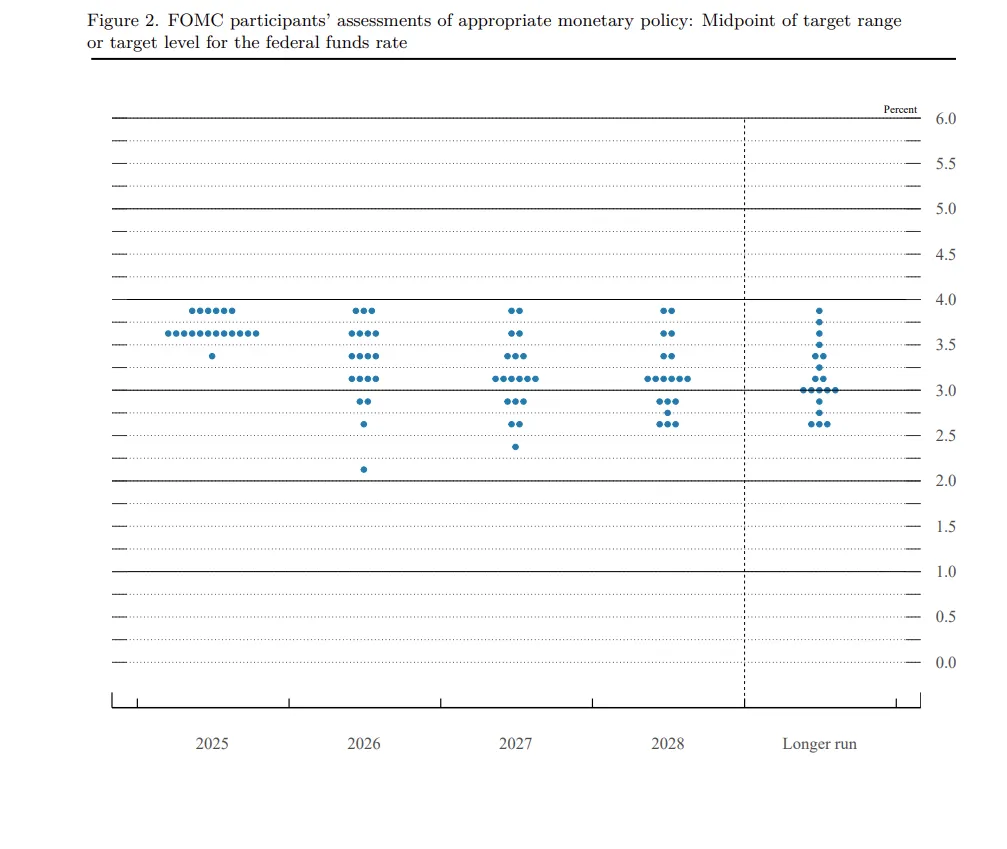
A Liquidity Turning Point Under Hawkish Rate Cuts The FOMC meeting was the final monetary policy decision of 2025. The decision to cut rates was passed with a 9:3 split vote, but the "dot plot" showed a slower path for rate cuts in 2026, with only one 25-basis-point cut remaining.

This reinforces the "hawkish cut" narrative: the Fed is wary of rebounding inflation and is aiming for a soft landing in the job market, unwilling to ease too aggressively in the short term. The market had priced in an 89% probability of a cut, leading to only minor fluctuations in BTC post-event, while ETH consolidated around $3,000.

The impact on crypto is dual:

  • Short-term pressure: Hawkish guidance increases risk aversion. BTC did not rally to the expected high of $94,000 but instead triggered tens of billions of dollars in leveraged liquidations. Thin year-end liquidity (e.g., perpetual open interest down 40%-50% from October), combined with Bank of Japan (BOJ) decisions, makes the market prone to "pump and dump" behavior.

  • Long-term positive: QT (Quantitative Tightening) officially ended on December 1st. The Fed's balance sheet shrank from $9 trillion to $6.5 trillion and has now begun to expand again. The RMP plan is equivalent to "stealth QE," expected to inject trillions in liquidity in 2026, driving a re-rating of risk assets. Historical data shows that liquidity turning points often trigger crypto rallies (e.g., the BTC surge after the Fed's pivot in 2024). Furthermore, explosive growth in global M2 money supply, a weakening DXY US Dollar Index, and stimulus policies from China/the EU will further tilt capital towards risk assets.

The FOMC reinforced the "macro-dominated" narrative. Crypto is no longer driven solely by its own cycles but is increasingly correlated with stocks and AI assets. Short-term volatility is intensifying, but liquidity injections are paving the way for 2026.
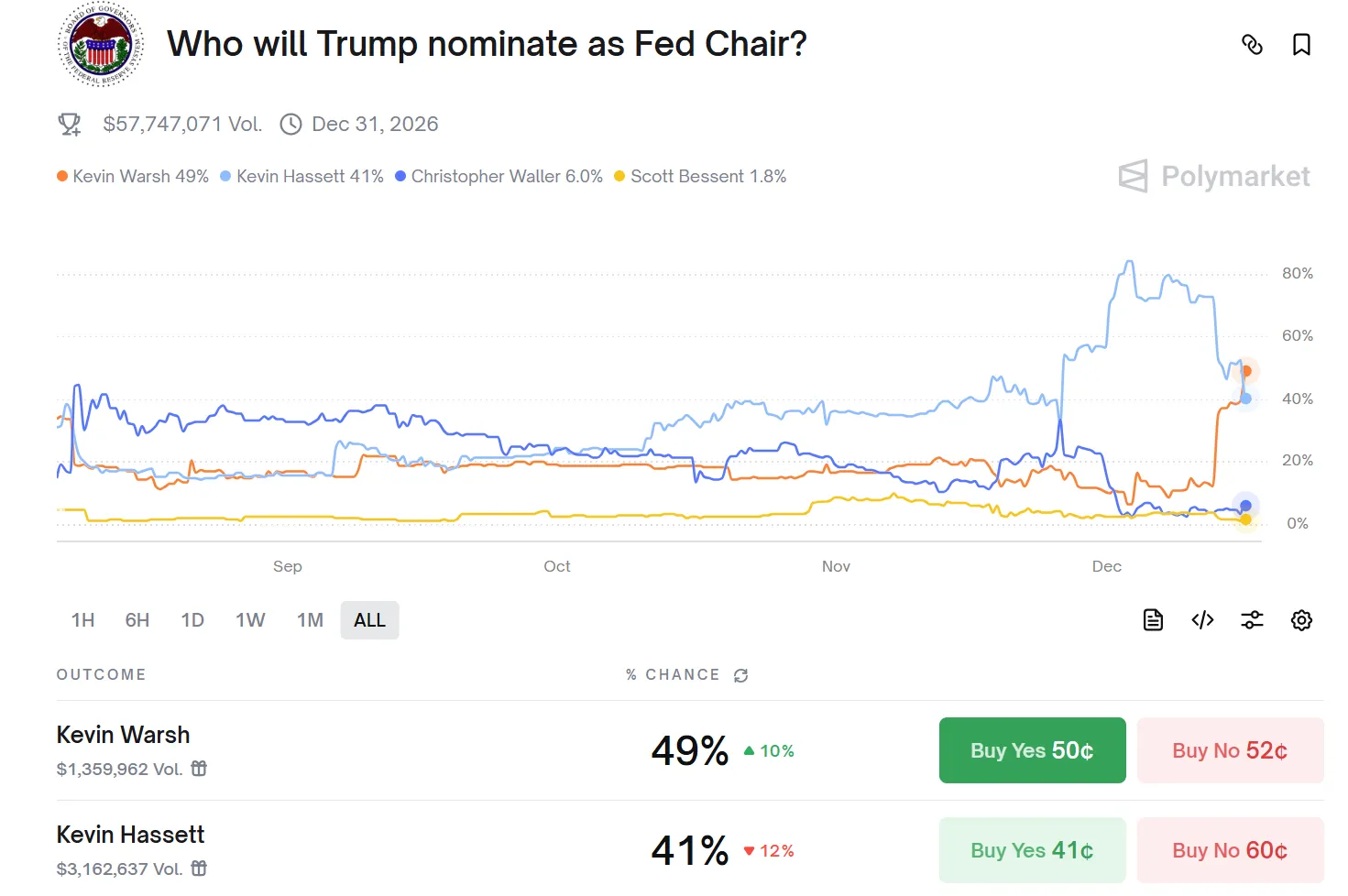
The appointment of the new Fed Chair will also be a key variable for the 2026 liquidity environment. Jerome Powell's term as Chair officially ends in May 2026 (his term as Governor lasts until January 2028). President Trump has indicated he will announce a nominee for his successor in early 2026. Current top candidates focus on the "two Kevins": National Economic Council Director Kevin Hassett (advocates for more aggressive rate cuts) and former Fed Governor Kevin Warsh (recently visited the White House, emphasizing consulting the President on interest rate views).

A Chair more aligned with Trump and more inclined towards accommodative policy could strengthen the 2026 rate cut path and accelerate liquidity injection, resonating with policies like the RMP plan and national Bitcoin reserves, further boosting confidence in risk assets.

Institutional Trends Preview: 2026 Positioning—From "Defense" to "Structural Participation"

2025 is seen as the "Year of Crypto Mainstreaming." Institutional entry is no longer a fringe experiment but a systemic shift. According to a16z's "State of Crypto 2025 Report," traditional financial institutions like Visa, BlackRock, Fidelity, and JPMorgan Chase have fully launched crypto products, while tech-native players like PayPal and Stripe are doubling down on payment infrastructure.

This marks a paradigm shift from "retail-led" to "institution-led": A joint survey by EY-Parthenon and Coinbase shows 83% of institutional investors plan to increase their crypto allocation in 2025. DeFi exposure is expected to jump from 24% to 75%, with a focus on derivatives, lending, and yield opportunities.

Institutional Allocation Trends: From Single BTC Allocation to Multi-Asset Portfolios

  • BTC remains core, but its share is declining: BTC as "digital gold" continues to dominate institutional positions (ETF AUM exceeds $168 billion, accounting for 60-80% of institutional crypto exposure), but institutions view it as a low-correlation diversification tool rather than a single speculative asset.

  • Expansion into ETH, Altcoins, and Emerging Assets: Institutions are increasing exposure to ETH (attracted by staking yields), Solana (high TPS and institutional partnerships), stablecoins (payment infrastructure), and RWA (real-world asset tokenization). A Coinbase report shows 76% of institutions plan to invest in tokenized assets in 2026, focusing on tokenized Treasuries, private equity, and bonds, offering instant settlement and fractional ownership.

  • Pension Funds and Sovereign Wealth Funds Testing the Waters: Although mostly indirect exposure (e.g., the Norwegian fund holds BTC via MicroStrategy), 2026 is expected to see more direct allocations of 0.5-3% (via ETFs or tokenized instruments). Reports from BlackRock and others note that sovereign funds and pension funds are seriously considering crypto as a long-term diversification hedge, with allocation ratios gradually increasing.

Historical Pattern: BTC's Year-End "Spring Festival Effect"
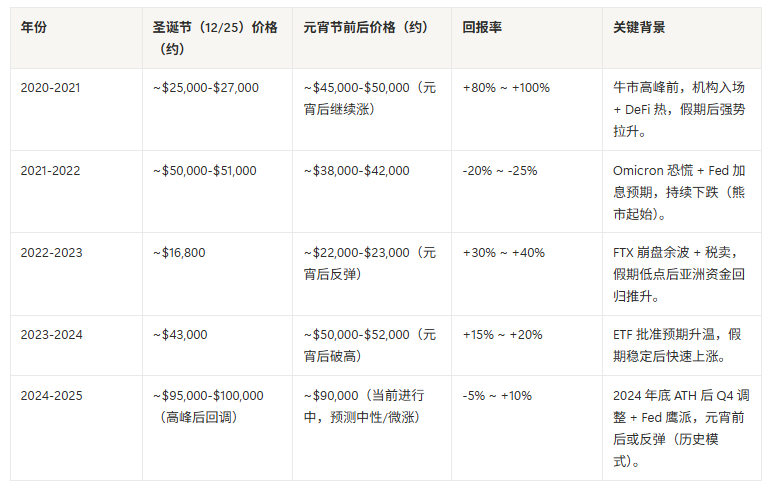
Drivers of the "Christmas Low - Spring Festival Rally" Pattern

Western Liquidity Drain: From December 20th to early January,欧美 (European and American) institutions enter holiday mode, and trading volume plummets. In a low-liquidity environment, any selling pressure amplifies volatility, forming technical lows.

Asian Capital Inflow: Around the Spring Festival (late January to mid-February), year-end bonuses and red packets are distributed in Mainland China, Hong Kong, Singapore, etc., leading retail and high-net-worth individuals to increase allocations to risk assets. Historical data shows that BTC buying volume on Asian exchanges (like Binance, OKX) typically rises in the two weeks before the Lunar New Year.

Portfolio Rebalancing: January marks the start of the new fiscal year for many institutions. Pension funds and hedge funds reassess their asset allocations. If BTC shows relative resilience in December (e.g., only a 5-10% pullback in 2025), institutions tend to add positions in January to catch up with benchmark returns.

On-Chain Data: A Concentration of Bottom Signals

Following the hawkish Fed rate cut, the crypto market has entered a typical "year-end low liquidity" phase. Bitcoin (BTC) is oscillating repeatedly in the $88,000-$92,000 range, and the Fear & Greed Index has dropped to 25 (Extreme Fear). Superficially, this looks like a "sell the news" correction. However, on-chain data reveals more structural signals: deep capitulation by short-term holders, continued accumulation by long-term holders, accelerated outflows from exchange reserves, and bottoming characteristics in medium-to-long-term indicators. This data suggests the current situation is not a simple bear market but rather a "mid-cycle adjustment + washout" phase within a bull market.

1. Short-Term Holder (STH) Capitulation: Pain Nearing an End
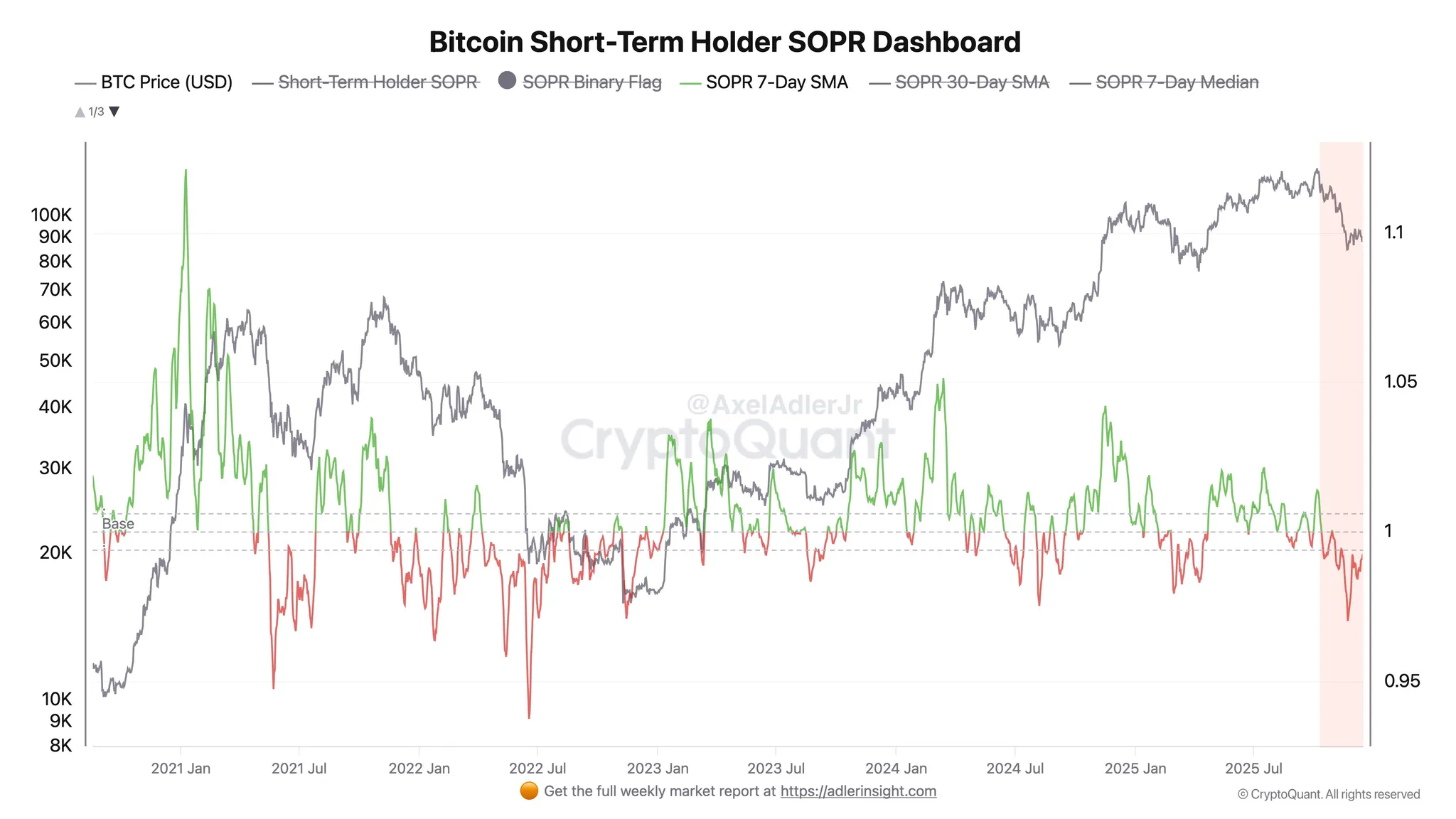
  • Realized Loss Scale: Over the past 30 days, short-term holders (holding <155 days) have realized losses exceeding $4.5 billion, second only to the $5.2 billion during the August 2024 Yen carry trade crash (Glassnode data). This indicates leveraged players and FOMO-driven散户 (retail investors) have largely capitulated.

  • SOPR Indicator: The Short-Term Holder SOPR (Spent Output Profit Ratio) has remained below 1 (indicating average selling at a loss) for over 3 weeks. History shows that after such deep capitulation, BTC often finds a阶段性底部 (stage bottom) within 1-3 months.

2. Exchange Reserves & Withdrawals: Strengthening De-platforming Trend
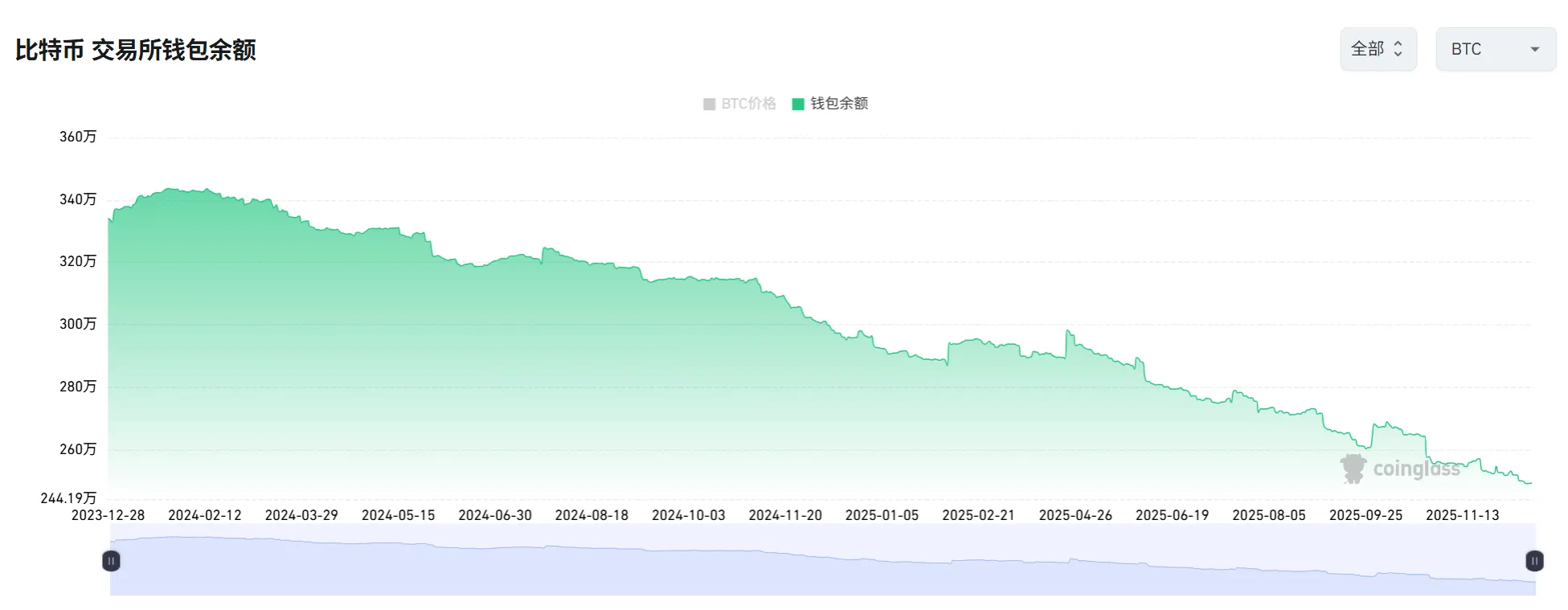
  • Exchange BTC Balance: Over the past 30 days, BTC reserves across all exchanges have decreased by approximately 120,000 coins (about 2.5%), falling below 2.6 million (CryptoQuant), the lowest level since 2018.

  • ETH Exchange Reserves: Decreased by about 1.2 million ETH during the same period, with withdrawal speeds hitting a 2025 high, reflecting strong staking and self-custody demand.

  • Stablecoin Reserves: Exchange balances of USDT/USDC have seen seasonal declines, but active addresses and transfer volumes on-chain remain stable, indicating capital has not left the ecosystem but is moving to cold storage awaiting re-entry.

Capital flowing out of exchanges often预示价格底部 (foreshadows a price bottom), reducing selling pressure while building momentum for a subsequent rebound.

3. Medium-to-Long Term Indicators: Concentration of Bottom Signals
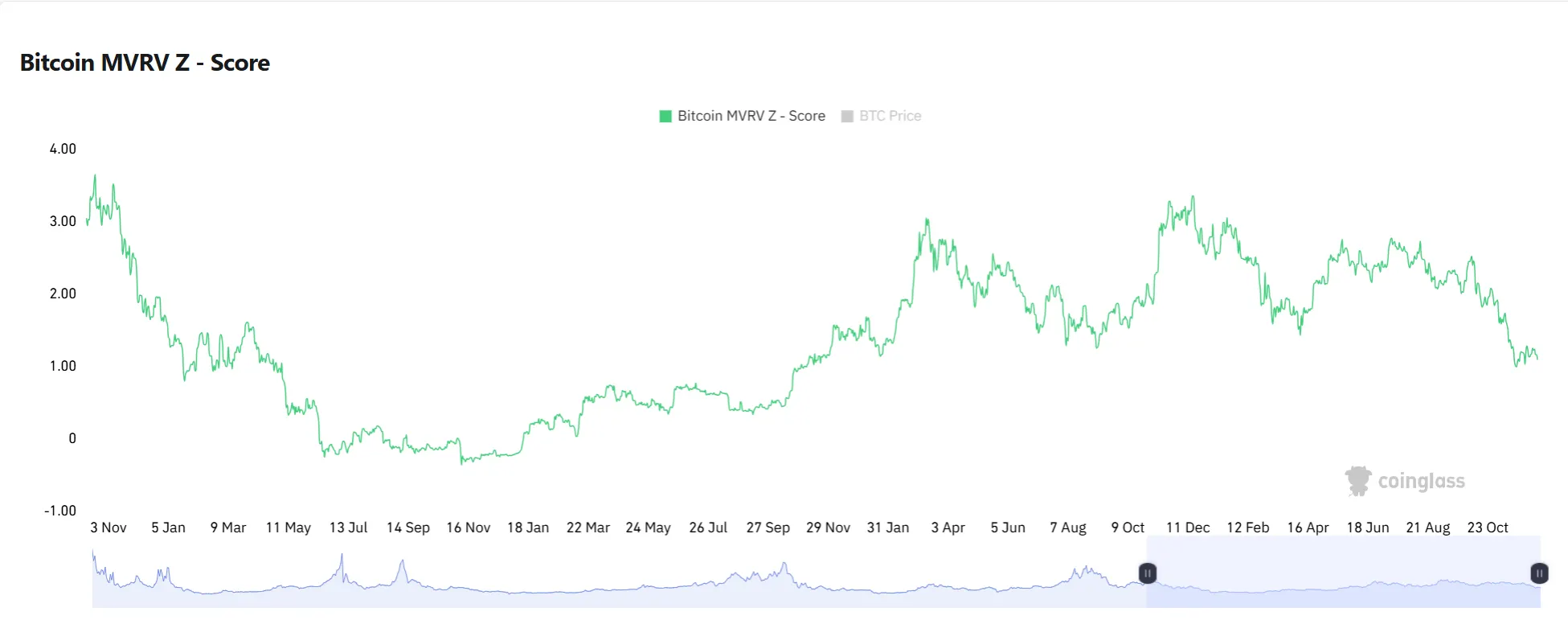
  • MVRV Z-Score: Currently at 1.1, entering the historical "green buy zone."

  • RHODL Ratio: Has fallen to levels seen at the bottom of the 2022 bear market, indicating market fervor has completely cooled.

  • Puell Multiple: The miner revenue indicator has fallen back to 0.6. Historical lows are often accompanied by price reversals following mining capitulation.

  • Active Addresses & Transaction Volume: Although低迷 (sluggish) short-term, the 30-day MA has not experienced a cliff-like drop, unlike the "activity exhaustion" seen at the 2021 bull market top.

Allocation Strategy: Finding Certainty Amid Uncertainty

The market is at a rare confluence:

  • Short-term sentiment is extremely fearful (Fear & Greed Index 25), but on-chain data shows a concentration of bottom characteristics.

  • The historical "Christmas Low - Spring Festival Rally" pattern provides seasonal support, validated successfully three times in the past five years.

  • Macro liquidity is about to turn (QT ended, RMP initiated), but is still suppressed by hawkish guidance in the short term.

  • The institutionalization process is accelerating, transforming the market structure from "speculation-driven" to "allocation-driven."

For investors seeking long-term value, the current environment provides a relatively clear risk-reward framework: deep capitulation by short-term holders, accelerated outflows from exchange reserves, continued accumulation by long-term holders, and valuation indicators like MVRV and RHODL entering historical buy zones—these signals, when they appeared in the past, have marked the opening of medium-to-long term allocation windows. For traders focused on liquidity management, December's liquidity drought period presents both risk and opportunity. Maintaining sufficient flexibility, preserving ammunition during market panic, and acting opportunistically when the Spring Festival effect is validated might be wiser than chasing short-term volatility.

Data for this report was compiled and edited by WolfDAO. Please contact us if you have any questions requiring updates;

Author: Nikka / WolfDAO ( X : @10xWolfdao )


Original link:https://www.bitpush.news/articles/7596651

Domande pertinenti

QWhat was the immediate market reaction to the December 10th FOMC decision to cut rates by 25 basis points?

AThe market reaction was muted, characterized by a 'buy the news, sell the fact' pullback, with Bitcoin briefly falling below the $90,000 mark.

QWhat long-term liquidity measure did the Fed announce alongside the rate cut, and what is its potential impact for 2026?

AThe Fed announced the 'Reserve Management Purchases' (RMP) plan to inject $40 billion per month in short-term Treasury liquidity. This is seen as a form of 'stealth QE' that could inject trillions in liquidity by 2026, potentially drive a re-rating of risk assets like crypto, and reshape market dynamics.

QAccording to the article, what key on-chain data signals suggest the market may be nearing a bottom?

AKey on-chain bottom signals include: Short-Term Holder (STH) capitulation with $4.5B in realized losses (2nd highest ever), STH SOPR below 1 for over 3 weeks, exchange reserves dropping to multi-year lows, and valuation metrics like MVRV Z-Score and RHODL Ratio entering historical buy zones.

QHow is institutional involvement in crypto changing, as described in the a16z report cited?

AInstitutional involvement is shifting from a 'retail-dominated' to an 'institution-dominated' paradigm. It's no longer an edge experiment but a systemic shift, with 83% of institutional investors planning to increase crypto allocations in 2025 and a focus expanding from just Bitcoin to ETH, altcoins, stablecoins, and tokenized real-world assets (RWA).

QWhat is the historical 'Christmas Low - Spring Festival Rally' pattern, and what are its main drivers?

AIt's a historical pattern where Bitcoin often forms a technical low around the Christmas holiday period due to low Western liquidity and then rallies around the Chinese Lunar New Year. The main drivers are: illiquid holiday markets amplifying sell pressure, and Asian capital inflows from year-end bonuses and red packets during the Spring Festival, alongside institutional portfolio rebalancing in the new fiscal year.

Letture associate

Warsh Hearing Concludes: What Are the Notable Signals for the Crypto Industry?

The Senate Banking Committee held a confirmation hearing for Judy Shelton, a Federal Reserve nominee, who faced intense questioning regarding her ability to maintain the central bank's independence amid pressure from President Trump to lower interest rates. Shelton denied any pre-arranged commitments on rate cuts and emphasized her independence, though Democrats remained skeptical, citing contradictions with Trump's public statements. Shelton characterized post-pandemic inflation as a major policy failure and called for a "regime change" in the Fed’s approach, including reforms to inflation measurement and communication strategies. She criticized the current practice of Fed officials frequently signaling future rate moves and did not commit to maintaining post-meeting press conferences, suggesting potential reductions in transparency. Regarding crypto markets, Shelton’s extensive investments in digital asset companies—including Solana, DeFi, and blockchain infrastructure—were noted, though she has pledged to divest these holdings due to ethics rules. Her familiarity with the crypto industry and deregulatory leanings may signal a more open, though cautious, stance toward digital assets. However, concerns were raised about potential conflicts of interest, especially given Trump family involvement in crypto-financial ventures. The timing of her confirmation remains uncertain, pending a Justice Department investigation into current Chair Powell. Shelton’s potential leadership could lead to a more hawkish, productivity-focused Fed with tighter policy communication—factors that may significantly influence liquidity conditions and macro narratives for crypto markets.

marsbit4 h fa

Warsh Hearing Concludes: What Are the Notable Signals for the Crypto Industry?

marsbit4 h fa

Trading

Spot
Futures

Articoli Popolari

Cosa è BITCOIN

Comprendere HarryPotterObamaSonic10Inu (ERC-20) e la sua posizione nel mondo delle criptovalute Negli ultimi anni, il mercato delle criptovalute ha assistito a un aumento della popolarità delle meme coin, catturando l'interesse non solo dei trader, ma anche di coloro che cercano coinvolgimento comunitario e valore di intrattenimento. Tra questi token unici c'è HarryPotterObamaSonic10Inu (ERC-20), un progetto intrigante che mescola riferimenti culturali nel tessuto delle criptovalute. Questo articolo esplora gli aspetti chiave di HarryPotterObamaSonic10Inu, analizzando i suoi meccanismi, l'etica guidata dalla comunità e il suo coinvolgimento con il panorama crittografico più ampio. Che cos'è HarryPotterObamaSonic10Inu (ERC-20)? Come suggerisce il suo nome, HarryPotterObamaSonic10Inu è una meme coin costruita sulla blockchain di Ethereum, classificata secondo lo standard ERC-20. A differenza delle criptovalute tradizionali che possono enfatizzare l'utilità pratica o il potenziale investimento, questo token prospera grazie al valore di intrattenimento e alla forza della sua comunità. Il progetto mira a creare un ambiente in cui gli utenti coinvolti possono riunirsi, condividere idee e partecipare ad attività ispirate a diversi fenomeni culturali. Una caratteristica notevole di HarryPotterObamaSonic10Inu è la zero tassa sulle transazioni. Questo elemento allettante tende a incoraggiare il trading e il coinvolgimento della comunità, privo di costi aggiuntivi che possono scoraggiare i trader di piccole dimensioni. L'offerta totale della moneta è fissata a un miliardo di token, un numero che segna la sua intenzione di mantenere una circolazione sostanziale all'interno della comunità. Creatore di HarryPotterObamaSonic10Inu (ERC-20) Le origini di HarryPotterObamaSonic10Inu sono avvolte in un certo mistero; i dettagli sul creatore rimangono sconosciuti. Lo sviluppo di questo token non presenta un team identificabile o un piano esplicito, cosa non rara nel settore delle meme coin. Invece, il progetto è emerso organicamente, con il suo progresso fortemente dipendente dall'entusiasmo e dalla partecipazione della sua comunità. Investitori di HarryPotterObamaSonic10Inu (ERC-20) Per quanto riguarda investimenti esterni e finanziamenti, HarryPotterObamaSonic10Inu rimane ambiguo. Il token non elenca alcuna fondazione di investimento conosciuta o un sostegno organizzativo significativo. Invece, la linfa vitale del progetto è la sua comunità di base, che informa la sua crescita e sostenibilità attraverso azioni collettive e coinvolgimento nello spazio crittografico. Come funziona HarryPotterObamaSonic10Inu (ERC-20)? In quanto meme coin, HarryPotterObamaSonic10Inu opera principalmente al di fuori delle strutture tradizionali che governano spesso il valore degli asset. Ci sono diversi aspetti distintivi che definiscono il funzionamento del progetto: Transazioni senza tasse: Senza costi fiscali sulle transazioni, gli utenti possono comprare e vendere liberamente il token senza preoccuparsi di costi nascosti. Coinvolgimento della comunità: Il progetto prospera sull'interazione della comunità, sfruttando le piattaforme social per creare entusiasmo e facilitare il coinvolgimento. Discussioni, condivisione di contenuti e coinvolgimento sono elementi cruciali che aiutano ad espandere la sua portata e a favorire la lealtà tra i sostenitori. Nessuna utilità pratica: Va notato che HarryPotterObamaSonic10Inu non offre un'utilità concreta all'interno dell'ecosistema finanziario. Piuttosto, è classificato come un token principalmente per attività di intrattenimento e comunitarie. Riferimento culturale: Il token incorpora astutamente elementi della cultura pop per attirare interesse, collegandosi a appassionati di meme e seguaci delle criptovalute. HarryPotterObamaSonic10Inu esemplifica come le meme coin operino in modo diverso rispetto ai progetti di criptovalute più tradizionali, entrando nel mercato come costrutti sociali innovativi piuttosto che come asset utilitari. Cronologia di HarryPotterObamaSonic10Inu (ERC-20) La storia di HarryPotterObamaSonic10Inu è segnata da diversi traguardi notevoli: Creazione: Il token è emerso da un meme virale, catturando l'immaginazione di molti appassionati di criptovalute. Le date di creazione specifiche non sono disponibili, sottolineando la sua crescita organica. Inserimento negli scambi: HarryPotterObamaSonic10Inu ha fatto il suo ingresso in vari scambi, consentendo un accesso e un trading più facili da parte della comunità. Iniziative di coinvolgimento della comunità: Attività in corso volte a migliorare l'interazione della comunità, comprese gare, campagne sui social media e generazione di contenuti da parte di fan e sostenitori. Piani di espansione futura: La tabella di marcia del progetto include il lancio di una collezione NFT, merchandising e un sito di eCommerce relativo ai suoi temi culturali, coinvolgendo ulteriormente la comunità e cercando di aggiungere più dimensioni al suo ecosistema. Punti chiave su HarryPotterObamaSonic10Inu (ERC-20) Natura guidata dalla comunità: Il progetto dà priorità al contributo collettivo e alla creatività, garantendo che il coinvolgimento degli utenti sia al centro del suo sviluppo. Classificazione come meme coin: Rappresenta l'epitome delle criptovalute basate sull'intrattenimento, distinguendosi dai veicoli d'investimento tradizionali. Nessuna affiliazione diretta con Bitcoin: Nonostante la somiglianza nel nome del ticker, HarryPotterObamaSonic10Inu è distintivo e non ha alcuna relazione con Bitcoin o altre criptovalute consolidate. Focus sulla collaborazione: HarryPotterObamaSonic10Inu è progettato per creare uno spazio per la collaborazione e la condivisione di storie tra i suoi detentori, fornendo un canale per la creatività e il legame comunitario. Prospettive future: L'ambizione di espandersi oltre il suo presupposto iniziale verso NFT e merchandising delinea un percorso per il progetto per potenzialmente entrare in strade più mainstream all'interno della cultura digitale. Poiché le meme coin continuano a catturare l'immaginazione della comunità crittografica, HarryPotterObamaSonic10Inu (ERC-20) si distingue per i suoi legami culturali e il suo approccio centrato sulla comunità. Anche se potrebbe non adattarsi al modello tipico di un token orientato all'utilità, la sua essenza risiede nella gioia e nella camaraderia coltivate tra i suoi sostenitori, evidenziando la natura in evoluzione delle criptovalute in un'epoca sempre più digitale. Con la continuazione dello sviluppo del progetto, sarà importante osservare come le dinamiche della comunità influenzano la sua traiettoria nel panorama in continuo cambiamento della tecnologia blockchain.

1.2k Totale visualizzazioniPubblicato il 2024.04.01Aggiornato il 2024.12.03

Cosa è BITCOIN

Come comprare BTC

Benvenuto in HTX.com! Abbiamo reso l'acquisto di Bitcoin (BTC) semplice e conveniente. Segui la nostra guida passo passo per intraprendere il tuo viaggio nel mondo delle criptovalute.Step 1: Crea il tuo Account HTXUsa la tua email o numero di telefono per registrarti il tuo account gratuito su HTX. Vivi un'esperienza facile e sblocca tutte le funzionalità,Crea il mio accountStep 2: Vai in Acquista crypto e seleziona il tuo metodo di pagamentoCarta di credito/debito: utilizza la tua Visa o Mastercard per acquistare immediatamente BitcoinBTC.Bilancio: Usa i fondi dal bilancio del tuo account HTX per fare trading senza problemi.Terze parti: abbiamo aggiunto metodi di pagamento molto utilizzati come Google Pay e Apple Pay per maggiore comodità.P2P: Fai trading direttamente con altri utenti HTX.Over-the-Counter (OTC): Offriamo servizi su misura e tassi di cambio competitivi per i trader.Step 3: Conserva Bitcoin (BTC)Dopo aver acquistato Bitcoin (BTC), conserva nel tuo account HTX. In alternativa, puoi inviare tramite trasferimento blockchain o scambiare per altre criptovalute.Step 4: Scambia Bitcoin (BTC)Scambia facilmente Bitcoin (BTC) nel mercato spot di HTX. Accedi al tuo account, seleziona la tua coppia di trading, esegui le tue operazioni e monitora in tempo reale. Offriamo un'esperienza user-friendly sia per chi ha appena iniziato che per i trader più esperti.

3.6k Totale visualizzazioniPubblicato il 2024.12.12Aggiornato il 2025.03.21

Come comprare BTC

Cosa è $BITCOIN

ORO DIGITALE ($BITCOIN): Un'Analisi Completa Introduzione all'ORO DIGITALE ($BITCOIN) L'ORO DIGITALE ($BITCOIN) è un progetto basato su blockchain che opera sulla rete Solana, con l'obiettivo di combinare le caratteristiche dei metalli preziosi tradizionali con l'innovazione delle tecnologie decentralizzate. Sebbene condivida un nome con Bitcoin, spesso definito “oro digitale” a causa della sua percezione come riserva di valore, l'ORO DIGITALE è un token separato progettato per creare un ecosistema unico all'interno del panorama Web3. Il suo obiettivo è posizionarsi come un asset digitale alternativo valido, anche se i dettagli riguardanti le sue applicazioni e funzionalità sono ancora in fase di sviluppo. Cos'è l'ORO DIGITALE ($BITCOIN)? L'ORO DIGITALE ($BITCOIN) è un token di criptovaluta esplicitamente progettato per l'uso sulla blockchain di Solana. A differenza di Bitcoin, che fornisce un ruolo di stoccaggio di valore ampiamente riconosciuto, questo token sembra concentrarsi su applicazioni e caratteristiche più ampie. Aspetti notevoli includono: Infrastruttura Blockchain: Il token è costruito sulla blockchain di Solana, nota per la sua capacità di gestire transazioni ad alta velocità e a basso costo. Dinamiche di Offerta: L'ORO DIGITALE ha un'offerta massima fissata a 100 quadrilioni di token (100P $BITCOIN), sebbene i dettagli riguardanti la sua offerta circolante siano attualmente non divulgati. Utilità: Sebbene le funzionalità precise non siano esplicitamente delineate, ci sono indicazioni che il token potrebbe essere utilizzato per varie applicazioni, potenzialmente coinvolgendo applicazioni decentralizzate (dApp) o strategie di tokenizzazione degli asset. Chi è il Creatore dell'ORO DIGITALE ($BITCOIN)? Attualmente, l'identità dei creatori e del team di sviluppo dietro l'ORO DIGITALE ($BITCOIN) rimane sconosciuta. Questa situazione è tipica tra molti progetti innovativi nel settore blockchain, in particolare quelli allineati con la finanza decentralizzata e i fenomeni delle meme coin. Sebbene tale anonimato possa favorire una cultura guidata dalla comunità, intensifica le preoccupazioni riguardo alla governance e alla responsabilità. Chi sono gli Investitori dell'ORO DIGITALE ($BITCOIN)? Le informazioni disponibili indicano che l'ORO DIGITALE ($BITCOIN) non ha alcun sostenitore istituzionale noto o investimenti di venture capital prominenti. Il progetto sembra operare su un modello peer-to-peer incentrato sul supporto e sull'adozione della comunità piuttosto che su percorsi di finanziamento tradizionali. La sua attività e liquidità si trovano principalmente su exchange decentralizzati (DEX), come PumpSwap, piuttosto che su piattaforme di trading centralizzate consolidate, evidenziando ulteriormente il suo approccio di base. Come Funziona l'ORO DIGITALE ($BITCOIN) Le meccaniche operative dell'ORO DIGITALE ($BITCOIN) possono essere elaborate in base al suo design blockchain e alle caratteristiche della rete: Meccanismo di Consenso: Sfruttando il proof-of-history (PoH) unico di Solana combinato con un modello di proof-of-stake (PoS), il progetto garantisce una validazione efficiente delle transazioni contribuendo all'alta performance della rete. Tokenomics: Sebbene meccanismi deflazionistici specifici non siano stati dettagliati ampiamente, l'ampia offerta massima di token implica che potrebbe soddisfare microtransazioni o casi d'uso di nicchia che devono ancora essere definiti. Interoperabilità: Esiste il potenziale per l'integrazione con l'ecosistema più ampio di Solana, inclusi vari piattaforme di finanza decentralizzata (DeFi). Tuttavia, i dettagli riguardanti integrazioni specifiche rimangono non specificati. Cronologia degli Eventi Chiave Ecco una cronologia che evidenzia traguardi significativi riguardanti l'ORO DIGITALE ($BITCOIN): 2023: Il dispiegamento iniziale del token avviene sulla blockchain di Solana, contrassegnato dal suo indirizzo di contratto. 2024: L'ORO DIGITALE guadagna visibilità poiché diventa disponibile per il trading su exchange decentralizzati come PumpSwap, consentendo agli utenti di scambiarlo contro SOL. 2025: Il progetto assiste a un'attività di trading sporadica e a un potenziale interesse per impegni guidati dalla comunità, sebbene non siano state documentate partnership significative o avanzamenti tecnici fino ad ora. Analisi Critica Punti di Forza Scalabilità: L'infrastruttura sottostante di Solana supporta alti volumi di transazioni, il che potrebbe migliorare l'utilità di $BITCOIN in vari scenari di transazione. Accessibilità: Il potenziale basso prezzo di trading per token potrebbe attrarre investitori al dettaglio, facilitando una partecipazione più ampia grazie a opportunità di proprietà frazionata. Rischi Mancanza di Trasparenza: L'assenza di sostenitori, sviluppatori o di un processo di audit pubblicamente noti potrebbe generare scetticismo riguardo alla sostenibilità e all'affidabilità del progetto. Volatilità del Mercato: L'attività di trading è fortemente dipendente dal comportamento speculativo, il che può comportare una significativa volatilità dei prezzi e incertezze per gli investitori. Conclusione L'ORO DIGITALE ($BITCOIN) emerge come un progetto intrigante ma ambiguo all'interno dell'evolvente ecosistema di Solana. Sebbene tenti di sfruttare la narrativa dell'“oro digitale”, la sua partenza dal ruolo consolidato di Bitcoin come riserva di valore sottolinea la necessità di una chiara differenziazione della sua utilità e struttura di governance. L'accettazione e l'adozione future dipenderanno probabilmente dall'affrontare l'attuale opacità e dalla definizione più esplicita delle sue strategie operative ed economiche. Nota: Questo rapporto comprende informazioni sintetizzate disponibili a ottobre 2023, e potrebbero essersi verificati sviluppi oltre il periodo di ricerca.

99 Totale visualizzazioniPubblicato il 2025.05.13Aggiornato il 2025.05.13

Cosa è $BITCOIN

Discussioni

Benvenuto nella Community HTX. Qui puoi rimanere informato sugli ultimi sviluppi della piattaforma e accedere ad approfondimenti esperti sul mercato. Le opinioni degli utenti sul prezzo di BTC BTC sono presentate come di seguito.

活动图片