XRP Slides Below $1.60 Amid Broader Crypto Market Pullback

TheNewsCryptoPubblicato 2026-02-02Pubblicato ultima volta 2026-02-02

Introduzione

The broader crypto market experienced a significant pullback, declining over 4.3% and dragging total market capitalization to approximately $2.55 trillion. XRP, the fifth-largest cryptocurrency, was notably affected, falling more than 4% in 24 hours to trade near $1.58. Over the past week, XRP extended losses to nearly 15.7%, trading about 20% below its January highs. Data from Coinglass indicates a 6.06% drop in open interest, suggesting traders are closing positions. Despite the downturn, XRP ETFs saw positive inflows, with $16.7 million on January 30, led by the 21Shares XRP ETF. Technical analysis shows XRP facing bearish pressure, with key support at $1.55 and resistance between $1.62 and $1.67. Indicators like the MACD and an RSI of 26 signal strong oversold conditions, hinting at possible short-term consolidation amid ongoing market volatility.

The crypto market opened the day on a weak note, sliding by over 4.3%, dragging the total market capitalization down to around $2.55 trillion. Amid this downturn, XRP, the top fifth-largest market-valued crypto also facing notable losses, which is currently trading near $1.58, marking a decline of more than 4% over the past 24 hours.

On a broader timeframe, XRP has extended its losses nearly 15.7% over the last week; also, the price is now trading nearly 20% below its January highs, highlighting the extent of the recent correction.

According to Coinglass Derivatives data, which confirms the weakening momentum, XRP’s open interest has dropped by around 6.06% in the last 24 hours, indicating that traders are closing positions and reducing exposure.

XRP Drops With Market Pullback as ETF Sees Inflows

The XRP is falling because of a broader crypto pullback, where Bitcoin, the first and largest crypto itself facing trouble and sliding more than 40% after reaching an All-time high at Oct 2025, which was followed by other major altcoins.

Though the price had dropped, ETFs have seen positive flows. On January 30, XRP has seen around $16.7 million in inflows, which proves that despite the heavy withdrawals or selling pressure, more capital has drawn into Exchange-Traded Funds, as all the XRP funds seen positive flows, with the 21Shares XRP ETF(TOXR) leading with $8.19 million, as per SoSoValue data.

XRP Price analysis

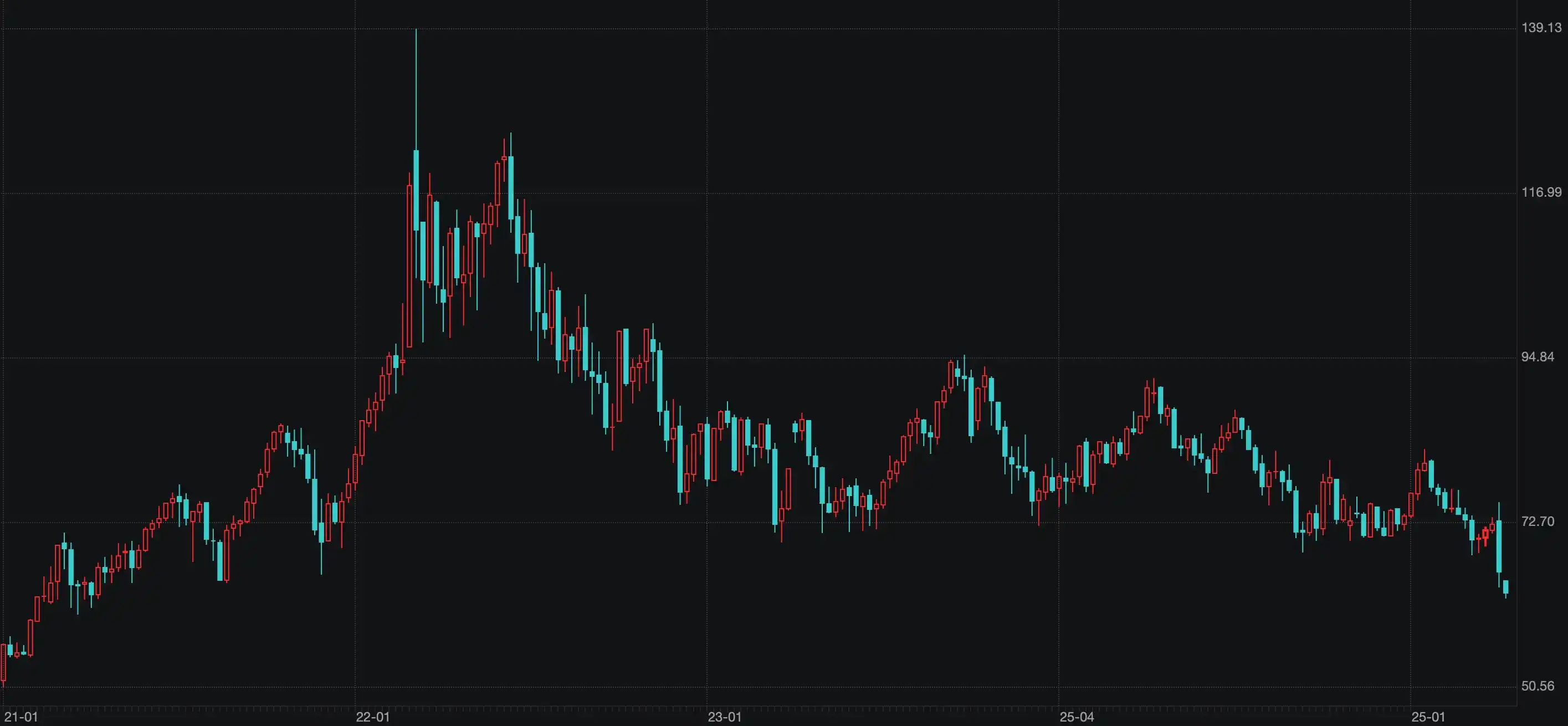
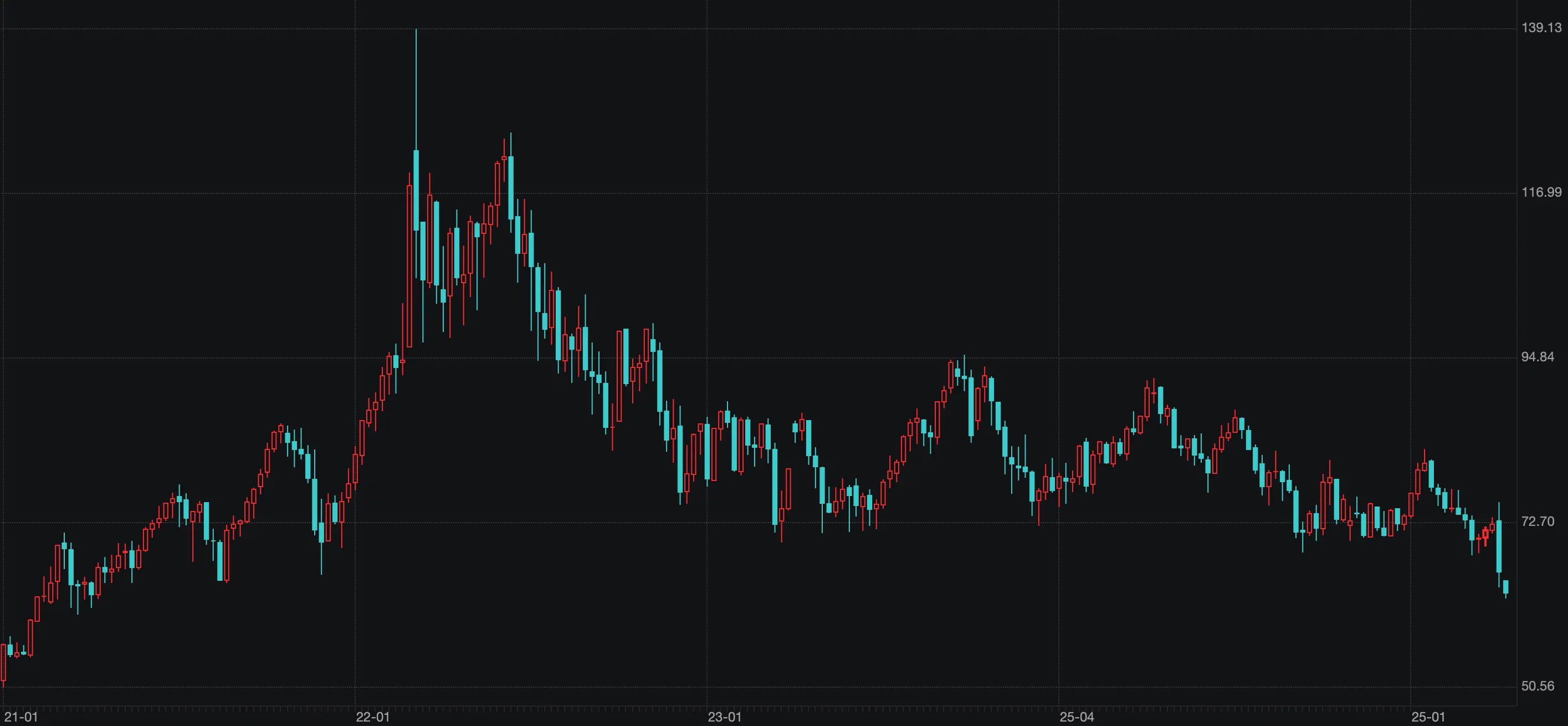
When analysing the one-day chart of XRP, it has reached its intraday high of $1.61 before settling at $1.58, reinforcing the prevailing bearish sentiment.​

With that, the immediate support lies at $1.55; if it moves further down, potentially dragging XRP toward the $1.50 zone. Conversely, a recovery attempt faces resistance near the $1.62 – $1.67 mark; a strong break out above this zone could see a shift in momentum, which is back in favor of the bulls.

On seeing the indicators, XRP’s moving average convergence and divergence line is below the signal line, which clearly indicates the downtrend. The RSI (Relative Strength Index) value is 26 which is below 30 level, signalling that the XRP is strongly oversold zone, following the lengthy price drops. Overall, XRP is under pressure due to broader market volatility, though oversold conditions indicate a brief price consolidation.

Highlighted Crypto News:

Nomura Cuts Crypto Risk After Q4 Profit Decline

TagsCrypto MarketRipple (XRP)xrp

Crypto di tendenza

Domande pertinenti

QWhat is the current trading price of XRP and how much has it declined in the past 24 hours?

AXRP is currently trading near $1.58, marking a decline of more than 4% over the past 24 hours.

QAccording to Coinglass data, what does the 6.06% drop in XRP's open interest indicate?

AThe 6.06% drop in XRP's open interest indicates that traders are closing positions and reducing their exposure, confirming weakening momentum.

QDespite the price drop, what positive flow did XRP see on January 30 according to SoSoValue data?

AOn January 30, XRP saw around $16.7 million in inflows into Exchange-Traded Funds, with the 21Shares XRP ETF (TOXR) leading with $8.19 million.

QWhat are the key support and resistance levels for XRP mentioned in the price analysis?

AThe immediate support lies at $1.55, with a further drop potentially dragging XRP toward $1.50. A recovery faces resistance near the $1.62 – $1.67 mark.

QWhat do the RSI value and MACD indicator suggest about XRP's current market condition?

AThe RSI value of 26 indicates XRP is in a strongly oversold zone. The MACD line being below the signal line clearly indicates a downtrend.

Letture associate

Will MicroStrategy Fall Into a Death Spiral? How Will the Macro Outlook Evolve in the Second Half of the Year?

**Summary:** The discussion centers on recent Bitcoin price declines and the evolving financial strategy of MicroStrategy (MSTR). The core argument is that the primary pressure is not from one-off Bitcoin sales by MSTR, but from the market's new expectation that MSTR may need to engage in *sustained, small-scale* Bitcoin sales to cover cash flow obligations for its growing portfolio of preferred shares and debt instruments (like STRC). This shift is driven by its stated goal of maintaining "bitcoins per share neutrality." The market is now testing whether it can absorb this potential ongoing selling pressure without entering a severe "death spiral" with Bitcoin's price. A resolution may involve MSTR softening its approach to avoid damaging both its stock and Bitcoin. The conversation then explores the parallel rise of AI-related stocks. The guest posits that AI is fundamentally restructuring labor, with "tokens" (representing access to AI models/compute) becoming a new form of capital and a substitute for human execution. This drives corporate efficiency and profits, benefiting upstream hardware providers (semiconductors, data centers), which explains the sustained rally. This represents the early stages of a "machine economy." Regarding crypto exchanges offering US stock trading, this is seen as a natural evolution. With few crypto-native assets generating lasting value, exchanges are pivoting to distribute valuable real-world assets (RWAs). This doesn't necessarily harm crypto's long-term prospects, as blockchain infrastructure may become crucial for future machine-to-machine economies. The analysis concludes that the era of rampant altcoin speculation is likely over, heavily damaged by the liquidity shock of the "1011" event (likely referring to a major market crash). Meme-driven capital has largely migrated to US equities. Looking ahead, macroeconomic uncertainty is rising due to potential large IPOs (e.g., SpaceX) and the US elections. While short-term market corrections are possible, the long-term trends of AI-driven productivity gains and the maturation of blockchain towards real-world utility and institutional adoption remain intact.

marsbit6 min fa

Will MicroStrategy Fall Into a Death Spiral? How Will the Macro Outlook Evolve in the Second Half of the Year?

marsbit6 min fa

Will MicroStrategy Fall into a Death Spiral? What Will the Macro Trend Be in the Second Half of the Year?

The podcast features investor Didier discussing the recent Bitcoin downturn and the evolving strategy of MicroStrategy (MSTR). He argues the core pressure is not macro factors or ETF outflows, but the market pricing in an expectation that MSTR will engage in continuous, small-scale Bitcoin sales to fund its increasing preferred stock and debt obligations under its "bitcoin-per-share neutrality" principle. This creates a structural headwind. However, he is cautiously optimistic a "death spiral" is avoidable without new major shocks, as market support is likely to emerge at a certain price point. Didier then posits that the AI-driven bull market in US stocks (semiconductors, data centers) is fundamentally driven by AI agents and tokens becoming the "new labor force," displacing human roles and boosting corporate margins. This shift toward a machine economy is still in its early stages. He comments on crypto exchanges adding US stock trading, viewing it as a natural move toward valuable real-world assets as truly valuable crypto-native assets remain scarce. For crypto-native traders, he suggests existing strategies (e.g., meme-chasing or value investing) can translate to similar assets in US markets. The discussion notes the severe liquidity damage from the "1011 event" (likely referring to a major market crash) has essentially ended the altcoin cycle, with speculative momentum shifting to the more liquid US stock market. Regarding the macroeconomic outlook for H2 2024, Didier expresses increased caution due to potential market pressure from upcoming mega-IPOs (e.g., SpaceX) and US midterm election risks. Long-term, he remains bullish on AI's productivity gains and its convergence with blockchain/Web3, which he sees maturing into a more institutional, real-asset-focused phase.

链捕手8 min fa

Will MicroStrategy Fall into a Death Spiral? What Will the Macro Trend Be in the Second Half of the Year?

链捕手8 min fa

Dylan Patel: Founder of SemiAnalysis, Praised by Jensen Huang, is a 'Beekeeper' and 'Forum Enthusiast'

Dylan Patel, founder of the independent research firm SemiAnalysis, has an unconventional background. A former beekeeper from rural Georgia, he entered the semiconductor world as a self-taught "forum warrior," discussing chip technology anonymously online from a young age. He launched the SemiAnalysis blog in May 2020, which later transitioned to a paid subscription model. The firm has grown from a one-person operation to a global team of around 60, with a dedicated teardown lab. Its detailed, technically-focused analysis on semiconductor supply chains, AI infrastructure, and products has earned significant industry recognition. Notably, NVIDIA founder Jensen Huang has publicly cited their reports. In a landmark case, a critical 2024 report on AMD's MI300X GPU software stack led to a 90-minute call with AMD CEO Lisa Su, who thanked him for the constructive feedback. SemiAnalysis later acknowledged AMD's improvements. The firm's influence on markets was seen when a report on NVIDIA's Rubin memory configuration was partially shared, affecting memory stock prices. Dylan Patel emphasized the importance of context, contrasting the shared excerpt with the report's actual title. SemiAnalysis, now a multi-faceted consultancy with revenue projected to reach $100 million, is known for its deep technical insights that influence major industry players and investment decisions.

marsbit58 min fa

Dylan Patel: Founder of SemiAnalysis, Praised by Jensen Huang, is a 'Beekeeper' and 'Forum Enthusiast'

marsbit58 min fa

Dylan Patel: SemiAnalysis, Praised by Jensen Huang, is Founded by a 'Beekeeper and Forum Warrior'

Dylan Patel, founder of the independent research firm SemiAnalysis, has an unconventional background. Growing up in rural Georgia, he later worked as a beekeeper in Minnesota. His entry into semiconductors began as a self-taught "forum warrior," engaging anonymously in online tech communities from a young age. In May 2020, he started the SemiAnalysis blog on WordPress, later moving it to Substack as a paid subscription service. The firm has since evolved from a one-person operation into a global company with around 60 employees, featuring a dedicated chip teardown lab. Its revenue, reaching $20 million last year, is projected to surpass $100 million this year. SemiAnalysis is highly regarded in the AI and semiconductor industry for its deep technical analysis. NVIDIA founder Jensen Huang has publicly praised its reports. In a notable instance, a critical report on AMD's MI300X GPU software shortcomings prompted a 90-minute call with CEO Lisa Su, who thanked Patel for the "constructive feedback." A later report acknowledged AMD's subsequent improvements. The firm's analyses have significant market impact. For example, a June report discussing potential memory configuration changes in NVIDIA's next-generation servers was cited as a factor in pressure on memory-related stocks. Patel plans to establish a venture capital firm, having already made personal investments in about 20 startups. SemiAnalysis combines roles as a consultancy, model platform, and tech lab, focusing on the practical bottlenecks in AI infrastructure.

Odaily星球日报1 h fa

Dylan Patel: SemiAnalysis, Praised by Jensen Huang, is Founded by a 'Beekeeper and Forum Warrior'

Odaily星球日报1 h fa

Ethereum Q1 Report: On-chain Activity Hits Record High, Tokenized Assets Lead the Industry

Ethereum Q1 2026 Report: On-chain activity hits record high, tokenized assets lead the industry. In Q1 2026, Ethereum's network experienced a unique divergence: on-chain activity soared while USD-denominated metrics declined. Monthly active users reached 13.2 million, transactions hit 200.4 million, and TPS averaged 25.78, all setting new highs. However, total value locked (TVL) fell 11.0% to $316.2B, DEX volume dropped 24.0% to $134.5B, and ETH's fully diluted market cap fell 30.3% to $290B. A key driver was the Blob Parameter Fork (BPO#2) in January, which increased data capacity and caused a sharp 47.9% drop in layer-1 transaction fees despite higher usage. Etherean's tokenized asset market cap reached $203.4B, up 42.9% year-over-year. While stablecoins ($178.9B) saw a slight dip, tokenized funds ($19.4B, +73.1% YoY), commodities ($4.7B, +325.9% YoY), and stocks ($365.1M) grew strongly. Ethereum dominates cross-chain comparisons, holding 71% of TVL, 79.2% of active loans, 61.8% of stablecoins, and 73% of tokenized funds among top chains. The report highlights a "Jevons Paradox" scenario: network expansion reduces per-transaction costs but unleashes latent demand, driving long-term growth. Ethereum's strategy mirrors Amazon's early focus on scale over profit. Its open, neutral foundation is seen as critical for institutional adoption, as evidenced by growing activity from firms like BlackRock and JPMorgan. The roadmap targets further scalability, aiming for thousands of TPS by 2029 to solidify its role as a global financial settlement layer.

marsbit1 h fa

Ethereum Q1 Report: On-chain Activity Hits Record High, Tokenized Assets Lead the Industry

marsbit1 h fa

Trading

Spot
Futures

Articoli Popolari

Cosa è XRP 2.0

XRP 2.0: Una Nuova Frontiera nel Paesaggio delle Criptovalute Introduzione a XRP 2.0 Nel mondo in continua evoluzione delle criptovalute, nuovi progetti emergono continuamente, cercando attenzione e adozione. Una tale iniziativa promettente è XRP 2.0, un nuovo progetto di criptovaluta progettato per sfruttare avanzate tecnologie blockchain e metodologie di crittografia robuste. Anche se il nome richiama alla mente l'XRP di Ripple, è fondamentale notare che XRP 2.0 opera in modo indipendente, concentrandosi sul miglioramento della sicurezza delle transazioni, della privacy e della scalabilità. Mentre il panorama finanziario digitale abbraccia sempre di più soluzioni decentralizzate, XRP 2.0 mira a contribuire in modo significativo al web3 e all'espansione generale dei progetti crypto. Cos'è XRP 2.0? Alla sua base, XRP 2.0 è un progetto di criptovaluta che mira a creare un ecosistema di valuta digitale sicuro e decentralizzato. La sua tecnologia fondamentale integra principi di blockchain sofisticati con tecniche di crittografia all'avanguardia. L'obiettivo principale di XRP 2.0 è quello di affermarsi come una piattaforma affidabile ed efficiente in grado di consentire un'esecuzione rapida delle transazioni, dando priorità a migliori protezioni della privacy per i suoi utenti. Il progetto è promosso come una soluzione a molte limitazioni affrontate dalle criptovalute esistenti, proponendo un sistema in grado di gestire un volume maggiore di transazioni con migliorata velocità e privacy. Questa versatilità pone XRP 2.0 come un significativo competitor in un mercato affollato di varie valute digitali. Chi è il Creatore di XRP 2.0? L'identità del creatore dietro XRP 2.0 è stata segnalata come 'Wilbur'. Tuttavia, i dettagli completi riguardanti Wilbur o l'entità associata rimangono sfuggenti. L'anonimato di molti creatori di criptovalute non è un fenomeno raro nel settore, spesso progettato per mantenere un certo grado di privacy e sicurezza. Chi sono gli Investitori di XRP 2.0? Al momento, informazioni specifiche relative alle fondazioni o organizzazioni di investimento a supporto di XRP 2.0 non sono disponibili pubblicamente. Nel settore delle criptovalute, il supporto di investitori rinomati può influenzare significativamente la credibilità e il successo di un progetto, tuttavia la trasparenza riguardo ai sostenitori finanziari di XRP 2.0 non è stata stabilita. Come Funziona XRP 2.0? XRP 2.0 si distingue per l'impiego di una combinazione di tecnologia blockchain e algoritmi di crittografia avanzati che garantiscono transazioni sicure e decentralizzate. La sua struttura innovativa include caratteristiche uniche progettate per promuovere il coinvolgimento degli utenti e ampliare le funzionalità oltre le transazioni convenzionali delle criptovalute. Tra queste caratteristiche, XRP 2.0 incorpora capacità alimentate da intelligenza artificiale, come funzionalità di testo in immagini e testo in voce. Queste aggiunte sono progettate per migliorare l'esperienza interattiva per gli utenti, promuovendo una maggiore applicabilità in vari settori. Unendo progressi tecnologici con design incentrati sugli utenti, XRP 2.0 mira a catturare l'attenzione di una vasta gamma di individui e aziende che cercano di integrare soluzioni di criptovaluta nei loro framework operativi. Cronologia di XRP 2.0 Comprendere XRP 2.0 richiede di esaminare i traguardi che hanno definito il suo percorso fino ad ora: 23 luglio 2023: XRP 2.0 viene introdotto come un nuovo progetto di criptovaluta, mirante a rivoluzionare le capacità di transazione sicura e decentralizzata nel dominio blockchain. 8 settembre 2023: Si verifica il lancio di un altro progetto, XRP20, marcando l'emergere di un token ERC-20 sulla blockchain di Ethereum che resta non correlato a XRP 2.0. 13 novembre 2023: Il ledger XRP subisce un significativo aggiornamento con il rilascio della versione 2.0.0 del software server rippled. È essenziale notare che questo sviluppo è scollegato dal progetto di criptovaluta XRP 2.0. Punti Chiave su XRP 2.0 Per distillare l'essenza di XRP 2.0, emergono diversi fattori critici: Caratteristiche Uniche: L'inclusione di funzionalità come il testo in immagini e testo in voce alimentato da intelligenza artificiale diversifica ulteriormente le potenziali applicazioni di XRP 2.0. Tecnologia Blockchain: Il framework utilizza meccanismi blockchain avanzati e protocolli di crittografia, garantendo un ambiente sicuro e decentralizzato per le transazioni. Scalabilità e Privacy: XRP 2.0 dà priorità a migliori protezioni della privacy nei processi di transazione e alla scalabilità necessaria per accogliere una base di utenti in crescita. Nessuna Affiliazione con Ripple: È importante notare che, nonostante il suo nome, XRP 2.0 non ha alcuna fedeltà o collaborazione con l'XRP di Ripple, distinguendo il proprio framework operativo e obiettivi all'interno dell'ecosistema delle criptovalute. Conclusione XRP 2.0 rappresenta un'ambiziosa venture nell'ambito delle criptovalute, mirante a offrire una combinazione di sicurezza, privacy ed efficienza nelle transazioni digitali. Integrando tecnologie sofisticate e caratteristiche user-friendly, il progetto si propone di ampliare gli orizzonti di ciò che le criptovalute possono realizzare nell'economia digitale odierna. Sebbene l'anonimato del suo creatore e la mancanza di investitori dichiarati possano sollevare domande per alcuni, il focus di XRP 2.0 su funzionalità avanzate e decentralizzazione ne amplifica l'appeal in un mercato crypto sempre più affollato. Man mano che il panorama delle criptovalute continua a evolversi, XRP 2.0 potrebbe emergere come un attore decisivo nell'espansione di soluzioni blockchain sicure e scalabili.

167 Totale visualizzazioniPubblicato il 2024.04.05Aggiornato il 2024.12.03

Cosa è XRP 2.0

Come comprare XRP

Benvenuto in HTX.com! Abbiamo reso l'acquisto di XRP (XRP) semplice e conveniente. Segui la nostra guida passo passo per intraprendere il tuo viaggio nel mondo delle criptovalute.Step 1: Crea il tuo Account HTXUsa la tua email o numero di telefono per registrarti il tuo account gratuito su HTX. Vivi un'esperienza facile e sblocca tutte le funzionalità,Crea il mio accountStep 2: Vai in Acquista crypto e seleziona il tuo metodo di pagamentoCarta di credito/debito: utilizza la tua Visa o Mastercard per acquistare immediatamente XRPXRP.Bilancio: Usa i fondi dal bilancio del tuo account HTX per fare trading senza problemi.Terze parti: abbiamo aggiunto metodi di pagamento molto utilizzati come Google Pay e Apple Pay per maggiore comodità.P2P: Fai trading direttamente con altri utenti HTX.Over-the-Counter (OTC): Offriamo servizi su misura e tassi di cambio competitivi per i trader.Step 3: Conserva XRP (XRP)Dopo aver acquistato XRP (XRP), conserva nel tuo account HTX. In alternativa, puoi inviare tramite trasferimento blockchain o scambiare per altre criptovalute.Step 4: Scambia XRP (XRP)Scambia facilmente XRP (XRP) nel mercato spot di HTX. Accedi al tuo account, seleziona la tua coppia di trading, esegui le tue operazioni e monitora in tempo reale. Offriamo un'esperienza user-friendly sia per chi ha appena iniziato che per i trader più esperti.

1.6k Totale visualizzazioniPubblicato il 2024.12.10Aggiornato il 2026.06.02

Come comprare XRP

Discussioni

Benvenuto nella Community HTX. Qui puoi rimanere informato sugli ultimi sviluppi della piattaforma e accedere ad approfondimenti esperti sul mercato. Le opinioni degli utenti sul prezzo di XRP XRP sono presentate come di seguito.

活动图片