World's Richest Man, 'Silicon Valley Iron Man' Musk, to Take SpaceX Public in 2026!

marsbitPubblicato 2025-12-11Pubblicato ultima volta 2025-12-11

Introduzione

Elon Musk, the world's richest person and CEO of SpaceX, plans to take the company public in 2026 with a target valuation of approximately $1.5 trillion. The IPO is expected to raise "significantly more than $30 billion," potentially making it the largest in history, surpassing Saudi Aramco's 2019 offering. A key driver of this ambitious valuation is a new narrative: **space-based AI computing**. Musk introduced the concept of "space AI compute" at a recent investor conference, arguing that within five years, running AI training and inference in space could become the lowest-cost solution. The core advantages include near-uninterrupted solar power and the vacuum of space acting as an ultimate heat sink. Additionally, with its reusable Starship rockets, SpaceX aims to drastically reduce launch costs to as low as $200–300 per kilogram. This vision, however, faces significant technical hurdles. Challenges include managing extreme heat radiation in direct sunlight, protecting hardware from cosmic radiation, and the economic risks associated with potential launch failures. Competitors are also entering the arena, including Jeff Bezos’ Blue Origin, which is developing its own orbital data centers, and Sam Altman’s OpenAI, which is reportedly considering acquiring a rocket company. Despite the challenges, Wall Street has responded positively. Firms like Ark Invest are now valuing SpaceX as a high-growth AI infrastructure company rather than a traditional aerospace firm, projectin...

World's Richest Man, 'Silicon Valley Iron Man' Musk, to Take SpaceX Public in 2026.

Overall valuation is approximately $1.5 trillion (about RMB 10.6 trillion), and the planned financing scale will "significantly exceed $30 billion". If achieved, it will surpass Saudi Aramco's 2019 IPO ($29.4 billion) to become the world's largest IPO.

The grand goal of a $1.5 trillion valuation cannot rely solely on the old dream of Starlink and Starship's "stars and seas"; Musk has opportunistically crafted a new dream: Space Computing Power.
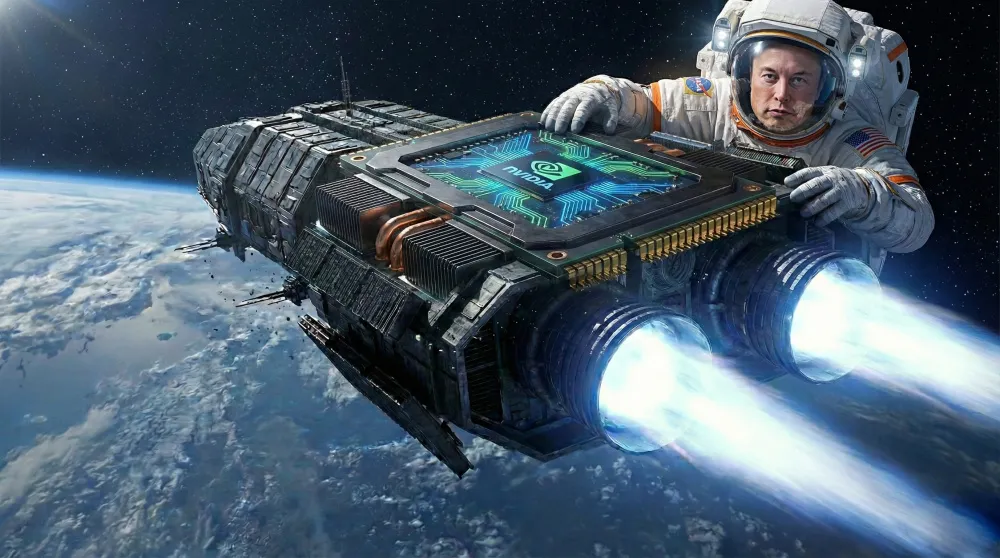
Those sharing the same dream include Bezos, Altman, and Silicon Valley giants like Google, NVIDIA, and Amazon. There's no other way—infrastructure and electricity on Earth are just too expensive.

At the Baron Capital Annual Investor Conference on November 18, Musk publicly elaborated on the concept of "Space AI Computing Power" for the first time. "Within five years, running AI training and inference in space will become the lowest-cost solution."

Musk clearly stated that Earth's orbit has the never-setting sun providing free electricity; the cosmic vacuum is the ultimate heat sink; the reusability of Starship will significantly reduce the cost of transporting materials to Earth's orbital space.

However, to utilize space's environment and energy, computing power in space requires additional technological advancements, including radiation protection, heat dissipation, etc., which in turn raises economic feasibility questions—the very problem space-based computing was meant to solve economically.

A senior aerospace researcher quipped: "Placing user data under the狂暴solar wind冲刷, what he needs isn't a computer, it's a brain supplement."

01

The Core of the New Narrative: Space Computing Power

Musk's proposed "space data center" is not science fiction but directly targets the two major bottlenecks of current Earth-based AI infrastructure: energy costs and cooling costs.

The environmental characteristics offered by space make it a leapfrog alternative, primarily including the never-setting sun and the cosmic vacuum. The former provides almost free energy, while the latter is a natural "ultimate heat sink".

As AI models expand dramatically, energy has become the biggest pressure point in the computing economy. Training a model like GPT-5 could cost hundreds of millions of dollars, with electricity costs constituting a significant portion.
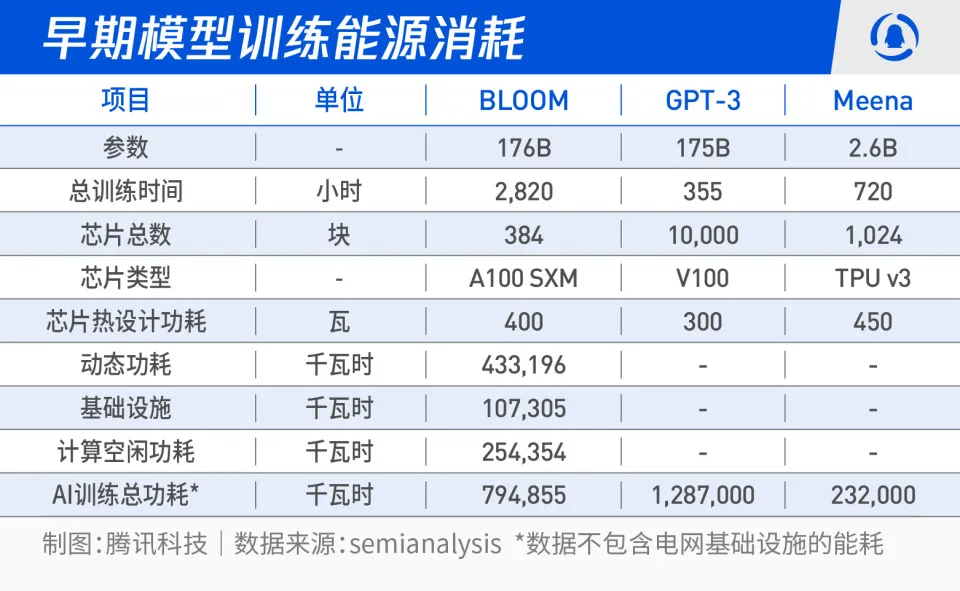
In contrast, low Earth orbit could enable space computing power to achieve a cost floor that is unattainable on Earth.

First, there is continuous solar resources—low orbit satellites circle the Earth about 16 times a day. Through orbital distribution and inter-satellite link scheduling, tasks can be switched in real-time to nodes in the sunlit zone, achieving nearly 24-hour energy supply.

Second, no land, power grid, or substation facilities are needed. Once deployed, the long-term cost of space-based solar power approaches zero.

Energy and infrastructure become cheap in space, but the heat dissipation problem must be solved. High-performance GPUs have extremely high thermal density, causing 30%–40% of a ground data center's electricity to be consumed by cooling.

In space, the vacuum environment, lacking convection and conduction, relies solely on thermal radiation for heat dissipation. For satellites on the sun-facing side, this is equivalent to "barbecue mode". Additionally, space radiation and high-energy particles could potentially disrupt high-performance computing processes, making them "fragmented".

"The computing chips you use on the ground likely won't work up there," emphasized the aforementioned researcher.

Another key element supporting SpaceX's space computing power story is Starship's launch capacity cost.

The economics of space computing power are built upon Starship's extremely low launch costs. Musk's planned Starship V3 (single payload ~100 tons) could, with high-frequency reuse, push the launch price down to $200–300 per kilogram, far lower than existing rockets.

Based on this estimate, the transportation cost to send a 200MW-class data center into orbit would be about $5–7.5 billion, still significantly lower than the total investment required to build a similar-scale AI supercomputer on Earth ($15–25 billion).

The story is always beautiful, but reality presents numerous challenges.

Beyond the aforementioned heat dissipation and cosmic rays, the first issue proponents of the "space computing power" narrative must consider is rocket explosions and accidents—the cost of such low-probability events would far exceed the value brought by increased launch capacity, especially considering 1GW of computing power on Earth is worth up to $50 billion.

From this perspective, everything returns to the original point: the "economic problem".

Regarding heat dissipation, while it might be possible to utilize the deep space's low temperatures, this raises another issue—distance is too great, requiring another more efficient energy source, such as nuclear power, to replace solar.

As for radiation, although it can be mitigated through radiation hardening, this adds extra technical challenges and costs beyond standard GPUs.

"Radiation hardening, the materials and processes themselves are expensive, and there's an upper limit to reinforcement; it's never as effective as the atmosphere's radiation protection," said the aforementioned researcher.

To address this, SpaceX is leveraging Tesla's experience with automotive-grade AI chips: Triple Modular Redundancy (TMR) architecture and real-time verification significantly improve radiation resistance.


02

Silicon Valley Capital Pushers "Get On Board"

SpaceX's new space computing power narrative is receiving a strong response from Wall Street and Silicon Valley capital.

Investment bank Morgan Stanley emphasized in a recent research report that the market's repricing of SpaceX's valuation essentially stems from the renewed expansion of its commercial boundaries. The "orbital data center" has become a new AI infrastructure narrative driving its valuation surge.
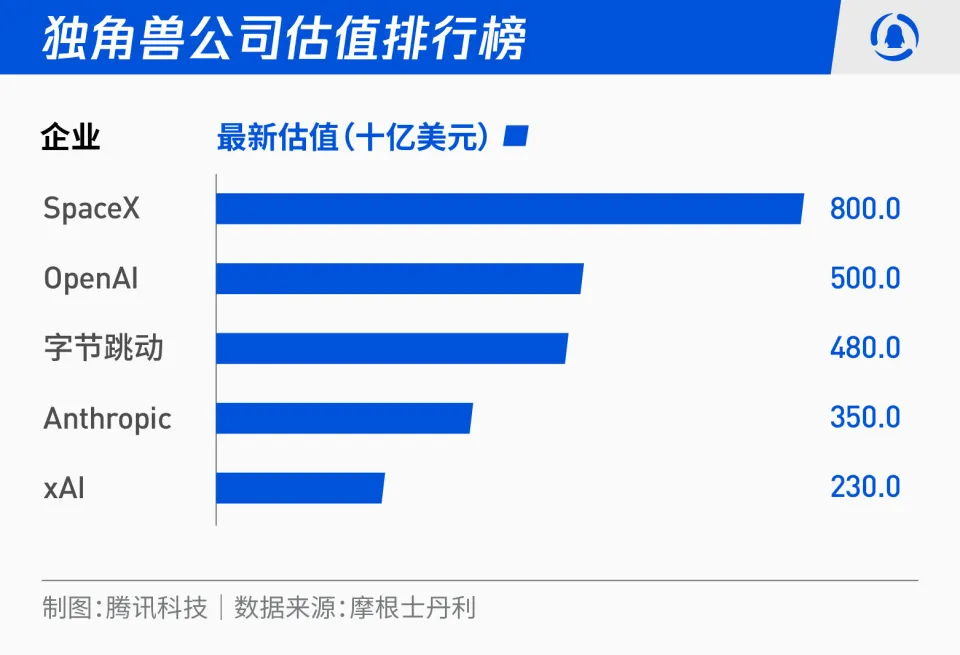
Analysts pointed out that this concept not only explains why the market is willing to price SpaceX like a high-growth software company but also why its valuation has shown a trend of doubling in half a year.

Wall Street has responded positively to Musk's new story for SpaceX. The most representative example is Cathie Wood's Ark Investment.

Ark's latest model explicitly values SpaceX entirely as a high-growth software company and AI infrastructure company, rather than a traditional aerospace or telecommunications enterprise. Almost all the新增valuation in their model comes from the "Space AI Computing Power" business line.

As long-time investors in Musk, they made aggressive scenario assumptions: By 2030, Starlink terminal users reach 120 million, contributing $300 billion in annual revenue; Orbital data centers will bring an additional $80–120 billion in revenue, with a net profit margin exceeding 70%, far higher than ground-based cloud services.

Ark Investment believes the key point is reducing Starship launch costs to below $100 per kilogram. After that, the scaled deployment of space computing power will experience exponential growth, similar to Amazon Web Services (AWS) after its launch, pushing SpaceX to become a $2.5 trillion-level company.

On the other hand, Silicon Valley mogul Peter Thiel's influence on SpaceX is more strategically significant.

As one of the earliest and most crucial external investors, Thiel provided a lifeline in 2008 when SpaceX faced three consecutive launch failures and was on the verge of bankruptcy, investing $20 million through Founders Fund as a timely rescue. He has since made multiple additional investments in SpaceX.

Thiel's support for SpaceX goes far beyond money itself; it also comes with the authoritative endorsement of the Silicon Valley ideology. Peter Thiel's involvement lends credibility to the "space computing power" narrative. More importantly, Thiel leverages his "Silicon Valley-Washington" influence to secure key policy and regulatory space for SpaceX.

The backing of these capital大佬相当于给SpaceX 1.5万亿美元的估值贴上了“可信”的标签. Therefore, Morgan Stanley noted in the aforementioned report that while Musk denied the rumored "$800 billion valuation," he was更多的是否认“融资行为”,并未否认估值本身.

Progress on Starship and Starlink, acquisition of global direct-to-cellular spectrum, the orbital data center becoming a new narrative, and SpaceX's overwhelming capability of capturing 90% of global launch mass have convinced capital markets that these variables will become the "main artery of future AI infrastructure".


03

Competition, Bubbles, and Risks

Over the past few years, Musk hasn't been the only one pushing the development of space computing power.

As early as 2021, the Barcelona Supercomputing Center (BSC) in Europe and Airbus Defence and Space jointly launched the GPU4S (GPU for Space) project, funded by the European Space Agency (ESA), to verify the feasibility of embedded GPUs in aerospace applications.

The project produced an open-source benchmark suite, GPU4S Bench, for evaluating performance in image processing, autonomous navigation, etc., and yielded the open-source benchmark test suite OBPMark adopted by ESA, laying the foundation for Europe's technological autonomy in orbital computing.

On November 2, 2025, a SpaceX Falcon 9 successfully launched the first experimental satellite, Starcloud-1, for startup Starcloud into low Earth orbit. The satellite carried an NVIDIA H100 GPU, marking the first verification of in-orbit AI data processing capability. It is reported that NVIDIA and Starcloud jointly developed a combined vacuum heat dissipation architecture, using highly thermally conductive materials on the satellite's exterior to conduct heat to the surface for dissipation via infrared radiation.

As Musk's old rival in the commercial space race, Jeff Bezos is also pushing Blue Origin to develop orbital AI data center technology, planning to use space-based solar power to fuel large-scale AI computing power.

He predicts that within the next 20 years, the cost of orbital data centers could be lower than ground facilities.

Another opponent in the AI field, OpenAI CEO Sam Altman, is also eager, considering acquiring rocket company Stoke Space to send AI computing payloads into space.

It can be said that the path for SpaceX to reach its $1.5 trillion valuation via "space computing power" is full of challengers, but the most direct opponent at this stage is Amazon's Project Kuiper.

Public information shows that Kuiper plans to deploy 3,200 satellites between 2026 and 2029 through launch agreements with Blue Origin. Its biggest advantage lies in AWS's global cloud ecosystem, which can offer enterprises a "ground + space" hybrid computing power offering.

But in Thiel's view, Kuiper still belongs to an "extension of the traditional cloud," relying on an Earth-infrastructure mindset that hasn't changed. Whereas SpaceX's space AI is a completely new paradigm: moving the computing center itself into orbit, making Earth data centers a supplementary layer. This paradigm difference determines the ceiling for both sides in the future "orbital cloud" competition.

Beyond technical and competitive challenges, regulatory issues must be considered—including orbital debris management, international spectrum coordination, and space militarization controversies—any of which could affect SpaceX's progress节奏in the next two to three years.

Returning to SpaceX: From the "Starlink IPO" in 2019, to "Starship is the core asset" in 2022, to the current "space data centers will become the cheapest AI computing power," Musk has rewritten SpaceX's narrative three times in the past six years, almost每一次都从质疑变成现实原型 (each time transforming from skepticism to a reality prototype).

Now, he is tying together Tesla's chip capabilities, xAI models, Starlink bandwidth, and Starship launch capacity into a unified strategy, targeting the most expensive resource of the AI era—low-cost computing power.

Wall Street has already started betting—the question is, can the richest man's new version of the "space dream" once again take shape?


Domande pertinenti

QWhat is the core of Elon Musk's new narrative for SpaceX's 2026 IPO, and what are its main advantages?

AThe core of the new narrative is 'Space Computing' or 'Orbital Data Centers'. The main advantages are access to nearly free, continuous solar power in orbit and the vacuum of space acting as the 'ultimate heat sink', which could significantly reduce the energy and cooling costs associated with large-scale AI computing on Earth.

QWhat major challenge does placing computing hardware in space present, according to the article?

AA major challenge is protecting the hardware from intense solar radiation and high-energy particles, which can disrupt high-performance computing processes. This requires developing and implementing expensive radiation-hardened technology and materials.

QWhich financial institution's analysis is cited as supporting the new 'space computing' narrative for SpaceX's valuation?

AInvestment bank Morgan Stanley is cited. Their analysis states that the 'orbital data center' concept is a new AI infrastructure story driving a re-rating of SpaceX's valuation, explaining why it's being valued like a high-growth software company.

QWho are some of the key competitors also exploring the concept of space-based computing, as mentioned in the article?

AKey competitors include Jeff Bezos' Blue Origin, which is developing orbital AI data center technology, and OpenAI CEO Sam Altman, who is considering acquiring rocket company Stoke Space for AI computing payloads. Amazon's Project Kuiper is also a direct competitor leveraging its AWS cloud ecosystem.

QWhat is the projected cost target for SpaceX's Starship V3 launch to make space computing economically viable, according to Ark Invest's model?

AArk Invest's model assumes a crucial target of reducing the Starship launch cost to under $100 per kilogram. Achieving this is seen as a key trigger for the exponential growth of space computing deployment.

Letture associate

VCs on 2025 Crypto Investments: 84% of 118 Tokens Break Issue Price, Only One Type of Company is Quietly Making Money

Crypto investor Ching Tseng categorizes the market into four quadrants based on two axes: crypto-native vs. traditional finance (TradFi)-oriented, and having traction vs. no traction. In 2025, 84.7% of 118 tracked token launches fell below their issuance price, with a median fully diluted valuation drop of 71%. Crypto-native projects without traction are experiencing massive capital destruction, often relying on speculative narratives without sustainable revenue or user retention. Crypto-native teams with traction, often built in prior cycles, generate real revenue but face structural challenges with their tokens lacking direct value capture mechanisms. While some have implemented successful buyback programs, the core issue remains finding growth beyond crypto volatility. TradFi-oriented startups without traction face long, costly enterprise sales cycles but benefit from a robust M&A environment, with crypto acquisitions reaching a record $8.6 billion in 2025. The current winners are TradFi-oriented companies with traction, particularly in the Real World Asset (RWA) tokenization space, which grew from $5.5B to $18.6B in 2025. They are winning through enterprise sales, building alliances, and improving unit economics on established compliance stacks. Their main risk is being bypassed by large incumbent institutions building their own infrastructure. The overarching theme is market maturation, where narrative alone is insufficient for long-term success.

marsbit25 min fa

VCs on 2025 Crypto Investments: 84% of 118 Tokens Break Issue Price, Only One Type of Company is Quietly Making Money

marsbit25 min fa

Trading

Spot
Futures

Articoli Popolari

Cosa è $S$

Comprendere SPERO: Una Panoramica Completa Introduzione a SPERO Mentre il panorama dell'innovazione continua a evolversi, l'emergere delle tecnologie web3 e dei progetti di criptovaluta gioca un ruolo fondamentale nel plasmare il futuro digitale. Un progetto che ha attirato l'attenzione in questo campo dinamico è SPERO, denotato come SPERO,$$s$. Questo articolo mira a raccogliere e presentare informazioni dettagliate su SPERO, per aiutare gli appassionati e gli investitori a comprendere le sue basi, obiettivi e innovazioni nei domini web3 e crypto. Che cos'è SPERO,$$s$? SPERO,$$s$ è un progetto unico all'interno dello spazio crypto che cerca di sfruttare i principi della decentralizzazione e della tecnologia blockchain per creare un ecosistema che promuove l'impegno, l'utilità e l'inclusione finanziaria. Il progetto è progettato per facilitare interazioni peer-to-peer in modi nuovi, fornendo agli utenti soluzioni e servizi finanziari innovativi. Al suo interno, SPERO,$$s$ mira a responsabilizzare gli individui fornendo strumenti e piattaforme che migliorano l'esperienza dell'utente nello spazio delle criptovalute. Questo include la possibilità di metodi di transazione più flessibili, la promozione di iniziative guidate dalla comunità e la creazione di percorsi per opportunità finanziarie attraverso applicazioni decentralizzate (dApps). La visione sottostante di SPERO,$$s$ ruota attorno all'inclusività, cercando di colmare le lacune all'interno della finanza tradizionale mentre sfrutta i vantaggi della tecnologia blockchain. Chi è il Creatore di SPERO,$$s$? L'identità del creatore di SPERO,$$s$ rimane piuttosto oscura, poiché ci sono risorse pubblicamente disponibili limitate che forniscono informazioni dettagliate sul suo fondatore o fondatori. Questa mancanza di trasparenza può derivare dall'impegno del progetto per la decentralizzazione—un ethos che molti progetti web3 condividono, dando priorità ai contributi collettivi rispetto al riconoscimento individuale. Centrando le discussioni attorno alla comunità e ai suoi obiettivi collettivi, SPERO,$$s$ incarna l'essenza dell'empowerment senza mettere in evidenza individui specifici. Pertanto, comprendere l'etica e la missione di SPERO rimane più importante che identificare un creatore singolo. Chi sono gli Investitori di SPERO,$$s$? SPERO,$$s$ è supportato da una varietà di investitori che vanno dai capitalisti di rischio agli investitori angelici dedicati a promuovere l'innovazione nel settore crypto. Il focus di questi investitori generalmente si allinea con la missione di SPERO—dando priorità a progetti che promettono avanzamenti tecnologici sociali, inclusività finanziaria e governance decentralizzata. Queste fondazioni di investitori sono tipicamente interessate a progetti che non solo offrono prodotti innovativi, ma contribuiscono anche positivamente alla comunità blockchain e ai suoi ecosistemi. Il supporto di questi investitori rafforza SPERO,$$s$ come un concorrente degno di nota nel dominio in rapida evoluzione dei progetti crypto. Come Funziona SPERO,$$s$? SPERO,$$s$ impiega un framework multifunzionale che lo distingue dai progetti di criptovaluta convenzionali. Ecco alcune delle caratteristiche chiave che sottolineano la sua unicità e innovazione: Governance Decentralizzata: SPERO,$$s$ integra modelli di governance decentralizzati, responsabilizzando gli utenti a partecipare attivamente ai processi decisionali riguardanti il futuro del progetto. Questo approccio favorisce un senso di proprietà e responsabilità tra i membri della comunità. Utilità del Token: SPERO,$$s$ utilizza il proprio token di criptovaluta, progettato per servire varie funzioni all'interno dell'ecosistema. Questi token abilitano transazioni, premi e la facilitazione dei servizi offerti sulla piattaforma, migliorando l'impegno e l'utilità complessivi. Architettura Stratificata: L'architettura tecnica di SPERO,$$s$ supporta la modularità e la scalabilità, consentendo un'integrazione fluida di funzionalità e applicazioni aggiuntive man mano che il progetto evolve. Questa adattabilità è fondamentale per mantenere la rilevanza nel panorama crypto in continua evoluzione. Coinvolgimento della Comunità: Il progetto enfatizza iniziative guidate dalla comunità, impiegando meccanismi che incentivano la collaborazione e il feedback. Nutrendo una comunità forte, SPERO,$$s$ può affrontare meglio le esigenze degli utenti e adattarsi alle tendenze di mercato. Focus sull'Inclusione: Offrendo basse commissioni di transazione e interfacce user-friendly, SPERO,$$s$ mira ad attrarre una base utenti diversificata, inclusi individui che potrebbero non aver precedentemente interagito nello spazio crypto. Questo impegno per l'inclusione si allinea con la sua missione generale di empowerment attraverso l'accessibilità. Cronologia di SPERO,$$s$ Comprendere la storia di un progetto fornisce preziose intuizioni sulla sua traiettoria di sviluppo e sui traguardi. Di seguito è riportata una cronologia suggerita che mappa eventi significativi nell'evoluzione di SPERO,$$s$: Fase di Concettualizzazione e Ideazione: Le idee iniziali che formano la base di SPERO,$$s$ sono state concepite, allineandosi strettamente con i principi di decentralizzazione e focus sulla comunità all'interno dell'industria blockchain. Lancio del Whitepaper del Progetto: Dopo la fase concettuale, è stato rilasciato un whitepaper completo che dettaglia la visione, gli obiettivi e l'infrastruttura tecnologica di SPERO,$$s$ per suscitare interesse e feedback dalla comunità. Costruzione della Comunità e Prime Interazioni: Sono stati effettuati sforzi attivi di outreach per costruire una comunità di early adopters e potenziali investitori, facilitando discussioni attorno agli obiettivi del progetto e ottenendo supporto. Evento di Generazione del Token: SPERO,$$s$ ha condotto un evento di generazione del token (TGE) per distribuire i propri token nativi ai primi sostenitori e stabilire una liquidità iniziale all'interno dell'ecosistema. Lancio della Prima dApp: La prima applicazione decentralizzata (dApp) associata a SPERO,$$s$ è stata attivata, consentendo agli utenti di interagire con le funzionalità principali della piattaforma. Sviluppo Continuo e Partnership: Aggiornamenti e miglioramenti continui alle offerte del progetto, inclusi partnership strategiche con altri attori nello spazio blockchain, hanno plasmato SPERO,$$s$ in un concorrente competitivo e in evoluzione nel mercato crypto. Conclusione SPERO,$$s$ rappresenta una testimonianza del potenziale del web3 e delle criptovalute di rivoluzionare i sistemi finanziari e responsabilizzare gli individui. Con un impegno per la governance decentralizzata, il coinvolgimento della comunità e funzionalità progettate in modo innovativo, apre la strada verso un panorama finanziario più inclusivo. Come per qualsiasi investimento nello spazio crypto in rapida evoluzione, si incoraggiano potenziali investitori e utenti a ricercare approfonditamente e a impegnarsi in modo riflessivo con gli sviluppi in corso all'interno di SPERO,$$s$. Il progetto mostra lo spirito innovativo dell'industria crypto, invitando a ulteriori esplorazioni delle sue innumerevoli possibilità. Mentre il percorso di SPERO,$$s$ è ancora in fase di sviluppo, i suoi principi fondamentali potrebbero effettivamente influenzare il futuro di come interagiamo con la tecnologia, la finanza e tra di noi in ecosistemi digitali interconnessi.

75 Totale visualizzazioniPubblicato il 2024.12.17Aggiornato il 2024.12.17

Cosa è $S$

Cosa è AGENT S

Agent S: Il Futuro dell'Interazione Autonoma in Web3 Introduzione Nel panorama in continua evoluzione di Web3 e criptovalute, le innovazioni stanno costantemente ridefinendo il modo in cui gli individui interagiscono con le piattaforme digitali. Uno di questi progetti pionieristici, Agent S, promette di rivoluzionare l'interazione uomo-computer attraverso il suo framework agentico aperto. Aprendo la strada a interazioni autonome, Agent S mira a semplificare compiti complessi, offrendo applicazioni trasformative nell'intelligenza artificiale (AI). Questa esplorazione dettagliata approfondirà le complessità del progetto, le sue caratteristiche uniche e le implicazioni per il dominio delle criptovalute. Cos'è Agent S? Agent S si presenta come un innovativo framework agentico aperto, progettato specificamente per affrontare tre sfide fondamentali nell'automazione dei compiti informatici: Acquisizione di Conoscenze Specifiche del Dominio: Il framework apprende in modo intelligente da varie fonti di conoscenza esterne ed esperienze interne. Questo approccio duale gli consente di costruire un ricco repository di conoscenze specifiche del dominio, migliorando le sue prestazioni nell'esecuzione dei compiti. Pianificazione su Lungo Orizzonte di Compiti: Agent S impiega una pianificazione gerarchica potenziata dall'esperienza, un approccio strategico che facilita la suddivisione e l'esecuzione efficiente di compiti complessi. Questa caratteristica migliora significativamente la sua capacità di gestire più sottocompiti in modo efficiente ed efficace. Gestione di Interfacce Dinamiche e Non Uniformi: Il progetto introduce l'Interfaccia Agente-Computer (ACI), una soluzione innovativa che migliora l'interazione tra agenti e utenti. Utilizzando Modelli Linguistici Multimodali di Grandi Dimensioni (MLLM), Agent S può navigare e manipolare senza sforzo diverse interfacce grafiche utente. Attraverso queste caratteristiche pionieristiche, Agent S fornisce un framework robusto che affronta le complessità coinvolte nell'automazione dell'interazione umana con le macchine, preparando il terreno per innumerevoli applicazioni nell'AI e oltre. Chi è il Creatore di Agent S? Sebbene il concetto di Agent S sia fondamentalmente innovativo, informazioni specifiche sul suo creatore rimangono elusive. Il creatore è attualmente sconosciuto, il che evidenzia sia la fase embrionale del progetto sia la scelta strategica di mantenere i membri fondatori sotto anonimato. Indipendentemente dall'anonimato, l'attenzione rimane sulle capacità e sul potenziale del framework. Chi sono gli Investitori di Agent S? Poiché Agent S è relativamente nuovo nell'ecosistema crittografico, informazioni dettagliate riguardanti i suoi investitori e sostenitori finanziari non sono documentate esplicitamente. La mancanza di approfondimenti pubblicamente disponibili sulle fondazioni di investimento o sulle organizzazioni che supportano il progetto solleva interrogativi sulla sua struttura di finanziamento e sulla roadmap di sviluppo. Comprendere il supporto è cruciale per valutare la sostenibilità del progetto e il suo potenziale impatto sul mercato. Come Funziona Agent S? Al centro di Agent S si trova una tecnologia all'avanguardia che gli consente di funzionare efficacemente in contesti diversi. Il suo modello operativo è costruito attorno a diverse caratteristiche chiave: Interazione Uomo-Computer Simile a Quella Umana: Il framework offre una pianificazione AI avanzata, cercando di rendere le interazioni con i computer più intuitive. Mimando il comportamento umano nell'esecuzione dei compiti, promette di elevare le esperienze degli utenti. Memoria Narrativa: Utilizzata per sfruttare esperienze di alto livello, Agent S utilizza la memoria narrativa per tenere traccia delle storie dei compiti, migliorando così i suoi processi decisionali. Memoria Episodica: Questa caratteristica fornisce agli utenti una guida passo-passo, consentendo al framework di offrire supporto contestuale mentre i compiti si sviluppano. Supporto per OpenACI: Con la capacità di funzionare localmente, Agent S consente agli utenti di mantenere il controllo sulle proprie interazioni e flussi di lavoro, allineandosi con l'etica decentralizzata di Web3. Facile Integrazione con API Esterne: La sua versatilità e compatibilità con varie piattaforme AI garantiscono che Agent S possa adattarsi senza problemi agli ecosistemi tecnologici esistenti, rendendolo una scelta attraente per sviluppatori e organizzazioni. Queste funzionalità contribuiscono collettivamente alla posizione unica di Agent S all'interno dello spazio crittografico, poiché automatizza compiti complessi e multi-fase con un intervento umano minimo. Man mano che il progetto evolve, le sue potenziali applicazioni in Web3 potrebbero ridefinire il modo in cui si svolgono le interazioni digitali. Cronologia di Agent S Lo sviluppo e le tappe di Agent S possono essere riassunti in una cronologia che evidenzia i suoi eventi significativi: 27 Settembre 2024: Il concetto di Agent S è stato lanciato in un documento di ricerca completo intitolato “Un Framework Agentico Aperto che Usa i Computer Come un Umano”, mostrando le basi per il progetto. 10 Ottobre 2024: Il documento di ricerca è stato reso pubblicamente disponibile su arXiv, offrendo un'esplorazione approfondita del framework e della sua valutazione delle prestazioni basata sul benchmark OSWorld. 12 Ottobre 2024: È stata rilasciata una presentazione video, fornendo un'idea visiva delle capacità e delle caratteristiche di Agent S, coinvolgendo ulteriormente potenziali utenti e investitori. Questi indicatori nella cronologia non solo illustrano i progressi di Agent S, ma indicano anche il suo impegno per la trasparenza e il coinvolgimento della comunità. Punti Chiave su Agent S Man mano che il framework Agent S continua a evolversi, diversi attributi chiave si distinguono, sottolineando la sua natura innovativa e il potenziale: Framework Innovativo: Progettato per fornire un uso intuitivo dei computer simile all'interazione umana, Agent S porta un approccio nuovo all'automazione dei compiti. Interazione Autonoma: La capacità di interagire autonomamente con i computer attraverso GUI segna un passo avanti verso soluzioni informatiche più intelligenti ed efficienti. Automazione di Compiti Complessi: Con la sua metodologia robusta, può automatizzare compiti complessi e multi-fase, rendendo i processi più veloci e meno soggetti a errori. Miglioramento Continuo: I meccanismi di apprendimento consentono ad Agent S di migliorare dalle esperienze passate, migliorando continuamente le sue prestazioni e la sua efficacia. Versatilità: La sua adattabilità attraverso diversi ambienti operativi come OSWorld e WindowsAgentArena garantisce che possa servire un'ampia gamma di applicazioni. Man mano che Agent S si posiziona nel panorama di Web3 e delle criptovalute, il suo potenziale per migliorare le capacità di interazione e automatizzare i processi segna un significativo avanzamento nelle tecnologie AI. Attraverso il suo framework innovativo, Agent S esemplifica il futuro delle interazioni digitali, promettendo un'esperienza più fluida ed efficiente per gli utenti in vari settori. Conclusione Agent S rappresenta un audace passo avanti nell'unione tra AI e Web3, con la capacità di ridefinire il modo in cui interagiamo con la tecnologia. Sebbene sia ancora nelle sue fasi iniziali, le possibilità per la sua applicazione sono vaste e coinvolgenti. Attraverso il suo framework completo che affronta sfide critiche, Agent S mira a portare le interazioni autonome al centro dell'esperienza digitale. Man mano che ci addentriamo nei regni delle criptovalute e della decentralizzazione, progetti come Agent S giocheranno senza dubbio un ruolo cruciale nel plasmare il futuro della tecnologia e della collaborazione uomo-computer.

402 Totale visualizzazioniPubblicato il 2025.01.14Aggiornato il 2025.01.14

Cosa è AGENT S

Come comprare S

Benvenuto in HTX.com! Abbiamo reso l'acquisto di Sonic (S) semplice e conveniente. Segui la nostra guida passo passo per intraprendere il tuo viaggio nel mondo delle criptovalute.Step 1: Crea il tuo Account HTXUsa la tua email o numero di telefono per registrarti il tuo account gratuito su HTX. Vivi un'esperienza facile e sblocca tutte le funzionalità,Crea il mio accountStep 2: Vai in Acquista crypto e seleziona il tuo metodo di pagamentoCarta di credito/debito: utilizza la tua Visa o Mastercard per acquistare immediatamente SonicS.Bilancio: Usa i fondi dal bilancio del tuo account HTX per fare trading senza problemi.Terze parti: abbiamo aggiunto metodi di pagamento molto utilizzati come Google Pay e Apple Pay per maggiore comodità.P2P: Fai trading direttamente con altri utenti HTX.Over-the-Counter (OTC): Offriamo servizi su misura e tassi di cambio competitivi per i trader.Step 3: Conserva Sonic (S)Dopo aver acquistato Sonic (S), conserva nel tuo account HTX. In alternativa, puoi inviare tramite trasferimento blockchain o scambiare per altre criptovalute.Step 4: Scambia Sonic (S)Scambia facilmente Sonic (S) nel mercato spot di HTX. Accedi al tuo account, seleziona la tua coppia di trading, esegui le tue operazioni e monitora in tempo reale. Offriamo un'esperienza user-friendly sia per chi ha appena iniziato che per i trader più esperti.

827 Totale visualizzazioniPubblicato il 2025.01.15Aggiornato il 2025.03.21

Come comprare S

Discussioni

Benvenuto nella Community HTX. Qui puoi rimanere informato sugli ultimi sviluppi della piattaforma e accedere ad approfondimenti esperti sul mercato. Le opinioni degli utenti sul prezzo di S S sono presentate come di seguito.

活动图片