World Gold Council Proposes “Gold as a Service” Framework Impacting Tokenized Gold Market

TheNewsCryptoPubblicato 2026-03-20Pubblicato ultima volta 2026-03-20

Introduzione

The World Gold Council has introduced a "Gold as a Service" framework aimed at modernizing the global tokenized gold infrastructure. This system connects physical gold custody with digital issuance, enabling more efficient creation of gold-backed products. It is structured around three core components: physical custody, digital issuance, and synchronization systems that link assets to blockchain records. The framework is expected to impact major market players like Tether Gold (XAUT) and Paxos Gold (PAXG), which currently dominate the tokenized gold sector but operate on fragmented systems. By introducing standardized processes for custody, compliance, and redemption, the initiative seeks to unify the market, improve regulatory alignment, and reduce operational costs. This development is seen as a significant step in merging traditional gold markets with blockchain technology, potentially driving greater adoption among institutional investors and fintech companies. The Council emphasized that the framework is designed to foster future growth rather than target existing issuers.

The World Gold Council created a “Gold as a Service” framework to help modernize tokenized gold infrastructure worldwide. It does this by connecting physical gold custody and digital issuance systems, allowing companies to issue gold-backed products more efficiently. It is built on three levels of physical custody, digital issuance, and synchronization systems that connect assets and blockchain records.
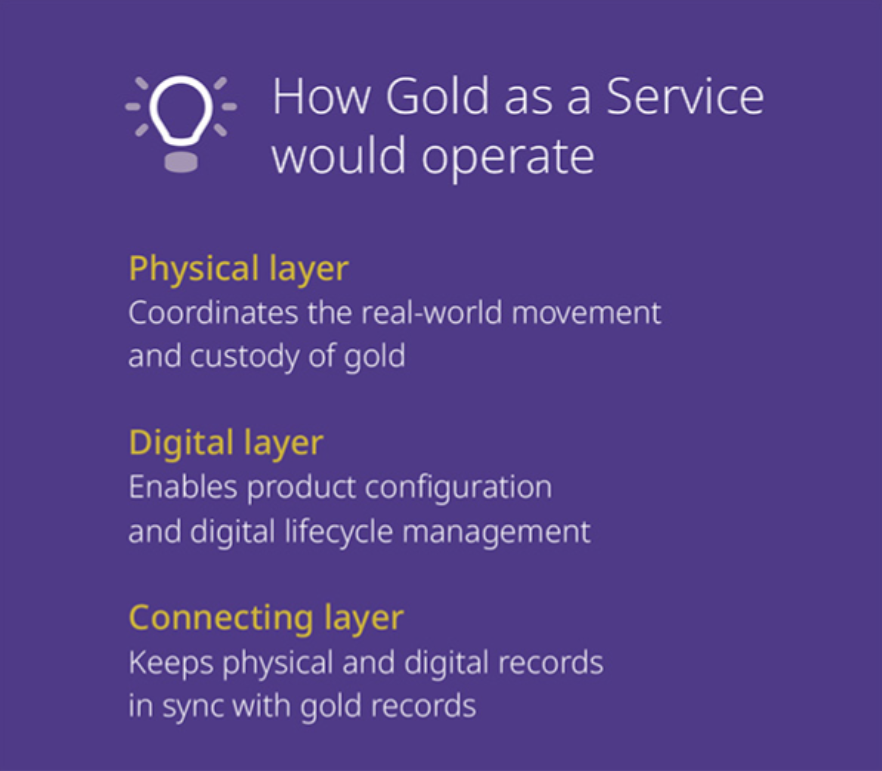
Source: World Gold Council

The World Gold Council CEO, David Tait, said, “Financial services are undergoing a rapid and pervasive digital transformation.” He further added that shared infrastructure would help in improving accessibility, tradability, and integration of gold in modern financial systems worldwide.

Impact on Tether Gold and Paxos Gold Market Leaders

Currently, Tether Gold (XAUT) and Paxos Gold (PAXG) currently dominate the overall tokenized gold market. Also, they collectively command a large market share in the overall market worldwide. Both of these operate on different systems for custody, audit, and redemption, and this is causing fragmentation in the overall digital gold market worldwide.

The new framework also outlines a set of standardized processes that include custody coordination, compliance checks, and redemption systems that are to be followed on all platforms globally. Such a framework would ensure that all platforms are aligned in terms of regulatory compliance. It has been noted that such a platform can enable hundreds of new issuances to happen in a more efficient manner.

The Potential and Development Mark

The platform can potentially lead to lower operational costs as well as better integration between tokenized gold assets on various blockchain platforms globally. This can further increase adoption rates among institutional investors as well as fintech companies that are entering the tokenized commodity space. Officials emphasized that the platform focuses on enabling growth. Rather than targeting existing issuers in the space.

The development marks a significant convergence between traditional gold markets and blockchain technology as the adoption of digital assets continues to gain momentum globally. Analysts noted that tokenized gold can act as a major growth driver in traditional gold markets globally.

Highlighted Crypto News:

Ondo Finance Expands Tokenized Securities Offering With BlackRock IBIT and Galaxy Digital

TagsBlockchainCryptocurrencyDigital assetsGoldservice

Domande pertinenti

QWhat is the main purpose of the 'Gold as a Service' framework proposed by the World Gold Council?

AThe main purpose is to modernize tokenized gold infrastructure worldwide by connecting physical gold custody and digital issuance systems, allowing companies to issue gold-backed products more efficiently.

QWhich two products currently dominate the tokenized gold market according to the article?

ATether Gold (XAUT) and Paxos Gold (PAXG) currently dominate the tokenized gold market.

QWhat are the three levels that the 'Gold as a Service' framework is built upon?

AIt is built on three levels: physical custody, digital issuance, and synchronization systems that connect assets and blockchain records.

QWhat benefits does the World Gold Council CEO believe shared infrastructure will bring to gold?

ADavid Tait believes shared infrastructure will help improve accessibility, tradability, and integration of gold in modern financial systems worldwide.

QHow can the new framework potentially impact operational costs and adoption rates?

AThe framework can lead to lower operational costs and better integration, which can further increase adoption rates among institutional investors and fintech companies entering the tokenized commodity space.

Letture associate

Bitcoin Boom in Full Swing: Saylor's Latest Statement Fuels Buying Speculation

MicroStrategy's Executive Chairman Michael Saylor has fueled speculation about a new Bitcoin purchase by posting "Bitcoin Drive engaged" on August 2, accompanied by the company's customary purchase tracker. This aligns with his pattern of hinting at treasury changes ahead of weekly reports. The accompanying report showed MicroStrategy's Bitcoin holdings at 843,775 BTC, with an average cost of $75,653 per coin and an unrealized loss of -$10.58B. A similar signal preceded the company's July 27 announcement, strengthening expectations for a treasury update on Monday. However, MicroStrategy's real-time ledger reflects two recent Bitcoin sales totaling 3,588 BTC, reducing holdings from 847,363 BTC to the current 843,775 BTC. The company stated these sales funded preferred stock dividends and replenished its U.S. dollar reserve. Recent reports indicate the company made no Bitcoin purchases the week ending July 26 while increasing its dollar reserve to approximately $3.75B. The company faces financial headwinds after reporting an $8.33B operating loss for Q2 2026, including an $8.32B unrealized loss on its digital assets. Management may sell up to $1.25B more in Bitcoin to meet cash obligations. The expected Monday update will reveal if the "Bitcoin Drive" signal marks a return to accumulation as MicroStrategy balances its massive Bitcoin stash against growing cash commitments.

cryptonews.ru1 h fa

Bitcoin Boom in Full Swing: Saylor's Latest Statement Fuels Buying Speculation

cryptonews.ru1 h fa

Trading

Spot
活动图片





