As the crypto industry moves past years of rapid growth and crises of trust, 2025 has become a turning point. For leading global trading platforms, the simple battle for user traffic is now a thing of the past; a more sophisticated competition centered on "compliance depth" and "technological innovation" is unfolding.
Recently, the globally leading crypto platform KuCoin has been making frequent moves. In November, it first obtained AUSTRAC registration as a digital currency exchange in Australia, followed by receiving a MiCAR license issued by Austrian authorities. MiCAR is widely regarded as one of the world's strictest, most comprehensive, and forward-looking digital asset regulatory frameworks. Leveraging MiCAR's passporting mechanism, KuCoin EU will be able to provide fully compliant digital asset services across 29 countries and regions in the European Economic Area.
This represents a significant breakthrough in compliance architecture, indicating that KuCoin has met the unified standards of the European Union in areas such as capital adequacy, customer asset segregation, and information disclosure.
Simultaneously, the AI-driven KuCoin investment information assistant, Kia, has been launched. It is initially available to all VIP users and will be gradually rolled out to more users. KuCoin is transforming from a mere trading platform into a trusted cryptocurrency partner for its users by building a dual-drive model of "compliance + technology".
KuCoin's Long-Termism: A $2 Billion Trust Building Initiative
Over the past few years, the crypto industry has experienced volatility, reshaping, and accelerated maturation, entering a new era fundamentally built on "trust." Whether it's the security and stability of trading infrastructure or the construction of a compliance system, both have become core variables in the industry's development. In this global effort to rebuild trust, KuCoin delivered a compliance report card by the end of 2025 that has drawn significant industry attention.
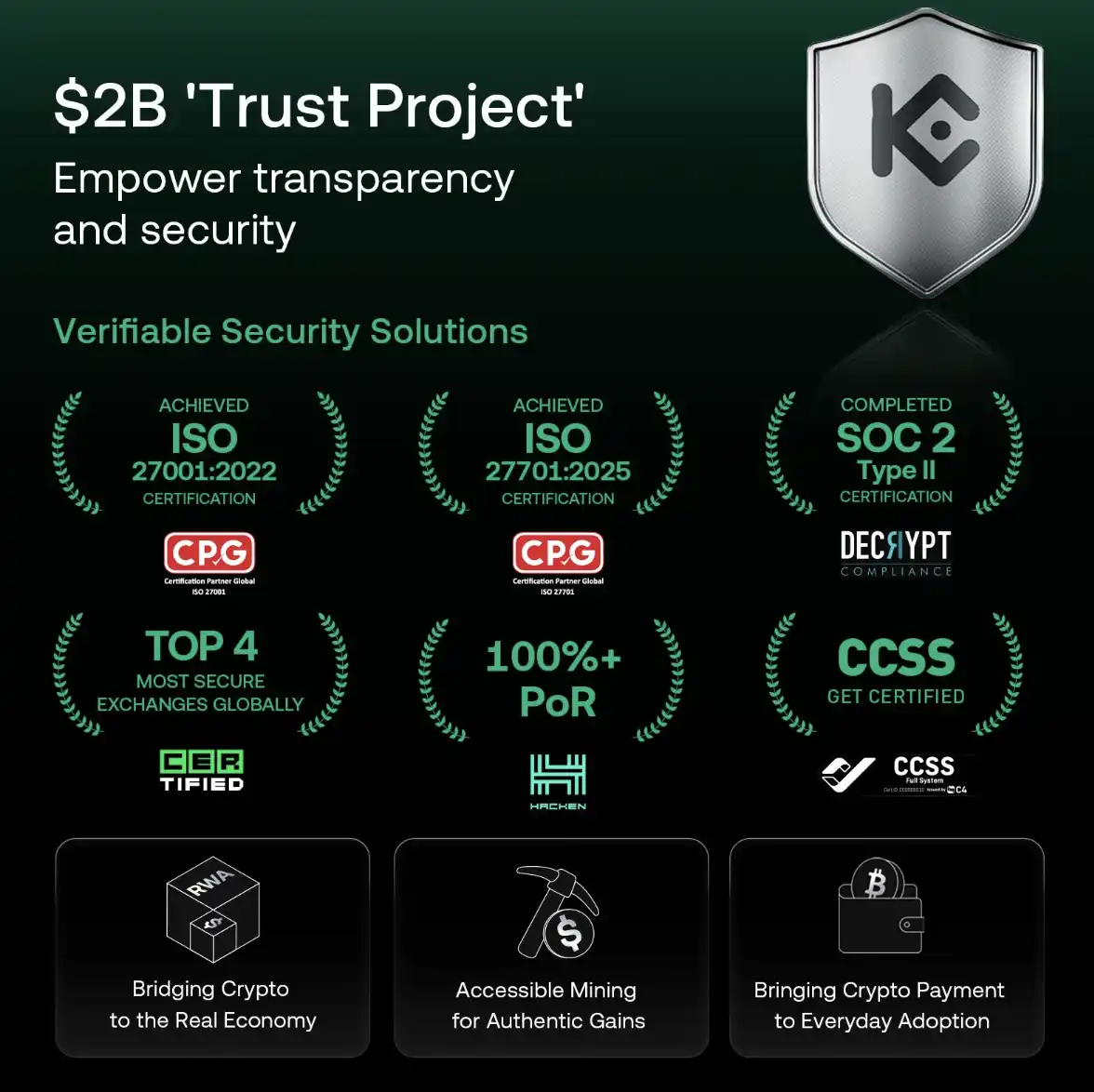
In addition to the AUSTRAC registration in Australia and the MiCAR license, KuCoin is also the only platform among global top-tier exchanges to simultaneously hold four top security certifications: SOC 2 Type II, ISO 27001, ISO 27701, and CCSS. Combined with a AAA security rating from CER.live and a long-standing commitment to third-party audited Proof of Reserves (PoR), KuCoin has effectively established a risk control and security system comparable to that of traditional financial institutions.
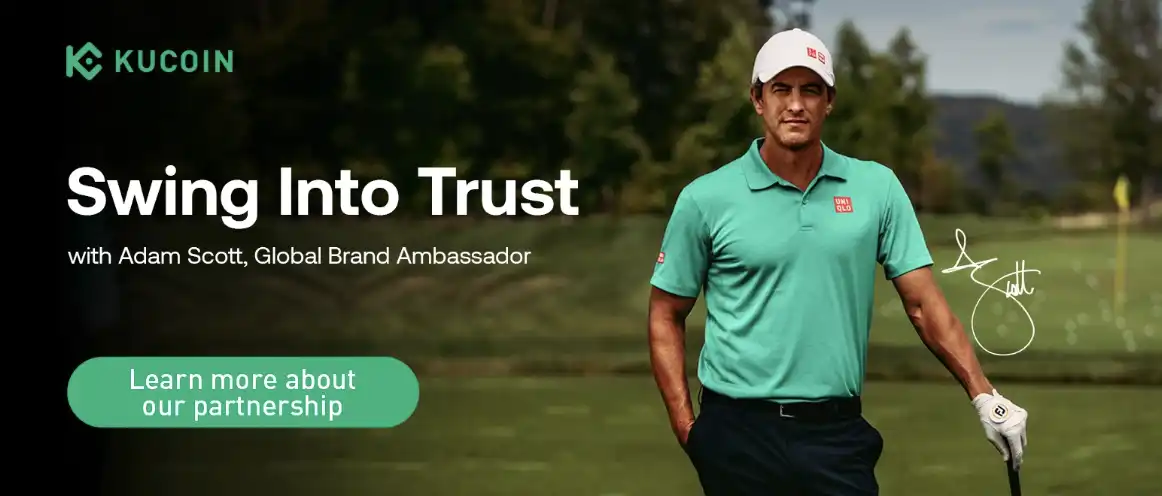
KuCoin CEO BC Wong has stated that compliance is not just an obligation but the cornerstone of a long-term strategy. This pursuit of ultimate security and compliance is reflected in the qualities of its first global brand ambassador, golf champion Adam Scott: precision, steadiness, and trustworthiness.
In many people's perception, trading platforms should invest more resources in marketing and advertising, or rush to list more popular Meme coins. In contrast, investing resources in compliance and security offers little short-term benefit. It is costly, time-consuming, and difficult for users to perceive in a short period.
However, taking a long-term view reveals that KuCoin is walking a difficult but correct path of long-termism. At the TOKEN2049 conference in 2025, KuCoin announced a $2 billion investment in its Trust Plan and introduced the principle of "Trust First. Trade Next."
The Trust Plan extends beyond finance into social responsibility. From supporting children's education in remote areas of Africa to the "Menstrual Equity Project" in the Bahamas and support for rescue efforts related to the fire in Tai Po, Hong Kong, KuCoin is demonstrating that the crypto industry is not just about cold code and candlestick charts; it can also be a warm force for improving the real world.
Kia: Will AI Reshape the Crypto Industry?
Compliance ensures the security of the user trading environment, while KuCoin's newly launched AI investment assistant, Kia, focuses on providing efficient advisory analysis to enhance user decision-making efficiency.
In today's highly competitive landscape of cryptocurrency trading platforms, competing on the number of assets or trading speed has become somewhat tired. When market fluctuations are measured in milliseconds and information is generated at an exponential rate, the biggest enemy for the average investor is no longer the market itself, but the paralysis of decision-making caused by information overload. What the market lacks are tools that can help ordinary users cut through the noise of information, emotional fluctuations, and complex markets.
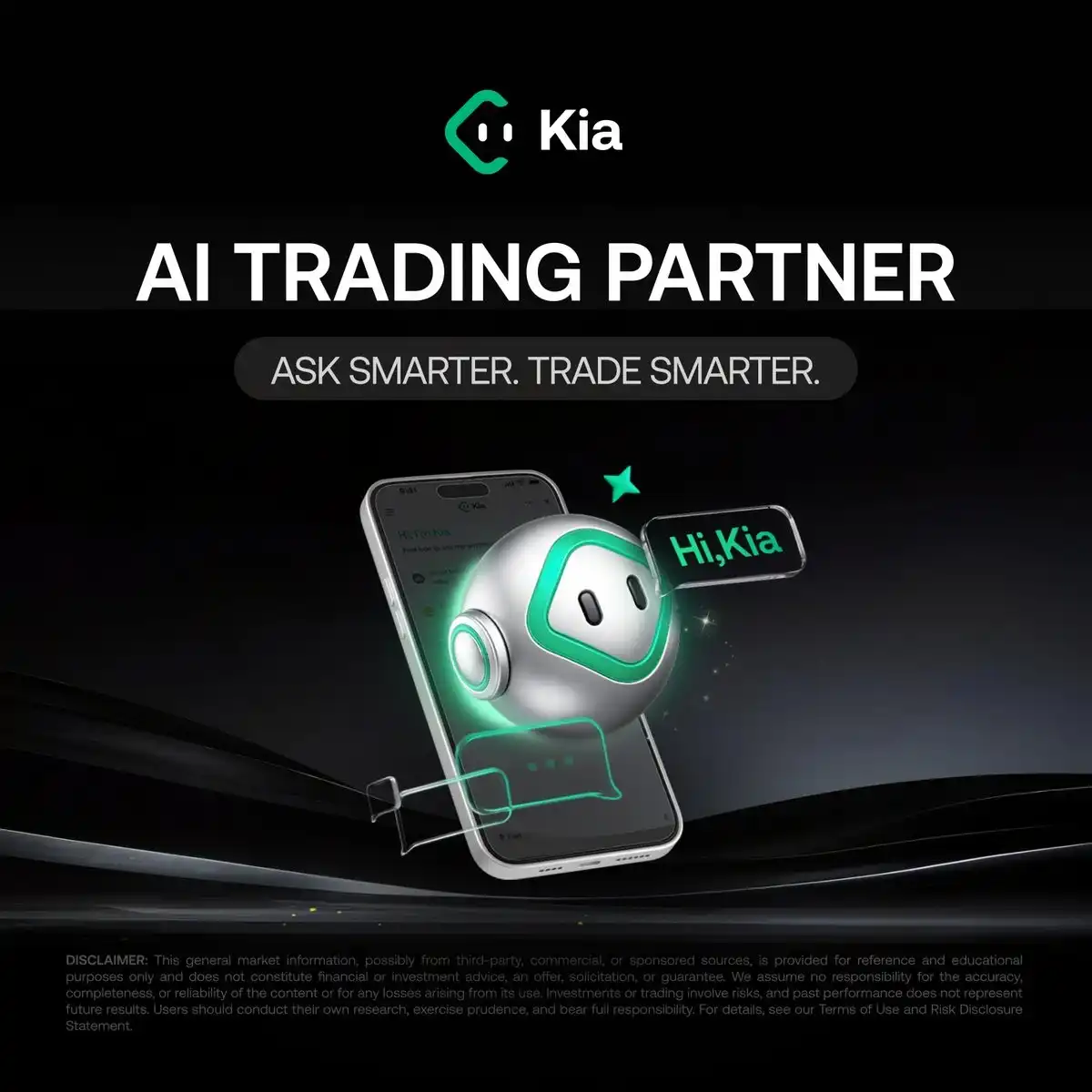
Kia might be the long-awaited game-changer. This is not just an embedded chatbot; it is KuCoin's technological ace—a crypto-native AI—thrown into the industry after years of accumulating trading data and technical reserves. Kia's core value lies in "noise reduction" and "empowerment."
Before Kia, crypto investors were faced with constantly flickering candlestick charts on their screens, along with a flood of news, on-chain activity, and social sentiment every second. In this relentless torrent, institutional investors might capture opportunities with their tools, but for ordinary user, this overload of information is mostly just noise that interferes with decision-making.
According to the technical details released by KuCoin, Kia demonstrates极强的 (extremely strong) data throughput and processing capabilities. Kia is not a simple Q&A system but an intelligent hub integrated with natural language processing technology. Kia can aggregate news, on-chain metrics, NFT and DeFi data, and social media sentiment in real-time, using natural language processing to extract trends and key factors—something previously only possible for institutional research departments or quantitative teams.
Furthermore, the indicators provided by Kia are different from traditional trading signals. Traditional trading signals are often like black boxes, whereas Kia emphasizes explainability, translating high-threshold financial terminology into everyday conversation. When it provides risk warnings or market summaries, it simultaneously displays fluctuations in on-chain data, changes in sentiment, or structural indicators to help users understand the underlying logic. It tells users whether the current market is greedy or fearful and what the driving factors are. The emergence of Kia makes executing complex strategies as simple as sending a message.
In other words, Kia allows ordinary users to enjoy institutional-grade data capabilities. Of course, Kia does not make decisions for users but rather increases the transparency of the user's decision-making process.
In the era when mobile phones transitioned from keypads to touchscreens, the change in interaction methods led to the explosion of the mobile internet. The emergence of Kia has the potential to lower the knowledge barrier, becoming a new gateway between users and the crypto world, allowing more people to safely enter Web3. This is a true upgrade for the crypto industry since smart contracts.
Through Kia, KuCoin has proven that it is not just an exchange but a technology company with deep AI expertise. As AI becomes the user's investment co-pilot, the mass adoption of cryptocurrency may no longer be a distant dream.
Compliance and Security as the Shield, AI Innovation as the Spear
Looking back at the crypto industry at the end of 2025, two main threads reshaping the landscape are clearly visible. One is the reconstruction of compliance infrastructure centered on regulation and transparency, and the other is the technological paradigm upgrade centered on AI. In other words, compliance and security are the shield, and innovation led by AI is the spear.
KuCoin's strategy恰好 (precisely) provides users with robust risk protection capabilities while also empowering them with innovative tools for more proactive decision-making and action. Whether it's the continuously expanding global licensing system, the $2 billion Trust Plan, or the AI service capabilities represented by Kia, all point to a very clear judgment. The future victory will not belong to whoever runs faster, but to whoever is willing to invest higher costs in long-term security and deeper innovation.
In an industry that has experienced consecutive crises, insisting on compliance and transparency is the most difficult path. The $2 billion Trust Building Plan means KuCoin has built one of the strongest shields in the industry at an extremely high cost. It not only safeguards user assets but also lays the foundation for the platform's global expansion.
Kia is the sharp spear KuCoin has forged for its users. It is an intelligent weapon powerful enough to change the industry experience, reshape service methods, and lower the barrier to entry. As an intelligent investment assistant driven by large language models, Kia does not simply display data but understands the user, the market, and strategic logic. It is like a professional analyst who is online 24/7, never tires, and can integrate on-chain and off-chain data to provide personalized analysis. It can even assist users in executing complex strategies, making it the first paradigm-shifting revolutionary product in the crypto industry.
With the "shield" securing user trust, the "spear" is opening up the future growth horizon for KuCoin. On the long march towards the mainstream adoption of cryptocurrency, doing the difficult but right thing is often the most certain path to long-term success.





