Winner Takes All: First Bitcoin Spot ETF Liquidated, Survival of Smaller Players in Jeopardy

marsbitPubblicato 2026-08-05Pubblicato ultima volta 2026-08-05

Introduzione

**Summary:** On August 3rd, asset manager Hashdex announced the closure and liquidation of its Hashdex Bitcoin ETF (DEFI), the first U.S. spot Bitcoin ETF to be wound down. With assets of only $14.7 million, DEFI's annual fee revenue (~$36,700) was insufficient to cover operational costs estimated at $500k-$1M+. Its exit highlights the "winner-takes-most" dynamic in the competitive U.S. spot Bitcoin ETF market, where giants like BlackRock's IBIT ($47.25B) dominate. Despite a cumulative return of ~166% since inception, DEFI's small size, combined with Hashdex's relative lack of brand recognition and established U.S. distribution channels compared to Wall Street incumbents, made the fund unsustainable. Other smaller ETFs like WisdomTree's BTCW ($143M) also operate near the profitability threshold. The market remains highly concentrated, with the top five funds holding nearly all assets, putting pressure on smaller players to achieve scale or risk a similar fate.

Original author: Nicky, Foresight News

On August 3rd, asset management company Hashdex announced the closure and liquidation of its Hashdex Bitcoin ETF (NYSE Arca: DEFI), marking the first spot Bitcoin ETF to officially announce liquidation in the US market. As of July 30th, the fund's assets under management were approximately $14.7 million, holding about 225.58 Bitcoins. Hashdex stated that the closure decision was based on a comprehensive assessment of factors including assets under management, trading liquidity, operational costs, and investor interest.

According to the official announcement, the last trading day for DEFI shares will be August 17th. After this date, it will stop accepting creation orders from authorized participants and be delisted from NYSE Arca. Shareholders who still hold shares by the last trading day will receive a cash liquidation distribution, expected to be paid around August 28th.

DEFI was initially launched for trading in September 2022 as a Bitcoin futures ETF. It was the first Bitcoin futures ETF in the US registered solely under the Securities Act of 1933, launched by Hashdex in collaboration with Teucrium Trading and Victory Capital. In January 2024, the US Securities and Exchange Commission approved 11 spot Bitcoin ETF applications, including Hashdex's. In March of the same year, DEFI completed its transition from a futures strategy to a spot strategy, officially rebranded as the Hashdex Bitcoin ETF, with a fee rate set at 0.25%. Since its inception, the fund has delivered a cumulative performance of approximately 166%, but its asset size has remained chronically low, with a historical peak of only about $17.54 million before declining again.
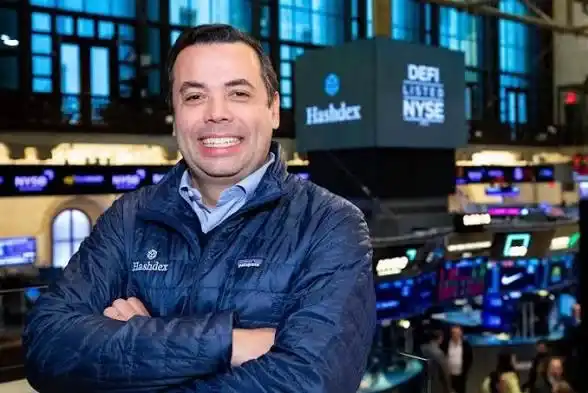
Marcelo Sampaio, Hashdex CEO (Image source: NYSE)

Hashdex is a global asset management company focused on crypto asset index investments, founded in 2018 in Rio de Janeiro, Brazil, by Marcelo Sampaio, Bruno Caratori, and others. In 2020, it partnered with Nasdaq to develop the Nasdaq CME Crypto Index. In 2021, it launched products like HASH11 in Brazil and later expanded to European and US markets. In February 2025, Hashdex launched the multi-asset crypto ETF NCIQ in the US, currently tracking seven crypto assets. As of July 28, 2026, Hashdex's global crypto index product assets under management exceeded $888 million, covering eight countries.

While closing DEFI, Hashdex continues to advance other product innovations. On July 24th, the company filed documents with the SEC announcing that its NCIQ has been approved to conduct staking activities with the crypto assets held by the fund, with Coinbase Cloud as the initial staking service provider. According to the distribution plan, staking net income equivalent to up to 25 basis points annualized of the net asset value per common share goes to the sponsor; any amount exceeding that is split 40% to the sponsor and 60% to the holders.
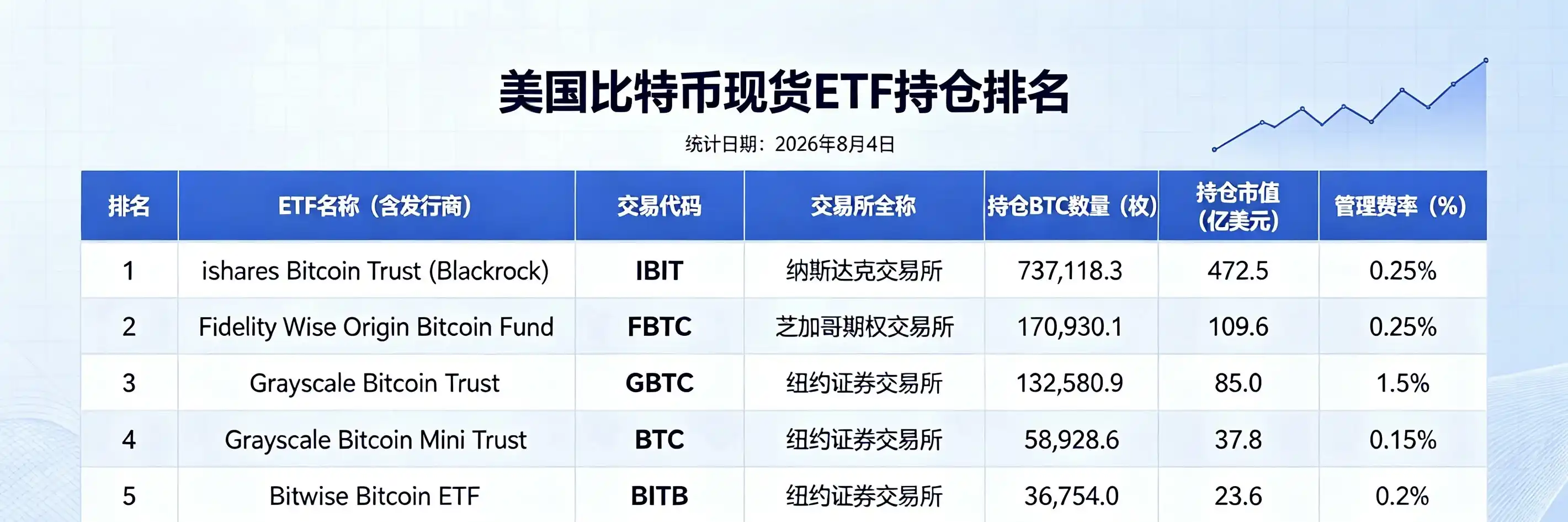
According to BitBo data, as of August 4th, there are 13 spot Bitcoin ETFs in the US market, collectively holding approximately 1.212 million Bitcoins, accounting for about 5.773% of the total Bitcoin supply, with a total size of about $77.7 billion. However, the fund distribution is extremely uneven. The top five products hold about $72.85 billion, occupying almost the entire market share.

BlackRock's iShares Bitcoin Trust (IBIT) holds about 737,000 Bitcoins, with a size of approximately $47.25 billion, accounting for over 60% of the total market size, with a fee rate of 0.25%. Fidelity Wise Origin Bitcoin Fund (FBTC) holds about 171,000 Bitcoins, with a size of about $10.96 billion, also with a 0.25% fee. Grayscale Bitcoin Trust (GBTC) holds about 133,000 Bitcoins, with a size of about $8.5 billion. Despite its high fee rate of 1.5% and persistent net outflows, it maintains its position as the third largest due to first-mover advantage and existing holdings. Grayscale's mini trust BTC holds about 59,000 Bitcoins, with a size of about $3.78 billion and a fee rate of only 0.15%, attracting significant funds transferred from GBTC.

Bitwise's BITB (0.2%), ARK 21Shares' ARKB (0.21%), and VanEck's HODL (0.25%) have sizes ranging from $1 billion to $2.4 billion, forming the middle tier. Morgan Stanley's MSBT holds about 6,231 Bitcoins, with a size of about $399 million, marking the first Bitcoin ETP directly held by a Wall Street investment bank. Valkyrie's BRRR, Franklin's EZBC, and Invesco's BTCO have sizes between $340 million and $380 million. WisdomTree's BTCW is about $143 million. In contrast, Hashdex's DEFI holds only about 225.6 Bitcoins, with a size of about $14.46 million, ranking at the bottom.

Management Fee Ledger: Annual Revenue Hardly Covers Operating Costs

The core revenue for ETF issuers comes from management fees, accrued daily as a percentage of the fund's assets under management. Taking DEFI as an example, with a fee rate of 0.25% and assets of $14.7 million, the annual management fee revenue is only about $36,700. Even at its peak size of $17.54 million, the annual revenue was less than $44,000. The fixed operating costs for a Bitcoin spot ETF include custody fees (Bitcoin custody requires qualified custodians like Coinbase, typically charging several basis points of assets plus a fixed fee), legal compliance and auditing (SEC periodic reporting, AML reviews, annual audits, etc., with annual expenditures in the hundreds of thousands of dollars range), market making and liquidity management (small ETFs need to pay higher incentives to maintain reasonable spreads), exchange listing annual fees, as well as director & officer liability insurance and administration. Industry estimates put the minimum annual operating cost for an ETF at $500,000 to over $1 million.

Even for ETFs with assets over $300 million like Valkyrie BRRR and Franklin EZBC, annual management fee revenue at the same fee rate is around $9 million, leaving profit room after subtracting operating costs. For WisdomTree BTCW below $150 million, annual management fee revenue is about $357,000, already at the breakeven edge. DEFI's annual revenue is only one-tenth of that, showing a clear operational deficit. With shares continuously shrinking and no new fund inflows, it is not commercially sustainable for the issuer to continue subsidizing operating expenses, making liquidation a rational choice.

Hashdex DEFI's exit is not just about size numbers; deeper reasons lie in the structural disadvantages of the issuer's origin and client acquisition capabilities in the US market. Hashdex originated in Rio de Janeiro, Brazil, and built strong brand recognition in Latin American and European markets. Its HASH11 once became Brazil's largest crypto index ETF. However, the US ETF market is dominated by Wall Street giants. Institutional investors place high importance on brand trust, capital strength, and trading depth when choosing products. When established institutions like BlackRock, Fidelity, and Morgan Stanley simultaneously launched similar products, fund managers tend to favor these long-term partners rather than issuers from emerging markets lacking a traditional asset management foundation in the US.

This gap is even more pronounced in customer acquisition costs. Leading issuers have vast existing client bases. BlackRock and Fidelity cross-sell to existing clients through their own platforms and channels like pensions, endowments, and family offices, with marginal customer acquisition costs being extremely low, almost zero. Grayscale has accumulated years of crypto-native investors. In contrast, Hashdex needed to build its brand from scratch in the US. Every step—participating in industry conferences, maintaining data terminal displays, sustaining market maker relationships—means high investment. At the same 0.25% fee level, a revenue gap tens of times larger means Hashdex cannot invest equivalent resources in marketing and investor education.

If Bitcoin prices continue to rise, DEFI's asset size could improve with market appreciation and new inflows, but structural challenges might not be fundamentally resolved. Assuming Bitcoin's rise pushes the size back to $50 million, annual management fee revenue could increase to $125,000, but the operational deficit would still exist. The true breakeven point requires assets exceeding $200 million, demanding a combined force of net investor inflows and price appreciation. However, in a highly concentrated competitive landscape, new funds continuously converge towards the top. BlackRock's IBIT has attracted tens of billions of dollars since listing. Small ETFs often only receive limited spillover even in a bull market. The fact that DEFI's size remained only $17.54 million during Bitcoin's peak in 2025 is proof; the bull market tailwind was insufficient to compensate for the shortcomings in client acquisition.

Besides Hashdex, Which Small ETFs Are in Danger?

As of August 4th, WisdomTree BTCW ($143 million), Invesco BTCO ($348 million), Franklin EZBC ($370 million), and Valkyrie BRRR ($377 million) are the four smallest funds. Among them, BTCW is closest to the safety margin. At a 0.25% fee rate, its annual management fee revenue is about $357,000. If the size continues to shrink, it might enter a loss-making zone. However, as an established ETF issuer, WisdomTree might continue its operation for strategic reasons like maintaining product line completeness. Invesco, Franklin, and Valkyrie have sizes around $350 million, with annual management fee revenue of about $870,000, facing little short-term survival pressure.

Prior to DEFI, there have been precedents of Bitcoin-related ETF closures in the US market, but they were all futures or other types. In January 2024, VanEck closed its Bitcoin futures ETF XBTF, which had a size of about $50 million at closure, as the company decided to concentrate resources after spot ETF approval. Earlier, in October 2022, Valkyrie's VBB was liquidated due to its small size of only about $570,000.


Crypto di tendenza

Domande pertinenti

QWhich ETF is reported as the first spot Bitcoin ETF to be liquidated in the U.S. market, and what were the main reasons cited for its closure?

AThe first spot Bitcoin ETF to announce liquidation is the Hashdex Bitcoin ETF (DEFI). The closure decision was based on a comprehensive evaluation of factors including assets under management size, trading liquidity, operational costs, and investor interest.

QAccording to the article, what was the asset size of the Hashdex Bitcoin ETF (DEFI) before its liquidation and how does it rank among the U.S. spot Bitcoin ETFs?

AThe Hashdex Bitcoin ETF (DEFI) had assets under management of approximately $14.7 million as of July 30. With this size, it ranked last among all U.S. spot Bitcoin ETFs at the time.

QWhat are the key structural disadvantages, as outlined in the article, that made it difficult for Hashdex's DEFI ETF to compete in the U.S. market?

AKey structural disadvantages for Hashdex's DEFI included its origin as a non-U.S. firm (based in Brazil), which led to lower brand recognition and trust among U.S. institutional investors compared to established Wall Street giants like BlackRock and Fidelity. It also faced much higher customer acquisition costs from a near-zero base, unlike incumbents with vast existing client networks for low-cost cross-selling.

QWhat is the estimated annual operational cost for a Bitcoin spot ETF mentioned in the article, and why does this create a challenge for smaller funds?

AThe article states that the estimated minimum annual operational cost for a Bitcoin spot ETF is between $500,000 to over $1 million. This creates a major challenge for smaller funds because their management fee income, calculated as a percentage of their assets, often falls far short of covering these fixed costs, leading to unsustainable losses for the issuer.

QName at least two other small U.S. spot Bitcoin ETFs identified in the article as being in potentially precarious positions following DEFI's liquidation.

AFollowing DEFI's liquidation, the article identifies WisdomTree BTCW ($143 million), Invesco BTCO ($348 million), Franklin EZBC ($370 million), and Valkyrie BRRR ($377 million) as the smallest funds. Among these, WisdomTree's BTCW is noted as being closest to the profitability threshold due to its relatively lower asset size.

Letture associate

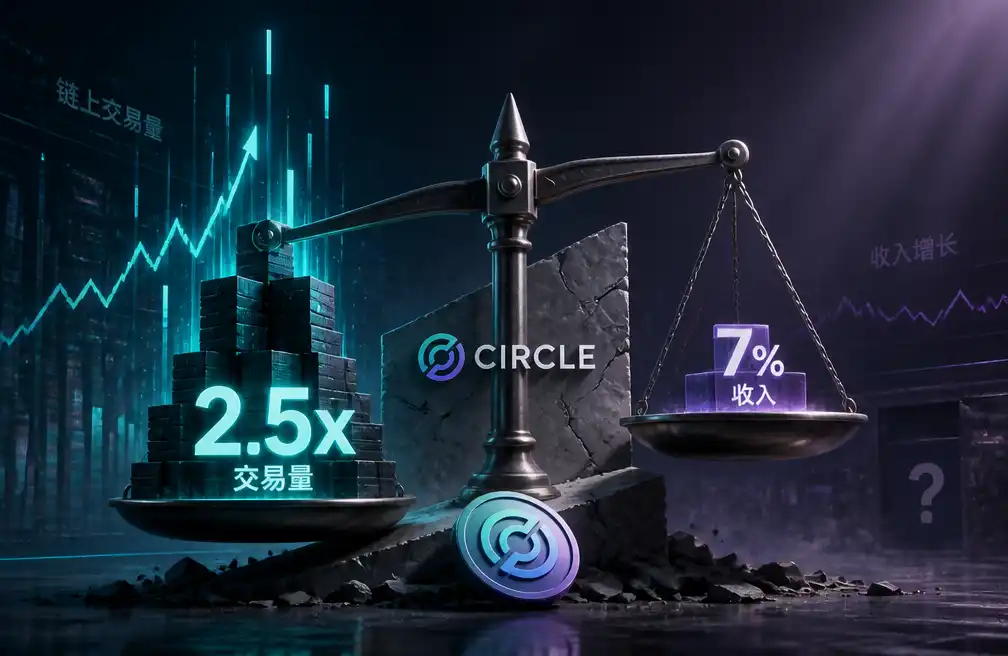
Trading Volume Increased by 2.5x, Why Did Circle's Revenue Only Grow by 7%?

Circle's Q2 performance presents a seemingly contradictory picture: the transaction volume of its stablecoin USDC surged 151% year-over-year to $14.8 trillion, while its "Total Revenue & Reserve Revenue" grew by only 7% to $701 million. This discrepancy highlights the core of Circle's business model. Revenue is primarily driven not by transaction volume, but by the average amount of USDC in circulation and the yield generated from its reserves. Key points: 1. **Revenue Drivers:** Over 90% of revenue comes from "reserve income," which is a function of average USDC circulation (up 25% YoY) and the reserve yield (which fell by 66 basis points). The net effect was a mere ~5% increase in reserve income. 2. **Transaction vs. Revenue:** High transaction volume indicates robust usage of USDC for payments and settlements, but does not translate directly to revenue. It must first convert into a sustained, average circulating balance. 3. **Cost Structure:** After accounting for distribution and other costs, the metric "Revenue Less Direct Costs" (RLDC) grew faster than total revenue, with its margin improving. However, rising operating expenses (up 23% YoY) meant that Adjusted EBITDA growth was limited to 8%. 4. **New Initiatives:** Circle reported progress on new networks like the Circle Payments Network and upcoming products (Arc, Agent Stack), but these are currently measured by adoption metrics (e.g., transaction run-rate, number of services) rather than material revenue contribution this quarter. In summary, the financial results are determined by the interplay of USDC circulation, reserve yields, and cost structures, while high transaction volume signals underlying network strength that has not yet fully flowed through to the income statement.

marsbit9 min fa

Trading Volume Increased by 2.5x, Why Did Circle's Revenue Only Grow by 7%?

marsbit9 min fa

Samsung China, Another Step Back

Samsung China Takes Another Step Back Samsung Electronics is further retreating from the Chinese consumer market. Following the exit of its home appliance business in May, its mobile phone division is now reportedly scaling down. Stores with monthly sales below 300,000 RMB are being closed in several cities. Data shows Samsung's smartphone market share in China has plummeted to 0.1% in Q2 2026, a stark contrast to its 22% global leadership. The decline is attributed to intense competition from domestic brands offering better value, higher specs (like faster charging), and superior localization in software and services. Samsung's premium pricing and less adapted One UI system have struggled against rivals like Huawei, Xiaomi, and Honor. This consumer electronics retreat coincides with Samsung's record-breaking semiconductor profits, driven by the AI boom. In Q2 2026, the chip division contributed nearly all operating profit, while the mobile and home appliance unit posted its first-ever operating loss. Internal dynamics, like the chip division charging market prices to the mobile unit, have increased cost pressures. Samsung's strategy now appears to be a focused retreat towards the ultra-premium segment in China, similar to its global push in high-end foldables like the Galaxy Z Fold8. The company is likely to retain only key stores in major cities to serve a niche, high-end clientele. While its deep semiconductor reserves offer a cushion, this shift away from mass-market consumer electronics reduces business diversification. The move is pragmatic but signifies a fundamental transformation; Samsung is ceding mass-market influence and betting heavily on its semiconductor strength and a narrowed premium product focus.

marsbit13 min fa

Samsung China, Another Step Back

marsbit13 min fa

Helium, Naphtha, and Photoresist: The Three Critical Vulnerabilities of Semiconductor Fabs

The article "Helium, Naphtha, Photoresist: The Three Achilles' Heels of Semiconductor Fabs" analyzes a hypothetical 2026 supply crisis triggered by geopolitical conflict in the Middle East, focusing on three critical materials for semiconductor manufacturing: helium, naphtha, and photoresist. A key attack on a Qatari LNG facility and the blockade of the Strait of Hormuz threaten the global supply of helium (a byproduct of LNG) and naphtha (a petroleum product). This creates a triple threat of shortages that could halt chip production. Helium is essential, particularly for precise wafer temperature control in dry etching processes; a shortage would cause an immediate "instant failure" in these steps. Naphtha is the foundational raw material for numerous equipment consumables and, crucially, for photoresist chemicals. Japan dominates the photoresist market, relying on a single key supplier for intermediates. The analysis shows the impacts would differ. The tiny fraction of global naphtha used for semiconductors (under 0.1%) makes securing supply for photoresist relatively easier. Helium is the greater vulnerability. Qatar supplies about one-third of the world's helium, exceeding the total annual consumption of the semiconductor industry (21-24% of global supply). While short-term buffers like corporate reserves, recycling, and prioritization (e.g., cutting balloon use first) can delay the crisis, helium cannot be stored long-term due to boil-off. Fabs typically hold only days to weeks of inventory. The consequences would be severe and tiered. Advanced logic nodes (e.g., 2nm, 3nm) using complex processes like GAA would be hit hardest, potentially stopping within three months. Mature nodes for automotive and power semiconductors would also eventually halt (within 6-12 months), which could be catastrophic for the auto industry due to stringent certification requirements. The crisis would unfold not as a sudden global stop, but through a sequence of allocation, severe price spikes, reduced output of low-margin products, and partial fab shutdowns by region and company if the shortage persists beyond a year.

marsbit15 min fa

Helium, Naphtha, and Photoresist: The Three Critical Vulnerabilities of Semiconductor Fabs

marsbit15 min fa

Post-World Cup, HIP-4 Awaits Its ‘Election Day’

Following its significant success driven by World Cup trading, Hyperliquid's HIP-4 prediction market is now looking toward the upcoming US midterm elections as its next major opportunity. Initially viewed as an extension for hedging crypto positions, HIP-4 unexpectedly saw nearly 48% of its total volume come from sports markets, primarily the World Cup. However, activity plummeted over 90% after the tournament, highlighting the platform's heavy reliance on major real-world events. To address this dependency and enable continuous market creation, Hyperliquid launched a permissionless deployment feature for HIP-4 on its testnet on July 31. This new system allows approved third-party deployers to create markets using pre-approved templates, requiring a 500,000 HYPE stake and offering up to 50% of trading fees. The goal is to decentralize the sourcing of timely, high-interest markets. The imminent US midterm elections present a critical test case. While competitors like Polymarket and Kalshi already offer extensive political markets, HIP-4 currently has none. If the permissionless system launches on mainnet in time, deployers could build a comprehensive election trading suite. Missing this window would mean relying on manual validator creation again, forfeiting a chance to prove that external deployers can sustainably supply popular markets. The coming weeks will be crucial for HIP-4's evolution beyond sporadic event-driven spikes.

marsbit17 min fa

Post-World Cup, HIP-4 Awaits Its ‘Election Day’

marsbit17 min fa

Crypto finance company BIT predicts gold and bitcoin will rise together! Here are the details

Crypto finance company BIT (formerly Matrixport) forecasts that potential US dollar weakness and expectations of interest rate cuts could simultaneously support the prices of both Bitcoin and gold. Their analysis suggests that current macroeconomic conditions may positively impact both risk assets and the safe-haven gold. Technical indicators hint that gold may be forming a significant low and could be poised for a new upward trend, with Bitcoin likely to benefit from similar macro factors. BIT highlights that while markets expect the US Federal Reserve to hike rates twice this year, this scenario is not certain. If economic data differs, the Fed might not raise rates at all in 2023. Such a development could weaken the US dollar and strengthen market expectations for rate cuts. A weaker dollar is a traditional key support for gold prices, and Bitcoin has shown sensitivity to similar macro dynamics in recent years. Increased global liquidity and rate cut expectations could drive investors toward alternative assets. Market experts believe low interest rates enhance the appeal of both gold and Bitcoin, as they lower the opportunity cost of holding non-yielding assets and encourage their use as inflation hedges. However, analysts caution that monetary policy expectations can shift rapidly based on incoming economic data, particularly inflation, employment, and growth figures, which will remain crucial in determining the Fed's future actions. *This is not investment advice.

cryptonews.ru17 min fa

Crypto finance company BIT predicts gold and bitcoin will rise together! Here are the details

cryptonews.ru17 min fa

Trading

Spot

Articoli Popolari

Cosa è BITCOIN

Comprendere HarryPotterObamaSonic10Inu (ERC-20) e la sua posizione nel mondo delle criptovalute Negli ultimi anni, il mercato delle criptovalute ha assistito a un aumento della popolarità delle meme coin, catturando l'interesse non solo dei trader, ma anche di coloro che cercano coinvolgimento comunitario e valore di intrattenimento. Tra questi token unici c'è HarryPotterObamaSonic10Inu (ERC-20), un progetto intrigante che mescola riferimenti culturali nel tessuto delle criptovalute. Questo articolo esplora gli aspetti chiave di HarryPotterObamaSonic10Inu, analizzando i suoi meccanismi, l'etica guidata dalla comunità e il suo coinvolgimento con il panorama crittografico più ampio. Che cos'è HarryPotterObamaSonic10Inu (ERC-20)? Come suggerisce il suo nome, HarryPotterObamaSonic10Inu è una meme coin costruita sulla blockchain di Ethereum, classificata secondo lo standard ERC-20. A differenza delle criptovalute tradizionali che possono enfatizzare l'utilità pratica o il potenziale investimento, questo token prospera grazie al valore di intrattenimento e alla forza della sua comunità. Il progetto mira a creare un ambiente in cui gli utenti coinvolti possono riunirsi, condividere idee e partecipare ad attività ispirate a diversi fenomeni culturali. Una caratteristica notevole di HarryPotterObamaSonic10Inu è la zero tassa sulle transazioni. Questo elemento allettante tende a incoraggiare il trading e il coinvolgimento della comunità, privo di costi aggiuntivi che possono scoraggiare i trader di piccole dimensioni. L'offerta totale della moneta è fissata a un miliardo di token, un numero che segna la sua intenzione di mantenere una circolazione sostanziale all'interno della comunità. Creatore di HarryPotterObamaSonic10Inu (ERC-20) Le origini di HarryPotterObamaSonic10Inu sono avvolte in un certo mistero; i dettagli sul creatore rimangono sconosciuti. Lo sviluppo di questo token non presenta un team identificabile o un piano esplicito, cosa non rara nel settore delle meme coin. Invece, il progetto è emerso organicamente, con il suo progresso fortemente dipendente dall'entusiasmo e dalla partecipazione della sua comunità. Investitori di HarryPotterObamaSonic10Inu (ERC-20) Per quanto riguarda investimenti esterni e finanziamenti, HarryPotterObamaSonic10Inu rimane ambiguo. Il token non elenca alcuna fondazione di investimento conosciuta o un sostegno organizzativo significativo. Invece, la linfa vitale del progetto è la sua comunità di base, che informa la sua crescita e sostenibilità attraverso azioni collettive e coinvolgimento nello spazio crittografico. Come funziona HarryPotterObamaSonic10Inu (ERC-20)? In quanto meme coin, HarryPotterObamaSonic10Inu opera principalmente al di fuori delle strutture tradizionali che governano spesso il valore degli asset. Ci sono diversi aspetti distintivi che definiscono il funzionamento del progetto: Transazioni senza tasse: Senza costi fiscali sulle transazioni, gli utenti possono comprare e vendere liberamente il token senza preoccuparsi di costi nascosti. Coinvolgimento della comunità: Il progetto prospera sull'interazione della comunità, sfruttando le piattaforme social per creare entusiasmo e facilitare il coinvolgimento. Discussioni, condivisione di contenuti e coinvolgimento sono elementi cruciali che aiutano ad espandere la sua portata e a favorire la lealtà tra i sostenitori. Nessuna utilità pratica: Va notato che HarryPotterObamaSonic10Inu non offre un'utilità concreta all'interno dell'ecosistema finanziario. Piuttosto, è classificato come un token principalmente per attività di intrattenimento e comunitarie. Riferimento culturale: Il token incorpora astutamente elementi della cultura pop per attirare interesse, collegandosi a appassionati di meme e seguaci delle criptovalute. HarryPotterObamaSonic10Inu esemplifica come le meme coin operino in modo diverso rispetto ai progetti di criptovalute più tradizionali, entrando nel mercato come costrutti sociali innovativi piuttosto che come asset utilitari. Cronologia di HarryPotterObamaSonic10Inu (ERC-20) La storia di HarryPotterObamaSonic10Inu è segnata da diversi traguardi notevoli: Creazione: Il token è emerso da un meme virale, catturando l'immaginazione di molti appassionati di criptovalute. Le date di creazione specifiche non sono disponibili, sottolineando la sua crescita organica. Inserimento negli scambi: HarryPotterObamaSonic10Inu ha fatto il suo ingresso in vari scambi, consentendo un accesso e un trading più facili da parte della comunità. Iniziative di coinvolgimento della comunità: Attività in corso volte a migliorare l'interazione della comunità, comprese gare, campagne sui social media e generazione di contenuti da parte di fan e sostenitori. Piani di espansione futura: La tabella di marcia del progetto include il lancio di una collezione NFT, merchandising e un sito di eCommerce relativo ai suoi temi culturali, coinvolgendo ulteriormente la comunità e cercando di aggiungere più dimensioni al suo ecosistema. Punti chiave su HarryPotterObamaSonic10Inu (ERC-20) Natura guidata dalla comunità: Il progetto dà priorità al contributo collettivo e alla creatività, garantendo che il coinvolgimento degli utenti sia al centro del suo sviluppo. Classificazione come meme coin: Rappresenta l'epitome delle criptovalute basate sull'intrattenimento, distinguendosi dai veicoli d'investimento tradizionali. Nessuna affiliazione diretta con Bitcoin: Nonostante la somiglianza nel nome del ticker, HarryPotterObamaSonic10Inu è distintivo e non ha alcuna relazione con Bitcoin o altre criptovalute consolidate. Focus sulla collaborazione: HarryPotterObamaSonic10Inu è progettato per creare uno spazio per la collaborazione e la condivisione di storie tra i suoi detentori, fornendo un canale per la creatività e il legame comunitario. Prospettive future: L'ambizione di espandersi oltre il suo presupposto iniziale verso NFT e merchandising delinea un percorso per il progetto per potenzialmente entrare in strade più mainstream all'interno della cultura digitale. Poiché le meme coin continuano a catturare l'immaginazione della comunità crittografica, HarryPotterObamaSonic10Inu (ERC-20) si distingue per i suoi legami culturali e il suo approccio centrato sulla comunità. Anche se potrebbe non adattarsi al modello tipico di un token orientato all'utilità, la sua essenza risiede nella gioia e nella camaraderia coltivate tra i suoi sostenitori, evidenziando la natura in evoluzione delle criptovalute in un'epoca sempre più digitale. Con la continuazione dello sviluppo del progetto, sarà importante osservare come le dinamiche della comunità influenzano la sua traiettoria nel panorama in continuo cambiamento della tecnologia blockchain.

2.1k Totale visualizzazioniPubblicato il 2024.04.01Aggiornato il 2024.12.03

Cosa è BITCOIN

Come comprare BTC

Benvenuto in HTX.com! Abbiamo reso l'acquisto di Bitcoin (BTC) semplice e conveniente. Segui la nostra guida passo passo per intraprendere il tuo viaggio nel mondo delle criptovalute.Step 1: Crea il tuo Account HTXUsa la tua email o numero di telefono per registrarti il tuo account gratuito su HTX. Vivi un'esperienza facile e sblocca tutte le funzionalità,Crea il mio accountStep 2: Vai in Acquista crypto e seleziona il tuo metodo di pagamentoCarta di credito/debito: utilizza la tua Visa o Mastercard per acquistare immediatamente BitcoinBTC.Bilancio: Usa i fondi dal bilancio del tuo account HTX per fare trading senza problemi.Terze parti: abbiamo aggiunto metodi di pagamento molto utilizzati come Google Pay e Apple Pay per maggiore comodità.P2P: Fai trading direttamente con altri utenti HTX.Over-the-Counter (OTC): Offriamo servizi su misura e tassi di cambio competitivi per i trader.Step 3: Conserva Bitcoin (BTC)Dopo aver acquistato Bitcoin (BTC), conserva nel tuo account HTX. In alternativa, puoi inviare tramite trasferimento blockchain o scambiare per altre criptovalute.Step 4: Scambia Bitcoin (BTC)Scambia facilmente Bitcoin (BTC) nel mercato spot di HTX. Accedi al tuo account, seleziona la tua coppia di trading, esegui le tue operazioni e monitora in tempo reale. Offriamo un'esperienza user-friendly sia per chi ha appena iniziato che per i trader più esperti.

4.4k Totale visualizzazioniPubblicato il 2024.12.12Aggiornato il 2026.06.02

Come comprare BTC

Cosa è $BITCOIN

ORO DIGITALE ($BITCOIN): Un'Analisi Completa Introduzione all'ORO DIGITALE ($BITCOIN) L'ORO DIGITALE ($BITCOIN) è un progetto basato su blockchain che opera sulla rete Solana, con l'obiettivo di combinare le caratteristiche dei metalli preziosi tradizionali con l'innovazione delle tecnologie decentralizzate. Sebbene condivida un nome con Bitcoin, spesso definito “oro digitale” a causa della sua percezione come riserva di valore, l'ORO DIGITALE è un token separato progettato per creare un ecosistema unico all'interno del panorama Web3. Il suo obiettivo è posizionarsi come un asset digitale alternativo valido, anche se i dettagli riguardanti le sue applicazioni e funzionalità sono ancora in fase di sviluppo. Cos'è l'ORO DIGITALE ($BITCOIN)? L'ORO DIGITALE ($BITCOIN) è un token di criptovaluta esplicitamente progettato per l'uso sulla blockchain di Solana. A differenza di Bitcoin, che fornisce un ruolo di stoccaggio di valore ampiamente riconosciuto, questo token sembra concentrarsi su applicazioni e caratteristiche più ampie. Aspetti notevoli includono: Infrastruttura Blockchain: Il token è costruito sulla blockchain di Solana, nota per la sua capacità di gestire transazioni ad alta velocità e a basso costo. Dinamiche di Offerta: L'ORO DIGITALE ha un'offerta massima fissata a 100 quadrilioni di token (100P $BITCOIN), sebbene i dettagli riguardanti la sua offerta circolante siano attualmente non divulgati. Utilità: Sebbene le funzionalità precise non siano esplicitamente delineate, ci sono indicazioni che il token potrebbe essere utilizzato per varie applicazioni, potenzialmente coinvolgendo applicazioni decentralizzate (dApp) o strategie di tokenizzazione degli asset. Chi è il Creatore dell'ORO DIGITALE ($BITCOIN)? Attualmente, l'identità dei creatori e del team di sviluppo dietro l'ORO DIGITALE ($BITCOIN) rimane sconosciuta. Questa situazione è tipica tra molti progetti innovativi nel settore blockchain, in particolare quelli allineati con la finanza decentralizzata e i fenomeni delle meme coin. Sebbene tale anonimato possa favorire una cultura guidata dalla comunità, intensifica le preoccupazioni riguardo alla governance e alla responsabilità. Chi sono gli Investitori dell'ORO DIGITALE ($BITCOIN)? Le informazioni disponibili indicano che l'ORO DIGITALE ($BITCOIN) non ha alcun sostenitore istituzionale noto o investimenti di venture capital prominenti. Il progetto sembra operare su un modello peer-to-peer incentrato sul supporto e sull'adozione della comunità piuttosto che su percorsi di finanziamento tradizionali. La sua attività e liquidità si trovano principalmente su exchange decentralizzati (DEX), come PumpSwap, piuttosto che su piattaforme di trading centralizzate consolidate, evidenziando ulteriormente il suo approccio di base. Come Funziona l'ORO DIGITALE ($BITCOIN) Le meccaniche operative dell'ORO DIGITALE ($BITCOIN) possono essere elaborate in base al suo design blockchain e alle caratteristiche della rete: Meccanismo di Consenso: Sfruttando il proof-of-history (PoH) unico di Solana combinato con un modello di proof-of-stake (PoS), il progetto garantisce una validazione efficiente delle transazioni contribuendo all'alta performance della rete. Tokenomics: Sebbene meccanismi deflazionistici specifici non siano stati dettagliati ampiamente, l'ampia offerta massima di token implica che potrebbe soddisfare microtransazioni o casi d'uso di nicchia che devono ancora essere definiti. Interoperabilità: Esiste il potenziale per l'integrazione con l'ecosistema più ampio di Solana, inclusi vari piattaforme di finanza decentralizzata (DeFi). Tuttavia, i dettagli riguardanti integrazioni specifiche rimangono non specificati. Cronologia degli Eventi Chiave Ecco una cronologia che evidenzia traguardi significativi riguardanti l'ORO DIGITALE ($BITCOIN): 2023: Il dispiegamento iniziale del token avviene sulla blockchain di Solana, contrassegnato dal suo indirizzo di contratto. 2024: L'ORO DIGITALE guadagna visibilità poiché diventa disponibile per il trading su exchange decentralizzati come PumpSwap, consentendo agli utenti di scambiarlo contro SOL. 2025: Il progetto assiste a un'attività di trading sporadica e a un potenziale interesse per impegni guidati dalla comunità, sebbene non siano state documentate partnership significative o avanzamenti tecnici fino ad ora. Analisi Critica Punti di Forza Scalabilità: L'infrastruttura sottostante di Solana supporta alti volumi di transazioni, il che potrebbe migliorare l'utilità di $BITCOIN in vari scenari di transazione. Accessibilità: Il potenziale basso prezzo di trading per token potrebbe attrarre investitori al dettaglio, facilitando una partecipazione più ampia grazie a opportunità di proprietà frazionata. Rischi Mancanza di Trasparenza: L'assenza di sostenitori, sviluppatori o di un processo di audit pubblicamente noti potrebbe generare scetticismo riguardo alla sostenibilità e all'affidabilità del progetto. Volatilità del Mercato: L'attività di trading è fortemente dipendente dal comportamento speculativo, il che può comportare una significativa volatilità dei prezzi e incertezze per gli investitori. Conclusione L'ORO DIGITALE ($BITCOIN) emerge come un progetto intrigante ma ambiguo all'interno dell'evolvente ecosistema di Solana. Sebbene tenti di sfruttare la narrativa dell'“oro digitale”, la sua partenza dal ruolo consolidato di Bitcoin come riserva di valore sottolinea la necessità di una chiara differenziazione della sua utilità e struttura di governance. L'accettazione e l'adozione future dipenderanno probabilmente dall'affrontare l'attuale opacità e dalla definizione più esplicita delle sue strategie operative ed economiche. Nota: Questo rapporto comprende informazioni sintetizzate disponibili a ottobre 2023, e potrebbero essersi verificati sviluppi oltre il periodo di ricerca.

311 Totale visualizzazioniPubblicato il 2025.05.13Aggiornato il 2025.05.13

Cosa è $BITCOIN

Discussioni

Benvenuto nella Community HTX. Qui puoi rimanere informato sugli ultimi sviluppi della piattaforma e accedere ad approfondimenti esperti sul mercato. Le opinioni degli utenti sul prezzo di BTC BTC sono presentate come di seguito.

活动图片