Will the Continued Shutdown of the Strait of Hormuz Trigger an Oil and Gas Supply Crisis?

marsbitPubblicato 2026-05-08Pubblicato ultima volta 2026-05-08

Introduzione

The prolonged closure of the Strait of Hormuz, a critical global energy chokepoint, is evolving from a military conflict into a severe stress test for worldwide energy trade. Despite a ceasefire, transit remains minimal due to persistent threats from Iran, which uses drones, small boats, mines, and a new transit permit/fee system to effectively control the strait. Daily vessel traffic has plummeted from about 135 to under 10 ships, trapping over 1500 commercial vessels. The U.S. has initiated "Project Freedom" to escort ships, but Iran condemns it as a violation. The crisis is forcing a fundamental re-pricing of risk and cost for using this route, which normally carries about one-fifth of global oil and LNG supplies. Even if a political deal is reached, restoring full, trusted transit will be slow due to mine clearance needs, security concerns, and eroded market confidence. Major oil producers like Saudi Arabia are using alternative pipelines, but capacities are limited and routes are also vulnerable. Iran has signaled its intent to institutionalize control over the strait post-conflict, leveraging it as a geopolitical tool. The standoff underscores how Iran can paralyze this vital passage without a traditional navy, creating a lasting impact on global energy security and trade logistics.

Editor's Note: The crisis in the Strait of Hormuz is evolving from a military conflict into a stress test for global energy trade.

The key recent shift is that the ceasefire has not led to a genuine resumption of navigation. In early May, the United States announced the launch of "Project Freedom," attempting to guide stranded vessels away from the Persian Gulf; Iran, in turn, warned external warships not to enter the strait. Subsequently, the U.S. and Iran engaged in another round of clashes near the Strait of Hormuz, with the U.S. claiming it intercepted an Iranian attack on three U.S. naval vessels, and Iran accusing the U.S. of violating the ceasefire and attacking vessels and coastal areas. While former President Trump stated the ceasefire remained in effect, the market has already begun repricing the risks, with Brent crude prices briefly rising to around $101 per barrel.

Iran has demonstrated that, even without a traditionally strong navy, it can bring the world's most important energy artery to a near-standstill through the use of drones, small boats, the threat of mines, and mechanisms for passage permits and fees. For shipowners, insurers, and oil-producing nations, the question is no longer just "can we pass through," but "how much risk do we bear for each passage."

This means the cost of using the Strait of Hormuz is being repriced. Once considered an implicitly available piece of global energy infrastructure, it is now turning into a geopolitical bargaining chip in Iran's hands. Even if a future agreement is reached between the U.S. and Iran, a full restoration of shipping to pre-conflict levels is unlikely to happen immediately, because what has truly been damaged is not the waterway itself, but the market's trust in its safety.

Below is the original article:

No region in the world produces more oil and natural gas than the countries spanning the coast of the Persian Gulf. Most of that energy is exported by tankers navigating through the Strait of Hormuz—and that waterway has effectively been blocked for more than two months.

Since being attacked by the U.S. and Israel in late February, Iran has been restricting vessel transit through the strait. Iran refuses to reopen this vital shipping lane unless the U.S. lifts its maritime blockade on Iranian ports. Tensions escalated again in early May, nearly threatening the maintenance of the ceasefire agreement. Prior to this, former U.S. President Donald Trump announced that the U.S. would launch an operation called "Project Freedom" to guide stranded ships away from the Persian Gulf.

The economic impact of the Strait of Hormuz obstruction is accumulating worldwide. As prices for oil, natural gas, and other commodities rise, supplies are also tightening. Even if the U.S. and Iran eventually break the deadlock in peace talks and reach an agreement to lift the strait blockade, free navigation may not fully resume. Iran has already signaled its intent to use its de facto control over the Strait of Hormuz as a weapon it can wield against adversaries in the future.
How Did the War Affect the Strait of Hormuz?

How did the Iran war affect shipping in the Strait of Hormuz?

Following the outbreak of war on February 28, Iran intermittently attacked ships in and around the Persian Gulf, leading most shipowners to be unwilling to risk casualties, cargo loss, and vessel destruction by attempting to cross the Strait of Hormuz. The average number of vessels passing through the strait daily dropped from around 135 during peacetime to fewer than 10.

Meanwhile, Iran has continued to transport its own oil through the strait. It has also allowed some other vessels to pass, often via a corridor hugging the Iranian coastline; sometimes, Iran has demanded fees of up to $2 million from these vessels.
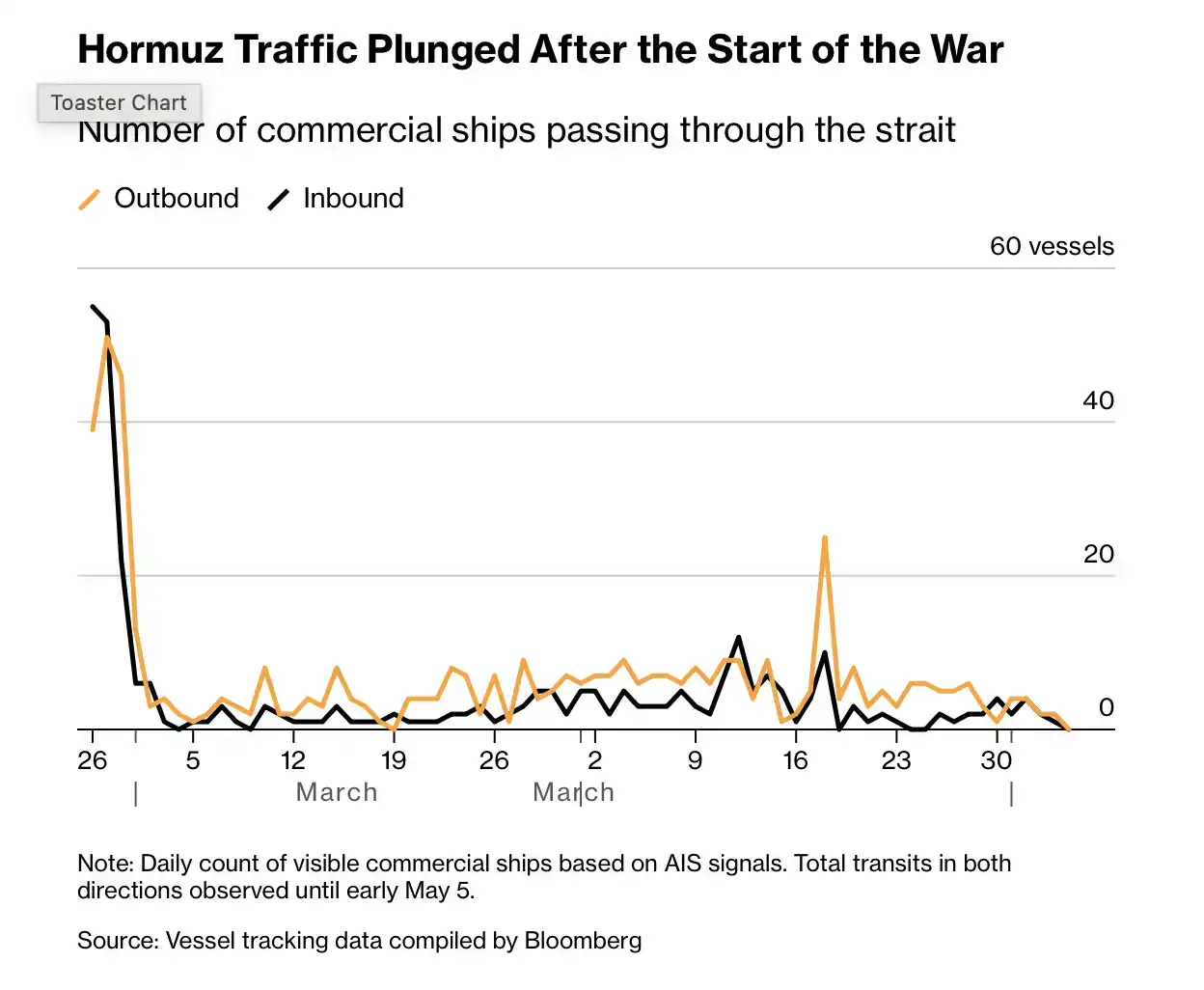
Even after the warring parties agreed to a ceasefire in early April, strait traffic remained nearly stagnant. Starting April 13, the U.S. began imposing a blockade on vessels that had called at Iranian ports or were bound for them, aiming to pressure Iranian oil exports and force the Iranian regime to restore the Strait of Hormuz to a "toll-free zone."

So far, Iran has successfully resisted the blockade pressure. According to Iran's semi-official Tasnim news agency, in early May, Iran even expanded the area over which it claims control in the Strait of Hormuz. As the stalemate persists, the U.S. military states that over 1,500 merchant vessels are now trapped in the Persian Gulf. With crude storage space exhausted, oil producers in the region have been forced to suspend most of their production.

What is needed to reopen the Strait of Hormuz?

Even if a peace agreement is reached, it is unlikely to immediately restore normal navigation through the Strait of Hormuz. Shipowners need assurance that the reopening is lasting and that passage is safe. One issue is the potential threat of mines. Iran has stated it has laid mines along the most commonly used routes within this narrow strait. Sweeping and clearing these explosives could take weeks.

Some vessel operators may be reluctant to sail through the Strait of Hormuz without military escorts. The U.S. Navy does not have enough ships to protect the more than 100 vessels that typically pass through the waterway daily, and the Trump administration has struggled to convince allies to immediately deploy their naval forces. The UK and France are leading consultations to form a multinational coalition to help restore shipping in the Strait of Hormuz once the conflict ceasefire holds.

Even if escort arrangements are finalized, clearing the backlog of vessels on both sides of the strait could take weeks. The narrowness of the Strait of Hormuz limits the number of ships that can be escorted at once and also makes convoyed vessels more vulnerable to attack.

Trump announced that, starting May 4, the U.S. would launch "Project Freedom" to guide neutral vessels out of the Persian Gulf. He did not elaborate on the operation's details, though U.S. Central Command stated it would provide military support, including deploying missile destroyers, aircraft, and drones. Iran labeled this move "Project Deadlock" and accused it of violating the ceasefire.

What does the Iran war mean for the long-term future of the Strait of Hormuz?

Shipowners, insurers, and clients have seen that for Iran, with minimal traditional naval power, rapidly bringing Strait of Hormuz transit to a halt was not difficult; restoring normal operations, however, is proving much harder.

If a U.S.-Iran peace agreement fails to eliminate the threat Iran poses to Hormuz shipping, the economic logic of this critical trade artery could change for years. The most cautious vessel operators may decide that transiting the strait under any circumstance is not worth the risk. Higher insurance premiums could also weaken the competitiveness of Gulf trade compared to other regions.

Iran has signaled its intent to continue exerting control over Strait of Hormuz transit and monetize its influence over this waterway, even after the war ends. Iran's parliament is advancing a bill to enshrine its sovereignty over the strait in domestic law and formally establish a fee system for vessel passage.
Energy Artery Being Repriced

Why is the Strait of Hormuz so important?

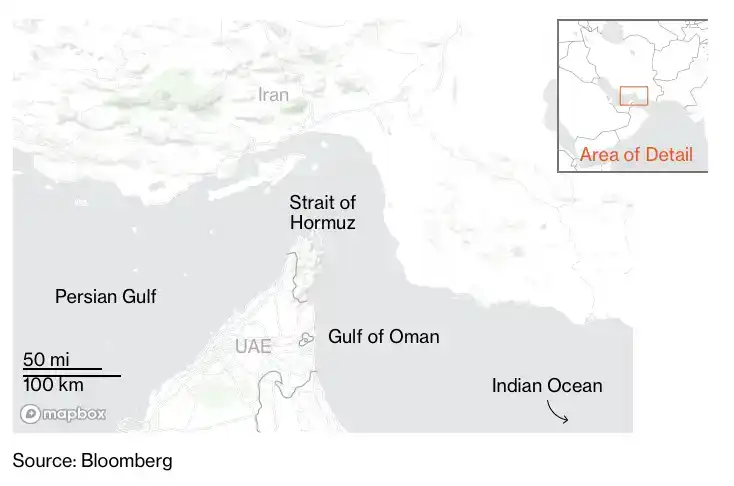
The Strait of Hormuz borders Iran to the north and the UAE and Oman to the south, connecting the Persian Gulf with the Indian Ocean. It stretches about 100 miles (161 km) long and is about 24 miles wide at its narrowest point. The two-way shipping lanes are each just 2 miles wide.

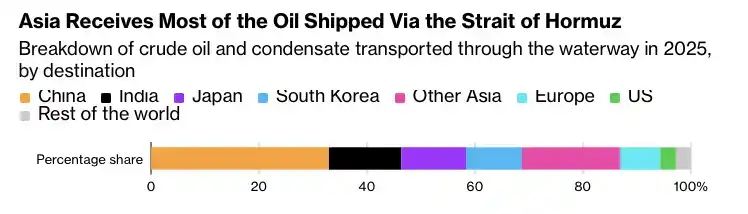
For energy markets, this strait is a vital artery, carrying about one-fifth of the world's oil and liquefied natural gas supply. Under normal circumstances, Saudi Arabia, Iraq, Iran, Kuwait, Bahrain, Qatar, and the UAE all export crude oil via the Strait of Hormuz, with the majority of cargoes destined for Asia.
Gulf countries also have numerous refineries producing significant volumes of diesel, jet fuel, naphtha—used in making plastics and gasoline—and other petroleum products, which are exported via the strait to global markets.

Beyond energy, the Strait of Hormuz is also a chokepoint for transporting products like aluminum, fertilizers, and even helium, which is used in semiconductor manufacturing.

Can oil-producing nations bypass the Strait of Hormuz?

Kuwait, Qatar, and Bahrain have no alternative maritime export routes.

Saudi Arabia, the largest shipper of oil through the Strait of Hormuz, has already diverted some crude via a pipeline extending west to the Red Sea port of Yanbu. Saudi Aramco plans to utilize the pipeline's full capacity of 7 million barrels per day, though only about 5 million barrels per day is available for export, with the remainder for domestic use.

But the Red Sea route is not without risk. Iran has already attacked a refinery in Yanbu and struck a pumping station on the East-West Pipeline; furthermore, the Iran-backed Houthi rebels in Yemen have threatened to resume attacks on vessels in the Red Sea.

The UAE can also bypass the Strait of Hormuz to some extent. However, its alternative capacity is limited, and the port of Fujairah has also been attacked by Iran. This port lies at the end of a pipeline linking UAE oilfields with the Gulf of Oman. Additionally, while Iraq is attempting to resume exports via Jordanian and Syrian ports, the transport volumes under consideration represent only a small fraction of its typical exports via the Strait of Hormuz.

Does Iran have the right to control the Strait of Hormuz?

Under the United Nations Convention on the Law of the Sea (UNCLOS), coastal states can exercise sovereignty over waters extending 12 nautical miles (about 14 miles) from their coastline, an area known as the territorial sea.

The Strait of Hormuz passes through the territorial seas of Iran and Oman. However, states must allow foreign vessels "innocent passage" within their territorial seas and must not hamper "innocent passage" or "transit passage" of foreign vessels through straits used for international navigation. The convention also stipulates that states may not levy charges on foreign vessels merely for passing through their territorial seas.

Although the Iranian government signed UNCLOS in 1982, the Iranian parliament has never ratified the treaty.


Domande pertinenti

QWhat is the core change in the geopolitical situation regarding the Strait of Hormuz, according to the article?

AThe core change is that the Strait of Hormuz is being re-priced from a piece of default, usable global infrastructure into a geopolitical lever under Iran's de facto control. It's no longer just a question of physical passage, but of risk and cost.

QAccording to the article, why would normal traffic not resume immediately even after a peace deal between the US and Iran?

ANormal traffic wouldn't resume immediately because the main issue is not just the physical blockade but the shattered market trust in the safety of the passage. Ship operators need assurances of lasting safety, and concerns like uncleared mines, lack of military escort, and high insurance costs would persist.

QHow did the daily traffic through the Strait of Hormuz change after the outbreak of war and during the ceasefire?

AAfter the war outbreak, daily traffic dropped from an average of about 135 vessels in peacetime to less than 10. During the subsequent ceasefire, maritime traffic remained almost at a standstill, with over 1,500 commercial ships reportedly trapped.

QWhat alternative route does Saudi Arabia primarily use to bypass the Strait of Hormuz, and what are its limitations?

ASaudi Arabia primarily reroutes oil through the Petroline pipeline to the Red Sea port of Yanbu. Its limitations include the pipeline's total capacity of 7 million barrels per day, with only about 5 million barrels available for export, and the route's exposure to risks from Iran and Houthi attacks.

QWhat is the legal basis, according to the article, that challenges Iran's right to control or charge fees for passage through the Strait of Hormuz?

AAccording to the United Nations Convention on the Law of the Sea (UNCLOS), which Iran signed in 1982 but never ratified, coastal states must allow 'innocent passage' or 'transit passage' in straits used for international navigation. The convention also states that countries cannot levy charges solely for the passage of foreign ships through their territorial waters.

Letture associate

Ten-Thousand-Word Analysis: From $10 to $290, MRVL Wins the Entire AI Era by 'Not Making GPUs'

Marvell Technology's stock price surged from under $10 in 2016 to a record $290 in June 2026, fueled not by making GPUs, but by dominating AI infrastructure connectivity. This analysis argues the market misvalues MRVL as merely a smaller Broadcom in custom AI chips, overlooking its true, unique position. Marvell's core strength lies in enabling high-speed data flow for AI clusters through three interconnected businesses. First, it holds a commanding ~70% market share in high-speed optical DSPs (essential for data center light modules), a deep-moat business with accelerating growth. Second, its custom AI chip design business serves hyperscalers like AWS, Microsoft, and Google, with a significant revenue pipeline despite lower margins. Third, stable cash flows come from Ethernet switch chips and enterprise storage controllers. Together, they form a full-stack "AI data movement" platform. CEO Matt Murphy's transformative leadership since 2016, involving strategic divestments, key acquisitions (like Inphi for optical DSPs), and securing long-term agreements with major cloud providers, repositioned the company. A pivotal $2 billion strategic investment from NVIDIA in 2026 underscored Marvell's critical role in the AI ecosystem, particularly through collaborations like NVLink Fusion. While Marvell faces risks—including client concentration (losing the Amazon Trainium3 design), lower-margin business mix, competitive threats, insider selling, and complex supply chains—its fundamentals remain strong. The optical interconnect moat is widening with the acquisition of Celestial AI (photonics fabric), and financial metrics show accelerating revenue growth and operating leverage. With a PEG ratio suggesting undervaluation relative to its growth, the thesis is that the market undervalues Marvell's monopolistic position in AI "plumbing" while overemphasizing its competitive custom chip segment. The story transcends investing, symbolizing how in any complex system—from the internet to AI—the value of "connection" ultimately surpasses that of individual "nodes."

marsbit4 min fa

Ten-Thousand-Word Analysis: From $10 to $290, MRVL Wins the Entire AI Era by 'Not Making GPUs'

marsbit4 min fa

AI Relay Stations Spark Heated Debate on Zhihu: Behind Cheap Tokens, What Are Users Really Worried About?

A discussion on Zhihu about "AI relay stations" shifted the niche developer topic of "cheap tokens" into broader user awareness. Users moved beyond simply questioning the legitimacy of these services to focus on practical concerns: Where do cheap tokens truly come from? Is the model being accessed the real one? Can relay stations see prompts, code, and API keys? For occasional users, are the risks worth it? The core debate centered less on price and more on trust. A primary worry is model authenticity—the risk of "model swapping," where users paying for a premium model might be routed to a cheaper one, creating an information asymmetry. Others argued that cost comparisons matter; while cheaper than official pay-as-you-go APIs, relay stations may not be the lowest-cost option versus subscriptions, domestic models, or free tiers, making user needs assessment crucial. Speculation about token sources ranged from legitimate bulk discounts to gray-area methods like account sharing or exploiting regional pricing. This opacity makes risk assessment difficult for users. Data security emerged as a critical concern, especially for enterprise use. When processing sensitive information like code, contracts, or client data, the inability to verify a relay station's data handling, retention, or access policies poses significant compliance and confidentiality risks. The evolving consensus suggests relay stations can be used cautiously for low-sensitivity, disposable tasks (e.g., summarizing public info, simple translation). However, they should not be the default for sensitive, professional, or production workflows involving proprietary data, Agents, or automated systems. Recommendations include avoiding large prepayments, not relying on a single service, using test prompts to monitor quality, anonymizing data where possible, and keeping official channels as backups. Ultimately, the discussion framed tokens not just as a billing unit but as a measure of real cost encompassing price, model integrity, data security, and service stability. The popularity of relay stations highlights user demand for affordable access, but the debate underscores a key trade-off: the savings from cheap tokens may come at the price of trust, transparency, and control over one's data and AI experience.

marsbit34 min fa

AI Relay Stations Spark Heated Debate on Zhihu: Behind Cheap Tokens, What Are Users Really Worried About?

marsbit34 min fa

In-Depth Research Report on TradFi: The Convergence Wave of Crypto and Traditional Finance

In 2026, the crypto industry is undergoing a profound infrastructure-level transformation—TradFi assets are migrating on-chain at an unprecedented pace. According to CoinGecko's Q1 2026 report, the total value locked (TVL) of tokenized real-world assets (RWA) has surpassed $31 billion, a nearly 4x increase from $7.8 billion at the beginning of 2025, with the sector’s aggregate market capitalization reaching $19.3 billion. Among these, the market cap of tokenized stocks surged from $2 million to $486 million, with Q1 spot trading volume reaching $15.1 billion—a single quarter already surpassing the entire second half of 2025. RWA perpetual contract Q1 trading volume reached a staggering $524.8 billion, far exceeding the $313 billion for all of 2025. Meanwhile, BlackRock's BUIDL fund has reached $2.3 billion in scale and has filed for two new tokenized funds, signaling that the world's largest asset manager's tokenization strategy is evolving from pilot to product suite expansion. HTX, as a core participant in the crypto exchange sector, officially launched TradFi perpetual futures products including NVDA, AAPL, MSFT, META, and SPY in 2026, enabling crypto users to gain 24/7 trading access to core U.S. equities. Boston Consulting Group predicts that global tokenized asset scale could reach $16 trillion by 2030, while McKinsey offers a conservative estimate of approximately $2 trillion. The on-chain migration of TradFi assets is no longer a "future narrative" but a structural transformation unfolding in real time, as crypto exchanges evolve from single crypto asset trading platforms toward "multi-asset-class trading infrastructure."

HTX Learn37 min fa

In-Depth Research Report on TradFi: The Convergence Wave of Crypto and Traditional Finance

HTX Learn37 min fa

Trading

Spot
Futures

Articoli Popolari

Come comprare GAS

Benvenuto in HTX.com! Abbiamo reso l'acquisto di GAS (GAS) semplice e conveniente. Segui la nostra guida passo passo per intraprendere il tuo viaggio nel mondo delle criptovalute.Step 1: Crea il tuo Account HTXUsa la tua email o numero di telefono per registrarti il tuo account gratuito su HTX. Vivi un'esperienza facile e sblocca tutte le funzionalità,Crea il mio accountStep 2: Vai in Acquista crypto e seleziona il tuo metodo di pagamentoCarta di credito/debito: utilizza la tua Visa o Mastercard per acquistare immediatamente GASGAS.Bilancio: Usa i fondi dal bilancio del tuo account HTX per fare trading senza problemi.Terze parti: abbiamo aggiunto metodi di pagamento molto utilizzati come Google Pay e Apple Pay per maggiore comodità.P2P: Fai trading direttamente con altri utenti HTX.Over-the-Counter (OTC): Offriamo servizi su misura e tassi di cambio competitivi per i trader.Step 3: Conserva GAS (GAS)Dopo aver acquistato GAS (GAS), conserva nel tuo account HTX. In alternativa, puoi inviare tramite trasferimento blockchain o scambiare per altre criptovalute.Step 4: Scambia GAS (GAS)Scambia facilmente GAS (GAS) nel mercato spot di HTX. Accedi al tuo account, seleziona la tua coppia di trading, esegui le tue operazioni e monitora in tempo reale. Offriamo un'esperienza user-friendly sia per chi ha appena iniziato che per i trader più esperti.

231 Totale visualizzazioniPubblicato il 2024.12.12Aggiornato il 2026.06.02

Come comprare GAS

Discussioni

Benvenuto nella Community HTX. Qui puoi rimanere informato sugli ultimi sviluppi della piattaforma e accedere ad approfondimenti esperti sul mercato. Le opinioni degli utenti sul prezzo di GAS GAS sono presentate come di seguito.

活动图片












