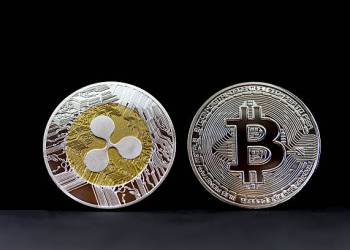
Why TRUMP token keeps falling despite $522M in trading volume

ambcryptoPubblicato 2026-02-06Pubblicato ultima volta 2026-02-06

Introduzione

The TRUMP memecoin continues to decline, down approximately 17% amid sustained selling pressure in both spot and derivatives markets. Despite a 100% surge in trading volume to $522 million, the price keeps falling, indicating strong seller momentum. Key factors include significant capital outflows, with $21.67 million exiting perpetual futures contracts, reducing Open Interest to $99.22 million. Funding rates have turned negative, reflecting dominant bearish positioning. Spot markets also show net selling, with 8.13 million units sold over recent weeks. Additionally, World Liberty Financial, a Trump-affiliated firm, reduced its crypto exposure by selling $23.56 million in Bitcoin, contributing to negative sentiment. Without stabilizing capital flows or weakening seller activity, downside risks remain high.

The Official Trump [TRUMP] memecoin remains under pressure as price discovery continues to skew lower. The token was trading around 17%, at press time, below its previous day’s level, reflecting sustained selling activity across derivatives and spot markets.

Market data suggests that downside pressure could persist in the near term. Capital flight, declining liquidity, and increasing bearish positioning continue to weigh on price structure.

Derivatives market signals capital flight

Memecoins typically experience amplified losses during periods of broader market weakness, and TRUMP has followed this pattern.

Perpetual futures data shows consistent capital outflows, indicating reduced risk appetite among leveraged traders.

Open Interest (OI), which tracks the total capital committed to perpetual contracts, has declined sharply. Over the observed period, $21.67 million exited TRUMP perpetual contracts, leaving approximately $99.22 million in remaining OI.

Funding Rate data further reinforces the bearish setup. The Funding Rate has turned negative, indicating that short positions are paying longs and that bearish traders currently dominate positioning.

If declining OI persists alongside negative funding rates, price discovery is likely to remain biased to the downside as losses deepen.

Spot market distribution intensifies

Spot investors have also contributed to the downside risk. According to CoinGlass data, spot market participants have been net sellers over the past two weeks.

Between the weekend ending January 26 and this week, cumulative spot sales reached approximately 8.13 million units, confirming a sustained period of distribution.

With limited spot demand supporting price, downside risk increases. The current market structure shows a bearish divergence, with price continuing to make lower lows while trading volume expands.

At press time, trading volume has risen by 100% to roughly $522 million, even as price trends lower.

This divergence indicates strengthening seller momentum and suggests that downside pressure could persist until selling activity shows signs of exhaustion.

World liberty financial and market sentiment

Market sentiment around TRUMP’s underperformance has also been influenced by developments involving World Liberty Financial (WLFI), a crypto firm backed by U.S. President Donald Trump.

According to Arkham Intelligence, WLFI has recently reduced its crypto exposure. During Bitcoin’s move toward $69,000, the firm sold approximately $23.56 million worth of Bitcoin in the past day.

Following these sales, WLFI’s remaining Bitcoin holdings stand at around $10.9 million, while its total crypto holdings, according to Arkham Intelligence, remain substantial at approximately $5.05 billion at the time of writing.

Although no direct link has been established between these actions and TRUMP’s price decline, the reduction in exposure by a high-profile, Trump-affiliated entity has contributed to broader market uncertainty and reinforced bearish sentiment surrounding the token.

Across both derivatives and spot markets, TRUMP continues to face sustained selling pressure.

Shrinking capital, negative funding rates, rising volume, and ongoing spot distribution collectively point to a fragile price structure. Until capital flows stabilize and seller momentum weakens, downside risks remain elevated.


Final Thoughts

  • TRUMP recorded significant capital exits over the past 24 hours as both perpetual traders and spot investors turned net sellers.
  • Market attention has shifted to World Liberty Financial following reports of reduced crypto exposure, adding to bearish sentiment.


Domande pertinenti

QWhat are the main factors contributing to the decline in TRUMP token's price despite high trading volume?

AThe decline is driven by sustained selling pressure in both derivatives and spot markets, capital flight from perpetual contracts, negative funding rates indicating bearish dominance, and reduced liquidity. Additionally, spot market distribution and selling activity from entities like World Liberty Financial have contributed to bearish sentiment.

QHow has the derivatives market, specifically perpetual futures, indicated capital flight for TRUMP token?

APerpetual futures data shows consistent capital outflows, with Open Interest (OI) declining sharply by $21.67 million, leaving approximately $99.22 million in remaining OI. The funding rate has turned negative, indicating that short positions are paying longs and bearish traders dominate.

QWhat role has the spot market played in the downside risk for TRUMP token?

ASpot market participants have been net sellers over the past two weeks, with cumulative sales reaching approximately 8.13 million units. Limited spot demand has increased downside risk, creating a bearish divergence where price makes lower lows despite expanding trading volume.

QHow has World Liberty Financial (WLFI) influenced market sentiment around TRUMP token?

AWLFI, a crypto firm backed by Donald Trump, reduced its crypto exposure by selling approximately $23.56 million worth of Bitcoin. Although no direct link is established, this action by a Trump-affiliated entity has contributed to broader market uncertainty and reinforced bearish sentiment around TRUMP token.

QWhat does the negative funding rate and declining Open Interest suggest about future price movement for TRUMP?

AThe negative funding rate indicates bearish traders are dominating, and declining Open Interest shows reduced risk appetite. If these conditions persist, price discovery is likely to remain biased to the downside, with downside risks elevated until capital flows stabilize and seller momentum weakens.

Letture associate

Google and Amazon Simultaneously Invest Heavily in a Competitor: The Most Absurd Business Logic of the AI Era Is Becoming Reality

In a span of four days, Amazon announced an additional $25 billion investment, and Google pledged up to $40 billion—both direct competitors pouring over $65 billion into the same AI startup, Anthropic. Rather than a typical venture capital move, this signals the latest escalation in the cloud wars. The core of the deal is not equity but compute pre-orders: Anthropic must spend the majority of these funds on AWS and Google Cloud services and chips, effectively locking in massive future compute consumption. This reflects a shift in cloud market dynamics—enterprises now choose cloud providers based on which hosts the best AI models, not just price or stability. With OpenAI deeply tied to Microsoft, Anthropic’s Claude has become the only viable strategic asset for Google and Amazon to remain competitive. Anthropic’s annualized revenue has surged to $30 billion, and it is expanding into verticals like biotech, positioning itself as a cross-industry AI infrastructure layer. However, this funding comes with constraints: Anthropic’s independence is challenged as it balances two rival investors, its safety-first narrative faces pressure from regulatory scrutiny, and its path to IPO introduces new financial pressures. Globally, this accelerates a "tri-polar" closed-loop structure in AI infrastructure, with Microsoft-OpenAI, Google-Anthropic, and Amazon-Anthropic forming exclusive model-cloud alliances. In contrast, China’s landscape differs—investments like Alibaba and Tencent backing open-source model firm DeepSeek reflect a more decoupled approach, though closed-source models from major cloud providers still dominate. The $65 billion bet is ultimately about securing a seat at the table in an AI-defined future—where missing the model layer means losing the cloud war.

marsbit1 h fa

Google and Amazon Simultaneously Invest Heavily in a Competitor: The Most Absurd Business Logic of the AI Era Is Becoming Reality

marsbit1 h fa

Computing Power Constrained, Why Did DeepSeek-V4 Open Source?

DeepSeek-V4 has been released as a preview open-source model, featuring 1 million tokens of context length as a baseline capability—previously a premium feature locked behind enterprise paywalls by major overseas AI firms. The official announcement, however, openly acknowledges computational constraints, particularly limited service throughput for the high-end DeepSeek-V4-Pro version due to restricted high-end computing power. Rather than competing on pure scale, DeepSeek adopts a pragmatic approach that balances algorithmic innovation with hardware realities in China’s AI ecosystem. The V4-Pro model uses a highly sparse architecture with 1.6T total parameters but only activates 49B during inference. It performs strongly in agentic coding, knowledge-intensive tasks, and STEM reasoning, competing closely with top-tier closed models like Gemini Pro 3.1 and Claude Opus 4.6 in certain scenarios. A key strategic product is the Flash edition, with 284B total parameters but only 13B activated—making it cost-effective and accessible for mid- and low-tier hardware, including domestic AI chips from Huawei (Ascend), Cambricon, and Hygon. This design supports broader adoption across developers and SMEs while stimulating China's domestic semiconductor ecosystem. Despite facing talent outflow and intense competition in user traffic—with rivals like Doubao and Qianwen leading in monthly active users—DeepSeek has maintained technical momentum. The release also comes amid reports of a new funding round targeting a valuation exceeding $10 billion, potentially setting a new record in China’s LLM sector. Ultimately, DeepSeek-V4 represents a shift toward open yet realistic infrastructure development in the constrained compute landscape of Chinese AI, emphasizing engineering efficiency and domestic hardware compatibility over pure model scale.

marsbit2 h fa

Computing Power Constrained, Why Did DeepSeek-V4 Open Source?

marsbit2 h fa

Trading

Spot
Futures
活动图片