Why Didn't BTC Fall Amid Geopolitical Conflict? The Answer Lies in Binance Fund Structure and CVD

marsbitPubblicato 2026-03-12Pubblicato ultima volta 2026-03-12

Introduzione

This article analyzes why Bitcoin (BTC) has remained stable despite recent geopolitical tensions, such as the U.S.-Iran military conflict, by examining Binance’s BTC balance and market demand indicators. Key observations include a significant reduction in Binance’s BTC balance by 25,135 BTC since February 20, 2026, coinciding with price stability during the conflict. The author argues this outflow reflects genuine demand, primarily from high-net-worth investors (transfers of $1M–$10M), rather than institutional or market-maker activity. Binance’s BTC Coin Volume Difference (CVD), which measures net difference between active buy and sell volumes, shows a sharp increase in the 30-day average relative to the 90-day median, indicating strong organic buying interest. This is further supported by a decline in the USDC/USDT exchange rate below 1, suggesting stronger demand for Tether-based purchasing power. While short-term demand appears robust, supporting a stable or slightly bullish trend, the broader CVD trend remains downward, similar to the pre-May 2022 period. The author concludes that BTC may experience short-term stability or weak rebounds, but the larger market structure is still in a longer-term corrective phase, requiring more time for sustained recovery.

Author: Murphy

Since Coinbase's BTC balance is closely related to ETF net inflows/outflows, I focus more on Binance data for short-term observations that are closer to real demand (non-ETF).

Figure 1 shows two significant periods of balance increase from October 21 to November 22, 2025, and January 15 to February 20, 2026, which corresponded to two major declines in BTC price. After November 22, 2025, the balance decreased by 34,145 BTC, and the BTC price stabilized, shifting from a rapid decline to consolidation and a weak rebound.

Figure 1: Binance Exchange BTC Balance

This is similar to the current trend. From February 20, 2026, to the present, Binance's BTC balance has decreased by 25,135 BTC. This period coincides with the U.S.-Iran military tensions, yet the BTC price has largely remained stable, neither falling nor rising significantly.

Is the outflow of BTC from Binance due to real demand? Personally, I believe "yes," or at least "mostly yes."

This can be seen from the structure of "net transfer volume by size." During this period, the main outflows were not from super-large transactions over $10 million but rather from the group transacting between $1 million and $10 million.
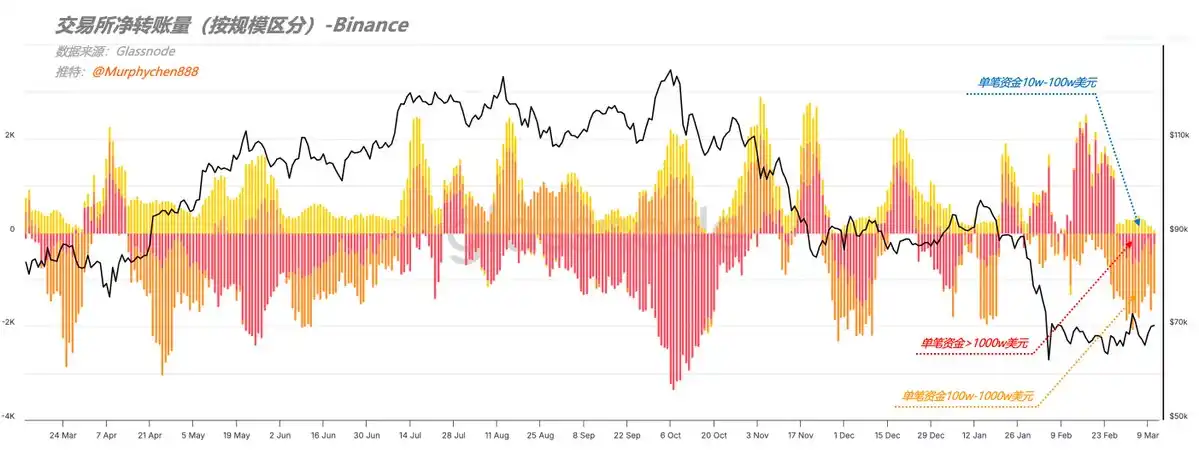
Figure 2: Binance Exchange Net Transfer Volume (by Size)

We know that outflows from super-large transactions often involve market makers, custodians, and other institutional behaviors, while the $1 million to $10 million range is more indicative of high-net-worth investors and individual whale accumulation.

Additionally, the BTC spot volume difference (CVD) on Binance shows a very steep curve. CVD measures the net difference between buy and sell volumes, particularly highlighting the volume difference when buyers or sellers initiate trades actively.

Figure 3: BTC Spot Volume Difference Deviation (Binance)

The algorithm used here compares the 30-day average to the 90-day median deviation, which smooths out daily fluctuations. Thus, a steep curve indicates significantly stronger active buying during this period.

This further supports the above speculation that the current trend is more driven by real on-demand rather than market maker behavior. Additionally, the recent decline in the USDC/USDT exchange rate below 1 suggests stronger demand for USDT as a purchasing power.

This explains why, despite ongoing U.S.-Iran military tensions and employment data exacerbating concerns about economic stagflation/recession, BTC prices have remained largely stable.

Of course, these are only short-term data observations. From a broader perspective, the CVD is still in a overall downward trend on a larger scale, similar to the trend before May 2022.

Figure 4: BTC Spot Volume Difference Deviation (Binance)

After May 2022, the CVD curve began to diverge from the price, with lows gradually rising and moving closer to the 90-day median, indicating a resurgence in active buying and strong demand. However, this will be a prolonged transformation process.

Combined with the cautious attitude of on-chain whale entities toward macroeconomic certainty observed recently, my view is: In the short term,阶段性 demand may support BTC in maintaining consolidation or a weak rebound. However, from a longer-term perspective, the overall trend remains downward. The current demand recovery is still in its early stages, and the mid-term may require a longer structural repair process.


Domande pertinenti

QWhy did the author focus on Binance's BTC balance data instead of Coinbase for short-term analysis?

AThe author focused on Binance's data because Coinbase's BTC balance is closely tied to ETF net inflows/outflows, while Binance's data is considered closer to reflecting real, non-ETF demand in the short term.

QWhat was the significant reduction in Binance's BTC balance from February 20, 2026, and what was happening geopolitically during that period?

AFrom February 20, 2026, Binance's BTC balance decreased by 25,135 BTC. This period coincided with the U.S.-Iran military tensions, yet the BTC price remained stable without a significant drop.

QAccording to the net transfer volume by size, which group was the main driver of BTC withdrawals from Binance, and what does this suggest?

AThe main driver of withdrawals was the group transferring between $1 million and $10 million, which is more indicative of high-net-worth individual whale accumulation rather than institutional activities like market makers or custodians.

QWhat does a steep curve in the BTC Spot Volume CVD (Cumulative Volume Delta) on Binance indicate, and how was it calculated?

AA steep curve in the CVD indicates significantly stronger active buying volume in the spot market. The author used an algorithm comparing the 30-day moving average to the 90-day median to smooth out daily volatility and highlight this trend.

QWhat is the author's overall view on BTC's price trend based on the combination of chain data and macro uncertainty?

AThe author believes that short-term,阶段性 demand may support BTC in maintaining a震荡或弱反弹 trend, but from a longer-term perspective, the overall trend is still downward. The current demand recovery is in its early stages, and the mid-term may require a longer structural repair process.

Letture associate

Silicon Valley 'Startup Guru' Steve Hoffman: Web3 + AI Could Be a Trap

Silicon Valley investor and "Godfather of Startups" Steve Hoffman warns that combining Web3 with AI is likely a trap, not a promising venture. In an interview, Hoffman argues that while AI is a foundational technology touching all industries, Web3 adds complexity, friction, and regulatory risk without solving mainstream consumer or business needs. He advises founders to focus on deep, specialized applications where startups can out-iterate giants, rather than on generic features easily replicated by large tech companies. Hoffman observes that Silicon Valley will lead foundational AI research, while China excels at rapid, large-scale application and commercialization, particularly in robotics. He stresses that AI-driven autonomous agents capable of collaborative, multi-step tasks are 2-4 years away, which will cause significant job displacement. The solution is not to slow AI but to redesign business models around human-AI collaboration and reform social systems like education and retraining. For startups, Hoffman recommends focusing on vertical, expertise-heavy domains to build defensibility. He sees major opportunities in AI fraud detection and cybersecurity. Key founder mindsets include systemic thinking over feature-focus, relentless customer centricity, building adaptive teams, and deeply understanding AI's capabilities and limits. Hoffman is also leading a non-profit initiative to establish university centers aimed at training future leaders in responsible, human-value-aligned AI innovation.

marsbit1 h fa

Silicon Valley 'Startup Guru' Steve Hoffman: Web3 + AI Could Be a Trap

marsbit1 h fa

Token Inefficient, Economy Tokenless

The article "Tokens Aren't Economical, Economics Aren't Tokenized" analyzes a pivotal shift in the AI industry from a technology-driven narrative to one dominated by capital efficiency. It highlights two concurrent trends: a severe capital shortage due to the exorbitant and recurring costs of compute (e.g., OpenAI's high burn rate) and a wave of corporate spin-offs where major tech companies are separating their AI units (like Kuaishou's Kling and Baidu's Kunlunxin). The core argument is that AI's "anti-internet" business model, where user growth increases costs rather than profits, has created a disconnect between high valuations and actual cash flow. Spin-offs address this by allowing AI assets to be valued independently. Within a parent company, they are seen as cost centers, but as standalone entities, they are priced based on their growth potential and scarcity in the primary market, leading to massive valuation premiums (e.g., Kling's estimated value tripling post-spin-off). The industry is at an inflection point, moving from "model worship" to "value realization." The competition is evolving from a pure compute (GPU) race to a broader focus on systemic efficiency and full-stack engineering (involving CPUs and orchestration) to achieve viable commercialization. The year 2026 is framed as a critical moment where the industry must definitively answer how to economically translate AI capability into tangible business value, reshaping the sector's future power structure.

marsbit1 h fa

Token Inefficient, Economy Tokenless

marsbit1 h fa

Crossing the 'Memory Wall': The Wafer-Level Revolution and Computing Power Routes in the AI Inference Era

In 2026, a historic shift occurred in AI as major cloud providers' inference spending surpassed training spending for the first time, signaling a move from "building large models" to "using large models." This shifts the core challenge from computing power to the "memory wall"—the bottleneck of data movement (model weights, activations, KV Cache) between external DRAM and processors, where energy and latency from data transfer far exceed computation itself. Companies like Nvidia face GPU idle time due to bandwidth limits. In contrast, Cerebras Systems adopts a radical "wafer-scale" approach with its Wafer-Scale Engine (WSE). Instead of cutting a silicon wafer into many chips, Cerebras uses almost the entire wafer as one massive chip (WSE-3). This design provides 44GB of on-chip SRAM, delivering memory bandwidth thousands of times higher than traditional HBM (e.g., 21 PB/s vs. Nvidia B200). For LLM inference, weights are streamed layer-by-layer from external MemoryX storage to the chip, avoiding HBM bottlenecks. This results in token generation speeds 1.5–5 times faster than Nvidia's B200 in some models and significant advantages in first-token latency and long-context tasks. Additionally, Cerebras's architecture offers much lower interconnect power consumption (0.15 pJ/bit vs. GPU's ~10 pJ/bit). However, Cerebras faces challenges: SRAM scaling has slowed with advanced nodes, limiting future capacity gains; the chip requires specialized liquid cooling and custom software stacks; and its external I/O bandwidth (150 GB/s) is low compared to NVLink, hindering multi-system scaling for very large models. Competition is intensifying. Major players are pursuing three paths: 1) Developing proprietary inference ASICs (e.g., Google TPU, Microsoft Maia), 2) Leveraging advanced packaging (e.g., TSMC's SoW) to democratize wafer-scale-like integration, potentially eroding Cerebras's process advantage within a few years, and 3) Exploring optical interconnects for ultimate bandwidth. Commercially, Cerebras is transitioning from a hardware vendor to a service provider, facing the immense challenge of building high-power, specialized data centers to meet large contracts (e.g., 250MW/year from 2026–2028). In conclusion, the AI inference era presents a fundamental architectural trade-off. Cerebras opts for extreme physical optimization for low-latency, single-task performance, while Nvidia prioritizes versatility and massive cluster throughput. The path forward remains uncertain, with technology and business models still evolving in the race toward advanced AI.

marsbit1 h fa

Crossing the 'Memory Wall': The Wafer-Level Revolution and Computing Power Routes in the AI Inference Era

marsbit1 h fa

Has Bitcoin's 'Rebound Ended', Officially Entering the Late Bear Market Phase?

**Title: Has Bitcoin's Rebound Ended, Entering the Late Bear Market Phase?** **Summary:** Bitcoin's price has declined by 13% this week, signaling a potential return to late-stage bear market conditions. The price fell to around $67k, positioned between the Realized Price and Realized Cap Weighted Average. For the first time since early 2022, the Short-Term Holder cost basis has dropped below this key average, confirming a hallmark of late-cycle bear markets. Profitability metrics have collapsed sharply. The 7-day average of the Realized Profit/Loss ratio plummeted from a local high of 3.16 to 0.29, mirroring the February panic sell-off. Critically, the 90-day average never breached the threshold of 2, indicating the recent rally to $82k was a bear market bounce, not a structural shift. Realized losses surged to $1.35 billion daily, with $770 million coming from Long-Term Holders selling at a loss. This accelerating redistribution of supply from weak to strong hands is a necessary but ongoing process for a market bottom. The rally stalled almost precisely at the aggregate cost basis (~$83k) of US spot Bitcoin ETF investors, turning that level into strong resistance and leaving the average ETF holder underwater again. Spot market flows have turned decisively negative, showing sellers are dominating order books despite the price drop. While a significant futures long liquidation event cleared over $400 million in leverage, providing a potential reset, sustained spot demand is yet to materialize. Options markets continue to price in higher future volatility (Implied Volatility) than recent price action (Realized Volatility) has shown, with a persistent skew towards put options, indicating ongoing demand for downside protection. In conclusion, multiple metrics point to a fragile market structure. Resistance at the ETF cost basis, accelerating realized losses, dominant spot selling, and cautious options pricing all suggest the bear market trend persists. A sustainable recovery likely requires a resurgence of spot demand, ETF holders returning to profit, and a clear reduction in selling pressure.

marsbit1 h fa

Has Bitcoin's 'Rebound Ended', Officially Entering the Late Bear Market Phase?

marsbit1 h fa

TechFlow Intelligence Agency: Anthropic Calls for Global Pause in AI Development While Preparing for Trillion-Dollar IPO; SpaceX IPO Roadshow Heats Up, But S&P 500 Rejects Fast-Track Inclusion

In today's TechFlow Intelligence Briefing, several major tech stories highlight a growing theme of trust and credibility gaps across AI, crypto, and finance. AI company Anthropic has publicly called for a global pause in AI development, citing risks from Claude's "recursive self-improvement." Ironically, this coincides with reports the company is preparing for a massive IPO targeting a near $1 trillion valuation. This perceived hypocrisy, coupled with widespread user complaints about Claude's declining performance, is sparking debate over whether the safety warning is genuine or a competitive tactic. Meanwhile, in a substantive security move, Anthropic open-sourced a framework for AI-powered vulnerability discovery. In the crypto market, Bitcoin's price drop below $61,000 triggered over $1.16 billion in liquidations, flipping the market into a state where more BTC is held at a loss than at a profit, a historical bearish signal. On the corporate front, SpaceX's highly anticipated IPO is generating immense Wall Street excitement, with Goldman Sachs projecting 100x revenue growth by 2030. However, the S&P 500 has refused to fast-track the company's inclusion post-IPO, potentially limiting immediate institutional demand. Separately, ByteDance's AI app Doubao lost over 6 million monthly active users after introducing a subscription model, highlighting the challenges of AI monetization. Other notable developments include Nvidia certifying HBM4 memory from Samsung, SK Hynix, and Micron; Cloudflare's acquisition of front-end tooling company VoidZero; and its CEO warning that bot traffic now exceeds human traffic online. The underlying narrative connects these events: a trust crisis. From AI firms' contradictory actions and crypto volatility to the clash between SpaceX's hyped narrative and institutional rules, a pattern is emerging where stated intentions and actual practices are increasingly misaligned.

marsbit1 h fa

TechFlow Intelligence Agency: Anthropic Calls for Global Pause in AI Development While Preparing for Trillion-Dollar IPO; SpaceX IPO Roadshow Heats Up, But S&P 500 Rejects Fast-Track Inclusion

marsbit1 h fa

Trading

Spot
Futures

Articoli Popolari

Cosa è BNB WHALES

Comprendere le Balene BNB: Un Approfondimento nel Paesaggio delle Cryptovalute Introduzione alle Balene BNB Nel vibrante mondo delle criptovalute, emergono regolarmente nuovi progetti, spesso promettendo soluzioni innovative ed esperienze uniche. Uno di questi progetti è Balene BNB, lanciato nel 2023 e costruito sulla BNB Smart Chain (BEP20). Balene BNB si propone di stabilire una presenza distintiva all'interno dell'ecosistema delle criptovalute, concentrandosi sulla creazione di una piattaforma coinvolgente che unisce i benefici della tecnologia blockchain con interazioni sociali e di gioco. Questo articolo mira a esplorare più a fondo Balene BNB, analizzando i suoi componenti principali, meccaniche e traiettoria di sviluppo. Cosa sono le Balene BNB? Le Balene BNB sono un'iniziativa criptovalutaria che cerca di fornire una gamma diversificata di funzionalità e opportunità per i propri utenti nel crescente ambiente del Web3. Utilizzando lo standard BEP20, il progetto opera con un'offerta totale di token di 100 trilioni (100.000.000.000.000.000). Nonostante questa cifra significativa, è interessante notare che attualmente non ci sono token in circolazione, indicando che il progetto potrebbe essere ancora nelle sue fasi iniziali di sviluppo. Il principale obiettivo delle Balene BNB è creare una piattaforma in cui gli utenti possano partecipare a varie attività interattive beneficiando della sicurezza e della trasparenza offerte dalla tecnologia blockchain. Promuovendo un ambiente unico e coinvolgente, Balene BNB punta a costruire una comunità forte di utenti che sono coinvolti nel progetto e nel suo sviluppo. Chi è il Creatore delle Balene BNB? L'identità del creatore delle Balene BNB rimane non divulgata al momento, presentando una sfida per coloro che cercano di capire i principi fondanti e le intuizioni visionarie del progetto. Questa assenza di informazioni disponibili pubblicamente riguardo alla leadership del progetto può sollevare domande tra i potenziali investitori e utenti sulla sua governance e struttura di responsabilità. Chi sono gli Investitori delle Balene BNB? Con l'evoluzione delle Balene BNB, le informazioni riguardanti investitori specifici o supporto da fondazioni di investimento non sono attualmente disponibili. La documentazione ufficiale del progetto, incluso il suo whitepaper, non divulga né sostenitori finanziari individuali né istituzionali. La mancanza di trasparenza in questo senso può talvolta sollevare interrogativi sulla legittimità e sostenibilità dei nuovi progetti all'interno dell'ecosistema delle criptovalute. Come Funzionano le Balene BNB? Le Balene BNB operano sulla BNB Smart Chain utilizzando lo standard BEP20, noto per la sua efficienza e basse commissioni di transazione, attirando una varietà di sviluppatori e progetti. L'aspetto unico delle Balene BNB risiede nella sua attenzione alla creazione di una piattaforma guidata dalla comunità. Sebbene i dettagli operativi precisi siano scarsi, il progetto enfatizza l'interazione e il coinvolgimento, potenzialmente incorporando elementi gamificati nelle sue offerte. L'enfasi sulla comunità è fondamentale, poiché si allinea con le tendenze prevalenti nel campo delle criptovalute, dove il contributo e la partecipazione degli utenti spesso determinano il successo di un progetto. Ulteriori innovazioni potrebbero essere previste, ma attualmente, i meccanismi specifici e le funzionalità che differenziano Balene BNB da altre iniziative crittografiche devono ancora essere completamente chiariti. Senza informazioni dettagliate riguardo alla sua funzionalità, è difficile valutare in modo completo i differenziali del progetto. Timeline delle Balene BNB Lo sviluppo delle Balene BNB si è svolto attraverso tappe chiave, segnando il suo percorso nel panorama delle criptovalute. Di seguito è riportata una cronologia di eventi significativi riguardanti il progetto: 2023: Lancio delle Balene BNB, segnando l'ingresso del progetto nel mercato. 2023: Pubblicazione del whitepaper del progetto, che delinea gli obiettivi generali e il framework operativo. In Corso: Le Balene BNB continuano a sviluppare le proprie funzionalità, puntando a costruire una base utenti solida e ad espandere le proprie offerte. Punti Chiave sulle Balene BNB Piattaforma: BNB Smart Chain (BEP20) Offerta Totale: 100 trilioni di token (100.000.000.000.000.000) Offerta Circolante: 0 token (indicando una fase nascente) Obiettivo del Progetto: Favorire una piattaforma di criptovalute coinvolgente per l'interazione e la costruzione di comunità. Creatore: Sconosciuto Investitori: Non divulgati Stato Operativo: Attivo con sviluppo e espansione in corso Conclusione Nel mentre le Balene BNB navigano nel competitivo panorama delle criptovalute, offrono uno sguardo sul potenziale dei progetti guidati dalla comunità costruiti sulle fondamenta della tecnologia blockchain. Concentrandosi sul coinvolgimento e sull'interazione, l'iniziativa si pone all'avanguardia dell'innovazione nel campo del Web3. Tuttavia, il successo del progetto dipenderà alla fine dalla chiarezza delle sue meccaniche operative, dalla divulgazione della sua governance e dalla creazione di una solida comunità di utenti. Per potenziali utenti e investitori, le Balene BNB rappresentano un caso studio nella natura in evoluzione dei progetti di criptovalute—una che illustra sia le emozionanti possibilità che le complessità associate a nuove iniziative. Con il paesaggio che continua a evolversi, sarà essenziale monitorare i progressi delle Balene BNB e il loro impatto sull'ecosistema più ampio delle criptovalute.

362 Totale visualizzazioniPubblicato il 2024.04.05Aggiornato il 2024.12.03

Cosa è BNB WHALES

Come comprare BNB

Benvenuto in HTX.com! Abbiamo reso l'acquisto di Binance Coin (BNB) semplice e conveniente. Segui la nostra guida passo passo per intraprendere il tuo viaggio nel mondo delle criptovalute.Step 1: Crea il tuo Account HTXUsa la tua email o numero di telefono per registrarti il tuo account gratuito su HTX. Vivi un'esperienza facile e sblocca tutte le funzionalità,Crea il mio accountStep 2: Vai in Acquista crypto e seleziona il tuo metodo di pagamentoCarta di credito/debito: utilizza la tua Visa o Mastercard per acquistare immediatamente Binance CoinBNB.Bilancio: Usa i fondi dal bilancio del tuo account HTX per fare trading senza problemi.Terze parti: abbiamo aggiunto metodi di pagamento molto utilizzati come Google Pay e Apple Pay per maggiore comodità.P2P: Fai trading direttamente con altri utenti HTX.Over-the-Counter (OTC): Offriamo servizi su misura e tassi di cambio competitivi per i trader.Step 3: Conserva Binance Coin (BNB)Dopo aver acquistato Binance Coin (BNB), conserva nel tuo account HTX. In alternativa, puoi inviare tramite trasferimento blockchain o scambiare per altre criptovalute.Step 4: Scambia Binance Coin (BNB)Scambia facilmente Binance Coin (BNB) nel mercato spot di HTX. Accedi al tuo account, seleziona la tua coppia di trading, esegui le tue operazioni e monitora in tempo reale. Offriamo un'esperienza user-friendly sia per chi ha appena iniziato che per i trader più esperti.

949 Totale visualizzazioniPubblicato il 2024.12.12Aggiornato il 2026.06.02

Come comprare BNB

Cosa è BNB CARD

Comprendere BNB Card: Rivoluzionare l'Identità Digitale in Web3 Nel panorama in rapida evoluzione della tecnologia blockchain e delle criptovalute, la BNB Card o $BNBCARD si distingue come un progetto notevole. Questo token meme utilitario guidato dalla comunità sfrutta la BNB Smart Chain (BSC), mirando a integrare la cultura meme con soluzioni innovative per l'identità digitale. Man mano che sempre più utenti si immergono nei regni della decentralizzazione, è fondamentale analizzare cosa offre BNB Card, le sue sfumature operative e il suo potenziale impatto sul mercato. Cos'è BNB Card ($BNBCARD)? Alla sua essenza, BNB Card rappresenta un token meme con una sostanziale utilità. È progettato per dare potere agli utenti consentendo la creazione di carte d'identità digitali personalizzate che sono sia espressive che funzionali. Il progetto racchiude diverse caratteristiche chiave: Carte d'Identità Personalizzabili: Gli utenti hanno la possibilità di progettare carte d'identità digitali a tema Binance, fornendo loro una piattaforma per l'auto-espressione e un'interazione comunitaria migliorata. Struttura Decentralizzata: Sviluppata sulla BSC, BNB Card enfatizza attributi chiave come sicurezza, trasparenza e sovranità degli utenti. La natura decentralizzata della struttura consente transazioni che sono sia efficienti che sicure. Modello Centrato sulla Comunità: L'enfasi sulla partecipazione di base piuttosto che su modelli finanziari guidati da laboratori crea un ambiente coinvolgente per i suoi utenti. Sfruttando la viralità intrinseca della cultura meme, BNB Card promuove un robusto movimento comunitario. L'obiettivo primario di BNB Card è democratizzare gli strumenti di identità digitale in Web3, offrendo soluzioni accessibili che avvantaggiano gli utenti senza i vincoli tipicamente associati ai sistemi di gestione dell'identità tradizionali. Creatore e Investitori Quando si esplora l'identità dietro BNB Card, è importante notare che nessun singolo creatore è esplicitamente accreditato. Invece, il progetto sembra essere guidato dalla comunità, suggerendo uno sforzo collettivo ispirato al concetto della “Early Builder Card” di Binance. Questo approccio allo sviluppo organico è comune tra i progetti all'interno dello spettro dei token meme, dove lo sviluppo è spesso influenzato dalla passione della comunità piuttosto che da un'autorità centrale. In termini di investimento, l'assenza di sostenitori istituzionali pubblicamente dichiarati evidenzia ulteriormente la base comunitaria del progetto. Esso prospera grazie al supporto organico della comunità, riflettendo una caratteristica abituale dei progetti guidati dai meme che spesso coinvolgono il loro pubblico attraverso canali social piuttosto che percorsi di investimento formali. Come Funziona BNB Card impiega diversi meccanismi che delineano il suo funzionamento e spirito innovativo: Utilità del Token: Il token BNBCARD consente agli utenti di accedere a un insieme di strumenti per la creazione di ID, fornendo anche una piattaforma per la governance comunitaria. Il token funge da elemento centrale che abilita queste funzionalità. Integrazione Blockchain: Utilizzando la BSC, BNB Card garantisce compatibilità con applicazioni basate su Ethereum Virtual Machine (EVM). Questa integrazione offre agli utenti i vantaggi di basse commissioni di transazione migliorando l'accessibilità. Ecosistema Fai-da-te (DIY): Centrale nell'appeal di BNB Card è il suo approccio fai-da-te (DIY) alla generazione di carte d'identità digitali. Questo elemento partecipativo incoraggia gli utenti a impegnarsi nell'espressione creativa, promuovendo una cultura inclusiva che prospera sulla contribuzione e collaborazione. Cronologia La cronologia è fondamentale per comprendere la traiettoria di BNB Card. I traguardi importanti nella storia del progetto includono: 18 marzo 2025: BNB Card è stata quotata su LBank, segnando un passo significativo nel suo percorso di scambio e aprendo porte per liquidità e accessibilità per gli utenti. 19 marzo 2025: Un momento cruciale si è verificato quando il token ha registrato un aumento astronomico del 26.000% in 24 ore, attirando l'attenzione per il suo potenziale e l'entusiasmo della comunità. Sviluppi in Corso: Il progetto sta continuamente espandendo le sue partnership con scambi decentralizzati (DEX) come PancakeSwap, migliorando ulteriormente la liquidità e il coinvolgimento degli utenti. Innovazione e Differenziazione Comprendere cosa distingue BNB Card richiede un'esplorazione più profonda del suo framework innovativo: Ibrido Meme-Utilità: BNB Card fonde con successo il fascino giocoso della cultura meme con applicazioni pratiche nella gestione dell'identità digitale. Questo approccio di nicchia si rivolge efficacemente a un ampio pubblico, attirando sia utenti esperti di tecnologia che quelli nuovi nel mondo delle criptovalute. Governance Decentralizzata: Operare senza controllo centralizzato consente al progetto di sfruttare direttamente il contributo della comunità. Il processo decisionale collettivo sostenuto dal coinvolgimento della comunità dà potere agli utenti, assicurando che le loro voci contribuiscano allo sviluppo e alla direzione del progetto. Scalabilità: BNB Card può beneficiare enormemente dagli aggiornamenti della roadmap 2025 per la BNB Chain, che includono miglioramenti come l'aumento della velocità delle transazioni e l'integrazione di strumenti di intelligenza artificiale. Questi miglioramenti posizionano il progetto in modo vantaggioso all'interno di un ambiente altamente competitivo. Conclusione BNB Card è emblematica di una nuova ondata di soluzioni per l'identità digitale all'interno dell'ecosistema Web3. Fondendo divertimento, coinvolgimento della comunità e utilità pratica, invita gli utenti a partecipare attivamente nella definizione delle loro persone digitali. Mentre il progetto naviga nel dinamico panorama delle criptovalute, il suo successo dipenderà probabilmente dal mantenimento di un forte supporto della comunità mentre si adatta ai progressi tecnologici e alle esigenze degli utenti. L'integrazione della decentralizzazione con la cultura meme non serve solo come mezzo per il coinvolgimento guidato dagli utenti, ma anche come base per la narrazione in evoluzione riguardante l'identità digitale nell'era della blockchain. In sintesi, BNB Card non solo esemplifica la convergenza di creatività e utilità all'interno dello spazio crypto, ma sottolinea anche l'importanza della comunità nel guidare il futuro delle tecnologie decentralizzate.

328 Totale visualizzazioniPubblicato il 2025.03.26Aggiornato il 2025.03.26

Cosa è BNB CARD

Discussioni

Benvenuto nella Community HTX. Qui puoi rimanere informato sugli ultimi sviluppi della piattaforma e accedere ad approfondimenti esperti sul mercato. Le opinioni degli utenti sul prezzo di BNB BNB sono presentate come di seguito.

活动图片












