Who is Selling, Who is Holding, Who is Still Buying? The Divergence of U.S. Old Money's Crypto ETF Holdings

marsbitPubblicato 2026-05-22Pubblicato ultima volta 2026-05-22

Introduzione

"American Institutional Crypto ETF Holdings Show Divergence in Q1 2026. Amidst a quarter of market pullback, major institutional 13F filings reveal distinct strategies towards crypto ETFs. Key sell-offs/trimming: Harvard Management cut its iShares Bitcoin Trust (IBIT) holdings by ~43% and fully exited its iShares Ethereum Trust (ETHA) position, reallocating some funds toward AI/tech stocks. Goldman Sachs reduced its overall crypto ETF exposure, notably clearing its XRP and Solana ETF holdings while adding to selected crypto-related equities like Circle and Galaxy Digital. Hedge funds Millennium Management and Capula Management also significantly reduced or fully exited major Bitcoin and Ethereum ETF positions. Holders maintaining positions: Brown University kept its IBIT stake unchanged, demonstrating a long-term allocation approach. Dartmouth College maintained its core Bitcoin ETF holding while shifting some Ethereum exposure to a staking ETF and initiating a position in a Bitwise Solana Staking ETF. Strategic buyers increasing exposure: Sovereign wealth fund Mubadala increased its IBIT holdings by ~16%. JPMorgan significantly boosted its IBIT stake by 174%, while Wells Fargo raised its Ethereum ETF allocations. Market maker Jane Street rebalanced, cutting Bitcoin ETF holdings but adding ~$82 million in Ethereum ETF exposure. The filings indicate institutions are actively sorting crypto assets by perceived risk and liquidity, with Bitcoin often treated as a 'core' holding, ...

Original Author: KarenZ, Foresight News

The most noteworthy aspect of Q1 is not how much the price fell, but how institutions navigated through this pullback.

If you only look at the market performance, crypto ETFs in Q1 2026 did not have it easy. Bitcoin and Ethereum faced pressure during the quarter, the book value of spot ETFs generally declined, and many positions, even if not sold, would look difficult by the quarter's end. However, the truly interesting part of a downturn is never the NAV curve itself, but what different types of institutions did on the same pullback chart.

By the latest round of 13F filings disclosed as of mid-May 2026, the market can already see a group of institutions' holdings as of the quarter-end, March 31, 2026. University endowments, large investment banks, sovereign wealth funds, market makers, and wealth management firms have provided several starkly different answers.

Those Reducing Holdings: Risk Contraction First

First, let's look at the reducers.

Harvard Management, which manages Harvard University's endowment and related financial assets, is one of the most typical examples in this round. According to its filed 13F report, its holdings in IBIT (iShares Bitcoin Trust ETF) decreased from 5,353,612 shares at the end of Q4 2025 to 3,044,612 shares at the end of Q1 2026, a reduction of approximately 43%, with the corresponding book value dropping from about $266 million to about $117 million. Meanwhile, its holdings in ETHA (iShares Ethereum Trust), which it still held last quarter, were completely exited this quarter. This indicates that Harvard is not merely reacting to price pullbacks but is actively compressing its public exposure to Bitcoin and Ethereum spot ETFs.
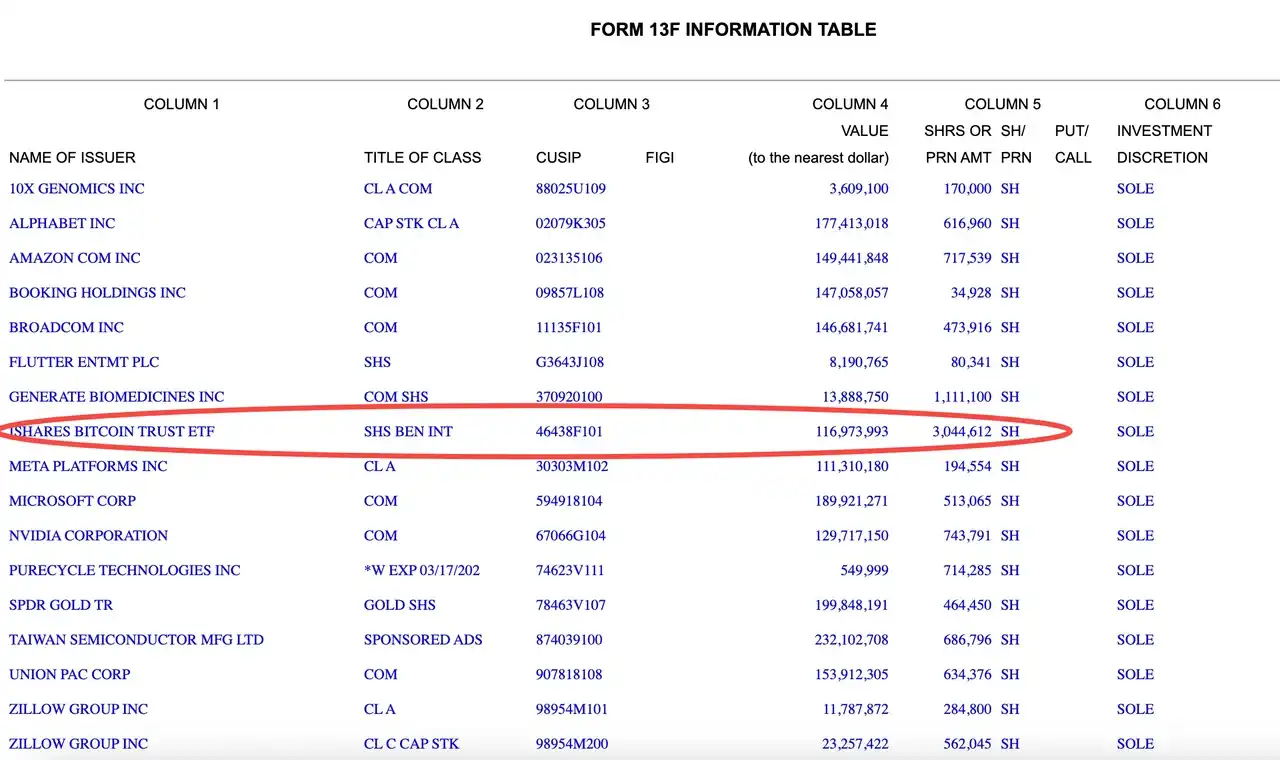
This change in holdings carries another layer of meaning. Harvard did not turn entirely defensive overall but instead reallocated part of its portfolio to assets related to the AI and computing power chain, increasing holdings in stocks like NVIDIA, Broadcom, and TSMC. Taken together, these moves look more like a structural rebalancing act of "reducing crypto, adding AI," rather than a comprehensive risk reduction.

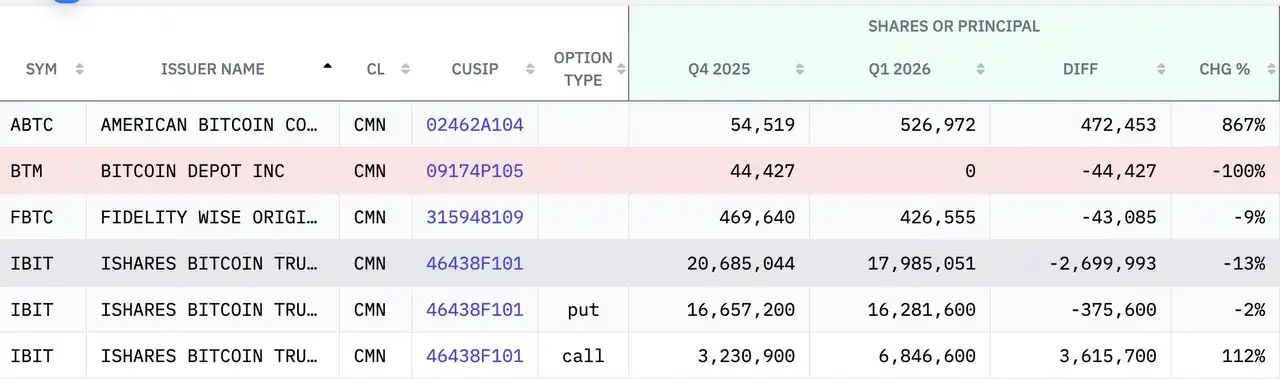
Goldman Sachs's strategy is broadly similar, albeit with more complex tactics. Comparing the latest two 13F reports, Goldman Sachs still held approximately $690 million worth of IBIT and about $25.18 million worth of FBTC (Fidelity Wise Origin Bitcoin Fund) at the end of Q1 2026, with both showing reductions from the previous quarter. More noteworthy than the simple reduction is its position structure: Goldman holds spot, call options, and put options on IBIT simultaneously, indicating this is not merely a directional bet but carries clear trading and hedging characteristics.
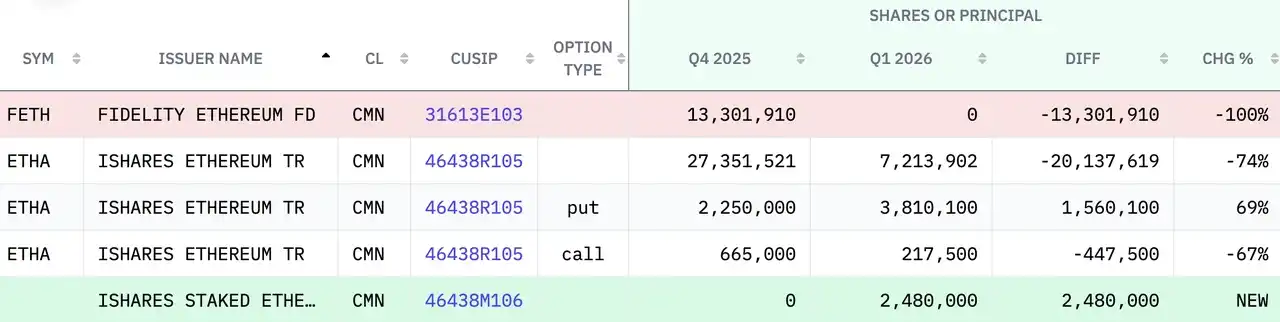
Goldman's handling of Ethereum was even more aggressive. It not only completely exited its position in the Fidelity Ethereum Fund (holding a value of $394 million at the end of Q4 2025) but also significantly reduced its spot position in iShares Ethereum Trust (ETHA) by about 74%, leaving a remaining position of about $114 million. Additionally, it newly acquired a position worth approximately $66.885 million in the iShares Staked Ethereum Trust ETF.
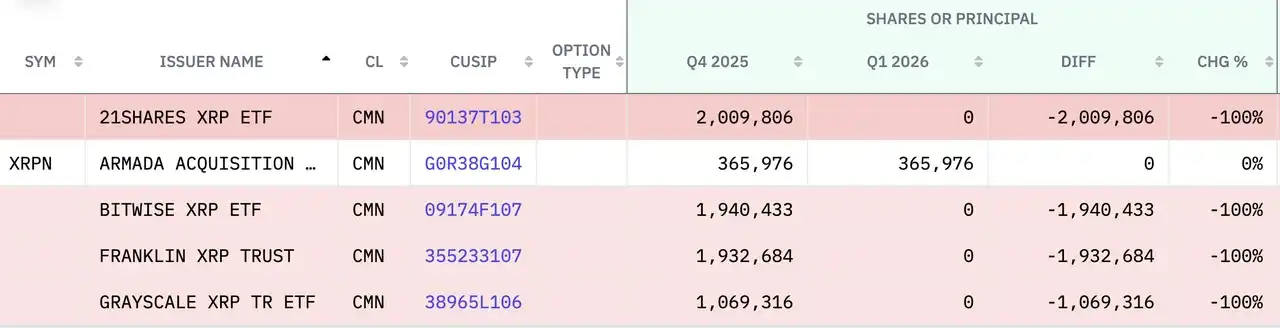
Meanwhile, Goldman Sachs has liquidated all its XRP and Solana-related ETFs. By the end of Q4 2025, it held a combined value of about $152 million in XRP ETFs from Bitwise, Franklin Templeton, Grayscale, and 21shares, and also liquidated all Solana ETFs/Trusts from Grayscale, Bitwise, and Fidelity (valued at $109 million at the end of Q4 2025).
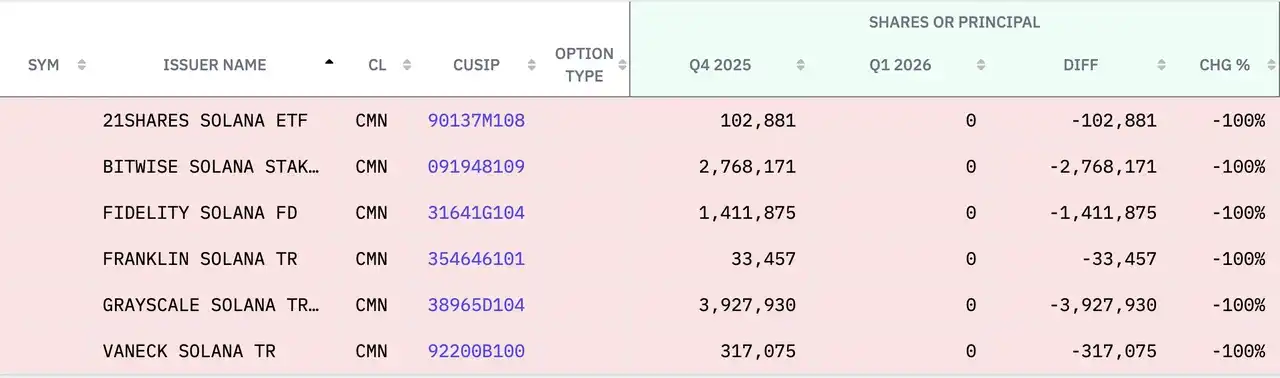
Regarding crypto-related stocks, Goldman Sachs increased its position in Circle by 249% to around $140 million, and its position in Galaxy Digital also rose by 205% (to $41.48 million). Holdings in Coinbase (+65%), Robinhood (+35%), and PayPal also increased. Meanwhile, it reduced holdings in Strategy and Riot Platforms. Overall, this resembles an internal rotation of "compressing ETF risk and shifting to selected individual stocks."

Among hedge funds, Millennium Management also gave a similar signal. Publicly compiled data shows its IBIT holdings decreased from 34.334 million shares to 19.287 million shares, a reduction of approximately 43.8%. Its ETHA holdings also declined synchronously (by about 34.3%), indicating a clear reduction in exposure to both Bitcoin and Ethereum spot ETFs.

London-based hedge fund manager Capula Management Ltd went even further. As of December 30, 2025, it held $470 million worth of IBIT, $160 million worth of FBTC, $207 million worth of ETHA, and $61.43 million worth of FETH. However, its latest 13F report shows these ETFs have been completely liquidated. Concurrently, Capula Management Ltd has also completely liquidated its Coinbase position (retaining a small options position).

Standing Pat Is Also an Attitude

The second category is those standing pat.

Brown University's IBIT holdings remain at 212,500 shares, with no increase or decrease. Calculated by disclosed market value, this position fell from about $10.551 million at the end of 2025 to about $8.164 million at the end of Q1 2026. Such university endowments do not directly convert a quarter's price volatility into trading instructions, instead emphasizing portfolio discipline and long-term allocation rhythm.

Dartmouth College's handling of crypto assets in Q1 2026 resembles a mild expansion rather than an aggressive rotation. Comparing its 13F with the previous quarter, the college retained its core Bitcoin ETF positions. The share count of IBIT remained largely unchanged, though the book value dropped from over $10 million to about $7.7 million due to the Q1 price pullback. For Ethereum exposure, it performed a product switch, replacing the previous Grayscale Ethereum Mini Trust with the staking-enabled Grayscale Ethereum Staking ETF, holding about 178,100 shares. It also newly established a position in the Bitwise Solana Staking ETF, approximately 304,803 shares, with a book value of about $3.3 million.

A Different Playbook: Buying the Dip

The third category consists of those increasing their holdings against the trend.

The Abu Dhabi sovereign wealth fund Mubadala is one of the most prominent names. Its IBIT holdings increased from 12,702,323 shares to 14,721,917 shares, a rise of about 15.9%. However, even though the share count increased, the quarter-end holding value still fell from about $631 million to about $566 million. This set of numbers is quite telling. The act of increasing holdings does not automatically lead to profits, especially when the market is still in a downtrend. Adding to positions first brings greater exposure, and only secondly might it bring higher future elasticity.

The moves by JPMorgan Chase can also be understood within this logic. The latest 13F data shows JPMorgan increased its IBIT holdings from about 3.028 million shares to about 8.30 million shares, a surge of 174%. It also increased exposure to some FBTC, BITB, and Ethereum ETFs. Judging by the share count change, it has clearly become more active; but this does not mean it has locked in excess returns during this volatility. For major banks, increasing ETF holdings is often about expanding the product shelf, meeting client allocation needs, and balancing liquidity and book risk, not just a one-way bullish bet.

The position changes at Wells Fargo are also worth examining separately. Comparing the two periods, the bank retained its core IBIT position while increasing allocations to products like BITB and the Grayscale Bitcoin Mini Trust. More notably, it significantly increased its Ethereum ETF exposure. Its ETHA holdings rose from about 672.6k shares to about 1.10 million shares, and its ETHW holdings also increased. In other words, Wells Fargo adopted a strategy of "retaining Bitcoin core positions and increasing Ethereum weight."

Market maker Jane Street showcases another typical style. Comparing the two 13F periods, it significantly reduced its Bitcoin spot ETF exposure in Q1, with IBIT holdings dropping from about 20.30 million shares to about 5.90 million shares, and FBTC also showing a clear decline. However, concurrently, it newly added about $82 million in Ethereum ETF exposure. On the crypto stock side, Jane Street increased holdings in Galaxy Digital (8746%), Circle (1162%), Coinbase (+14%), BitMine (+47%), and others. This combination looks more like a typical trading rebalancing: reducing Bitcoin ETFs, adding Ethereum ETFs, while seeking higher elasticity on the individual stock side.

Bitcoin, Ethereum, and Solana: Institutions Are Making Finer Risk Rankings

Another signal worth unpacking from this round of 13Fs is that institutional attitudes towards BTC ETFs, ETH ETFs, and even Solana ETFs are no longer uniform. The more pertinent question now is: which crypto asset are institutions prepared to keep as a core position, which one to place in an elastic position, and which one to simply remove for now.

Taking Harvard Management as an example, while it reduced IBIT, it completely exited ETHA. This resembles a risk ranking. The Bitcoin ETF still retains a relatively core position, while the Ethereum ETF was prioritized for reduction in the portfolio rebalancing.

Goldman Sachs's approach also indicates that large financial institutions are taking this ranking to an even more refined level. It still maintained a relatively large Bitcoin ETF exposure in Q1, but its contraction of Ethereum-related products was noticeably faster, while it essentially liquidated XRP and Solana-related ETFs. Taken together, Goldman is re-concentrating its portfolio onto the layer of assets it considers most liquid, easiest to hedge, and most easily incorporated into institutional risk models. Bitcoin here looks more like a "base position," Ethereum falls into the compressible category, and products like Solana and XRP are closer to peripheral experimental positions. Once market volatility amplifies, these are often the first to be cut.

On the other hand, Wells Fargo and Dartmouth College present completely different answers. Wells Fargo actively increased the weight of Ethereum ETFs, suggesting that within its internal framework, Ethereum is more like a secondary position worth increasing allocation during a pullback to capture potential upside. Dartmouth College's strategy is even more representative: it left its Bitcoin ETF core untouched but extended its new elastic exposure to Solana-related ETFs, especially those with staking attributes.

13F Gives the Market a Snapshot, But Also Leaves Blanks

This is also where the most restraint is needed when looking at institutional holdings.

13F filings allow the outside world to see, under a unified standard, how mainstream institutions allocate to crypto ETFs. But they also have very clear boundaries. First, there is a time lag. What investors see in May is only a snapshot of institutions' positions as of March 31, the quarter-end. If significant adjustments were made in Q2, the tables won't show it in advance. Second, 13F only shows holdings, not the actual purchase cost. A decline in an institution's holding value over a quarter does not necessarily mean an overall loss, as it might have bought earlier, or may have reduced and re-added positions during the quarter.

Furthermore, for institutions like Goldman Sachs, positions in spot ETFs are often overlaid with options, hedging, and market-making related positions. Looking at the table alone can easily mistake trading behavior for a long-term stance.

Yet, precisely because it is incomplete, the 13F is more like a window into institutional sentiment, not a conclusion table. Seeing Abu Dhabi's Mubadala increase holdings while its book value declined shows the patience of sovereign wealth. Seeing Brown University stand pat while enduring a pullback shows long-term allocation discipline. Seeing Harvard University reduce Bitcoin and exit Ethereum ETFs reveals the real sensitivity of university endowments to volatility. And seeing JPMorgan, Wells Fargo, and Jane Street continue to adjust exposure on certain products indicates that Wall Street still treats crypto ETFs as a category that needs to remain on the shelf and be constantly repriced.


Domande pertinenti

QWhat does the article reveal about the different strategies of major institutional investors regarding crypto ETF holdings during the first quarter of 2026?

AThe article reveals a clear divergence in strategies among U.S. institutional investors during the Q1 2026 market pullback. Some, like Harvard Management and Goldman Sachs, actively reduced their exposure to crypto ETFs, particularly those tied to Ethereum and altcoins like XRP and Solana, often reallocating towards assets like AI and selected crypto equities. Others, such as Brown University, maintained their holdings, reflecting a long-term discipline. Conversely, institutions like the Abu Dhabi sovereign fund Mubadala and JPMorgan increased their holdings, viewing the dip as an opportunity to expand exposure, though not necessarily signaling immediate bullishness but rather actions related to client servicing and portfolio rebalancing.

QHow did Harvard Management adjust its crypto and AI-related investments in Q1 2026, according to the 13F filings?

AAccording to 13F filings, Harvard Management significantly reduced its exposure to crypto ETFs. It cut its holdings in the iShares Bitcoin Trust (IBIT) by approximately 43% and completely exited its position in the iShares Ethereum Trust (ETHA). Concurrently, it reallocated capital into AI and computing-related assets, increasing its holdings in companies like NVIDIA, Broadcom, and TSMC. This indicates a strategic portfolio rebalancing, shifting away from crypto assets towards the AI sector, rather than a broad-based risk reduction.

QWhat specific actions did Goldman Sachs take regarding its Ethereum and altcoin ETF holdings in the reported quarter?

AGoldman Sachs took aggressive actions on its Ethereum and altcoin ETF holdings. It completely exited its position in the Fidelity Ethereum Fund and significantly reduced its holding in the iShares Ethereum Trust (ETHA) by about 74%. It also introduced a new position in the iShares Staked Ethereum Trust ETF. Furthermore, Goldman Sachs completely liquidated all its holdings in XRP and Solana-related ETFs from various issuers like Bitwise, Franklin Templeton, Grayscale, and 21Shares, which were valued at hundreds of millions of dollars at the end of Q4 2025.

QWhich institutions were cited as examples of "buying the dip" or increasing their crypto ETF exposure in Q1 2026, and what does the article suggest about their motivation?

AInstitutions cited as increasing their crypto ETF exposure include the Abu Dhabi sovereign fund Mubadala, JPMorgan, and Wells Fargo. Mubadala increased its IBIT holdings by about 15.9%, while JPMorgan dramatically boosted its IBIT position by 174%. Wells Fargo increased its holdings in Ethereum ETFs. The article suggests that for these large institutions, such increases are not solely a directional bullish bet on price. Motivations are more complex, involving expanding product offerings for clients, meeting allocation demands, balancing liquidity, managing book risk, or strategically increasing exposure to assets perceived to have higher future elasticity during a market downturn.

QWhat are the key limitations of 13F filings as a tool for understanding institutional investment behavior, as highlighted in the article?

AThe article highlights several key limitations of 13F filings. First, they have a significant time lag, showing only a snapshot of holdings at the quarter's end (e.g., March 31st), which may not reflect subsequent trades within the new quarter. Second, 13Fs show only holdings, not the actual purchase cost or the profitability of positions. A decline in reported value doesn't necessarily mean an overall loss. Third, for firms like Goldman Sachs, the reported ETF holdings are often part of a complex strategy involving options, hedging, and market-making activities. Therefore, viewing the static data alone can lead to misinterpreting tactical trades as long-term investment convictions.

Letture associate

Warsh's First Day in Office, Markets Deliver a 'Wake-up Call': Rate Hike Expected This Year

On his first day in office, newly inaugurated Federal Reserve Chairman Warsh received a stark market warning, with expectations now fully pricing in a 25-basis-point interest rate hike this year. The shift was triggered by hawkish remarks from Fed Governor Waller, who stated that inflation is now the key policy "driver" and that the odds of a hike or cut are evenly split. This sent short-term Treasury yields higher. Waller signaled a significant pivot in his stance, citing disappointing inflation and labor data. He suggested removing "easing bias" language from Fed statements and did not rule out future rate increases if inflation fails to recede, though he noted immediate action isn't warranted without signs of unanchored inflation expectations. Chairman Warsh faces immediate pressure at his first FOMC meeting in June. With the preferred inflation gauge at a three-year high, analysts warn that failing to hike could be interpreted as an implicit easing of policy. The geopolitical situation in the Middle East is adding to existing price pressures. The market's expectation for a hike contrasts sharply with earlier forecasts for multiple cuts. While long-term Treasury yields have been contained by lower energy prices recently, analysts note they remain under structural upward pressure. Warsh's swearing-in at the White House highlights political scrutiny over Fed independence. However, the market has made it clear that inflation is the most urgent challenge, leaving the new chairman little time to settle in.

marsbit7 h fa

Warsh's First Day in Office, Markets Deliver a 'Wake-up Call': Rate Hike Expected This Year

marsbit7 h fa

Has Microsoft Lost Its Way in the AI Race, and Can Copilot Bring It Back on Track?

Microsoft, once seen as an early AI frontrunner due to its investment in OpenAI, is navigating a strategic shift amid increased competition. Its initial reliance on OpenAI’s GPT models has been complicated by OpenAI’s growing ambitions as a direct competitor, rapid advancements from rivals like Claude and Gemini, and the disruptive rise of AI agents, which challenge its traditional SaaS business model. These factors contributed to stock declines and slower-than-expected adoption of its flagship Copilot products. In response, CEO Satya Nadella has taken a hands-on role in product development, signaling the urgency of change. Microsoft is pivoting from a model-centric strategy to a "model-agnostic" enterprise platform approach. It aims to become the foundational layer connecting various AI models—from OpenAI, Anthropic, or its own new "Superintelligence" team—with enterprise workflows, data, security, and cloud services. Recent organizational changes merged consumer and enterprise Copilot teams to accelerate innovation, exemplified by new products like Copilot Tasks and Copilot Cowork. However, this transformation comes at a high cost. Microsoft faces massive capital expenditures, potentially reaching ~$190 billion by 2026, to support AI infrastructure. While its platform strategy shows early signs of traction with growing Azure AI revenue, it must balance startup-like agility with the reliability expected by enterprise clients. The core challenge is no longer being the sole AI winner but defending its position as the essential enterprise software entry point amidst rapid technological commoditization and the shift towards always-on AI agents.

marsbit8 h fa

Has Microsoft Lost Its Way in the AI Race, and Can Copilot Bring It Back on Track?

marsbit8 h fa

Trading

Spot
Futures

Articoli Popolari

Cosa è $S$

Comprendere SPERO: Una Panoramica Completa Introduzione a SPERO Mentre il panorama dell'innovazione continua a evolversi, l'emergere delle tecnologie web3 e dei progetti di criptovaluta gioca un ruolo fondamentale nel plasmare il futuro digitale. Un progetto che ha attirato l'attenzione in questo campo dinamico è SPERO, denotato come SPERO,$$s$. Questo articolo mira a raccogliere e presentare informazioni dettagliate su SPERO, per aiutare gli appassionati e gli investitori a comprendere le sue basi, obiettivi e innovazioni nei domini web3 e crypto. Che cos'è SPERO,$$s$? SPERO,$$s$ è un progetto unico all'interno dello spazio crypto che cerca di sfruttare i principi della decentralizzazione e della tecnologia blockchain per creare un ecosistema che promuove l'impegno, l'utilità e l'inclusione finanziaria. Il progetto è progettato per facilitare interazioni peer-to-peer in modi nuovi, fornendo agli utenti soluzioni e servizi finanziari innovativi. Al suo interno, SPERO,$$s$ mira a responsabilizzare gli individui fornendo strumenti e piattaforme che migliorano l'esperienza dell'utente nello spazio delle criptovalute. Questo include la possibilità di metodi di transazione più flessibili, la promozione di iniziative guidate dalla comunità e la creazione di percorsi per opportunità finanziarie attraverso applicazioni decentralizzate (dApps). La visione sottostante di SPERO,$$s$ ruota attorno all'inclusività, cercando di colmare le lacune all'interno della finanza tradizionale mentre sfrutta i vantaggi della tecnologia blockchain. Chi è il Creatore di SPERO,$$s$? L'identità del creatore di SPERO,$$s$ rimane piuttosto oscura, poiché ci sono risorse pubblicamente disponibili limitate che forniscono informazioni dettagliate sul suo fondatore o fondatori. Questa mancanza di trasparenza può derivare dall'impegno del progetto per la decentralizzazione—un ethos che molti progetti web3 condividono, dando priorità ai contributi collettivi rispetto al riconoscimento individuale. Centrando le discussioni attorno alla comunità e ai suoi obiettivi collettivi, SPERO,$$s$ incarna l'essenza dell'empowerment senza mettere in evidenza individui specifici. Pertanto, comprendere l'etica e la missione di SPERO rimane più importante che identificare un creatore singolo. Chi sono gli Investitori di SPERO,$$s$? SPERO,$$s$ è supportato da una varietà di investitori che vanno dai capitalisti di rischio agli investitori angelici dedicati a promuovere l'innovazione nel settore crypto. Il focus di questi investitori generalmente si allinea con la missione di SPERO—dando priorità a progetti che promettono avanzamenti tecnologici sociali, inclusività finanziaria e governance decentralizzata. Queste fondazioni di investitori sono tipicamente interessate a progetti che non solo offrono prodotti innovativi, ma contribuiscono anche positivamente alla comunità blockchain e ai suoi ecosistemi. Il supporto di questi investitori rafforza SPERO,$$s$ come un concorrente degno di nota nel dominio in rapida evoluzione dei progetti crypto. Come Funziona SPERO,$$s$? SPERO,$$s$ impiega un framework multifunzionale che lo distingue dai progetti di criptovaluta convenzionali. Ecco alcune delle caratteristiche chiave che sottolineano la sua unicità e innovazione: Governance Decentralizzata: SPERO,$$s$ integra modelli di governance decentralizzati, responsabilizzando gli utenti a partecipare attivamente ai processi decisionali riguardanti il futuro del progetto. Questo approccio favorisce un senso di proprietà e responsabilità tra i membri della comunità. Utilità del Token: SPERO,$$s$ utilizza il proprio token di criptovaluta, progettato per servire varie funzioni all'interno dell'ecosistema. Questi token abilitano transazioni, premi e la facilitazione dei servizi offerti sulla piattaforma, migliorando l'impegno e l'utilità complessivi. Architettura Stratificata: L'architettura tecnica di SPERO,$$s$ supporta la modularità e la scalabilità, consentendo un'integrazione fluida di funzionalità e applicazioni aggiuntive man mano che il progetto evolve. Questa adattabilità è fondamentale per mantenere la rilevanza nel panorama crypto in continua evoluzione. Coinvolgimento della Comunità: Il progetto enfatizza iniziative guidate dalla comunità, impiegando meccanismi che incentivano la collaborazione e il feedback. Nutrendo una comunità forte, SPERO,$$s$ può affrontare meglio le esigenze degli utenti e adattarsi alle tendenze di mercato. Focus sull'Inclusione: Offrendo basse commissioni di transazione e interfacce user-friendly, SPERO,$$s$ mira ad attrarre una base utenti diversificata, inclusi individui che potrebbero non aver precedentemente interagito nello spazio crypto. Questo impegno per l'inclusione si allinea con la sua missione generale di empowerment attraverso l'accessibilità. Cronologia di SPERO,$$s$ Comprendere la storia di un progetto fornisce preziose intuizioni sulla sua traiettoria di sviluppo e sui traguardi. Di seguito è riportata una cronologia suggerita che mappa eventi significativi nell'evoluzione di SPERO,$$s$: Fase di Concettualizzazione e Ideazione: Le idee iniziali che formano la base di SPERO,$$s$ sono state concepite, allineandosi strettamente con i principi di decentralizzazione e focus sulla comunità all'interno dell'industria blockchain. Lancio del Whitepaper del Progetto: Dopo la fase concettuale, è stato rilasciato un whitepaper completo che dettaglia la visione, gli obiettivi e l'infrastruttura tecnologica di SPERO,$$s$ per suscitare interesse e feedback dalla comunità. Costruzione della Comunità e Prime Interazioni: Sono stati effettuati sforzi attivi di outreach per costruire una comunità di early adopters e potenziali investitori, facilitando discussioni attorno agli obiettivi del progetto e ottenendo supporto. Evento di Generazione del Token: SPERO,$$s$ ha condotto un evento di generazione del token (TGE) per distribuire i propri token nativi ai primi sostenitori e stabilire una liquidità iniziale all'interno dell'ecosistema. Lancio della Prima dApp: La prima applicazione decentralizzata (dApp) associata a SPERO,$$s$ è stata attivata, consentendo agli utenti di interagire con le funzionalità principali della piattaforma. Sviluppo Continuo e Partnership: Aggiornamenti e miglioramenti continui alle offerte del progetto, inclusi partnership strategiche con altri attori nello spazio blockchain, hanno plasmato SPERO,$$s$ in un concorrente competitivo e in evoluzione nel mercato crypto. Conclusione SPERO,$$s$ rappresenta una testimonianza del potenziale del web3 e delle criptovalute di rivoluzionare i sistemi finanziari e responsabilizzare gli individui. Con un impegno per la governance decentralizzata, il coinvolgimento della comunità e funzionalità progettate in modo innovativo, apre la strada verso un panorama finanziario più inclusivo. Come per qualsiasi investimento nello spazio crypto in rapida evoluzione, si incoraggiano potenziali investitori e utenti a ricercare approfonditamente e a impegnarsi in modo riflessivo con gli sviluppi in corso all'interno di SPERO,$$s$. Il progetto mostra lo spirito innovativo dell'industria crypto, invitando a ulteriori esplorazioni delle sue innumerevoli possibilità. Mentre il percorso di SPERO,$$s$ è ancora in fase di sviluppo, i suoi principi fondamentali potrebbero effettivamente influenzare il futuro di come interagiamo con la tecnologia, la finanza e tra di noi in ecosistemi digitali interconnessi.

75 Totale visualizzazioniPubblicato il 2024.12.17Aggiornato il 2024.12.17

Cosa è $S$

Cosa è AGENT S

Agent S: Il Futuro dell'Interazione Autonoma in Web3 Introduzione Nel panorama in continua evoluzione di Web3 e criptovalute, le innovazioni stanno costantemente ridefinendo il modo in cui gli individui interagiscono con le piattaforme digitali. Uno di questi progetti pionieristici, Agent S, promette di rivoluzionare l'interazione uomo-computer attraverso il suo framework agentico aperto. Aprendo la strada a interazioni autonome, Agent S mira a semplificare compiti complessi, offrendo applicazioni trasformative nell'intelligenza artificiale (AI). Questa esplorazione dettagliata approfondirà le complessità del progetto, le sue caratteristiche uniche e le implicazioni per il dominio delle criptovalute. Cos'è Agent S? Agent S si presenta come un innovativo framework agentico aperto, progettato specificamente per affrontare tre sfide fondamentali nell'automazione dei compiti informatici: Acquisizione di Conoscenze Specifiche del Dominio: Il framework apprende in modo intelligente da varie fonti di conoscenza esterne ed esperienze interne. Questo approccio duale gli consente di costruire un ricco repository di conoscenze specifiche del dominio, migliorando le sue prestazioni nell'esecuzione dei compiti. Pianificazione su Lungo Orizzonte di Compiti: Agent S impiega una pianificazione gerarchica potenziata dall'esperienza, un approccio strategico che facilita la suddivisione e l'esecuzione efficiente di compiti complessi. Questa caratteristica migliora significativamente la sua capacità di gestire più sottocompiti in modo efficiente ed efficace. Gestione di Interfacce Dinamiche e Non Uniformi: Il progetto introduce l'Interfaccia Agente-Computer (ACI), una soluzione innovativa che migliora l'interazione tra agenti e utenti. Utilizzando Modelli Linguistici Multimodali di Grandi Dimensioni (MLLM), Agent S può navigare e manipolare senza sforzo diverse interfacce grafiche utente. Attraverso queste caratteristiche pionieristiche, Agent S fornisce un framework robusto che affronta le complessità coinvolte nell'automazione dell'interazione umana con le macchine, preparando il terreno per innumerevoli applicazioni nell'AI e oltre. Chi è il Creatore di Agent S? Sebbene il concetto di Agent S sia fondamentalmente innovativo, informazioni specifiche sul suo creatore rimangono elusive. Il creatore è attualmente sconosciuto, il che evidenzia sia la fase embrionale del progetto sia la scelta strategica di mantenere i membri fondatori sotto anonimato. Indipendentemente dall'anonimato, l'attenzione rimane sulle capacità e sul potenziale del framework. Chi sono gli Investitori di Agent S? Poiché Agent S è relativamente nuovo nell'ecosistema crittografico, informazioni dettagliate riguardanti i suoi investitori e sostenitori finanziari non sono documentate esplicitamente. La mancanza di approfondimenti pubblicamente disponibili sulle fondazioni di investimento o sulle organizzazioni che supportano il progetto solleva interrogativi sulla sua struttura di finanziamento e sulla roadmap di sviluppo. Comprendere il supporto è cruciale per valutare la sostenibilità del progetto e il suo potenziale impatto sul mercato. Come Funziona Agent S? Al centro di Agent S si trova una tecnologia all'avanguardia che gli consente di funzionare efficacemente in contesti diversi. Il suo modello operativo è costruito attorno a diverse caratteristiche chiave: Interazione Uomo-Computer Simile a Quella Umana: Il framework offre una pianificazione AI avanzata, cercando di rendere le interazioni con i computer più intuitive. Mimando il comportamento umano nell'esecuzione dei compiti, promette di elevare le esperienze degli utenti. Memoria Narrativa: Utilizzata per sfruttare esperienze di alto livello, Agent S utilizza la memoria narrativa per tenere traccia delle storie dei compiti, migliorando così i suoi processi decisionali. Memoria Episodica: Questa caratteristica fornisce agli utenti una guida passo-passo, consentendo al framework di offrire supporto contestuale mentre i compiti si sviluppano. Supporto per OpenACI: Con la capacità di funzionare localmente, Agent S consente agli utenti di mantenere il controllo sulle proprie interazioni e flussi di lavoro, allineandosi con l'etica decentralizzata di Web3. Facile Integrazione con API Esterne: La sua versatilità e compatibilità con varie piattaforme AI garantiscono che Agent S possa adattarsi senza problemi agli ecosistemi tecnologici esistenti, rendendolo una scelta attraente per sviluppatori e organizzazioni. Queste funzionalità contribuiscono collettivamente alla posizione unica di Agent S all'interno dello spazio crittografico, poiché automatizza compiti complessi e multi-fase con un intervento umano minimo. Man mano che il progetto evolve, le sue potenziali applicazioni in Web3 potrebbero ridefinire il modo in cui si svolgono le interazioni digitali. Cronologia di Agent S Lo sviluppo e le tappe di Agent S possono essere riassunti in una cronologia che evidenzia i suoi eventi significativi: 27 Settembre 2024: Il concetto di Agent S è stato lanciato in un documento di ricerca completo intitolato “Un Framework Agentico Aperto che Usa i Computer Come un Umano”, mostrando le basi per il progetto. 10 Ottobre 2024: Il documento di ricerca è stato reso pubblicamente disponibile su arXiv, offrendo un'esplorazione approfondita del framework e della sua valutazione delle prestazioni basata sul benchmark OSWorld. 12 Ottobre 2024: È stata rilasciata una presentazione video, fornendo un'idea visiva delle capacità e delle caratteristiche di Agent S, coinvolgendo ulteriormente potenziali utenti e investitori. Questi indicatori nella cronologia non solo illustrano i progressi di Agent S, ma indicano anche il suo impegno per la trasparenza e il coinvolgimento della comunità. Punti Chiave su Agent S Man mano che il framework Agent S continua a evolversi, diversi attributi chiave si distinguono, sottolineando la sua natura innovativa e il potenziale: Framework Innovativo: Progettato per fornire un uso intuitivo dei computer simile all'interazione umana, Agent S porta un approccio nuovo all'automazione dei compiti. Interazione Autonoma: La capacità di interagire autonomamente con i computer attraverso GUI segna un passo avanti verso soluzioni informatiche più intelligenti ed efficienti. Automazione di Compiti Complessi: Con la sua metodologia robusta, può automatizzare compiti complessi e multi-fase, rendendo i processi più veloci e meno soggetti a errori. Miglioramento Continuo: I meccanismi di apprendimento consentono ad Agent S di migliorare dalle esperienze passate, migliorando continuamente le sue prestazioni e la sua efficacia. Versatilità: La sua adattabilità attraverso diversi ambienti operativi come OSWorld e WindowsAgentArena garantisce che possa servire un'ampia gamma di applicazioni. Man mano che Agent S si posiziona nel panorama di Web3 e delle criptovalute, il suo potenziale per migliorare le capacità di interazione e automatizzare i processi segna un significativo avanzamento nelle tecnologie AI. Attraverso il suo framework innovativo, Agent S esemplifica il futuro delle interazioni digitali, promettendo un'esperienza più fluida ed efficiente per gli utenti in vari settori. Conclusione Agent S rappresenta un audace passo avanti nell'unione tra AI e Web3, con la capacità di ridefinire il modo in cui interagiamo con la tecnologia. Sebbene sia ancora nelle sue fasi iniziali, le possibilità per la sua applicazione sono vaste e coinvolgenti. Attraverso il suo framework completo che affronta sfide critiche, Agent S mira a portare le interazioni autonome al centro dell'esperienza digitale. Man mano che ci addentriamo nei regni delle criptovalute e della decentralizzazione, progetti come Agent S giocheranno senza dubbio un ruolo cruciale nel plasmare il futuro della tecnologia e della collaborazione uomo-computer.

521 Totale visualizzazioniPubblicato il 2025.01.14Aggiornato il 2025.01.14

Cosa è AGENT S

Come comprare S

Benvenuto in HTX.com! Abbiamo reso l'acquisto di Sonic (S) semplice e conveniente. Segui la nostra guida passo passo per intraprendere il tuo viaggio nel mondo delle criptovalute.Step 1: Crea il tuo Account HTXUsa la tua email o numero di telefono per registrarti il tuo account gratuito su HTX. Vivi un'esperienza facile e sblocca tutte le funzionalità,Crea il mio accountStep 2: Vai in Acquista crypto e seleziona il tuo metodo di pagamentoCarta di credito/debito: utilizza la tua Visa o Mastercard per acquistare immediatamente SonicS.Bilancio: Usa i fondi dal bilancio del tuo account HTX per fare trading senza problemi.Terze parti: abbiamo aggiunto metodi di pagamento molto utilizzati come Google Pay e Apple Pay per maggiore comodità.P2P: Fai trading direttamente con altri utenti HTX.Over-the-Counter (OTC): Offriamo servizi su misura e tassi di cambio competitivi per i trader.Step 3: Conserva Sonic (S)Dopo aver acquistato Sonic (S), conserva nel tuo account HTX. In alternativa, puoi inviare tramite trasferimento blockchain o scambiare per altre criptovalute.Step 4: Scambia Sonic (S)Scambia facilmente Sonic (S) nel mercato spot di HTX. Accedi al tuo account, seleziona la tua coppia di trading, esegui le tue operazioni e monitora in tempo reale. Offriamo un'esperienza user-friendly sia per chi ha appena iniziato che per i trader più esperti.

935 Totale visualizzazioniPubblicato il 2025.01.15Aggiornato il 2025.03.21

Come comprare S

Discussioni

Benvenuto nella Community HTX. Qui puoi rimanere informato sugli ultimi sviluppi della piattaforma e accedere ad approfondimenti esperti sul mercato. Le opinioni degli utenti sul prezzo di S S sono presentate come di seguito.

活动图片













