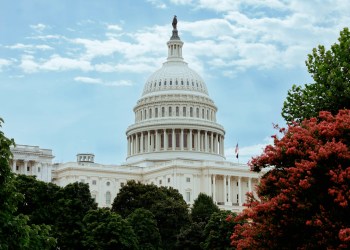
White House talks expose stablecoin rewards as fault line in U.S. crypto legislation

ambcryptoPubblicato 2026-02-03Pubblicato ultima volta 2026-02-03

Introduzione

A White House meeting on February 2nd failed to break the stalemate in U.S. crypto market structure legislation, with stablecoin rewards identified as the core unresolved issue. Banking groups argue that yield-bearing stablecoins threaten traditional banks by drawing deposits away and undermining lending capabilities. Crypto firms counter that rewards are essential for customer acquisition and competitiveness, warning that a ban would favor incumbents and disadvantage digital-asset platforms. Major banking associations reaffirmed their stance post-meeting, emphasizing financial system safety and local lending support. The dispute reflects a deeper structural tension over dollar intermediation in the digital economy, with neither side willing to concede. Further discussions are expected, but Senate progress remains uncertain.

A White House meeting convened on 2 February to break a months-long stalemate over U.S. crypto market structure legislation ended without agreement. Stablecoin rewards was highlighted as the central unresolved issue dividing banks and crypto firms.

The closed-door session, organized by the White House’s crypto council, brought together representatives from both industries to seek compromize on legislation aimed at setting federal rules for digital assets.

While participants described the talks as constructive, core disagreements persisted, according to people familiar with the meeting.

Rewards versus deposits

At the heart of the impasse is how the bill treats interest and other rewards paid on stablecoins.

Banking groups have pushed for language that would prohibit such practices. They argue that yield-bearing stablecoins could draw deposits away from insured lenders.

Also, they argued that it would undermine the funding base that supports lending to households and small businesses.

Crypto firms counter that rewards are a critical tool for customer acquisition and competitiveness. Particularly in a market where stablecoins function as both payment rails and on-chain liquidity instruments.

Barring rewards, they argue, would entrench incumbents and tilt the playing field against digital-asset platforms.

This dispute has stalled progress on the legislation for months. It also contributed to the Senate Banking Committee postponing a markup amid concerns that the bill lacked sufficient support to advance.

Banking groups hold the line

Following the meeting, major banking trade groups, including the American Bankers Association, the Bank Policy Institute, and the Independent Community Bankers of America, issued a joint statement thanking the administration for the discussion but stopping short of signaling compromise.

The statement emphasized the need for legislation that protects the “safety and soundness” of the financial system and preserves banks’ ability to provide local lending.

It did not reference stablecoins or rewards directly, underscoring that banks’ core concerns remain unchanged.

Why the issue won’t fade

The clash over rewards reflects a deeper structural tension: who intermediates dollar-denominated value in a digital economy.

For banks, deposits underpin balance sheets and credit creation. For crypto firms, stablecoins—and the incentives attached to them—are foundational to user growth and on-chain activity.

That makes the dispute less about drafting tweaks and more about economic alignment. Even as lawmakers seek to deliver regulatory clarity, neither side appears ready to concede ground on a question that goes to the heart of their business models.

The White House has not commented publicly on the outcome, though participants expect additional meetings. Meanwhile, the House of Representatives has already passed its version of the bill, leaving the Senate’s path forward uncertain.


Final Thoughts

  • Stablecoin rewards have emerged as the decisive fault line in U.S. crypto legislation, reflecting a clash between deposit economics and on-chain competition.
  • Without movement on rewards, further talks may continue without unlocking a Senate compromise, delaying market-structure clarity.


Domande pertinenti

QWhat was the main unresolved issue discussed in the White House meeting regarding U.S. crypto legislation?

AStablecoin rewards were highlighted as the central unresolved issue dividing banks and crypto firms.

QWhy do banking groups oppose yield-bearing stablecoins according to the article?

ABanking groups argue that yield-bearing stablecoins could draw deposits away from insured lenders and undermine the funding base that supports lending to households and small businesses.

QHow do crypto firms justify the need for stablecoin rewards?

ACrypto firms counter that rewards are a critical tool for customer acquisition and competitiveness, especially in a market where stablecoins function as both payment rails and on-chain liquidity instruments.

QWhat was the outcome of the White House meeting on February 2nd?

AThe meeting ended without agreement, as core disagreements persisted, particularly regarding the treatment of stablecoin rewards.

QWhich banking trade groups issued a joint statement after the meeting, and what was their stance?

AMajor banking trade groups including the American Bankers Association, the Bank Policy Institute, and the Independent Community Bankers of America issued a joint statement thanking the administration but stopped short of signaling compromise, emphasizing the need to protect the financial system's safety and preserve banks' lending ability.

Letture associate

Anthropic's IPO Launch: Commercial Miracle or Valuation Bubble?

Anthropic has confidentially filed for an IPO, led by Morgan Stanley and Goldman Sachs, potentially going public by October. Following its latest $650 billion funding round, its pre-IPO valuation stands at $965 billion, with projections reaching up to $2 trillion at listing, which would make it the highest-valued private company ever. The article, written by Fu Sheng, addresses skepticism that this represents an AI bubble akin to the 2000 dot-com crash. It argues the current situation differs fundamentally. Unlike the internet bubble era, which relied on speculative narratives with little revenue, Anthropic's valuation is backed by unprecedented, measurable financial performance. Key data points include: * **Revenue Growth:** ARR skyrocketed from $10 billion in early 2025 to $470 billion by May 2026, targeting $100 billion by year-end—a growth curve unmatched in business history. * **Profitability:** It achieved operating profitability in Q2 2026 with an estimated $5.6 billion profit. * **Efficiency:** With ~3,000 employees and ~$470 billion ARR, its revenue per employee exceeds $10 million. Products like Claude Code, launched less than a year ago, already generate $25 billion in annualized revenue. * **Enterprise Adoption:** It boasts a strong enterprise client base, with 8 of the Fortune 10 and over 1,000 large firms spending over $1 million annually on Claude. The valuation is framed using a traditional SaaS model (e.g., a 10x Price-to-Sales multiple on $100 billion revenue). The author contends the core question for analysts has shifted from "How big could this be?" to "How much is it earning and will earn next quarter?" The discussion extends beyond Anthropic to a broader paradigm shift: the transition from a "carbon-based" to a "silicon-based" economy. Companies are increasingly prioritizing investment in compute and AI capabilities over human resources, as these directly scale productivity and competitive advantage. Anthropic's IPO is thus positioned not just as a corporate milestone, but as a price anchor for this new economic era.

链捕手3 h fa

Anthropic's IPO Launch: Commercial Miracle or Valuation Bubble?

链捕手3 h fa

Trading

Spot
Futures

Articoli Popolari

Come comprare HOUSE

Benvenuto in HTX.com! Abbiamo reso l'acquisto di Housecoin (HOUSE) semplice e conveniente. Segui la nostra guida passo passo per intraprendere il tuo viaggio nel mondo delle criptovalute.Step 1: Crea il tuo Account HTXUsa la tua email o numero di telefono per registrarti il tuo account gratuito su HTX. Vivi un'esperienza facile e sblocca tutte le funzionalità,Crea il mio accountStep 2: Vai in Acquista crypto e seleziona il tuo metodo di pagamentoCarta di credito/debito: utilizza la tua Visa o Mastercard per acquistare immediatamente HousecoinHOUSE.Bilancio: Usa i fondi dal bilancio del tuo account HTX per fare trading senza problemi.Terze parti: abbiamo aggiunto metodi di pagamento molto utilizzati come Google Pay e Apple Pay per maggiore comodità.P2P: Fai trading direttamente con altri utenti HTX.Over-the-Counter (OTC): Offriamo servizi su misura e tassi di cambio competitivi per i trader.Step 3: Conserva Housecoin (HOUSE)Dopo aver acquistato Housecoin (HOUSE), conserva nel tuo account HTX. In alternativa, puoi inviare tramite trasferimento blockchain o scambiare per altre criptovalute.Step 4: Scambia Housecoin (HOUSE)Scambia facilmente Housecoin (HOUSE) nel mercato spot di HTX. Accedi al tuo account, seleziona la tua coppia di trading, esegui le tue operazioni e monitora in tempo reale. Offriamo un'esperienza user-friendly sia per chi ha appena iniziato che per i trader più esperti.

282 Totale visualizzazioniPubblicato il 2025.04.27Aggiornato il 2026.06.02

Come comprare HOUSE

Discussioni

Benvenuto nella Community HTX. Qui puoi rimanere informato sugli ultimi sviluppi della piattaforma e accedere ad approfondimenti esperti sul mercato. Le opinioni degli utenti sul prezzo di HOUSE HOUSE sono presentate come di seguito.

活动图片