White House 'Exclusive' Teleprompter Operator Cashes in Over $100,000 Using Insider Information for Predictions

Odaily星球日报Pubblicato 2026-07-22Pubblicato ultima volta 2026-07-22

Introduzione

The White House is embroiled in another insider trading scandal, this time involving a teleprompter operator for former President Trump. Gabriel Perez, a longtime aide who controlled Trump's speech teleprompters, used his advance knowledge of speech content to profit over $100,000 on prediction markets like Kalshi by betting on which specific words Trump would mention. After Kalshi's monitoring systems flagged suspicious trading activity and froze his funds, the case was referred to the CFTC. Perez was suspended without pay by Trump, who called his actions "disgusting." Unlike previous insiders prosecuted in similar cases, Perez faced no criminal charges, only a CFTC settlement requiring him to return profits and cease such trading. The article highlights how "mention" markets are uniquely vulnerable to manipulation by insiders or even the speakers themselves, citing examples like a Grammy host jokingly saying a random word and a Coinbase CEO reading all prediction market options aloud. As prediction markets like Kalshi tighten compliance—such as requiring users to disclose employers—the piece argues this crackdown on insider trading, while promoting regulatory compliance, may move these markets further from "collective wisdom" and closer to being pure gambling venues.

Original | Odaily Planet Daily (@OdailyChina)

Author | Golem (@web3_golem)
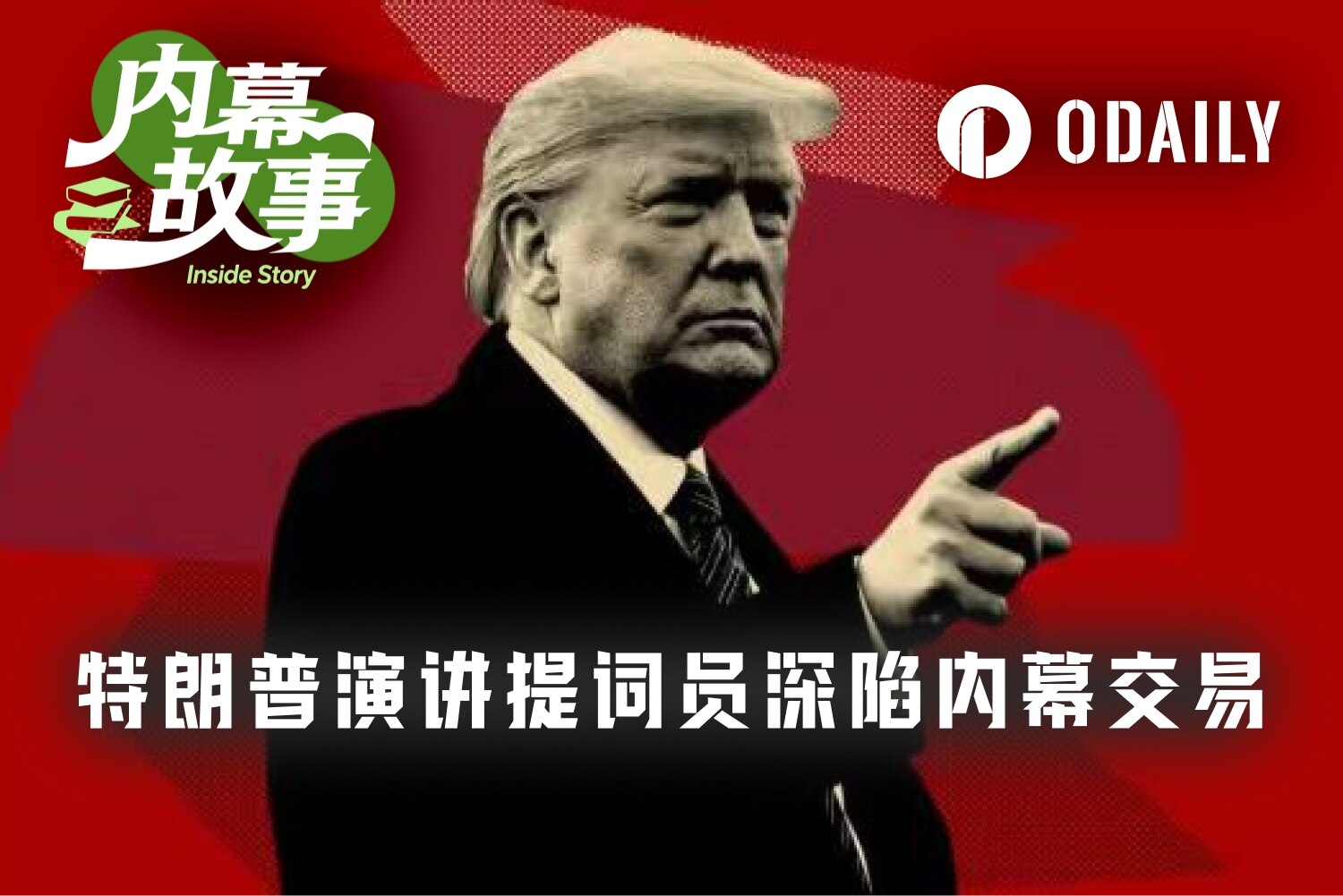
Recently, the White House was embroiled in yet another insider trading scandal.

A White House staff member traded using insider information to profit tens of thousands of dollars in prediction markets. The insider's identity turned out to be a long-term operator responsible for Trump's teleprompter during speeches. This employee has now been suspended and had his salary stopped.

This teleprompter operator has become the third insider disclosed by U.S. judicial authorities, following a special forces soldier involved in the Maduro capture operation and a Google security engineer, to have profited substantially in prediction markets using insider information. (Related Reading: After 4 Months, Polymarket Helped Trump Catch the Leaker of a Military Operation, but the Cost Was...; Checking the Answers Before Handing in the Test? Google Engineer Entangled in Polymarket Insider Trading Case)

Reported by Kalshi, Funds Frozen, But Ultimately Avoids Criminal Liability

The protagonist is named Gabriel Perez, who has been operating the teleprompter for Trump's speeches since 2016. Perez's journey to this job is rather dramatic. In 2016, Trump's campaign team urgently needed a teleprompter operator, so they searched for "teleprompter" on Google and found Perez's company. Perez was thus hired by Trump's team.

Gabriel Perez

Although Perez was hired by chance, over these 10 years, he gradually became one of Trump's closest aides. American Politico even stated that "Perez has become the only person Trump trusts," as he often receives Trump's personal last-minute modifications to public speeches.

Therefore, Perez became one of the few people with access to Trump's complete speech drafts in advance and held near-final approval authority over almost all of Trump's prepared remarks. This power is not insignificant. Perez's official title at the White House is Deputy Assistant to the President and Technical Advisor, with an annual salary of $175,000, only $20,000 less than senior staff like Chief of Staff Susie Wiles and Press Secretary Karoline Leavitt.

Such compensation already places him in the high-income bracket in the U.S., but the greedy Perez was not satisfied.

When prediction markets became popular, with countless players betting on which specific words Trump would "mention" in certain speeches, Perez discovered that his "privilege" could bring him even more wealth.

CFTC investigators found that Perez placed bets on over a dozen of Trump's speeches within about three months, with total profits exceeding $100,000. This included Trump's prime-time speech in December of last year, his speech at the World Economic Forum in Davos, Switzerland, in January of this year, the State of the Union address in February, and Trump's remarks at the Medal of Honor ceremony in March.

The U.S. President's statutory annual salary is $400,000, and with various allowances, the President receives approximately $569,000 per year. If Perez hadn't been caught, at his rate of earning over $100,000 in three months, his annual income, though his power is less than the President's, would have exceeded the President's salary.

However, even knowing the speech content in advance, Perez could not always successfully predict which words Trump would mention in his speeches because Trump often goes off-script "impromptu." When Trump skipped a word Perez had bet on during a speech, Perez would immediately sell to cut his losses. Trump himself admitted during a speech at the Detroit Economic Club in January that he doesn't look at the teleprompter 80% of the time.

Similar to the fates of the special forces soldier and the Google security engineer, Perez's exposure also originated from the prediction market platform's proactive reporting. Perez frequently used Kalshi for insider trading. Starting in March of this year, Kalshi's monitoring system detected some abnormal trades related to specific words mentioned in Trump's speeches, thus drawing attention to Perez.

After concluding its internal investigation, Kalshi quickly froze over $90,000 in Perez's account and handed the case over to the U.S. Commodity Futures Trading Commission (CFTC). Upon learning of this, Trump commented that it was "disgraceful" and personally decided to suspend Perez without pay during the suspension.

Ultimately, Perez's greed led him to lose both his profits and his original job. However, compared to the special forces soldier and the Google security engineer, Perez was fortunate because U.S. judicial authorities did not file criminal charges against him; Perez won't face jail time.

During the investigation, the CFTC had notified federal prosecutors in Manhattan, but the prosecutors declined to open a criminal investigation. According to informed sources, CFTC regulators have expressed willingness to reach a settlement with Perez and have discussed terms with him. The result requires Perez to return his profits and cease similar trades thereafter.

Perez is Just the Beginning of Purging Insiders from "Mention" Markets

The reason Perez avoided jail is that prosecutors believe his actions do not constitute a criminal offense; he neither leaked important government information in advance nor caused harm to national security. As Trump said, "it's just disgraceful," damaging the clean image of government officials.

In March of this year, the White House warned staff not to use non-public information to place bets in prediction markets. White House spokesperson Davis Ingles stated: "The White House has strict ethics guidelines, and we expect all staff and officials to adhere to them."

But Perez is definitely not the only White House staff member profiting from insider information, and Trump, who openly runs a paid subscription group, is even less qualified to comment on this teleprompter operator (Related Reading: $100,000 a Month, Trump Starts Selling 'Alpha' ).

It's no wonder Perez couldn't resist the temptation; the "mention" markets in prediction platforms are indeed the category most susceptible to manipulation. When the cost for insiders to participate is pushed extremely low, while the potential returns are extremely high, it ceases to be merely a moral issue and becomes a mechanism design problem. In the face of profit, even outwardly respectable and ostensibly righteous politicians cannot guarantee they will never cross that line.

The gameplay of "mention" markets involves users betting on specific words, phrases, or topics that will be mentioned in public speeches. Compared to other events (such as political elections, sports events, etc.), the cost of cheating in "mention" markets is extremely low. It's not limited to people like Perez who know the speech content in advance; for the speaker themselves, cheating is as simple as uttering a word, literalizing "a word is worth a thousand pieces of gold."

At the Grammy Awards ceremony in February this year, host Trevor Noah, after saying "welcome back to the Grammys," suddenly shouted the word "Potato." As everyone was confused, Trevor Noah continued, "if you bet on Polymarket that I was going to say this word, you just made a killing," and congratulated user "Noah 22." However, in reality, the "What will be mentioned at the Grammy Awards" prediction on Polymarket didn't even have "potato" as an option, and the user "noah-22" was purely fictional.

Grammy host shouting potato at the awards ceremony

Some analyses later suggested this was a marketing activity by Polymarket, but it already demonstrated the speaker's ability to manipulate the "mention" market.

There's an even more direct example. In October 2025, during Coinbase's Q3 earnings call, just as the meeting was about to end, CEO Brian Armstrong said he noticed many people were betting in prediction markets on what he would mention during this call. He then opened Polymarket and read aloud all the words listed in the options, ultimately causing all outcomes in that market to reach 100% probability, ending in a draw.

The above are just two examples showcasing speakers' control over "mention" markets; there are certainly many more individuals truly profiting from this lurking beneath the surface. However, as regulation of prediction markets gradually intensifies, perhaps all insiders in "mention" markets will eventually be purged. Perez is just the beginning.

Last month, Kalshi updated its policy, requiring users to disclose their employers. Kalshi's head of enforcement, Bobby DeNault, explained the rationale: "If you have access to information because of your job or employment, and you have a legal duty related to that information, you have an obligation not to take that information for your own use and not to convert it for personal use." Polymarket has not yet imposed such strict disclosure requirements on users, but in the increasingly competitive and compliant prediction market landscape, it is believed that stricter compliance requirements from Polymarket are also on the horizon.

From the special forces soldier and Google engineer to the White House teleprompter operator, prediction markets are step by step purging insider trading. Simultaneously, the market is undergoing a demystification of prediction markets. What was once thought to reflect the wisdom of the crowd is, in reality, just a cash machine for a few insiders.

Although purging insider trading makes prediction markets more compliant, it also moves them further away from truth and closer to being pure casinos.


Crypto di tendenza

Domande pertinenti

QWho is Gabriel Perez and what was his role in the White House?

AGabriel Perez was a White House staffer, officially titled Deputy Assistant to the President and Technical Advisor. His primary role was operating the teleprompter for former President Donald Trump's speeches, a position he held since 2016.

QHow did Gabriel Perez allegedly profit over $100,000 using inside information?

AGabriel Perez allegedly used his advance knowledge of the prepared text of Trump's speeches to place bets on prediction markets, specifically Kalshi, on whether Trump would mention specific words or phrases during those speeches. Over approximately three months, he profited over $100,000 from these bets.

QWhy was Perez not criminally prosecuted for his actions, according to the article?

AFederal prosecutors reportedly declined to bring criminal charges. They determined Perez's actions did not constitute a criminal offense, as he did not leak significant government information or pose a threat to national security. The CFTC pursued a civil settlement instead.

QWhat action did prediction market platform Kalshi take after discovering Perez's suspicious activity?

AKalshi's monitoring system flagged abnormal trading activity related to Trump's speech keywords. After an internal investigation, Kalshi froze over $90,000 in Perez's account and reported the case to the U.S. Commodity Futures Trading Commission (CFTC).

QAccording to the article, what is a major flaw with 'mention' markets on prediction platforms?

AA major flaw is their vulnerability to manipulation and insider trading. The cost for insiders (like speechwriters, teleprompter operators, or the speakers themselves) to influence the outcome is extremely low, as they can simply include or exclude specific words, making these markets easy targets for exploitation rather than reflecting true crowd wisdom.

Letture associate

Must-Watch Events Next Week|CLARITY Act Could Face Senate Vote; SpaceX, Circle to Report Earnings (8.3-8.9)

**Summary: Key Events and Developments to Watch (August 3-9)** The upcoming week is marked by significant financial disclosures, key legislative deadlines, and notable product updates. **Major Financial Events:** Several companies are scheduled to release their Q2 2026 earnings. American Bitcoin (ABTC) will report on August 3, followed by SpaceX and Hut 8 Mining Corp. on August 4, and Circle on August 5. Notably, a significant portion of SpaceX shares (up to 12% of total shares) will be unlocked on August 6 following their earnings release. **Key Legislative Deadline:** The U.S. Senate faces an August 7 deadline to secure 60 votes for the CLARITY Act, a bipartisan bill aiming to establish a federal regulatory framework for cryptocurrencies. The Senate may hold a full vote on the bill during the week. **Economic Data:** The U.S. July Non-Farm Payrolls report will be released on August 7, providing crucial labor market data. **Technology & Product Updates:** * **Shutdowns:** DeFi portfolio tracker Zapper and wallet app Ctrl Wallet will cease operations on August 3. * **Upgrades:** LayerZero will deprecate its v1 relayers on August 3. XRP Ledger's new version 3.3.0, featuring five new functions, is expected next week. * **AI:** Elon Musk announced that the advanced Grok 4.6 AI model is set for release around August 7. * **Bitcoin:** The BIP-110 forced signaling for a potential Bitcoin network change is scheduled to begin around August 8. **Other Notable Events:** Chinese robotics firm Unitree Tech has set its preliminary price inquiry for its IPO for August 5. South Korean exchange Upbit will delist AQT and AERGO tokens on August 3.

marsbit1 h fa

Must-Watch Events Next Week|CLARITY Act Could Face Senate Vote; SpaceX, Circle to Report Earnings (8.3-8.9)

marsbit1 h fa

Stocks Are Plummeting More Sharply Than Cryptocurrencies. Where Has the Money Gone?

Stock Markets Plunge Deeper Than Cryptocurrencies: Where Did the Money Go? In late July, Seoul's Kospi index triggered circuit breakers for two consecutive days, plummeting over 40% from its June high. The collapse was led by heavyweight stocks like SK Hynix, whose record profits still disappointed investors, and devastating leveraged ETFs, with one major product losing over 83% of its value. This signaled a global, forced deleveraging targeting the most crowded trades. Interestingly, while stocks exhibited extreme volatility akin to crypto markets, Bitcoin rose nearly 15% in July after a prior steep drop. Analysis shows the money fleeing equities did not flow into Bitcoin. Instead, Bitcoin had already absorbed its sell-off in May-June, when U.S. spot Bitcoin ETFs saw historic outflows. The true safe-haven beneficiary was gold, whose price rose over 20% year-on-year, highlighting a decoupling between Bitcoin and gold as "digital gold." The sell-off was a targeted unwinding of leveraged positions in tech and semiconductors, accelerated by broker-dealer risk management and shifts in the AI narrative, including new competition from Chinese memory chipmakers. The retreat path was clear: from high-valuation tech stocks to cash and U.S. Treasuries, then to gold. For Bitcoin to attract sustained institutional inflows, conditions like eased global liquidity pressure, a "soft-landing" Fed rate cut, and U.S. regulatory clarity via legislation like the stalled CLARITY Act are needed. Currently, Bitcoin is not a safe haven but an already-cleared asset. Its low correlation with tech stocks, however, makes it a potential diversification play for institutional portfolios once the storm passes. The money isn't here yet, but the positioning is underway.

marsbit1 h fa

Stocks Are Plummeting More Sharply Than Cryptocurrencies. Where Has the Money Gone?

marsbit1 h fa

In Conversation with Ray Dalio: We Are Currently in an AI Bubble, with 1% of My Portfolio in Bitcoin

Ray Dalio, founder of Bridgewater Associates, warns in an interview that the current AI boom shows classic bubble characteristics, which could lead to significant economic downturns as seen in past cycles like 1929 or 2000. He explains that speculative enthusiasm, fueled by debt and overvaluation, often precedes a crash when rising rates or taxation force asset sales, causing widespread losses and recession. Dalio also outlines his "Big Cycle" theory, describing an approximate 80-year pattern where widening wealth gaps, massive government deficits, and shifting geopolitical power (like China's rise) create internal conflict and global instability. He emphasizes that we are in a late-cycle, transitional phase where traditional powers like the US and UK face decline. For personal wealth protection, Dalio advises diversification beyond cash into assets like stocks, bonds, real estate, and particularly gold, which he prefers over Bitcoin. While he holds about 1% of his portfolio in Bitcoin as a non-printable hard asset, he views gold as more secure from technological or governmental threats. Regarding AI's impact, Dalio believes it will disproportionately benefit capital owners, worsening inequality by replacing both physical and cognitive labor. He suggests that human intuition and emotional intelligence, combined with AI, will be key for future workers. On taxation, Dalio argues that wealth taxes are impractical and risk triggering asset sell-offs, reducing productive investment. He points to the UK as a cautionary example of debt, low productivity, and political strife. Geopolitically, Dalio foresees a more regionalized world, with the US showing weakness in prolonged conflicts like with Iran, akin to past imperial declines. The ideal outcome, he suggests, is coexisting powerful blocs (e.g., Americas, China-Asia Pacific) without major war.

marsbit5 h fa

In Conversation with Ray Dalio: We Are Currently in an AI Bubble, with 1% of My Portfolio in Bitcoin

marsbit5 h fa

Trading

Spot

Articoli Popolari

Come comprare HOUSE

Benvenuto in HTX.com! Abbiamo reso l'acquisto di Housecoin (HOUSE) semplice e conveniente. Segui la nostra guida passo passo per intraprendere il tuo viaggio nel mondo delle criptovalute.Step 1: Crea il tuo Account HTXUsa la tua email o numero di telefono per registrarti il tuo account gratuito su HTX. Vivi un'esperienza facile e sblocca tutte le funzionalità,Crea il mio accountStep 2: Vai in Acquista crypto e seleziona il tuo metodo di pagamentoCarta di credito/debito: utilizza la tua Visa o Mastercard per acquistare immediatamente HousecoinHOUSE.Bilancio: Usa i fondi dal bilancio del tuo account HTX per fare trading senza problemi.Terze parti: abbiamo aggiunto metodi di pagamento molto utilizzati come Google Pay e Apple Pay per maggiore comodità.P2P: Fai trading direttamente con altri utenti HTX.Over-the-Counter (OTC): Offriamo servizi su misura e tassi di cambio competitivi per i trader.Step 3: Conserva Housecoin (HOUSE)Dopo aver acquistato Housecoin (HOUSE), conserva nel tuo account HTX. In alternativa, puoi inviare tramite trasferimento blockchain o scambiare per altre criptovalute.Step 4: Scambia Housecoin (HOUSE)Scambia facilmente Housecoin (HOUSE) nel mercato spot di HTX. Accedi al tuo account, seleziona la tua coppia di trading, esegui le tue operazioni e monitora in tempo reale. Offriamo un'esperienza user-friendly sia per chi ha appena iniziato che per i trader più esperti.

354 Totale visualizzazioniPubblicato il 2025.04.27Aggiornato il 2026.06.02

Come comprare HOUSE

Discussioni

Benvenuto nella Community HTX. Qui puoi rimanere informato sugli ultimi sviluppi della piattaforma e accedere ad approfondimenti esperti sul mercato. Le opinioni degli utenti sul prezzo di HOUSE HOUSE sono presentate come di seguito.

活动图片












