White House Crypto Adviser To Banks: Don’t Panic Over Stablecoin Returns

bitcoinistPubblicato 2026-02-14Pubblicato ultima volta 2026-02-14

Introduzione

White House crypto adviser Patrick Witt advises banks not to panic over stablecoin yield programs, arguing they are not an existential threat. He suggests banks and crypto firms can coexist by offering similar products, and a compromise on rewards is possible. The core dispute over allowing platforms to pay rewards is holding up the CLARITY Act, a key crypto bill defining regulatory roles for the SEC and CFTC. Lawmakers face a narrowing window to reach a deal before the midterm elections potentially fracture the bipartisan coalition. The White House is pushing for a solution to provide legal certainty and unlock institutional capital currently waiting for clearer rules.

Patrick Witt, a senior White House crypto adviser, told reporters that banks should not see stablecoin yield programs as an existential threat.

He argued that banks and crypto firms can both offer similar products to customers and that the controversy over rewards is fixable through compromise.

Reports note he made the comments in a sit-down with Yahoo Finance as lawmakers and industry groups continue talks.

Banks Can Offer Similar Products

Big lenders have options, and some are already moving to use them. According to meetings and follow-ups, several banks are seeking OCC charters and exploring ways to provide stablecoin-style accounts to customers, which undercuts the idea that yield programs automatically steal deposits from traditional banks.

That dynamic helped bring both sides into a recent White House convening, but the talks did not settle the core dispute over whether platforms should be allowed to pay rewards to holders.

Stablecoin Yields Hold Up Legislation

At the center of the fight is the CLARITY Act, a bill meant to draw lines between the SEC and the CFTC while creating a basic asset taxonomy for cryptocurrencies.

Reports say the debate over rewards and interest has become a major hold-up, with senators and industry groups trading proposals and pushbacks as they try to hash out workable language. SEC and CFTC are both part of the tug-of-war over who gets to police different tokens and services.

BTCUSD now trading at $69,818. Chart: TradingView

A Race Against The Calendar

Pressure to finish a deal is rising because lawmakers face an election calendar that could change the political math. US Treasury Secretary Scott Bessent warned that if Democrats win back the House the bipartisan coalition working on the bill could fracture, making rapid progress less likely.

That warning is echoed around Capitol Hill by lobbyists and some industry leaders, who say the current window to pass a compromise is dwindling.

A Narrow Window To Act

The White House has signaled it wants a solution before the fall slog of midterm politics takes hold. White House advisers have urged both sides to find middle ground, saying a functioning framework would unlock large pools of institutional capital now sitting on the sidelines.

Reports have disclosed that these investors are reluctant to deploy funds until the rules are clearer, which is one reason the administration is pressing for movement.

The debate is not only technical; it is political and strategic. Lawmakers will need to balance banks’ worries about deposits with crypto firms’ demand to preserve business models that rely on customer rewards.

For consumers, the immediate effect will depend on how any compromise treats protections, transparency and how rewards are funded.

For markets, the bigger prize is legal certainty — and that prize is getting harder to win as the calendar tightens.

Featured image from Unsplash, chart from TradingView

Crypto di tendenza

Domande pertinenti

QWhat did White House crypto adviser Patrick Witt say about banks' view on stablecoin yield programs?

APatrick Witt told reporters that banks should not see stablecoin yield programs as an existential threat.

QWhat are some banks doing in response to stablecoin competition, according to the article?

ASeveral banks are seeking OCC charters and exploring ways to provide stablecoin-style accounts to customers.

QWhat legislation is at the center of the stablecoin regulatory debate?

AThe CLARITY Act, a bill meant to draw lines between the SEC and the CFTC while creating a basic asset taxonomy for cryptocurrencies.

QWhy is there pressure to finish a regulatory deal quickly, according to the article?

ALawmakers face an election calendar that could change the political math, and the current window to pass a compromise is dwindling.

QWhat is the bigger prize for markets in this regulatory debate, as stated in the article?

AThe bigger prize for markets is legal certainty regarding cryptocurrency regulations.

Letture associate

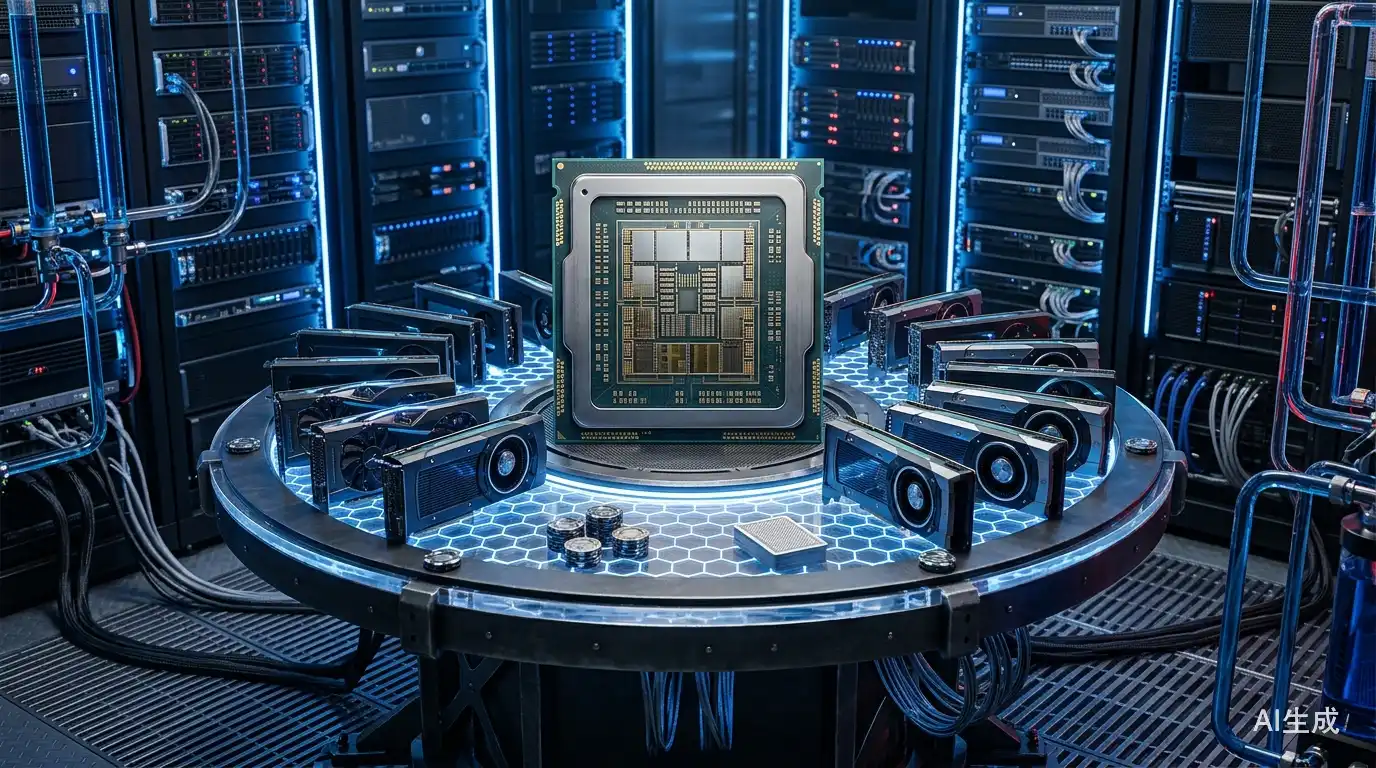
CPU Makes a Comeback to the Table, A $170 Billion "Power Seizure" Drama Begins

A new era is dawning for the server CPU (Central Processing Unit), driven by the shift from AI model training to large-scale reasoning and the rise of Agentic AI. This article explores how the CPU is reclaiming a central role in the AI data center. For years, the focus has been on the GPU (Graphics Processing Unit) for AI training. However, as AI moves to the inference and Agent phase—where tasks involve complex, multi-step reasoning, tool calls, and data management—the workload balance is flipping. Studies show CPUs now handle over 70% of the workload in Agentic AI, up from 10-30% in training. This is because Agent tasks generate massive intermediate data (KV Cache) that exceeds GPU memory, forcing it to be offloaded to the CPU's larger, more scalable memory pools. This increased importance is translating into market changes. Major players are taking note: NVIDIA launched its first standalone CPU line, Vera, based on ARM architecture and optimized for Agent performance. AMD doubled its server CPU market forecast to over $1200 billion by 2030. Analyst reports project the total server CPU market could reach $1700 billion by 2030, with AI-driven demand being a primary driver. Furthermore, the classic ratio of CPUs to GPUs in AI servers is rapidly changing, converging from 1:8 toward 1:1 for Agent deployments. This surge in demand has led to a rare industry-wide price increase of 10-15% for server CPUs from Intel and AMD, breaking a decade-long trend of "more performance for the same price." Demand is bifurcating into high-core-count CPUs for in-rack GPU support and moderate-core CPUs for standalone Agent task orchestration. In China, this global trend presents an opportunity for domestic CPU manufacturers like Hygon (海光信息) and Huawei Kunpeng, who are bolstered by both growing AI infrastructure needs and national policies promoting technological self-reliance ("xin chuang"). The maturity of their software ecosystems is also accelerating, evidenced by faster adaptation to new AI models. In conclusion, the narrative is shifting from a GPU-centric view to one where CPU-GPU synergy is critical. The CPU is no longer a peripheral component but a performance-defining bottleneck and a key growth driver in the AI hardware stack, opening a massive new market estimated in the hundreds of billions of dollars.

marsbit3 h fa

CPU Makes a Comeback to the Table, A $170 Billion "Power Seizure" Drama Begins

marsbit3 h fa

TechFlow Intelligence: AMD AI Director Publicly Criticizes Claude Code for "Becoming Dumber and Lazier", Trump Claims Full Ceasefire in Hormuz But Strait Still Has 80 Unexploded Mines

TechFlow Intelligence Report: This daily digest covers key developments in AI, crypto, hardware, and geopolitics. In AI, SK Telecom faces US export control scrutiny over its partnership with Anthropic, while a Gemini user reports being misled in a scam scenario, sparking safety debates. China's Z.AI launches the GLM-5.2 model, rivaling Claude Opus without NVIDIA chips. In crypto, Bithumb lists ReProtocol, and Upbit delists KernelDAO. On the hardware front, MIT researchers build a custom OS to study chips, ASML denies US claims its advanced lithography machines are in China, and Amazon considers selling its in-house AI chips. Apple's future A21 Pro chip may use TSMC's latest N2P process. Major tech issues include 10,000 GitHub repositories distributing malware and Apple patching a critical eavesdropping flaw in Beats earbuds. US stocks rise, led by semiconductors, with Intel surging 10.6%, while SpaceX falls 3.5%. Geopolitically, despite a US-Iran deal, the Strait of Hormuz remains risky with ~80 uncleared mines, stalling 80M barrels of oil on standby tankers. Iran postpones Switzerland talks, and Trump calls the agreement an "unconditional surrender." The report highlights a contrast: temporary geopolitical calm versus the ongoing, fundamental restructuring of tech supply chains and chip independence.

marsbit3 h fa

TechFlow Intelligence: AMD AI Director Publicly Criticizes Claude Code for "Becoming Dumber and Lazier", Trump Claims Full Ceasefire in Hormuz But Strait Still Has 80 Unexploded Mines

marsbit3 h fa

Trading

Spot
Futures

Articoli Popolari

Come comprare HOUSE

Benvenuto in HTX.com! Abbiamo reso l'acquisto di Housecoin (HOUSE) semplice e conveniente. Segui la nostra guida passo passo per intraprendere il tuo viaggio nel mondo delle criptovalute.Step 1: Crea il tuo Account HTXUsa la tua email o numero di telefono per registrarti il tuo account gratuito su HTX. Vivi un'esperienza facile e sblocca tutte le funzionalità,Crea il mio accountStep 2: Vai in Acquista crypto e seleziona il tuo metodo di pagamentoCarta di credito/debito: utilizza la tua Visa o Mastercard per acquistare immediatamente HousecoinHOUSE.Bilancio: Usa i fondi dal bilancio del tuo account HTX per fare trading senza problemi.Terze parti: abbiamo aggiunto metodi di pagamento molto utilizzati come Google Pay e Apple Pay per maggiore comodità.P2P: Fai trading direttamente con altri utenti HTX.Over-the-Counter (OTC): Offriamo servizi su misura e tassi di cambio competitivi per i trader.Step 3: Conserva Housecoin (HOUSE)Dopo aver acquistato Housecoin (HOUSE), conserva nel tuo account HTX. In alternativa, puoi inviare tramite trasferimento blockchain o scambiare per altre criptovalute.Step 4: Scambia Housecoin (HOUSE)Scambia facilmente Housecoin (HOUSE) nel mercato spot di HTX. Accedi al tuo account, seleziona la tua coppia di trading, esegui le tue operazioni e monitora in tempo reale. Offriamo un'esperienza user-friendly sia per chi ha appena iniziato che per i trader più esperti.

287 Totale visualizzazioniPubblicato il 2025.04.27Aggiornato il 2026.06.02

Come comprare HOUSE

Discussioni

Benvenuto nella Community HTX. Qui puoi rimanere informato sugli ultimi sviluppi della piattaforma e accedere ad approfondimenti esperti sul mercato. Le opinioni degli utenti sul prezzo di HOUSE HOUSE sono presentate come di seguito.

活动图片