When Elections Are No Longer Scarce, How Do Prediction Markets Break Through with 'Fandom Culture'?

比推Pubblicato 2026-02-24Pubblicato ultima volta 2026-02-24

Introduzione

With the increasing saturation of prediction markets, platforms are shifting their competitive focus from public macro-events to niche, community-driven content—particularly leveraging "fan culture" as a differentiator. Early leaders like Polymarket and Kalshi built trust through regulatory compliance, liquidity, and macro-themed markets (e.g., elections, geopolitical events), but these topics lack exclusivity and are easily replicated. Emerging platforms on networks like BNB Chain are instead cultivating hyper-specific, emotionally charged markets around community-centric topics: Binance ecosystem updates, celebrity appearances, or esports outcomes. These "fan-driven" markets—though not globally significant—generate high engagement within dedicated circles, transforming speculation into participatory narrative-building. This approach lowers entry barriers, amplifies social sharing, and fuels transactional activity through concentrated emotional investment. Crucially, such culture-bound markets create defensible advantages: they thrive on localized discourse, foster recurring interaction, and resist replication by outsiders. Asian crypto communities, for instance, naturally gravitate toward personality-driven narratives and ecosystem gossip, making fan culture a potent growth lever. The real edge lies not in technical infrastructure but in deep cultural alignment—turning prediction platforms into inseparable components of community identity.

Author: Asher

Original Title: Fandom Culture Is Becoming a Differentiating Variable for Prediction Markets


Public Issues Cannot Form the Moat for Emerging Prediction Markets

The competition in prediction markets is quietly changing.

In the early stages of prediction market development, competition revolved more around "underlying capabilities." Who is more compliant, who can gain regulatory approval, who has deeper liquidity and more efficient market-making structures determined who could first establish market trust. Platforms like Polymarket and Kalshi built markets around macro politics and global major events, gradually establishing clear cognitive advantages and user mindshare in the American context.

However, macro events themselves are not exclusive. Presidential elections, government shutdowns, war outcomes—these issues are inherently public in nature, and any platform can create similar markets. First-mover platforms rely on the accumulation of time and liquidity, not the exclusivity of the content itself. For latecomers, competing on the same issues can only unfold on worse liquidity and weaker trust foundations, making it difficult to form a structural difference.

For emerging prediction markets on BNB Chain, if rule design cannot form a barrier, then content structure and cultural positioning might become new competitive variables. It is precisely at this stage that "fandom culture" begins to matter.

Fandom Culture and Exclusive Content Supply

When prediction market platforms design events around specific ecosystems, figures, or community hotspots, what they provide is no longer a public issue for everyone but content embedded in a certain circle's context. For example, predict.fun's predictions around Binance ecosystem dynamics, such as "Will the SAFU fund wallet balance change?" or "How many posts will CZ make on platform X in a week?" are essentially closer to the daily discussion rhythm of the crypto community. They may not have macro significance but are often at the center of circle sentiment.

This logic becomes more intuitive when placed in a more typical Asian fandom scenario. For instance, whether G-Dragon adds a last-minute concert, whether Bai Lu appears at a certain brand press conference, whether Faker wins one more championship before retiring—the appeal of such topics does not come from global attention but from the high-density discussion within the fan circle. They are not public issues but highly emotionally concentrated topic nodes.

Fandom culture here provides another dynamic mechanism. When a community is highly focused on a certain issue, participation itself becomes a way to express an attitude. Betting is no longer just probability judgment but participation in the narrative. Compared to macro markets that require extensive information analysis, such topics make it easier for people to participate directly and are more likely to drive actual trading and discussion heat in the early stages.

What is truly valuable about fandom culture is not the emotion itself, but the fact that once concentrated, emotion naturally translates into participation. The denser the discussion, the more active the trading, and the topic itself is continuously amplified.

This might become the biggest difference between emerging prediction markets and leading platforms. The former relies on sustained activity within the circle, while the latter relies on the scale advantage of macro issues. The paths are different, and so is the logic.

From Communication Efficiency to Cultural Barriers

Prediction markets are essentially a product driven by discussion. Without discussion, there is no price discovery; without discussion, it is difficult to form sustained participation. The activity level of a platform largely depends on whether topics can be repeatedly disseminated and amplified.

Discussion of macro issues usually revolves around data and analysis, is relatively restrained in pace, and has a more rational diffusion path. Issues revolving around community figures or controversies, however, naturally have stronger social attributes. Conflicts of stance, faction expression, and emotional participation make them easier to spread quickly on social media and within communities. In this structure, prediction markets are not just trading tools but nodes for topic fermentation.

For emerging prediction platforms, communication efficiency itself is a growth lever. A market designed around community controversy is often more likely to form a discussion loop than a macro-economic event. Participation, sharing, commenting, and re-participation form a cycle of reinforcement; the higher the emotional density, the more concentrated the trading behavior. What fandom culture brings is not just heat, but sustainable interaction frequency.

More importantly, when this interaction occurs long-term in the same community context, the communication advantage gradually precipitates into cultural binding. Current prediction market platforms on BNB Chain with high community discussion heat, such as Opinion, predict.fun, and Probable, have core users who themselves come from Asian communities. The concentration of user structure naturally embeds the platform into a specific discussion environment and emotional structure.

Under such conditions, prediction markets are no longer just a replaceable trading tool but gradually become part of the community's operation. Macro markets can be copied, but the interaction model built within a specific cultural context is difficult to transplant. What fandom culture brings is not just short-term activity, but an emotional soil that is harder for external platforms to replicate.

The Asian Path Under Cultural Division

Prediction markets are not an industry where technology creates a gap; what truly determines the direction of a platform is content selection and the cultural soil it binds to.

Liquidity depth, product experience, and the number of events are certainly important, but these are more like entry thresholds than breakthroughs. For emerging platforms, simply copying hot events from Polymarket or Kalshi is unlikely to shake the established scale and mindshare advantages.

A number of emerging prediction market platforms have core users who themselves come from Asian communities. The difference in user structure determines the difference in content logic. Compared to macro political issues, Asian crypto communities emphasize personal narratives, ecosystem dynamics, and community interaction more. In this context, designing around community hotspots makes more practical sense than replicating public issues.

The reason fandom culture is important is not because it is emotional, but because it naturally fits this user structure. It lowers the participation threshold, increases communication efficiency, and activates real trading behavior in a short time. More crucially, this cultural soil is difficult to simply copy. Once a platform forms a bond with a specific community, the content is no longer just events but becomes a continuously operating narrative space.

When prediction markets enter the stage of cultural competition, what determines the direction of a platform is no longer just mechanism design, but the depth of understanding of its own user structure. Whoever understands their community better is more likely to hold their ground in a fragmented landscape.

This, perhaps, is the real opportunity for emerging prediction markets.


Twitter:https://twitter.com/BitpushNewsCN

Bitpush TG Discussion Group:https://t.me/BitPushCommunity

Bitpush TG Subscription: https://t.me/bitpush

Original link:https://www.bitpush.news/articles/7614119

Domande pertinenti

QWhat is the main competitive variable for emerging prediction markets according to the article?

AThe article argues that 'fan culture' (饭圈文化) and content structure have become key competitive variables for emerging prediction markets, as they provide differentiated engagement and cultural barriers that are hard to replicate.

QHow does fan culture contribute to the activity of prediction markets?

AFan culture concentrates community emotion and discussion around specific topics, transforming participation into a form of narrative engagement. This leads to higher trading activity, faster dissemination, and sustained interaction within the community.

QWhy can't public issues like elections form a moat for new prediction markets?

APublic issues are not exclusive; any platform can create markets around them. Early platforms rely on accumulated liquidity and trust, not content exclusivity, making it difficult for newcomers to compete on the same topics without structural differentiation.

QWhat role does cultural context play in the development of prediction markets in Asia?

ACultural context, particularly in Asian communities, emphasizes narratives around personalities, ecosystem dynamics, and community interactions. Platforms that understand and embed themselves in this cultural soil can create sustainable narrative spaces that are difficult for external platforms to replicate.

QHow do prediction markets benefit from high emotional density in community topics?

AHigh emotional density in community topics facilitates rapid dissemination on social media, lowers participation barriers, and activates real trading behavior quickly. It transforms prediction markets into nodes for topic fermentation, enhancing both discussion and transaction activity.

Letture associate

Debate: Korean Workers Fear Unemployment, While Musk Envisions a Society 'Without Work'?

While South Korean auto workers fear job losses from robotics, Elon Musk envisions a future where AI and robots render most work optional. This article explores the growing tension between immediate anxieties over automation and long-term visions of a post-work society. The piece begins with recent strikes at Hyundai's Korean plants, where unions, amid standard wage negotiations, also sought job guarantees against advancing robotics—specifically mentioning Boston Dynamics' Atlas. This reflects how anxiety about technological displacement is emerging even before robots are fully capable of replacing skilled labor on assembly lines. The author argues that while current robotics still struggle with the nuanced, experiential knowledge of veteran workers, the *perception* of imminent replacement is fueling social conflict prematurely. This modern "Luddite" sentiment is compared to the 19th-century English textile workers who smashed machines. Historically, Luddites weren't simply anti-technology; they were protesting the rapid devaluation of their skills and the unequal distribution of productivity gains. Similarly, today's workers ask who will bear the cost of transition and share in the new wealth created by machines. In contrast, figures like Elon Musk propose an optimistic endpoint: with AI and robotics driving extreme abundance, the link between work and survival could break. He suggests concepts like "Universal High Income" could allow society to share the technological bounty, transforming work from a necessity into a choice. The core challenge, however, lies in the transition. The author notes that technology's benefits diffuse slowly, while its disruptive costs—job losses, skill obsolescence—can be concentrated and immediate. The risk is a painful interim period where productivity gains are captured by a few before new social contracts, safety nets, and retraining systems are established. The conclusion calls for proactive governance. Just as past industrial revolutions gave rise to labor standards and social safety nets, the robotics era needs its own frameworks. These should address job transition support, distribution of productivity gains, safety liability, and ethical deployment. Embracing such "constraints" is not opposition to progress but a necessary step to ensure technology benefits society broadly. The discussion sparked by Hyundai's workers, therefore, is not premature but essential.

marsbit12 min fa

Debate: Korean Workers Fear Unemployment, While Musk Envisions a Society 'Without Work'?

marsbit12 min fa

CATL Invests in a 00s Graduate from Harbin Institute of Technology

Contemporary Amperex Technology Co., Limited (CATL) has exclusively invested in the Pre-A round of RoboParty, a company founded by 22-year-old Huang Yi. A former student at Harbin Institute of Technology, Huang built a bipedal humanoid robot in his dorm room and later dropped out to launch RoboParty in Shanghai. The company focuses on developing a fully open-source platform for humanoid robots, combining self-developed hardware, operating systems (Party OS), and foundational models. RoboParty's strategy emphasizes open-source collaboration to accelerate development and build a developer ecosystem, positioning itself as foundational infrastructure for embodied AI. Since its 2025 founding, the team—composed largely of top-tier university graduates—has secured six funding rounds in eight months, with investors including Matrix Partners, Xiaomi, and now CATL. This investment by CATL's corporate venture arm signals strong industry confidence in RoboParty's potential for real-world manufacturing and complex scenarios. Huang Yi prioritizes technological excellence and developer community growth over rapid commercialization. The company has already garnered significant interest from developers and research institutions globally. With a focus on continuous, rapid iteration and open innovation, RoboParty aims to prove the versatility of humanoid robots and drive the field toward an open-source future.

marsbit15 min fa

CATL Invests in a 00s Graduate from Harbin Institute of Technology

marsbit15 min fa

Will SpaceX's First Quarterly Report Rescue Its Stock Price Under the Pressure of 1.2 Billion Shares Unlocking?

SpaceX is set to release its first quarterly earnings report since going public, a key test for its stock which has declined 20% from its IPO price. Approximately 9.12 billion shares are set to unlock on August 6, with an additional 3.19 billion following a week later, creating potential selling pressure from early investors. A strong report may be the only catalyst to reverse the downtrend. The report will cover three segments: Space, Connectivity (Starlink), and AI. The AI business, centered on the merged xAI, is the biggest uncertainty. While it generated $818 million in revenue last quarter, it also reported a $2.5 billion operating loss and $7.7 billion in capital expenditures. New data center rental agreements with Anthropic and Google, particularly the substantial $1.25 billion monthly deal with Anthropic, add significant revenue variability this quarter. Investors await guidance on AI's future outlook and the timeline for launching AI computing satellites via Starship. Starlink remains the stable profit driver, ending last quarter with 10.3 million subscribers. Key metrics will be user growth, average revenue per user (ARPU), and enterprise/government contract backlogs. The Space segment, which posted a $657 million operating loss last quarter, will be scrutinized for updates on Starship development following its 13th test flight and the pace of Falcon 9 launches, many of which support internal Starlink deployment. Wall Street expects Q2 revenue of around $6.9 billion and EBITDA of $2.1 billion. However, as this is the first earnings report, analyst forecasts lack a historical baseline and could see significant variance. With a current market cap of ~$1.4 trillion and a high valuation, the market's reaction post-earnings will hinge on the report's strength, the magnitude of post-lockup selling, and ongoing investor concerns.

marsbit16 min fa

Will SpaceX's First Quarterly Report Rescue Its Stock Price Under the Pressure of 1.2 Billion Shares Unlocking?

marsbit16 min fa

Soaring 20% Then Dropping 5%: When Will the Bottom of the Korean Stock Market Be?

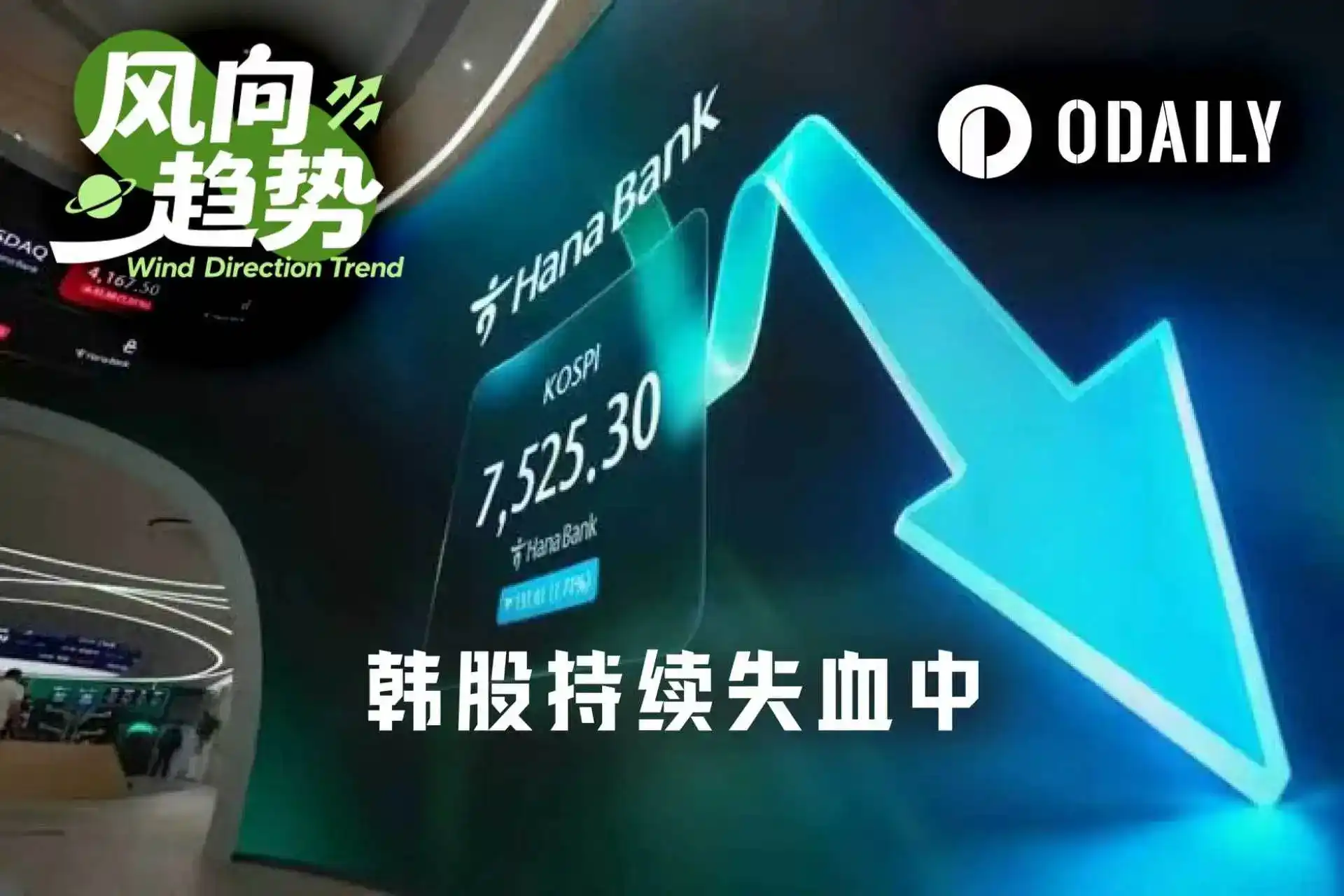
"South Korean stocks face a turbulent period as the KOSPI index, after a 20% surge, fell 5% to 6257 points. The market is grappling with severe issues: over 500,000 leveraged retail accounts have been liquidated, and more than 24 trillion won has flowed from stocks into bank deposits for safety. This reflects a significant loss of market liquidity and shaken investor confidence. In response, Korean financial regulators are taking action. They have tripled the minimum保证金 (margin) requirement for single-stock leveraged ETF trades to 30 million won and are considering granting themselves "emergency intervention" powers. These could include capping leverage ratios and setting investment limits on these ETFs, seen by many as amplifying market volatility. Initial results show a 75% drop in these products' trading volume post-regulation. The market downturn has political repercussions, pushing President Yoon Suk-yeol's approval rating to a new low. Meanwhile, foreign investors made a record net purchase of 7.18 trillion won during a recent rebound, while domestic retail investors sold off massively. Morgan Stanley has upgraded South Korean stocks to "overweight," citing the ongoing "leverage unwinding" and potential for a 36% upside, with giants like Samsung Electronics and SK Hynix providing valuation support. However, analysts caution that the market's structure remains vulnerable to foreign capital flows, and the current low may not be the bottom."

marsbit31 min fa

Soaring 20% Then Dropping 5%: When Will the Bottom of the Korean Stock Market Be?

marsbit31 min fa

Trading

Spot
活动图片